
Aubergine Schnitzel Puts a Vegetarian Spin on the Classic
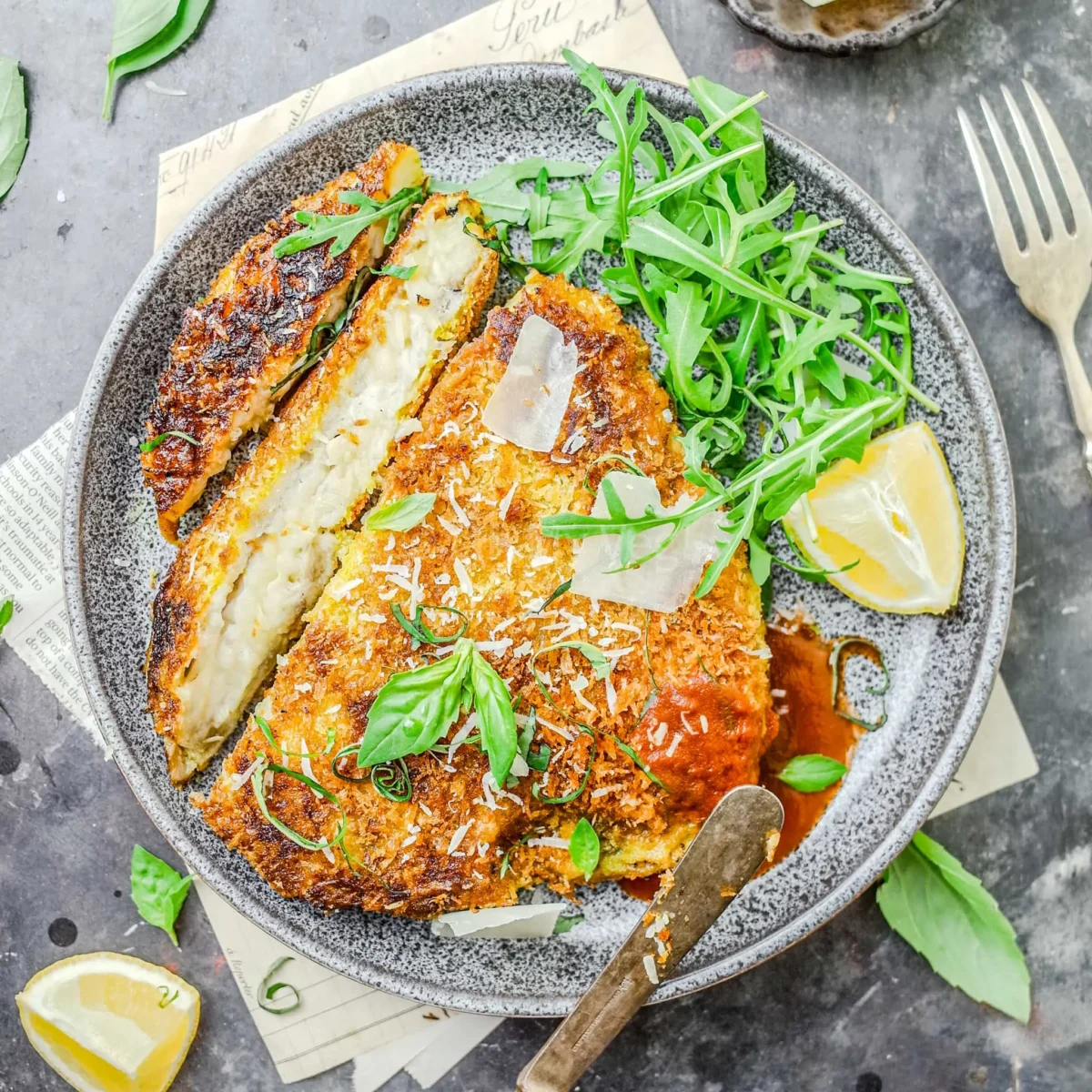
Imagine a flame-roasted aubergine: it’s tender, meaty, savoury, and intensely smoky. Next, it’s flattened and coated with breadcrumbs. Then, the aubergine schnitzel hits the fryer: golden-brown, earth-shatteringly crispy … and just waiting to be eaten.
One of the most common questions I get as a vegetarian is: “Don’t you feel like you’re missing out?” Thanks to the ever-growing number of mouth-watering vegetarian foods, the answer is always no.
There was one exception. I was visiting Vienna for the first time in the winter of 2012. I hit all the tourist must-dos (and some hidden gems): gorging myself on sachertorte, a concert at the Vienna State Opera, Klimt at the Belvedere, and dreamy palaces galore. But, I missed out on one major experience: eating Austria’s national dish, Wiener Schnitzel.
It wasn’t until recently that I found out there are restaurants in Vienna that serve vegan schnitzel … well, I am due for a trip back!
Since then, I’ve been compensating by making my own vegetarian schnitzel. I’ve tried seitan schnitzel (meatiest texture), cauliflower schnitzel, and tofu schnitzel (easiest), but ultimately landed on aubergine schnitzel.
While it may sound unconventional, eggplant schnitzel easily took first place prize for the most tender, juicy texture.
It’s perfect for those of you who aren’t a fan of meat substitutes — it’s more accessible (and less intimidating for people who don’t like to eat “vegetarian” meals), showcases whole foods, and tastes unbelievably moreish.
❤️ Why You’ll Love This Recipe
❓What is Schnitzel?
Traditionally, schnitzel involves pounding meat until thin, coating it in flour, egg, and breadcrumbs, then frying it until crispy. It’s always served with a selection of sides — most famously, potato salad.
The schnitzel was created in Vienna, Austria, sometime in the 1800s. Since then, the dish has spread: variations can now be found elsewhere in Europe, Africa, Western and Eastern Asia, plus North and South America! It’s had a phenomenal impact on global cuisine.
The original dish, Wiener Schnitzel, must be made with veal. In other countries, different proteins are equally as widespread: pork, chicken, turkey, or even fish.
Nowadays, schnitzel has been adapted to fit into vegetarian and vegan diet, too. Options typically include tofu, seitan, chickpeas, mushrooms, soy protein, aubergine, or other vegetables.
🍆 About Those Ingredients …
I’ve chosen to keep things simple, just like a traditional Austrian schnitzel.
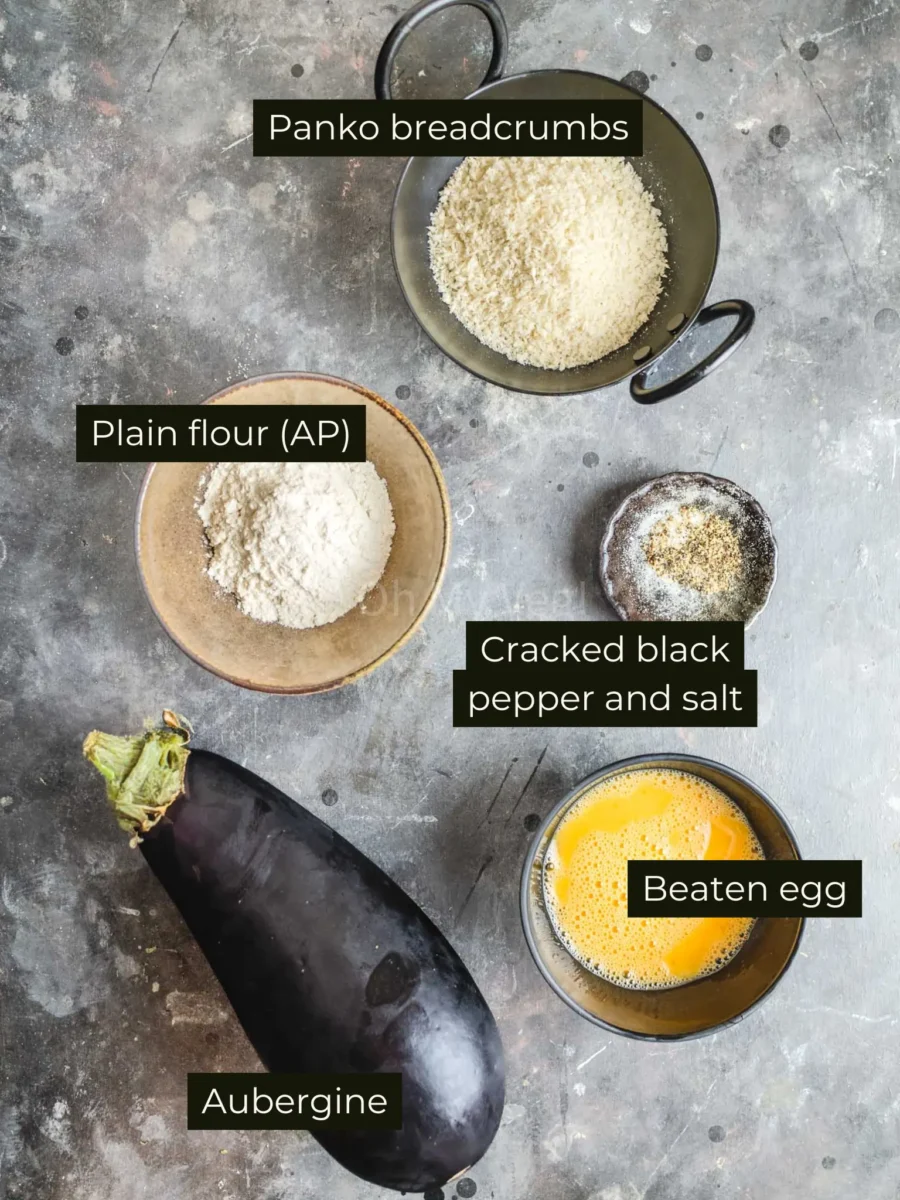
That means we’re only using five ingredients (not including salt and pepper), all of which you likely already have in your pantry:
- Aubergine, also called eggplant in the U.S., is the star ingredient of this dish. The fruit becomes smoky, tender, melt-in-the-mouth, and gorgeously meaty. I recommend using a large American globe eggplant or a standard Italian aubergine for properly hearty schnitzel.
- Egg makes a rich, thick batter for the aubergine.
- Plain flour (all-purpose flour) thickens the batter.
- Panko breadcrumbs are a Japanese ingredient I use often to make my vegan katsu curry (which is totally inspired by schnitzel, when you think about it!). Due to the unique processing (panko is made with pre-baked bread that’s shredded, not ground), I find they get the CRISPIEST — exactly what we want! Otherwise, you can also make your own breadcrumbs from stale bread, buy them, or even use ground cornflakes.
- Cracked black pepper adds just the right level of warm, citrusy seasoning with just a hint of heat. You’ll also need a touch of fine sea salt to lift the flavours.
- Neutral oil (not pictured) with a high smoke point, such as sunflower, rapeseed (canola) or peanut, for shallow-frying the aubergine schnitzel. If you’d rather bake the aubergine schnitzel, substitute a cooking spray.
🧀 Change it Up!
While I’ve mostly stuck to the age-old schnitzel recipe (apart from using aubergine instead of meat, which is pretty revolutionary!), you can get experimental with the seasoning.
Why not stir chilli flakes, garlic powder, smoked paprika, or dried herbs into the batter for a little extra oomph on the flavour?
Or, one of my favourite tips for instant umami: finely grate vegetarian hard cheese (such as vegetarian pecorino or parmesan) into the breadcrumbs. Delicious!
🌱 Adapting for Allergies and Dietary Requirements
While traditional schnitzel is made from pork, veal, or chicken, this version is completely vegetarian! It’s also dairy-free, soy-free, and nut-free, plus easily adaptable … AKA, perfect for families with mixed preferences!
🡆 To make aubergine schnitzel gluten-free, there are two simple swaps you need: gluten-free flour in place of plain flour (use your favourite brand) and gluten-free breadcrumbs.
You can buy gluten-free breadcrumbs at your local grocery store, make them by grinding gluten-free bread (stale works best!), or order these gluten-free panko breadcrumbs from Amazon — my favourite option.
🡆 To make aubergine schnitzel vegan, again, the process is easy-peasy! Just omit the egg. Exchange it for Bob’s Red Mill GF Egg Replacer and plant-based milk of your choice … or just milk and a little extra flour. Whisk until you get a thick batter.
♨️ How to Make Aubergine Schnitzel (Several Options)
There are two ways to make aubergine schnitzel:
- Peel the aubergine, then slice the fruit lengthways into long pieces. The raw, sliced aubergine can be battered, breaded, and fried.
- Roast the aubergine over a direct flame, then peel, flatten the roasted flesh, batter, bread, and fry.
I’ll help you decide which method to follow.
If you have access to a gas hob, or even better, a BBQ, I highly recommend roasting your aubergine whole. It infuses the dish with a jaw-dropping level of smoky depth, not to mention the tender texture — frankly, it’s unbeatable. I use the same process in my incredible vangyache bharit recipe, an authentic aubergine curry from Maharashtra, India, and tortang talong, a Filipino breakfast omelette!
That said, if you only have access to an induction stove, slicing the raw aubergine and then cooking will be your best bet. While you can whole roast an aubergine in the oven, it takes twice as long — around 40 minutes.
Step-by-Step Photos From My Kitchen
Below, I’ve included step-by-step photos of the whole-roasting method (and subsequent steps), so you can check back while cooking to ensure things are looking as they should.
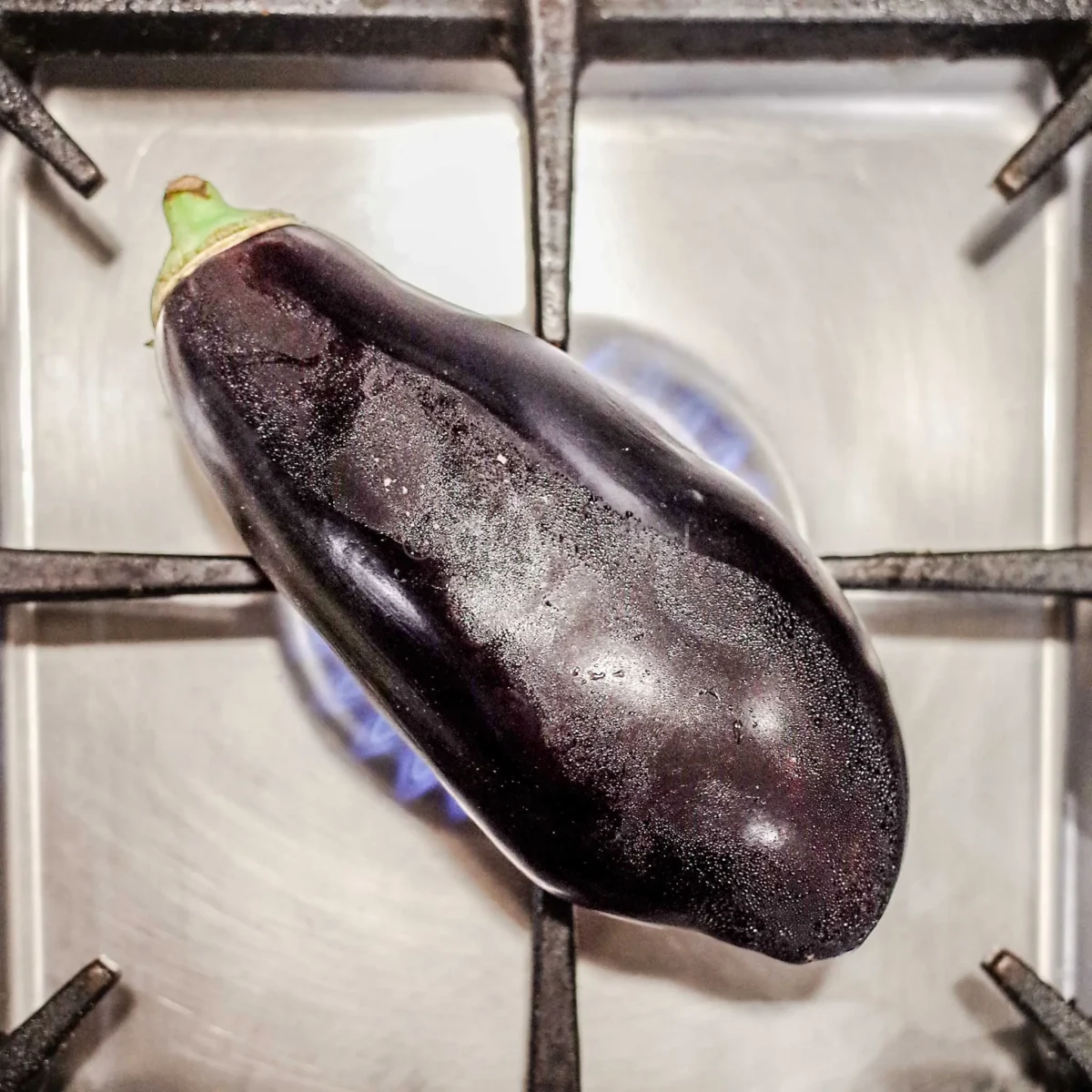
One: Place your aubergine directly onto your gas hob, with the flame set to medium-high. If the aubergine doesn’t balance on your stovetop grate/pot supports, you may want to use a wire roaster rack.
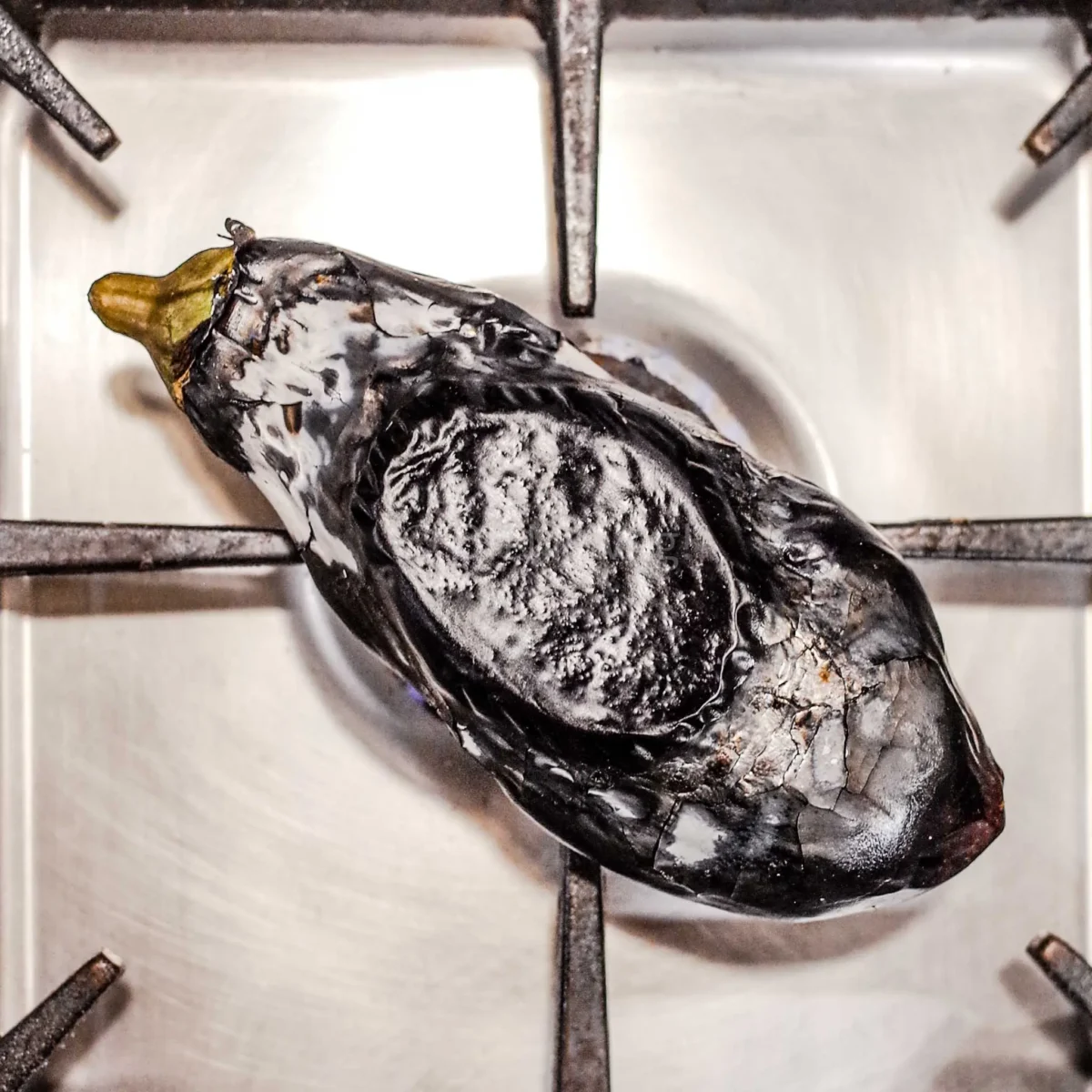
Two: Let the aubergine cook for 15-20 minutes — exact timings depend on the size of your fruit. Carefully rotate it every 5 minutes to expose all sides of the fruit to the direct flame. Once cooked, the skin should be blackened and cracked.
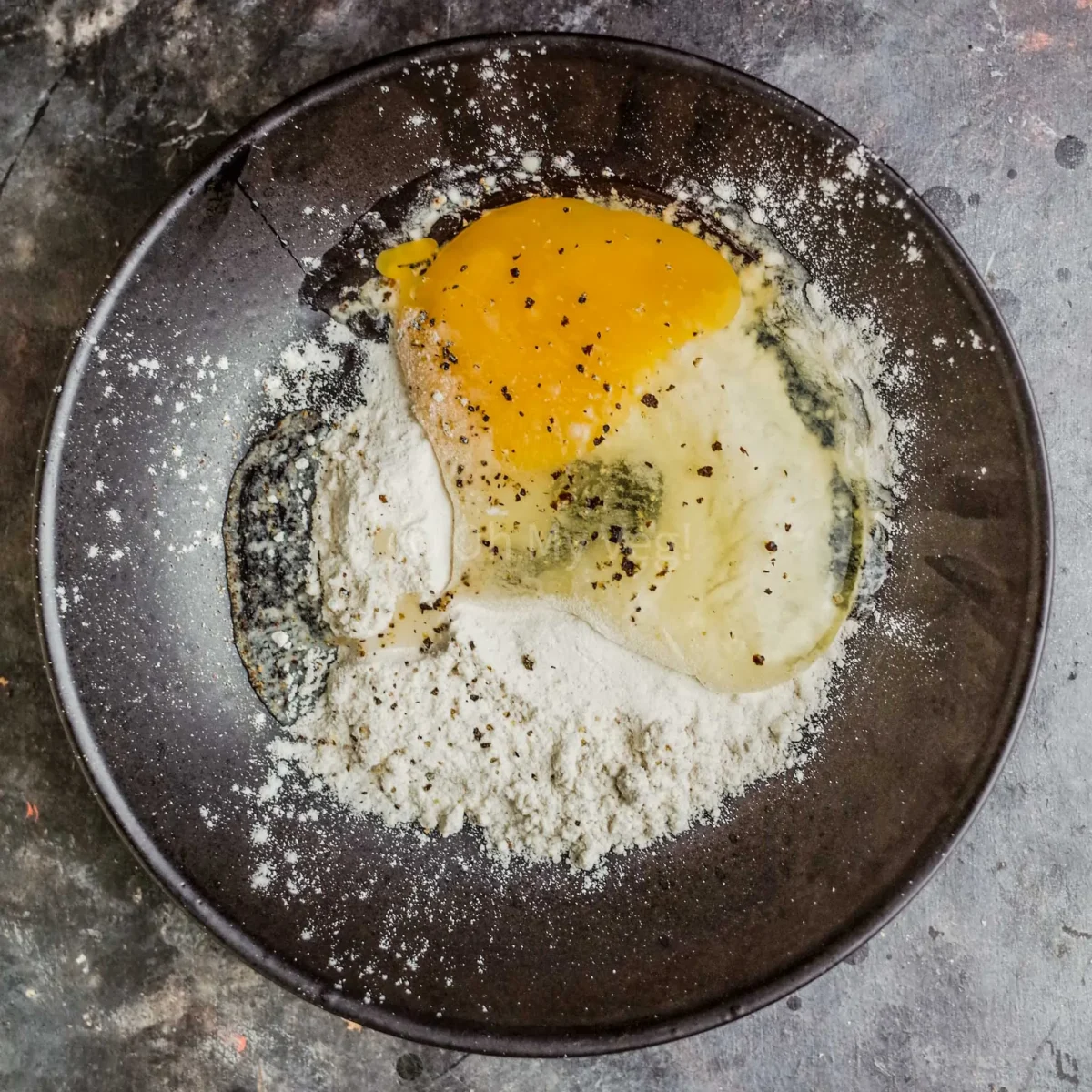
Three: Add plain flour (AP), a cracked egg, fine salt, and cracked black pepper to a shallow bowl.
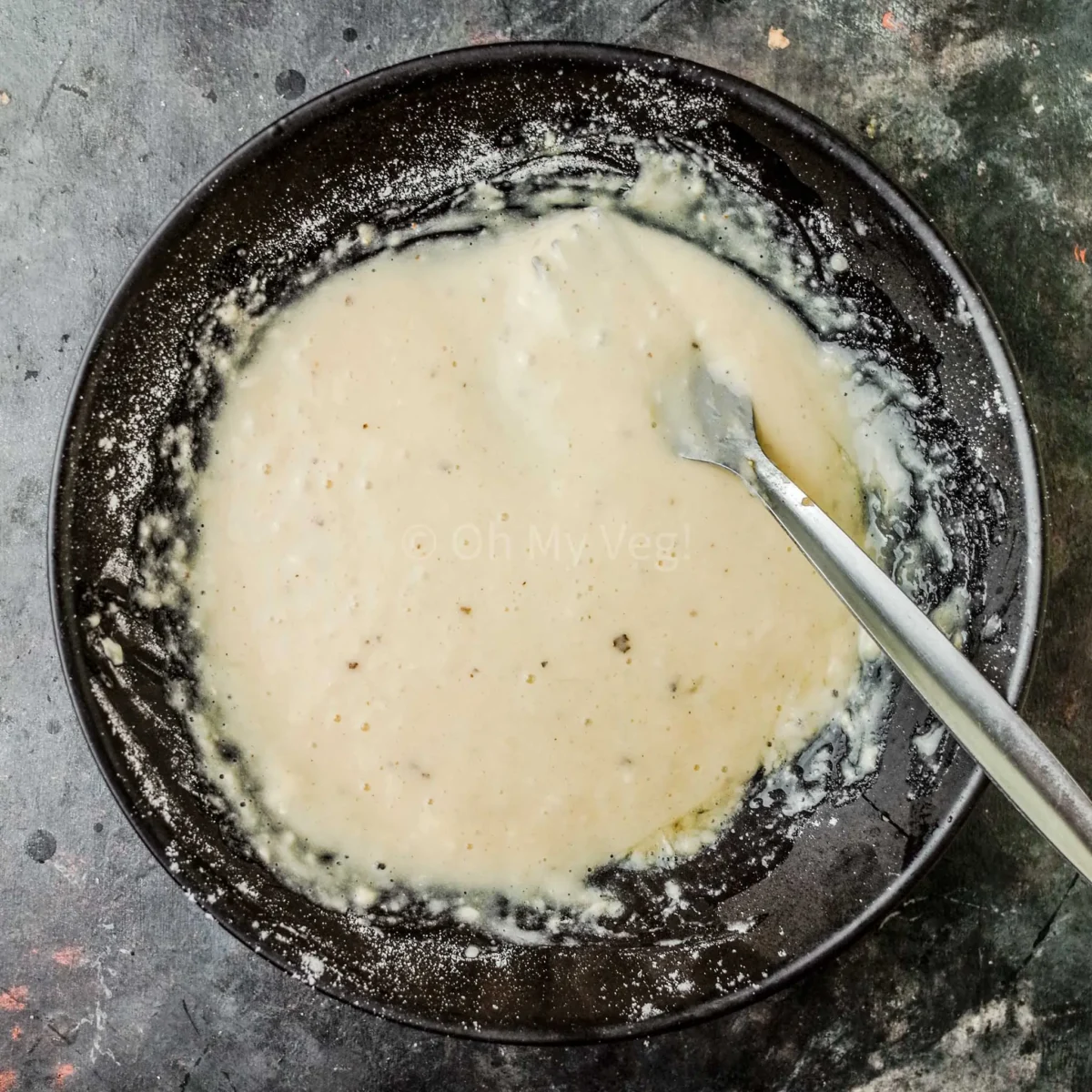
Four: Use a fork or hand-whisk to combine the mixture into a thick, lump-free batter.
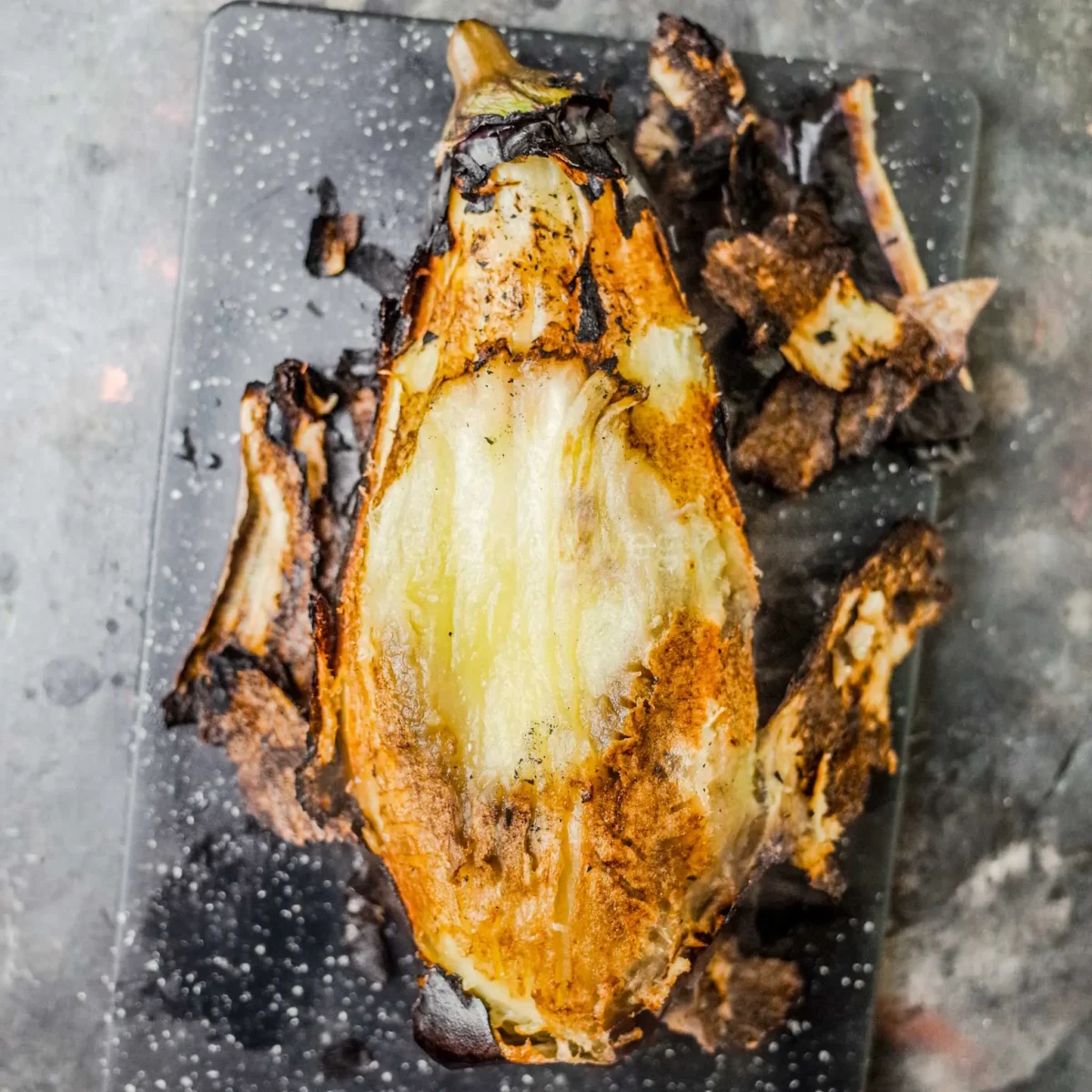
Five: Once the aubergine is cooked, remove it from the stove. Let it cool, then carefully peel off the skin. Most of it should flake off.
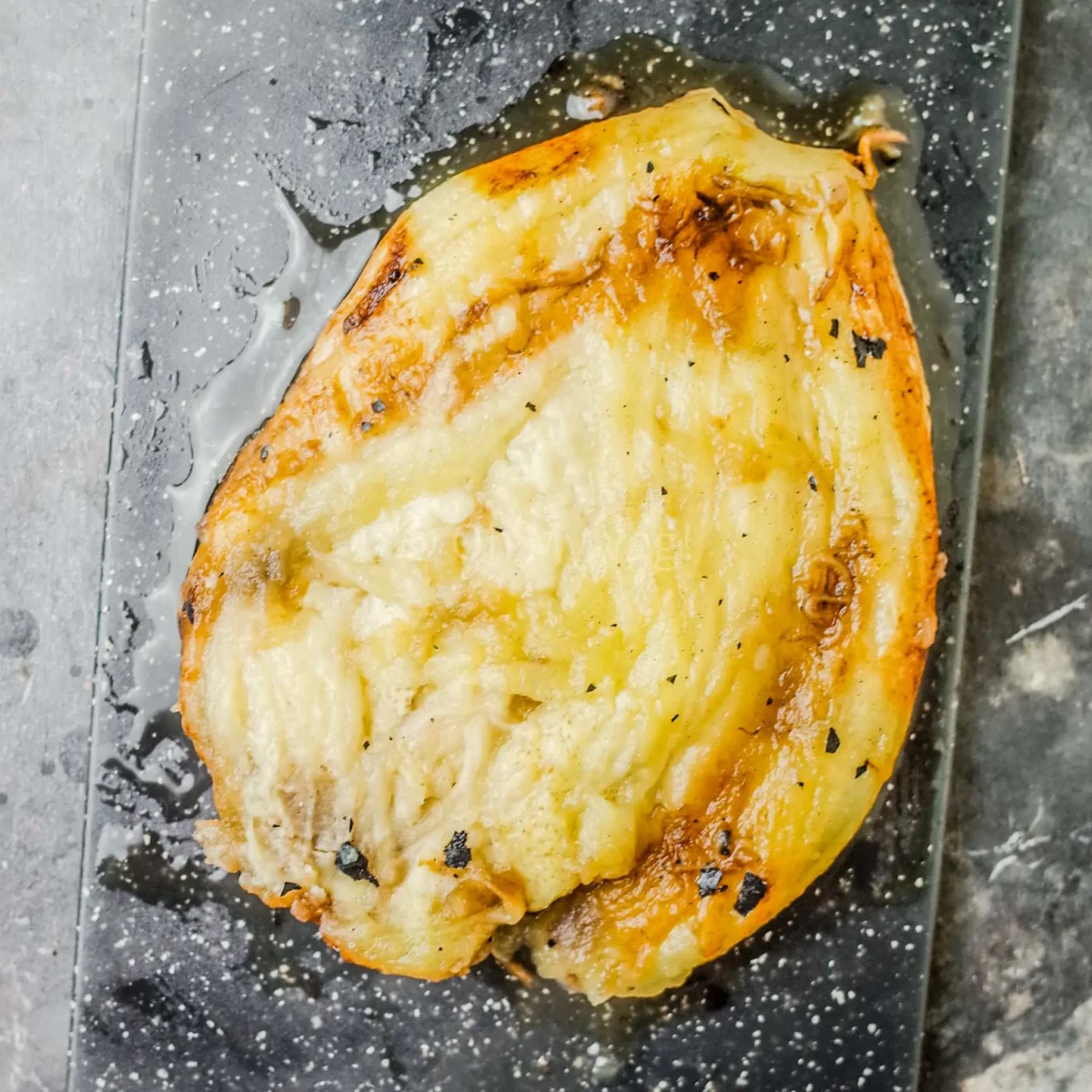
Six: Use a fork to carefully “mash” the aubergine into a flattened shape, without breaking its form. Once flattened, cut off the stem.
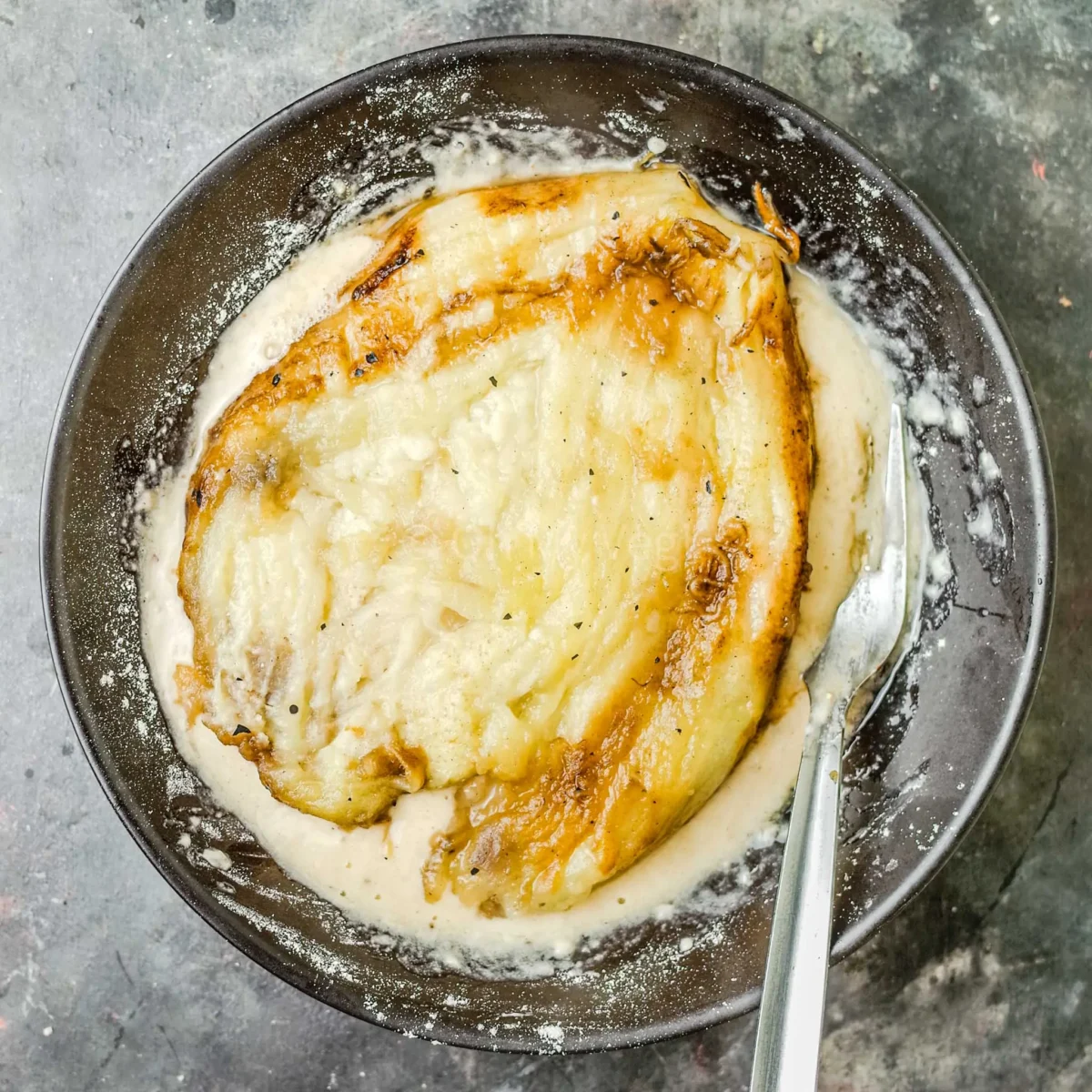
Seven: Carefully coat the flattened aubergine in batter. Be sure to do both sides!
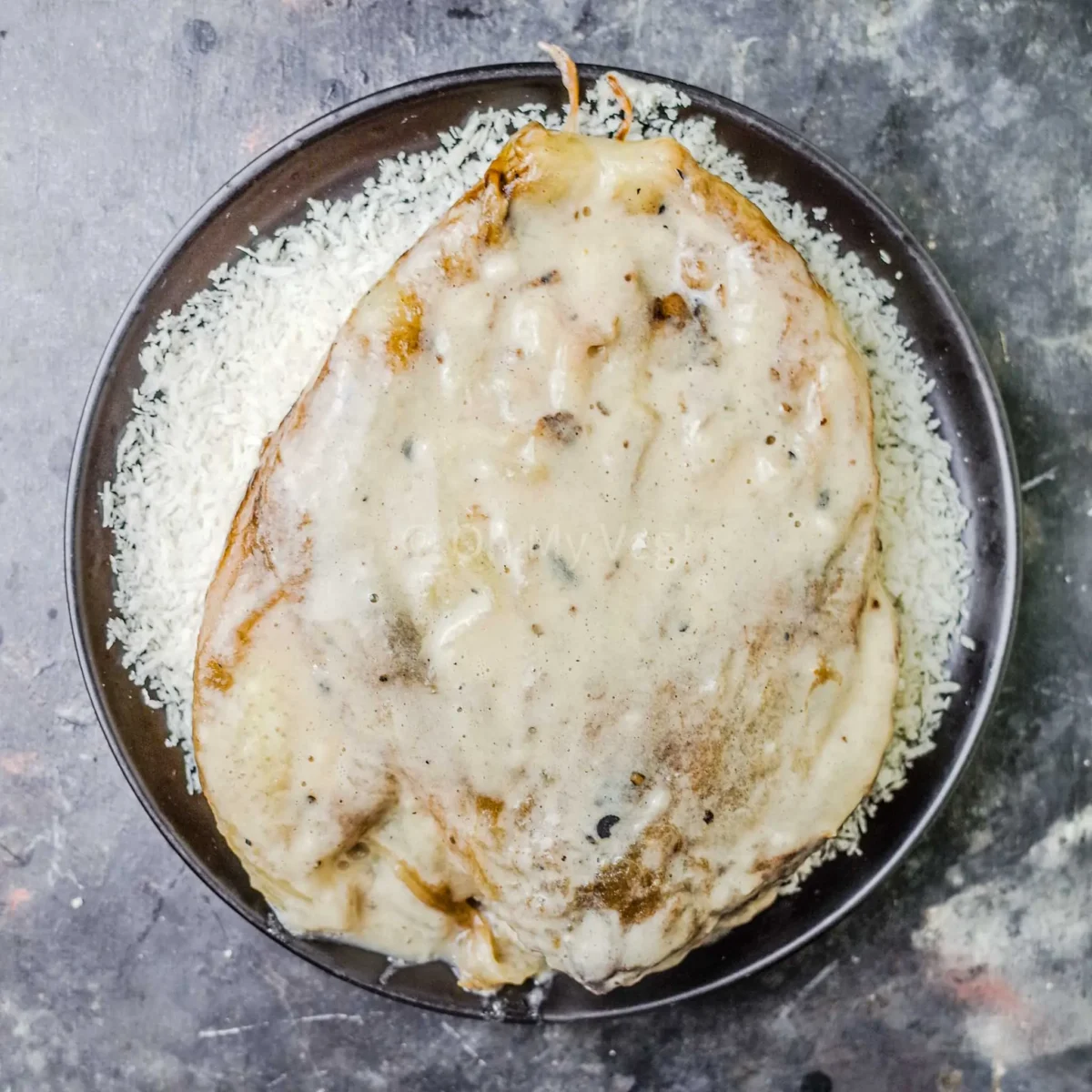
Eight: Add panko breadcrumbs to a large plate. Transfer the battered aubergine to the breadcrumbs.
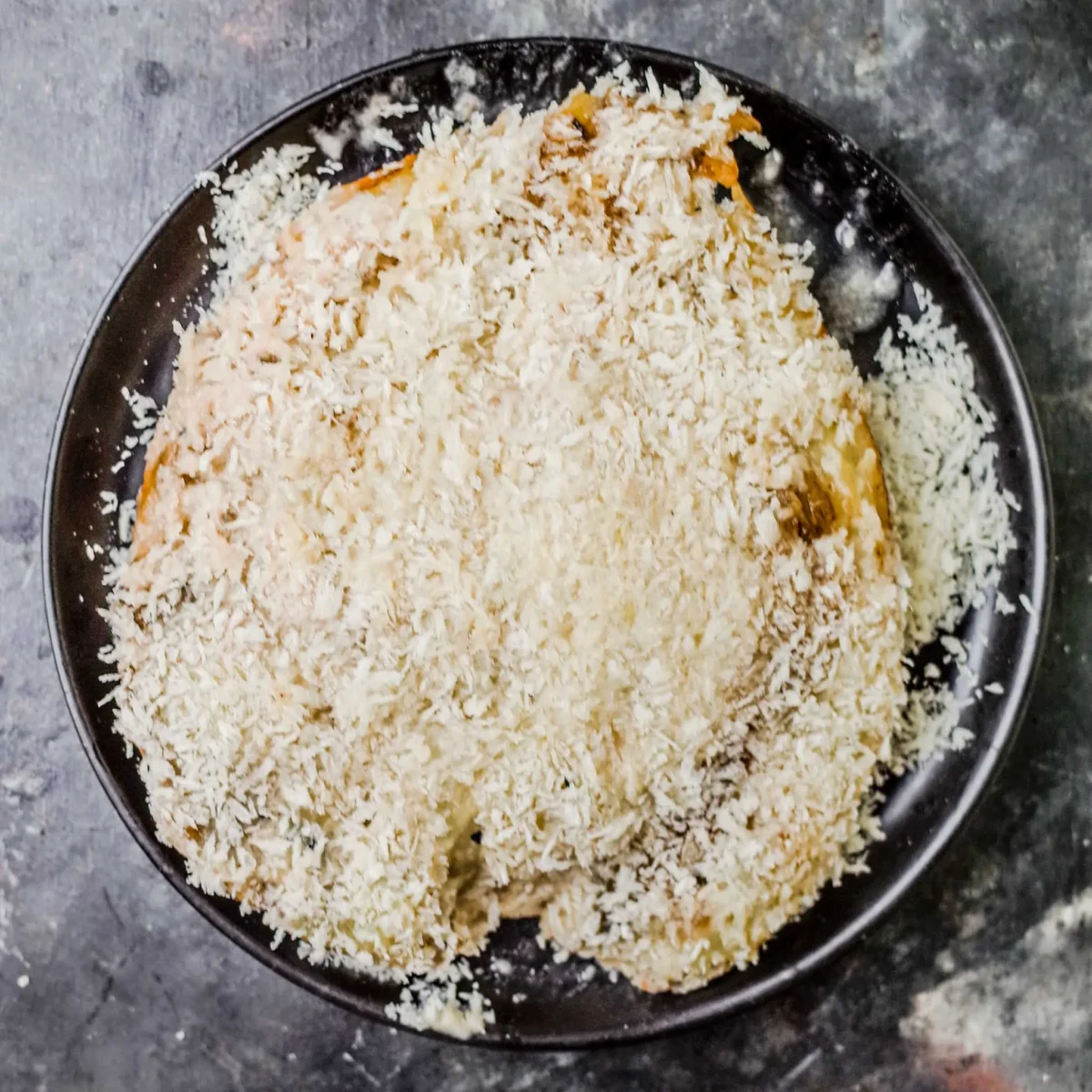
Nine: Coat both sides of the aubergine in crispy breadcrumbs. Press the breadcrumbs into the flesh slightly.
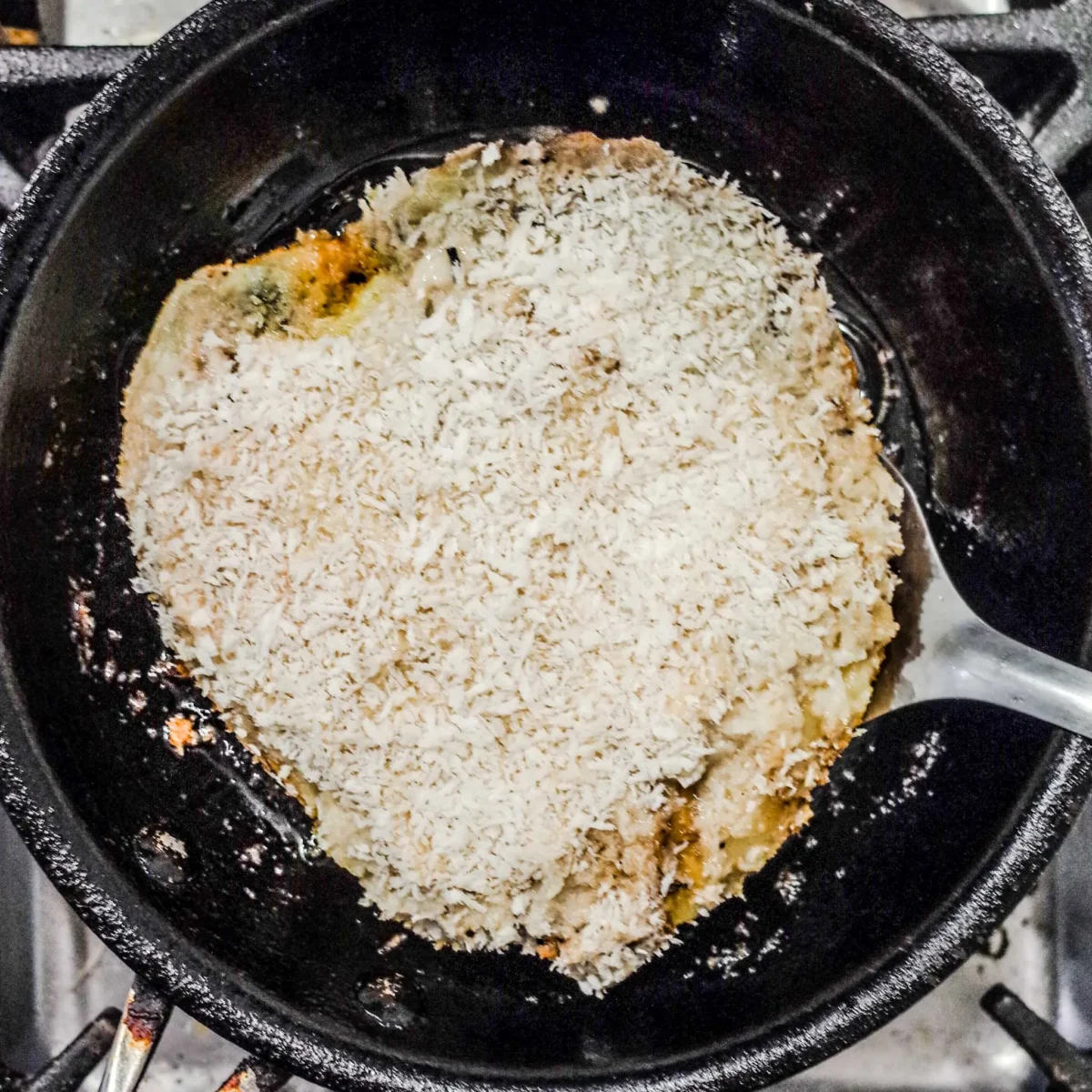
Ten: Heat neutral oil in a deep-sided frying-pan over medium heat. Once hot, add the breaded aubergine schnitzel.
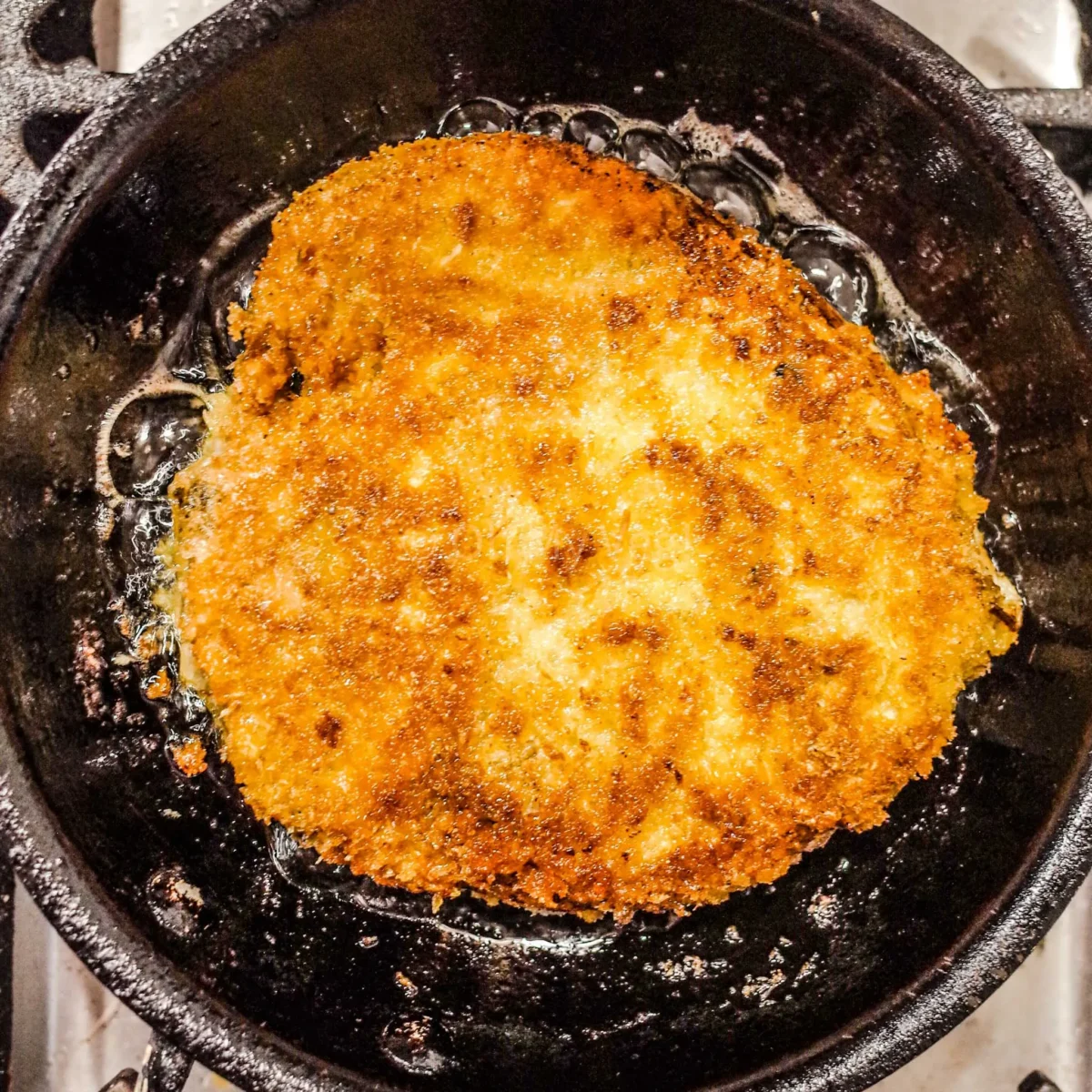
Eleven: Fry the aubergine schnitzel until golden-brown and crispy. Carefully flip the schnitzel (I find it easiest to use tongs) and cook the other side equally well. Once cooked, drain excess oil on a wire rack, then serve hot with your choice of sides.
Remember, the complete recipe (with ingredient quantities and instructions) can be found at the bottom of this page. You can also print or save the recipe, adjust the servings, and more from there!
🔥 Healthier Options: Air-Frying and/or Baking
Don’t feel like shallow frying your aubergine schnitzel? Not a problem!
🡆 To bake aubergine schnitzel, preheat the oven to 220°C (428°F). Next, grab a large, flat baking tray. Line with parchment paper. Add your aubergine schnitzel to the tray and spray with cooking oil. Bake for 30 minutes, turning halfway, until golden brown and crisp.
🡆 To air-fry aubergine schnitzel, preheat your air-fryer to 180°C (356°F). Place in a single layer (if you want to make multiple schnitzels, you’ll need to work in batches) and air-fry for 20-25 minutes, turning halfway.
❄️ Storing, Freezing, and Making Ahead
🡆 Fridge: Refrigerate cooked or uncooked aubergine schnitzel for up to 3 days. If you’re storing multiple schnitzels, layer parchment paper in between to prevent sticking, and stack them in an airtight container.
🡆 Freezer: Aubergine schnitzel can be frozen, cooked, or uncooked. Either way, lay on a parchment paper-lined baking tray and freeze until solid — this prevents sticking later on. Once solid, transfer to a freezer-safe bag or container, then label with the recipe name and best-before date. Can be frozen for up to 3 months.
🡆 Reheat: Reheat in a pre-heated oven for 10 minutes, or until piping hot. Alternatively, add a little oil to a frying pan and reheat on the stove. I don’t recommend the microwave, as it sacrifices texture.
Aubergine schnitzel can easily be made ahead of time for meal-prepping or parties. Either whole-roast the aubergine ahead of time, or take it as far as the battering and breading step before storing, then continue cooking.
🥗 Serving Suggestions for Aubergine Schnitzel
There are endless ways to serve vegetarian aubergine schnitzel! Whether you serve it as an appetiser, side dish, or the main event, it’s sure to impress.
Let’s start basic: lemon! Aubergine schnitzel (or any schnitzel, really) isn’t complete without a wedge of citrus on the side.
However, perhaps the most beloved pairing for schnitzel is Austrian (or German) potato salad. Soft and buttery, the potatoes are doused in a tangy, umami-rich mustard-vinegar sauce (and sometimes pickles). It’s a perfect contrast to the richness of fried schnitzel.
Cranberry jam — or lingonberry jam if preferred — serves the same purpose. Dish it up in a little bowl, then add to the schnitzel for a touch of sweet tartness. Personally, though, I feel fruity sides complement tofu schnitzel or seitan schnitzel better.
If you’d like to upgrade aubergine schnitzel to a more filling meal, serve it with buttery spaetzle (fresh egg pasta) or crispy fries.
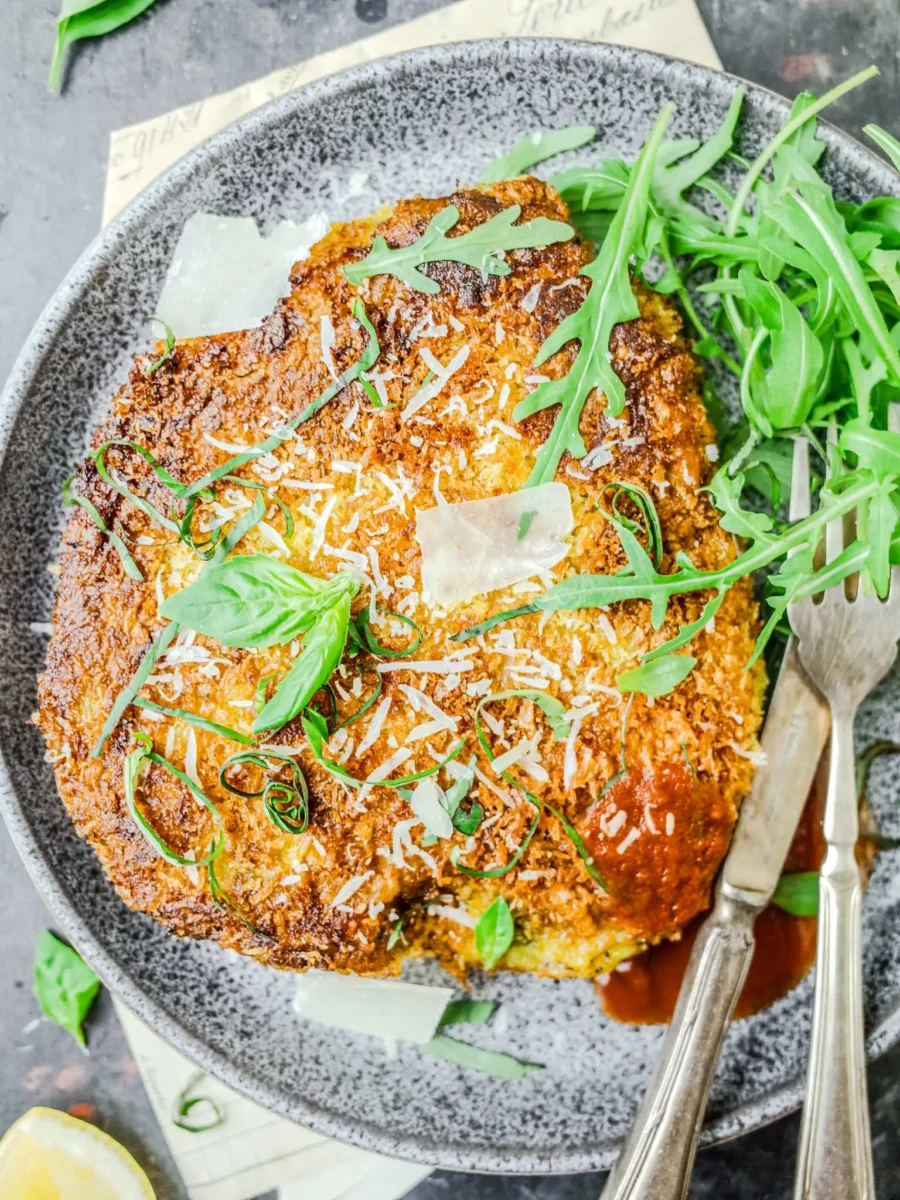
Personally, I love going full steam ahead with fusion and serving aubergine schnitzel with marinara sauce and shavings of vegetarian pecorino (as pictured!). It’s surprisingly tasty and pairs excellently with roasted asparagus or garlicky green beans.
Alternatively, Choose a Traditional Sauce:
- Hunter’s sauce. A rich brown gravy called “jaeger sauce,” made with mushrooms, onions, wine, and broth. To make the recipe vegetarian-friendly, all you need to do is substitute the more customary beef broth for vegetable broth.
- Rahm sauce, which is a rich and creamy affair made with plenty of onions, mushrooms, and cream. It’s gorgeous served with schnitzel and spaetzle.
- Zigeuner sauce. Smoky and slightly spicy, this is made with tomatoes, onions, bell peppers, and a lot of proper Hungarian paprika!
Finally, for a healthier option, opt for a simple dressed green salad (I went with peppery arugula/rocket). This way, aubergine schnitzel is best served as a light lunch or appetiser!
If you’ve tried this aubergine schnitzel recipe, please drop a comment ✍️ or a star rating 🌟 below to help fellow readers! Additionally, if you have a question, please drop a comment, and I’ll do my best to answer ASAP.
Aubergine Schnitzel

Ingredients
- 1 large aubergine (eggplant)
- 1 medium egg
- 20 grams plain flour (AP)
- fine sea salt to taste
- cracked black pepper to taste
- 30 grams panko breadcrumbs
- 4 tablespoons neutral oil*
Instructions
Roast the Aubergine
- Place 1 large aubergine (eggplant) directly over your gas hob, with the flame set to medium-high.1
- Cook the aubergine for 15-20 minutes, turning frequently to ensure all sides are evenly roasted. Once cooked, the skin should be blackened, charred, and flaking off. The aubergine should be soft to the touch.
- Set the aubergine aside to cool.
Prepare your Breading Station
- In a wide, shallow bowl, add 1 medium egg, 20 grams plain flour (AP), fine sea salt (to taste), and cracked black pepper (to taste). Whisk to combine into a thick batter.
- In a separate wide, shallow bowl, add 30 grams panko breadcrumbs.
Prepare the Aubergine
- Once the aubergine is cool, carefully peel off the blackened skin.
- Lay the aubergine on a flat surface. Use a fork to gently push down on the aubergine, flattening it. The goal is to flatten the aubergine without breaking its shape.
- Once flattened, carefully cut off the stem.
Bread the Aubergine Schnitzel
- Dip the aubergine into the batter. Coat both sides completely.
- Carefully transfer the battered aubergine to the panko breadcrumbs. Coat completely, then turn to coat the other side.
Fry the Aubergine Schnitzel²
- Heat 4 tablespoons neutral oil* — or enough to fill a medium frying pan ⅛-¼ inch deep — in a medium-sized frying pan, over medium heat.
- Once the oil heats, carefully lower the aubergine schnitzel into the oil.
- Fry on one side until golden-brown and crispy.
- Carefully (to avoid oil splatters!), turn the aubergine and fry the other side.
- Continue cooking until both sides are crispy and golden-brown.
- Once cooked, drain any excess oil on a metal cooking rack, then serve hot.
Notes
- To bake, preheat the oven to 220°C (428°F). Arrange aubergine schnitzel on a baking tray lined with parchment paper and spray with cooking oil. Bake for 30 minutes, turning halfway, until golden brown and crisp.
- To air-fry, preheat the air-fryer to 180°C (356°F). Place in a single layer, spray with oil, and air-fry for 20-25 minutes, turning halfway.





This looks delicious! Will it work with sourdough breadcrumbs?
It absolutely would! While they probably won’t be quite as crispy as panko, sourdough breadcrumbs will add incredible flavour to the aubergine schnitzel. I love the idea 🙂 Please let me know how it turns out.