Kobichi Bhaji (Maharashtrian Cabbage Stir-Fry)
Experience Maharashtrian home-style cuisine at its most authentic with kobichi bhaji, a dish best enjoyed with warm buttered chapati, creamy dal, and good company.

I love sharing the diversity of Indian cuisine here on Oh My Veg — especially regional hidden gems you won’t find on restaurant menus or takeaways, like this kobichi bhaji.
Cabbage is such an underrated ingredient. Here, it’s transformed into a buttery, sweet main character that demands your attention. Gentle spices, citrusy curry leaves, and crunchy lentils — all stir-fried in rich, nutty ghee — accent the dish with a true depth of flavour.
Despite the categorisation as a “dry” curry (there’s no sauce or gravy, like you’d find in classics like vangi batata rassa or malai kofta), kobichi bhaji is irresistibly moist and succulent.
Ultimately, though, the dish is simple, rustic, and good home cooking. Scooping up kobichi bhaji in hot, toop-laden poli feels like home to millions of foodies (count me among them!).
Best described as cosy comfort food, the Maharashtrian cabbage stir-fry is the kind of dish you can have on a weekly rotation without getting bored (not to mention all the fun ways you can adapt it!). I know you’re going to adore it 😍
❤️ Why You’ll Love This Recipe

🥬 About The Ingredients
Indian recipes have a reputation for being chock-a-block full of ingredients and heavy seasonings. On the contrary, this kobichi bhaji relies on simple whole spices, aromatics, and herbs to do the talking.
You may already have a few of the ingredients in your fridge or pantry — for the others, I recommend a trip to your local Indian store. If you don’t have a local store, try specialist e-retailers or Amazon. You’re unlikely to find some of these items at a general grocery store!
Let’s look at what each ingredient brings to the table, discuss swaps, and brand advice.
- White cabbage, also called green cabbage, is our hero ingredient. It’s sweet, mild, and the perfect carrier for spices. Scroll down for fun swaps!
- Ghee is rich and nutty, which adds a layer of flavour to our dish. It’s called clarified butter in English, but the Indian product is cooked over a long period, resulting in a deeper, more caramelised flavour. Making it yourself is straightforward, although ghee can be found in more grocery stores and all Indian specialist shops.
Avoid products called “better ghee,” as they are made from flavoured oil. Always buy pure butter ghee. - Black mustard seeds pop in the mouth, creating bursts of sharp, spicy heat.
- Cumin seeds are sweet, warm, and earthy. Using seeds rather than ground spice punctuates the flavour.
- Chana dal (split dried chickpeas) is nutty, sweet, and savoury.
- Urad dal (split white lentils) is earthy and mild. It adds a crisp texture.
- Fresh curry leaves are an authentic ingredient that’s a must-have. Buy them fresh from an Indian specialist store or Amazon, but never use dried; they lose flavour quickly. Fresh curry leaves boast a citrusy flavour and unmistakable aroma.
- Green chillies are where the bulk of the heat lives. I use an Indian chilli called “jwala,” which offers a sharp, fruity, apple-like spice.
- Onions sweat down to build a sweet base. Brown or yellow onions are best. Red onions, while tasty, don’t look so attractive.
- Asafoetida, known as “hing” in Hindi and Marathi, is a pungent spice that echoes the flavour of garlic. Pure asafoetida or the kind mixed with turmeric is fine (pure asafoetida is pungent, so its often mixed to reduce the smell).
- Turmeric powder lends a beautiful golden colour to the cabbage stir-fry.
- Fresh coriander (cilantro) as a garnish adds a lemony, bright lift to the dish.
🌱 Allergy and Dietary Information
This kobichi bhaji recipe is 100% vegetarian, nut-free, gluten-free, and soy-free. Because it ticks most boxes, it’s a fantastic dish to serve to a diverse crowd at gatherings — plus, the process of adapting the recipe for other dietary requirements is straightforward (I’m talking one-second swaps!).
To make kobichi bhaji vegan and dairy-free, swap ghee for a neutral oil. Groundnut (peanut) oil is traditional in Maharashtrian food; sunflower or canola (rapeseed) oil will do just as well.
Finally, I suggest that you check your asafoetida (hing) is gluten-free. Some brands mix pure asafoetida with gluten-based thickeners.
🫛 Adapting the Recipe
- Swap white cabbage for other brassicas or winter greens. I’ve made this dish with spring greens and Brussels sprouts many times to surprisingly delicious effect! Collard greens are another great option. I’d avoid overly tasty greens like kale, or delicate ones like bok choy.
- Skip the chana dal if you want to cut down the prep time (chana dal needs soaking). Either omit it entirely or add cashews or peanuts in its place.
- Add more vegetables! Many people like to add green peas, potatoes, or shredded carrots to the kobichi bhaji. Have vegetables languishing in the back of your fridge? This is a great time to use them.
- For a tropical flavour, cook the dish in coconut oil and finish with freshly grated coconut. The fruity nuttiness of coconut pairs exceptionally well with the roasted lentils.
- Add chopped tomatoes for a tangy flavour that’ll completely transform the dish. Only use fresh, in-season tomatoes — canned are overpowering.
🧑🍳 Step-by-Step Photos of How to Make Kobichi Bhaji
Although I always have a detailed recipe card at the bottom of my posts (it’s printable, too!), I like to include a photo-based step-by-step guide straight from my kitchen.
Not only is this great for visual learners, but it can also help you assess how each stage of cooking is supposed to look, to ensure you’re on the right track.
Without further ado, let’s see how to make kobichi bhaji!
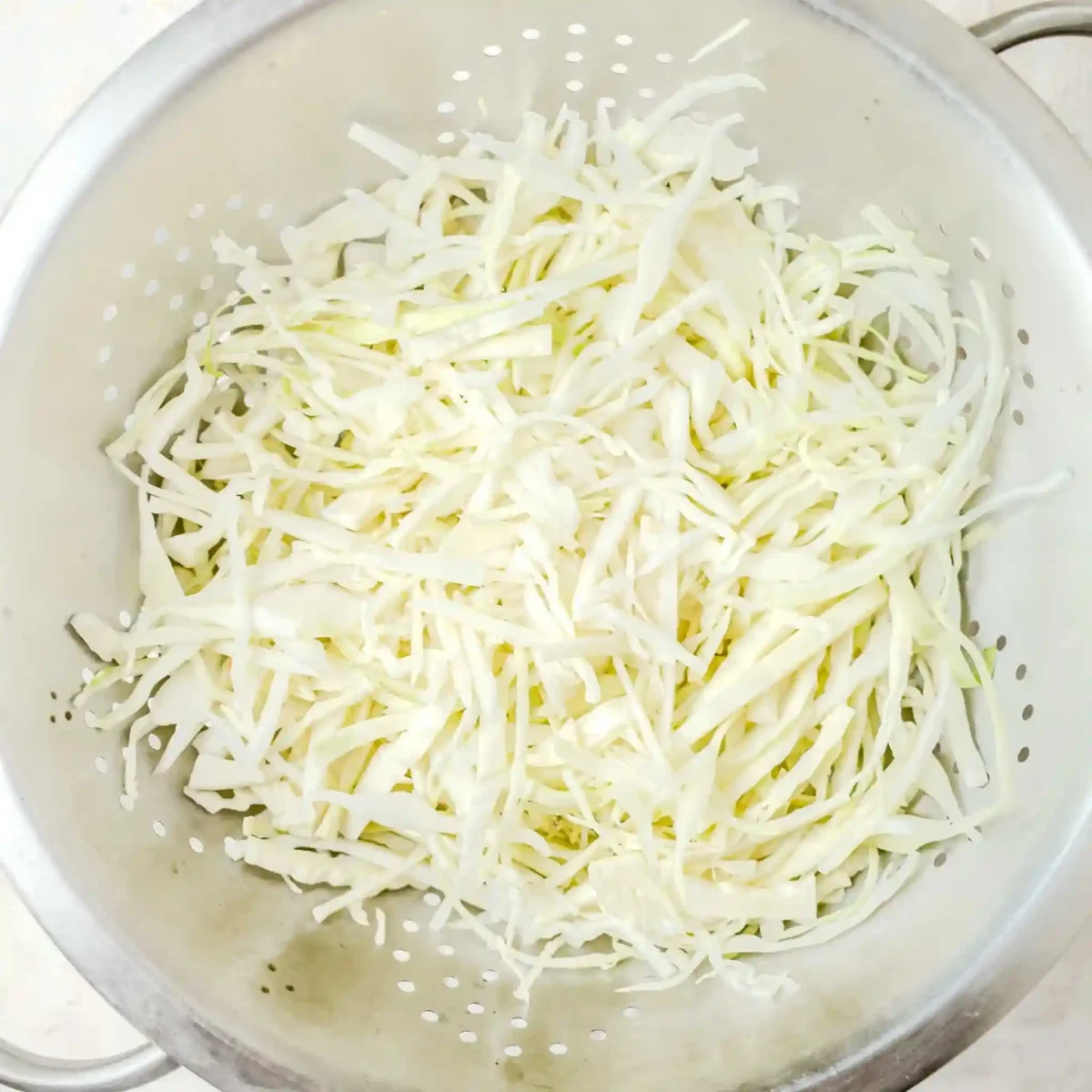
One: Cut the cabbage into fine strips, then wash thoroughly. While cabbages in the U.K. tend to be very clean, some vegetables have insects or dirt that must be washed off.
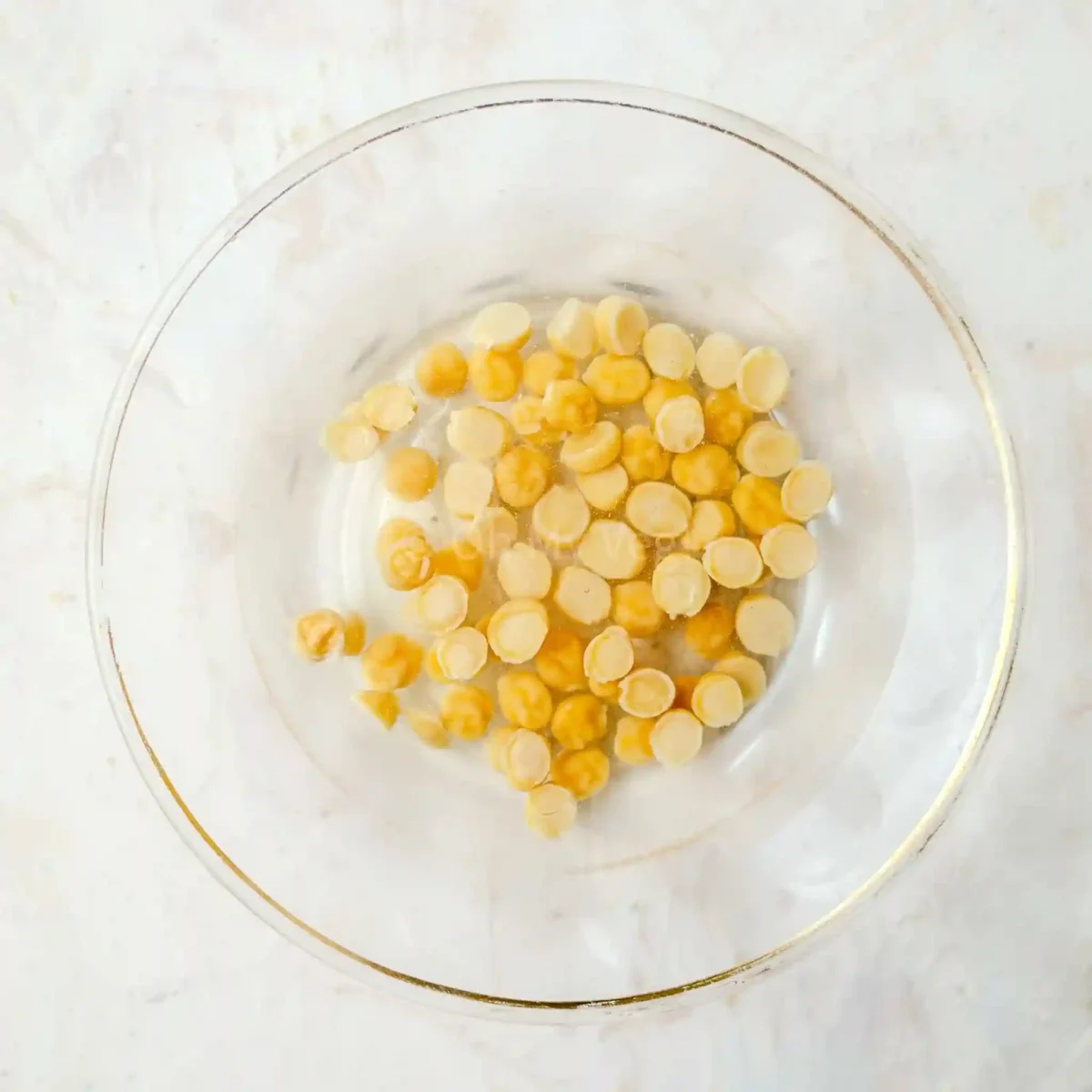
Two: Soak the chana dal in a small amount of hot water for at least 30 minutes. You can omit the chana dal if you don’t have the time.
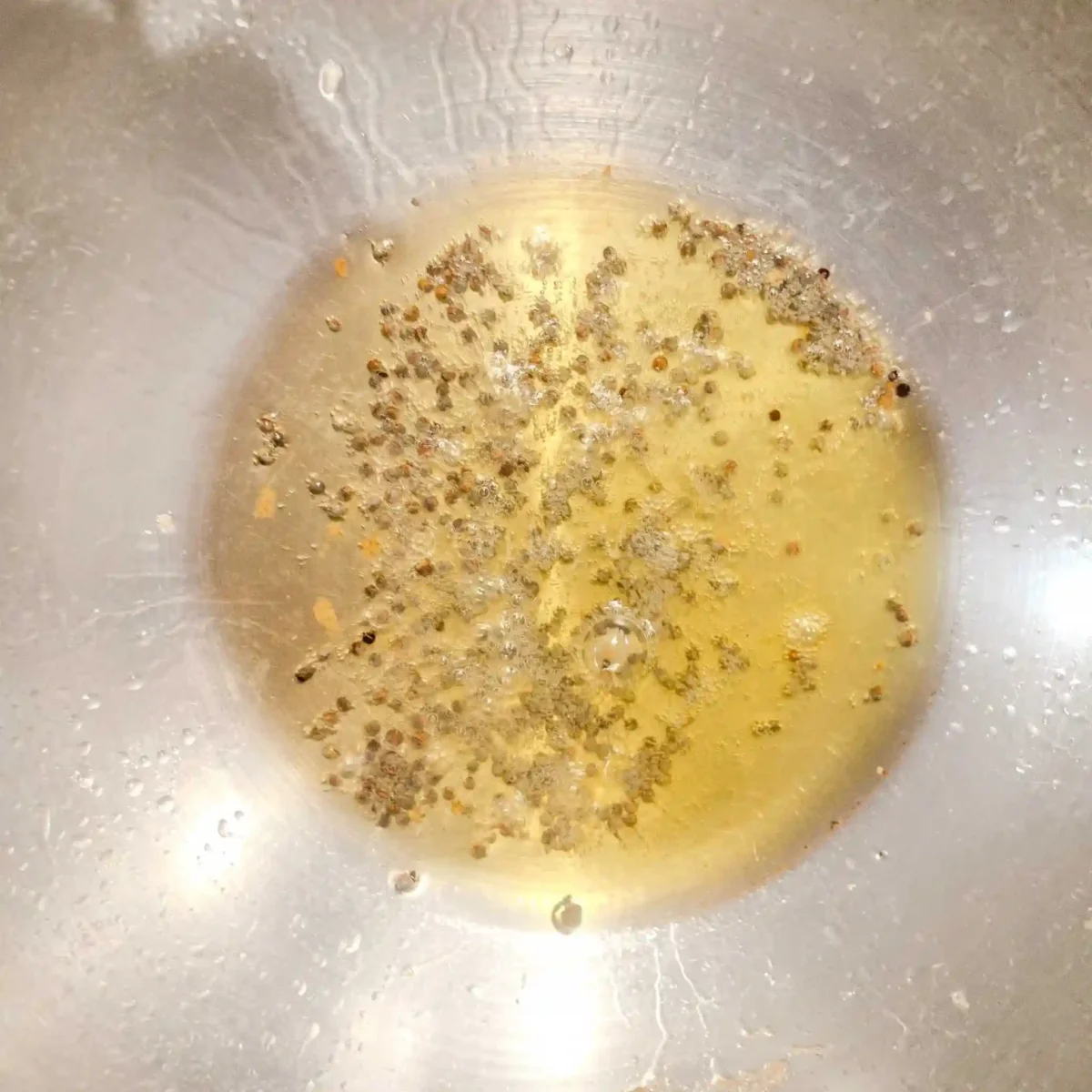
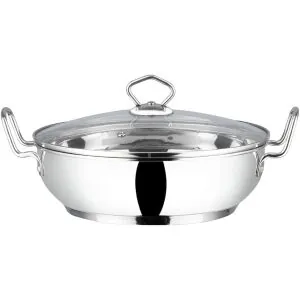
Three: Heat ghee in a large kadai or deep-sided saucepan. Once the ghee has melted, add the mustard seeds. They will pop and crackle.
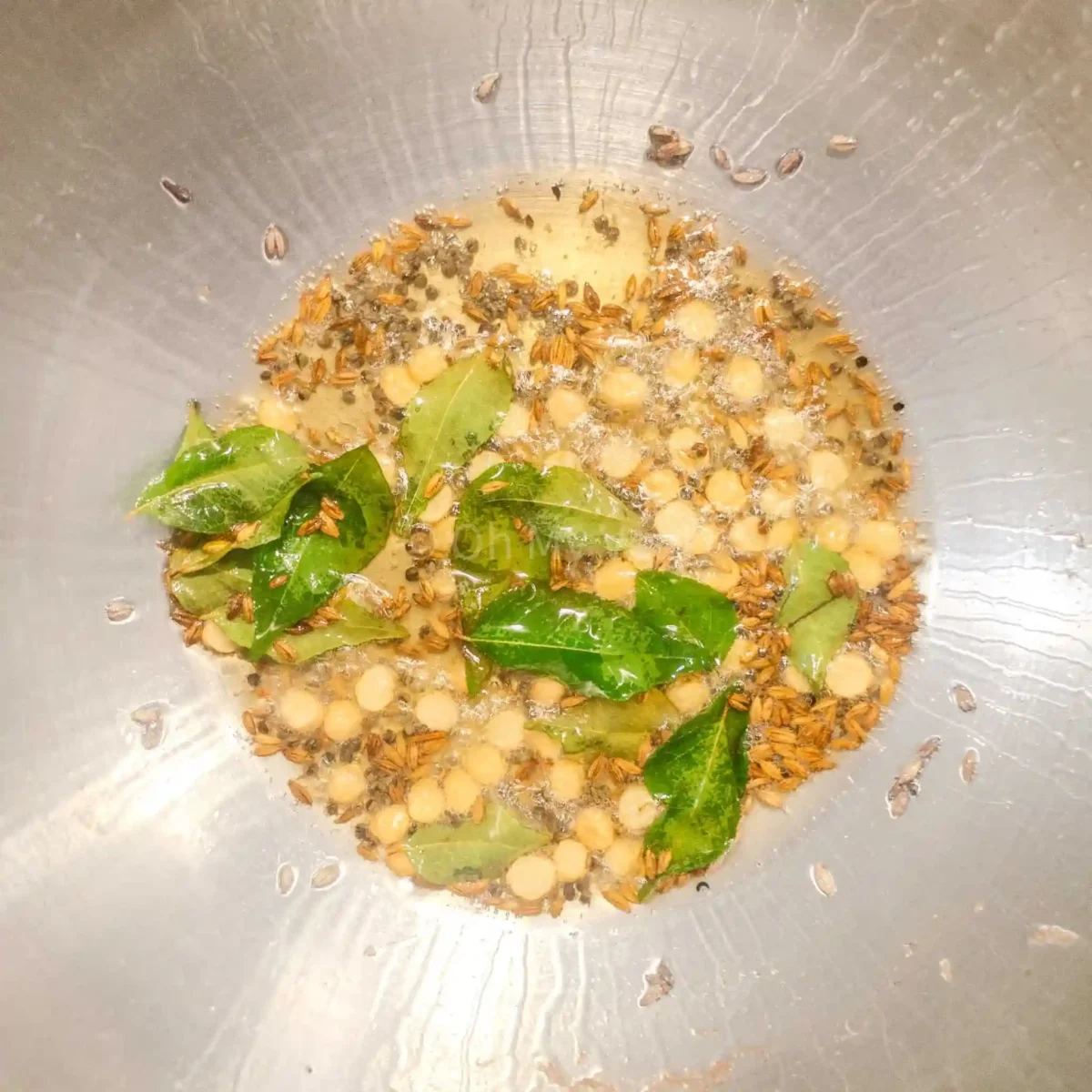
Four: Add the soaked (and drained) chana dal, cumin seeds, and curry leaves to the hot ghee. The curry leaves may splutter, so be careful of oil splashes.

Five: Next, add the urad dal, green chillies, and asafoetida. Fry for 30 seconds.
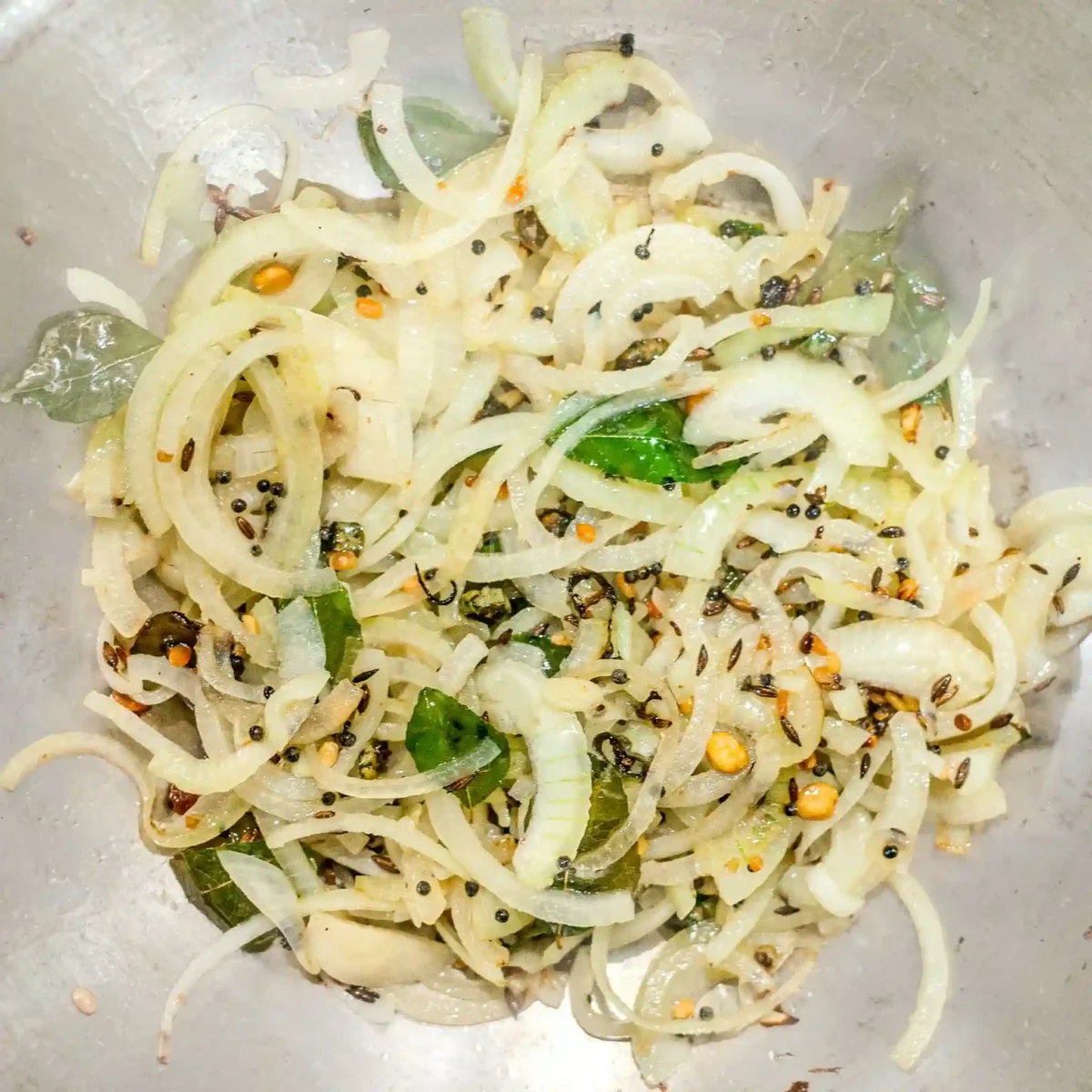
Six: Add your sliced onions to the pan and stir. Let the onions cook until softened.
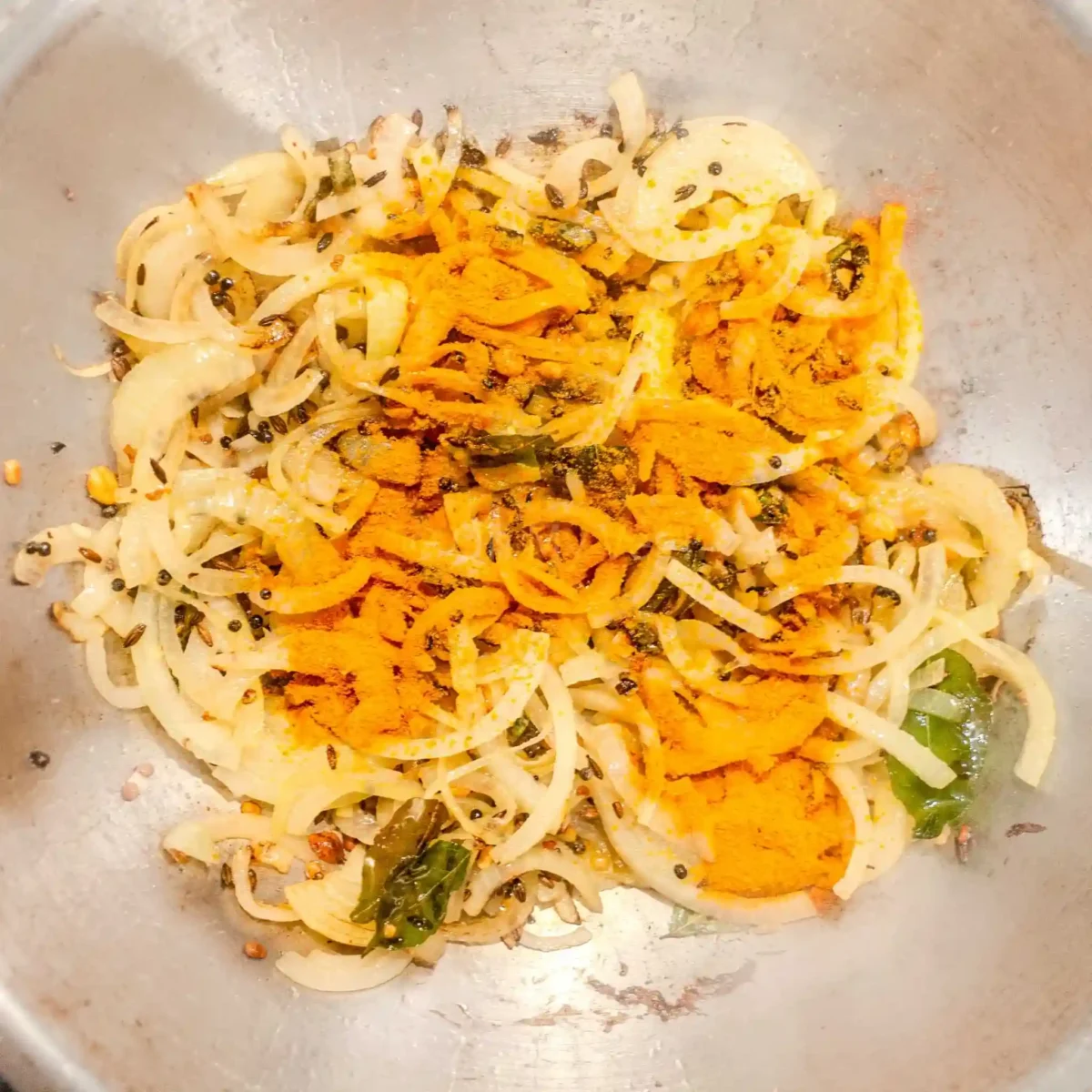
Seven: Once the onions have slightly softened, add your turmeric powder. Stir, but don’t fry — turmeric turns bitter if burnt.
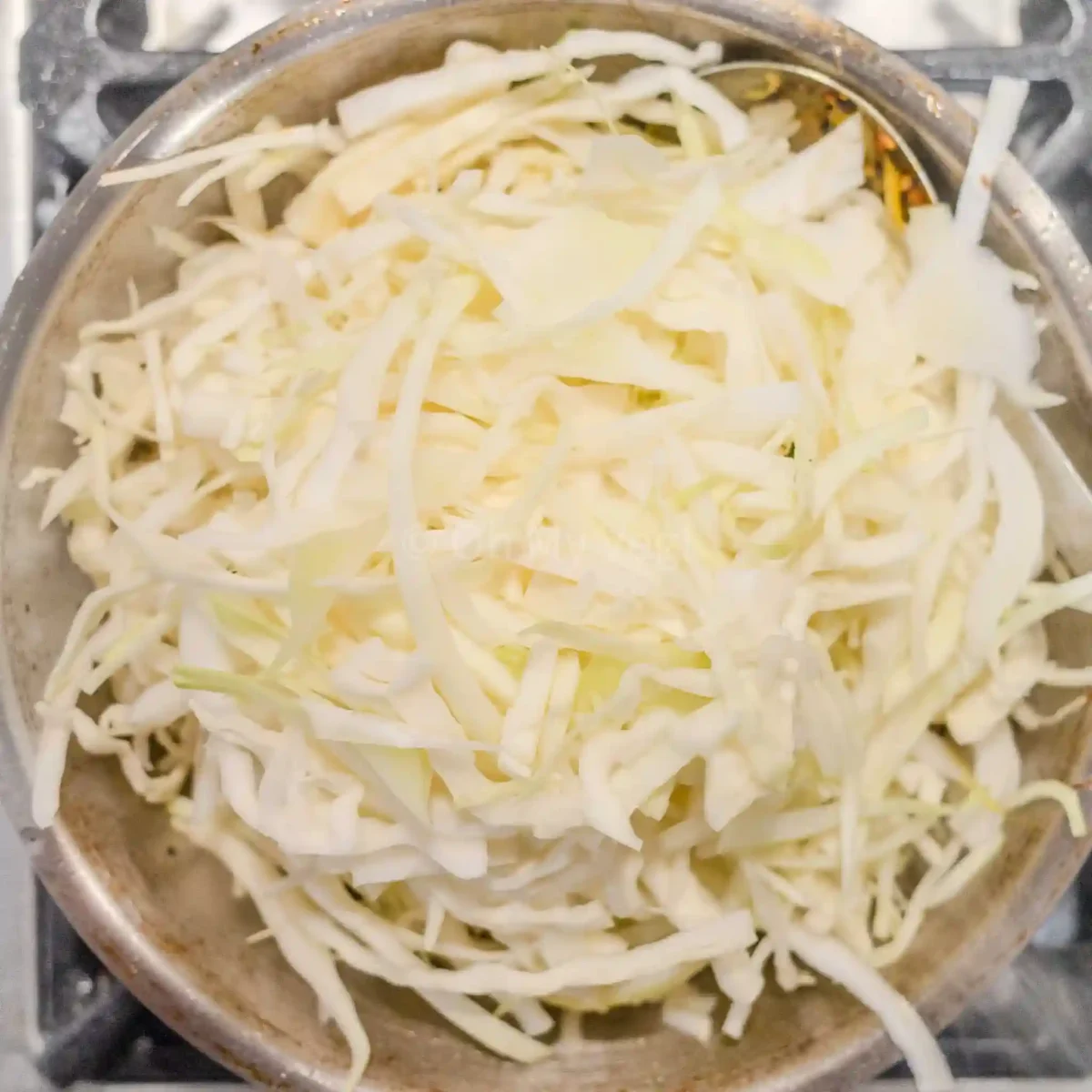
Eight: After adding the turmeric powder, immediately add the sliced, washed, and drained cabbage. Turn the flame to low-medium.
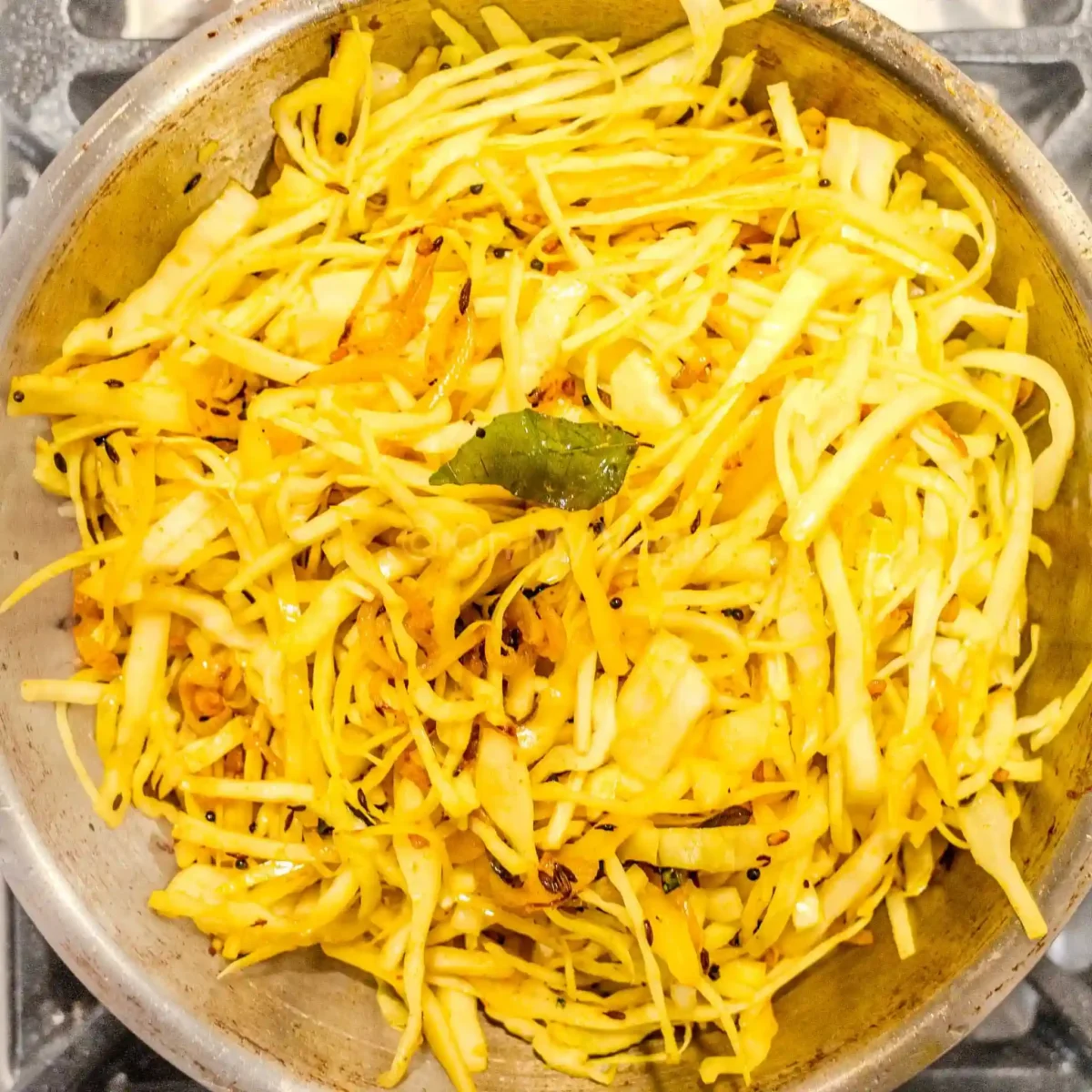
Nine: Stir and toss the cabbage until thoroughly coated with spices. Cover the pan and cook for 5 minutes. Season with salt to taste, then cover and cook for another 10 minutes. Stir every few minutes to prevent sticking.

Ten: After 15 minutes of gentle cooking, the cabbage should be soft with just a little bite. Top the bhaji with finely chopped fresh coriander (cilantro) and serve hot.
Remember, the complete recipe (with ingredient quantities and instructions) can be found at the bottom of this page. You can also print or save the recipe, adjust the servings, and more from there!

🧊 Storing, Freezing, and Reheating
🡆 Fridge: Cool, then portion into an airtight container. Refrigerate for up to three days.
🡆 Freezer: Cool, then transfer to a freezer-safe container or freezer bags. Label with the recipe name and best-before date to avoid future mix-ups. Freeze for up to three months. Freezing changes the texture of the cabbage, making it softer and “limper.” This can be fixed when reheating!
🡆 Reheat: On the stove for the best results. Either sprinkle with water and cover with a lid to steam (stir now and then to prevent the bottom burning), or stir-fry with a little extra oil. Microwaving is also an option. To reheat from frozen, defrost overnight first.
🡆 Leftovers: Leftover kobichi bhaji can be eaten as-is or “re-purposed” into a different meal. I’ve used it as a toastie filling, stuffed it into parathas, or mixed it with mashed potatoes to make crispy tikki patties.
🫓 Serving Suggestions: What to Serve with Kobichi Bhaji
Kobichi bhaji is a traditional and homely Maharashtrian dish enjoyed on busy weekdays.
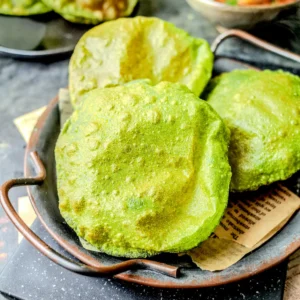
As such, it’s usually accompanied by equally humble basics: varan (garlic and cumin tempered toor dal), chapati (poli/roti), lemon wedges, and raw onion.
If I’m cooking for a large group, I like to elevate the recipe by serving it as a feast (or on a large thali).
I start with appetisers: crispy kanda bhaji and crunchy papad, accompanied by a selection of chutneys and sauces. I always include a basic raita, tamarind chutney, and coriander mint sauce, all of which are crowd-pleasers, but beyond that, it’s up to you.
Next, I chose another vegetable dish. To contrast the mild spicing and dry, stir-fried style of kobichi bhaji, I like fiery flower batata rassa or bharli vangi, both of which have thin, glossy, and flavour-packed sauces.
Round out the meal with a selection of sides: fresh chapati, steamed rice, healthy jwarichi bhakri (gluten-free), varan, and salad (I like methi gholana or a good old fashioned kachumber).
If you’ve tried this kobichi bhaji recipe, please drop a comment ✍️ or a star rating 🌟 below to help fellow readers! Additionally, if you have a question, please drop a comment, and I’ll do my best to answer ASAP.

Kobichi Bhaji

Ingredients
- 1 teaspoon chana dal
- 500 grams white cabbage
- 1 ½ tablespoons ghee or substitute for neutral oil
- ½ teaspoon black mustard seeds
- ½ teaspoon cumin seeds
- 1 sprig fresh curry leaves leaves separated from stem
- ½ teaspoon urad dal
- 3 green chillies I use jwala; finely sliced
- ⅛ teaspoon asafoetida (hing)
- 100 grams white onion finely sliced
- ½ teaspoon turmeric powder
- fine sea salt to taste
- 1 handful fresh coriander (cilantro) washed and finely chopped, to garnish, optional
Instructions
- Add 1 teaspoon chana dal to a small bowl, along with enough hot water to cover completely. Soak for at least 30 minutes (preferably a few hours).
- Take 500 grams white cabbage and cut it into fine strips. Transfer the cut cabbage to a large bowl and wash thoroughly. Drain and set aside.
- Place a large kadai on your stovetop over medium heat. Add 1 ½ tablespoons ghee and let it melt.
- Once the ghee is hot, add ½ teaspoon black mustard seeds. They will crackle and pop in the hot fat.
- Next, add your soaked and drained chana dal, along with ½ teaspoon cumin seeds and 1 sprig fresh curry leaves. The curry leaves will splutter, so be careful to avoid oil burns.
- Add ½ teaspoon urad dal, 3 green chillies (finely sliced), and ⅛ teaspoon asafoetida (hing). Fry for 30 seconds, stirring continually, until the cumin seeds are browned and everything smells aromatic.
- Add 100 grams white onion (sliced) to the kadai. Cook, stirring frequently, until the onions are translucent and softened.
- At this stage, add ½ teaspoon turmeric powder. Stir into the onions.
- Only let the turmeric cook for a second or so (it burns easily!) before adding your washed, drained, and sliced cabbage to the kadai. Stir well.
- Adjust the temperature to low and cook the kobichi bhaji, covered, for 5 minutes.
- Season with fine sea salt to taste. Stir and toss well.
- Cover and cook for a further 10 minutes. Check and stir the cabbage occasionally to prevent it sticking and burning. After 15 minutes of gentle cooking, the cabbage should be soft and buttery. Adjust seasonings to taste.
- Garnish the kobichi bhaji with 1 handful fresh coriander (cilantro), finely chopped. Serve hot.