
Wild Garlic Pesto (Ramsons)
Wondering what to do with a basket of wild garlic? Here’s your answer: oh-so-garlicky, zesty, pungent wild garlic pesto. It’s a divine spring-time addition to pastas, pizzas, salads, and much more.
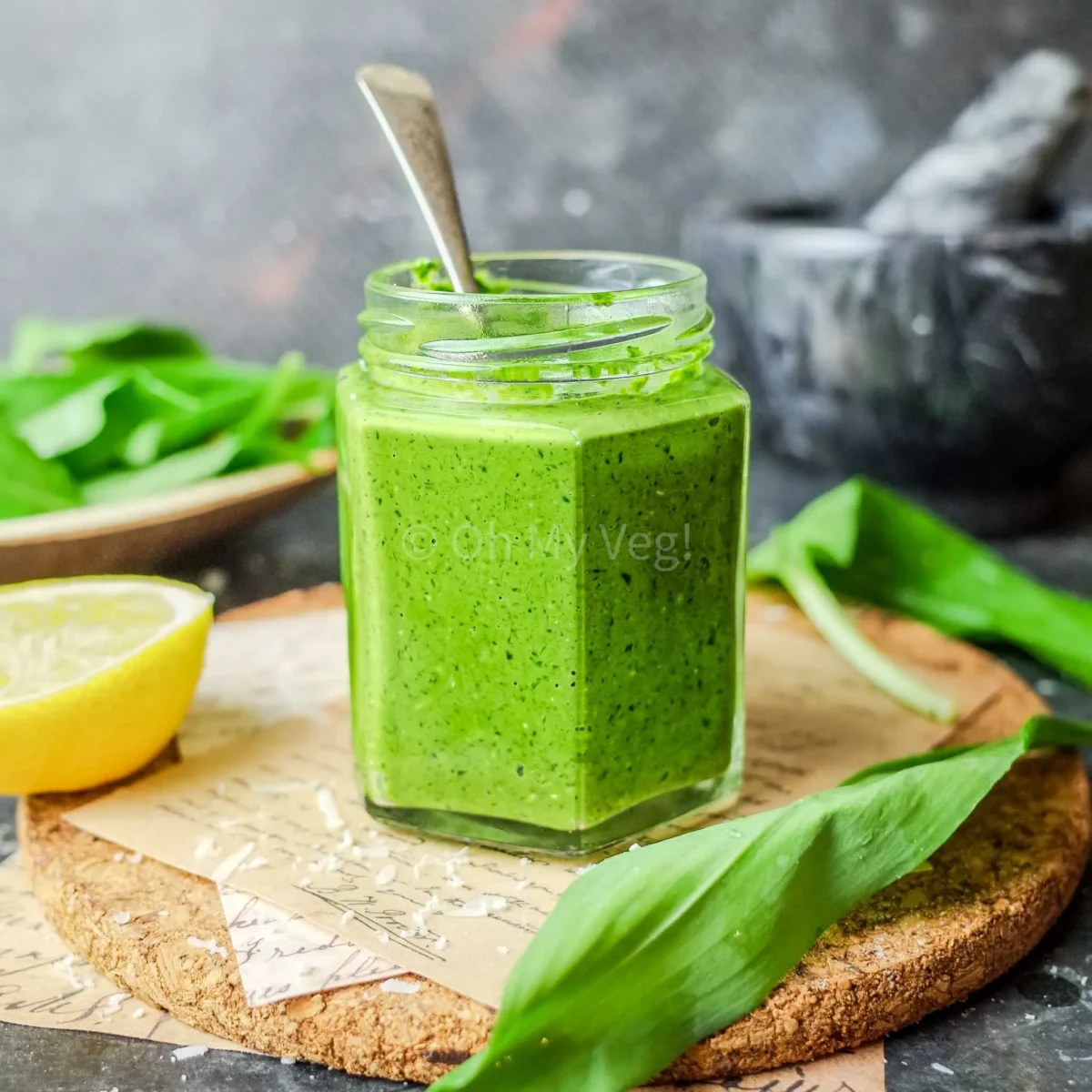
If you ask me, there’s nothing better than free food (which is essentially the definition of foraging)! We often forget it, but the Earth is bountiful and generous beyond belief.
With the advent of Spring, everything is coming to life again: cherry blossoms line the streets, plants grow new buds, and bulbs pop their heads out of the ground. It’s a glorious time of year, made even better by abundant natural produce — nettles, sorrel, elderflower (try my lime and elderflower cheesecake or strawberry elderflower galette), dandelions, and wild garlic.
Have you ever walked by a stream or babbling brook and caught a whiff of garlic on the wind? That’s wild garlic!
It’s a fabulous “beginner’s forage,” as it’s easy to identify, pick, and cook with. I’ve made wild garlic falafels, wild garlic butter, wild garlic pakora … but the recipe I keep returning to is wild garlic pesto, which is probably the most popular recipe using wild garlic.
Made with just five ingredients and five minutes of hands-on “cooking” time (it’s really a no-cook recipe), wild garlic pesto is a bright, vibrant, fresh sauce that’s guaranteed to elevate any other dish. What can I say — it adds a certain rustic je ne sais quoi!
❤️ Why You’ll Love This Recipe
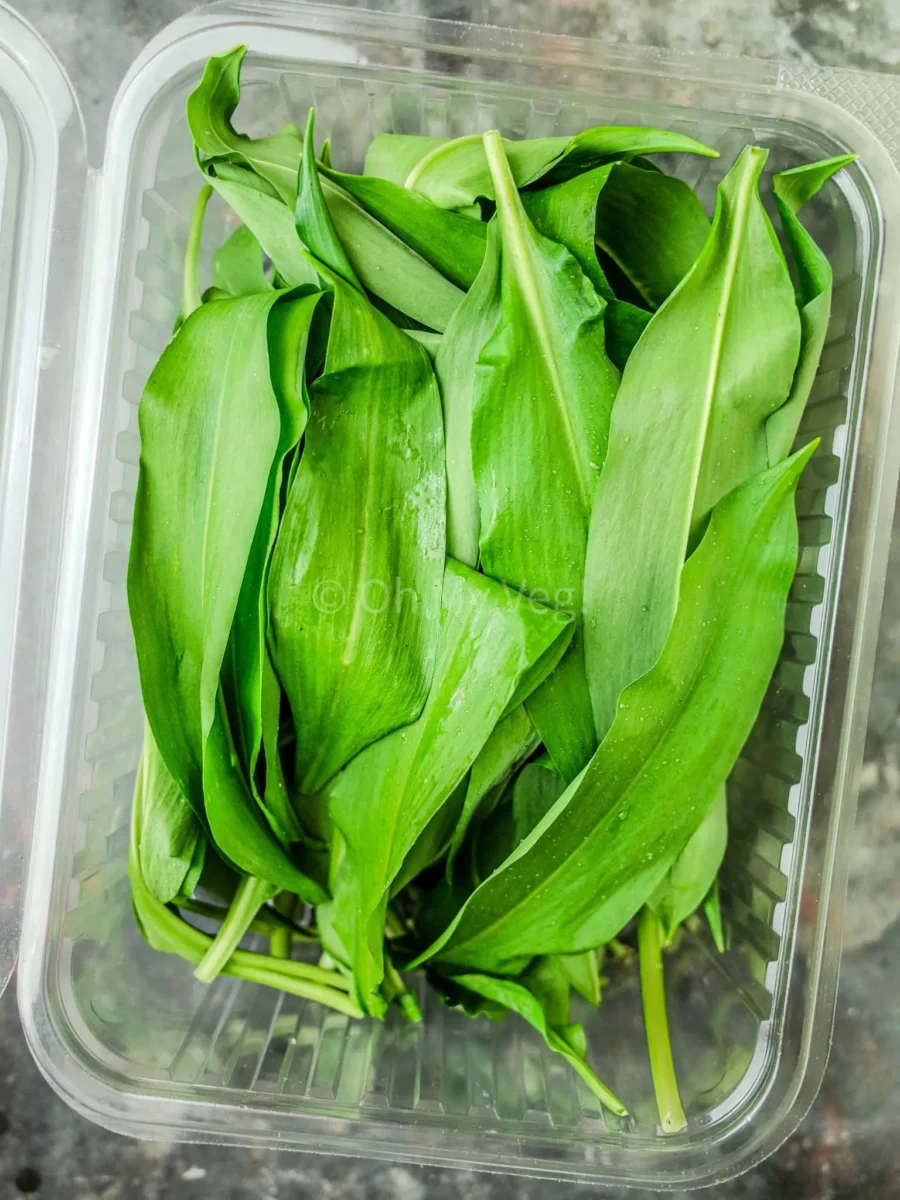
❓ What is Wild Garlic?
Wild garlic is a member of the allium family, much like chives, onions, and leeks.
As a herb, the plant is native to Europe and Asia, while a similar species, ramsons, grows in North America.
Since wild garlic grows from bulbs underground, it’s dormant for much of the year. Come spring, though, and the tasty greens carpet woodland walks.
All parts of wild garlic are edible, from the bulbs to the long green leaves and white star-shaped flowers. They boast a pungent flavour somewhere between common garlic and onions, although the taste mellows out to a mild, delicate bite once cooked.
🌳 How to Forage Wild Garlic
Wild garlic is in season from March to May. The best time to forage for wild garlic is usually between mid-March and early April, while the leaves are fresh and mild. Later in the season, the plant begins flowering, and while the flowers are edible, the leaves turn bitter.
The tasty plant loves shaded, damp ground, so you’ll often find it growing prolifically near streams or riverbanks. Foraging for wild garlic is also a great excuse to explore the U.K.’s ancient woodlands; the RHS suggests that the presence of wild garlic in forested areas indicates a habitat dating to the 17th century or earlier!
It’s legal to forage wild garlic on public land. If you’re on private land, you should always ask the landowner before picking any crops. It’s also worth noting that uprooting wild garlic bulbs is illegal (unless on your own land), as it won’t re-grow.
As with all foraging, be careful not to pick lookalikes — Lily of the valley and bluebells, both of which often grow nearby, are highly poisonous.
The best way to identify wild garlic is through its smell. The leaves emit a powerful garlicky aroma when crushed between your fingers.
Furthermore, I always suggest foraging with respect for the natural environment. That means you should only pick 1-2 leaves from each plant, never dig up the bulbs, and only take as much as you will actually use.
When you get home, give your pickings a good inspection to root out any dangerous lookalikes that you may have carried home with you.
IF YOU CAN’T FORAGE WILD GARLIC, don’t despair! Head to your local farmers’ markets and you may be lucky enough to find some for sale in-season.
You can also sow wild garlic seeds indoors between August and September, before harvesting the following year. Growing wild garlic at home is fantastic if you don’t have any nearby — but I advise planting in containers, as they spread rapidly and can take over your entire garden!
🌿 Ingredient Notes + Substitutions
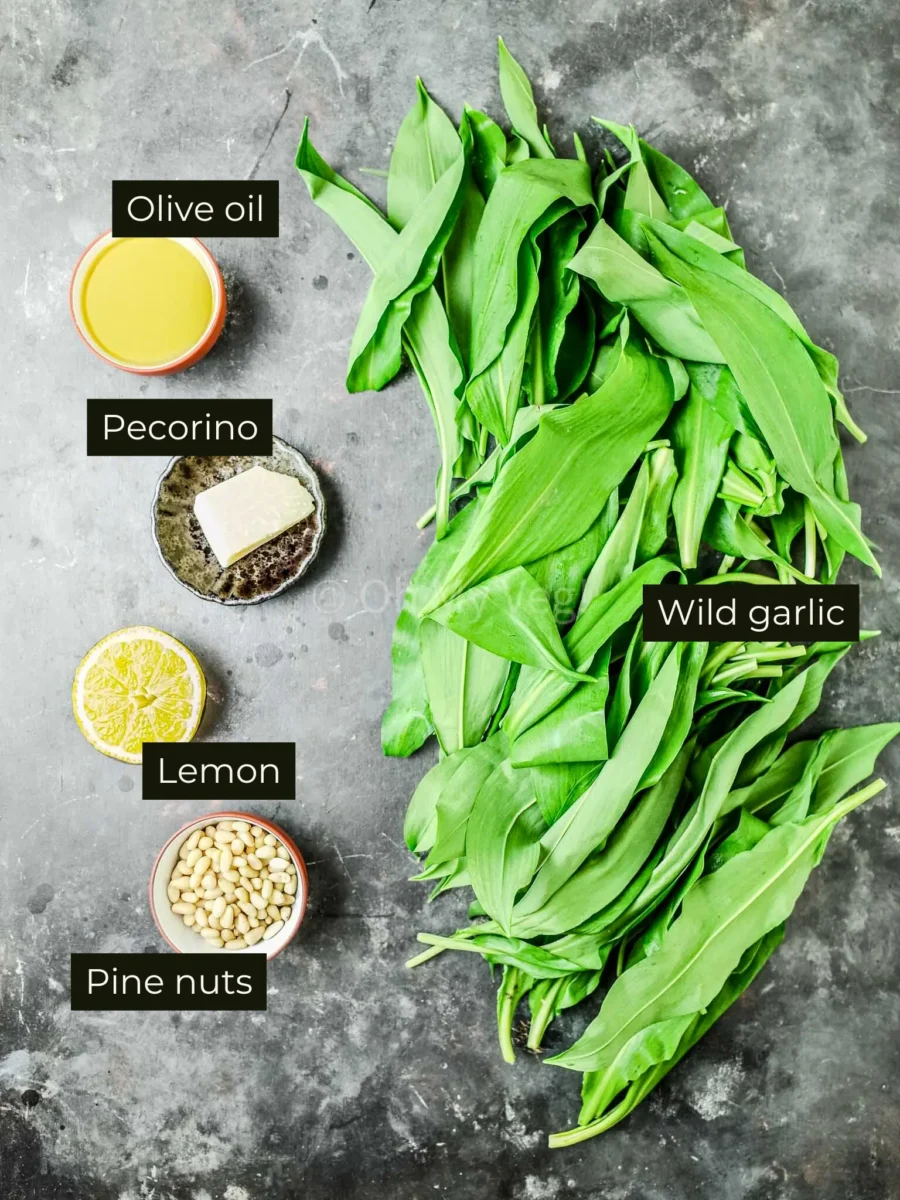
Like a classic basil pesto, this wild garlic version needs just five ingredients:
- Wild garlic (known as ramps or ramsons in the U.S.) lends an intensely garlicky, pungent, and peppery flavour to this pesto. It also turns the sauce a stunningly vibrant green and eliminates the need to add any garlic bulbs.
- Olive oil brings the pesto together and adds distinctive grassy, fruity flavour notes. Use the best quality olive oil you can afford, preferably extra virgin.
- Pecorino is an Italian hard cheese with a nutty, salty flavour. I use pecorino rather than Parmesan; both are customarily used in pesto (sometimes together), but the former is easier to find in vegetarian form.
Traditionally, both pecorino and Parmesan are made with animal-based rennet (the lining of calves’ stomachs). Luckily, you can now find hard cheese made with microbial rennet, making it suitable for vegetarians.
If in doubt, check the cheese label; it should list “suitable for vegetarians.” I’ve learnt that any cheese labelled DOP (Parmigiano Reggiano DOP, Pecorino Romano DOP, Pecorino Sardo DOP) must be made with traditional, authentic methods — AKA, non-vegetarian. - Lemon brightens the wild garlic pesto with a zesty, fresh acidity. While lemon is optional in other pesto recipes, I think it’s crucial for balancing the pungency of wild garlic.
- Pine nuts are creamy, buttery, and mild. You can use nuts of your choice, such as hazelnuts, pistachios, almonds, or cashews. Alternatively, make a nut-free pesto or take a leaf out of my pumpkin seed pesto recipe and replace nuts with seeds.
You’ll also need a good dose of fine sea salt, which acts as a flavour booster. How much you’ll need to add depends on the saltiness of your pecorino.
Adapting for Allergies and Dietary Requirements
This wild garlic pesto recipe is gluten-free, soy-free, and vegetarian.
To make it vegan, replace pecorino with nutritional yeast. The ingredient (often called “nooch”) is a mainstay in vegan kitchens for its deeply savoury, umami-packed, cheesy flavour.
You could also use vegan parmesan — I’ve used and enjoyed brands such as Violife and Follow Your Heart.
To make wild garlic pesto nut-free, replace pine nuts with sunflower or pumpkin seeds.
👩🏻🍳 How to Make Wild Garlic Pesto (Step-by-Step Photos)
My wild garlic pesto is an easy, no-cook recipe. You can go from a basket of foraged greens to a jar of pesto in as little as 5 minutes.
Talk about fast!
The process is remarkably similar to a standard pesto al basilico, with just a few changes. AKA, easy-peasy.
If you like to have a visual guide while cooking, I’ve made these step-by-step process photos straight from my kitchen that you can follow along with:
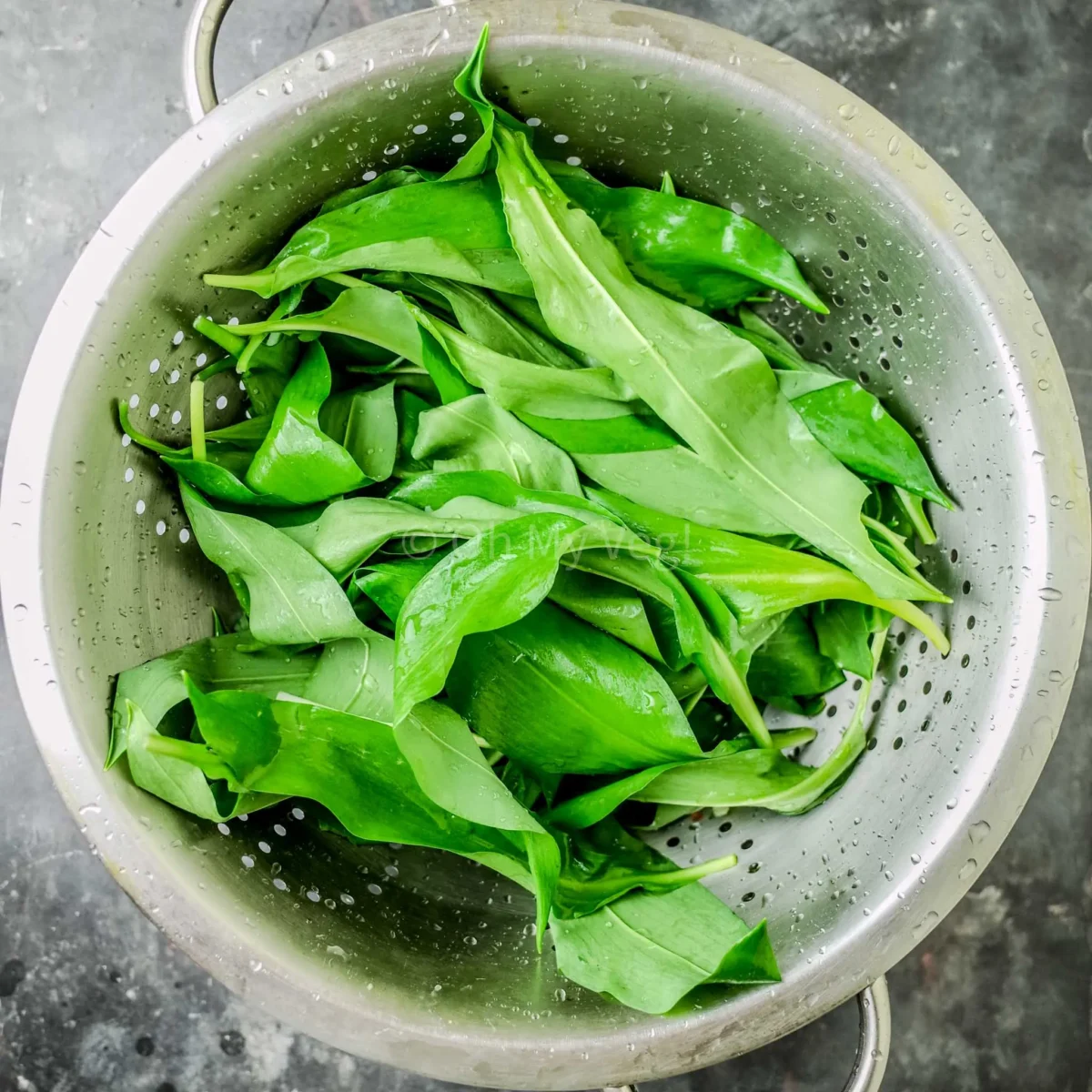
One: Thoroughly wash your wild garlic leaves.
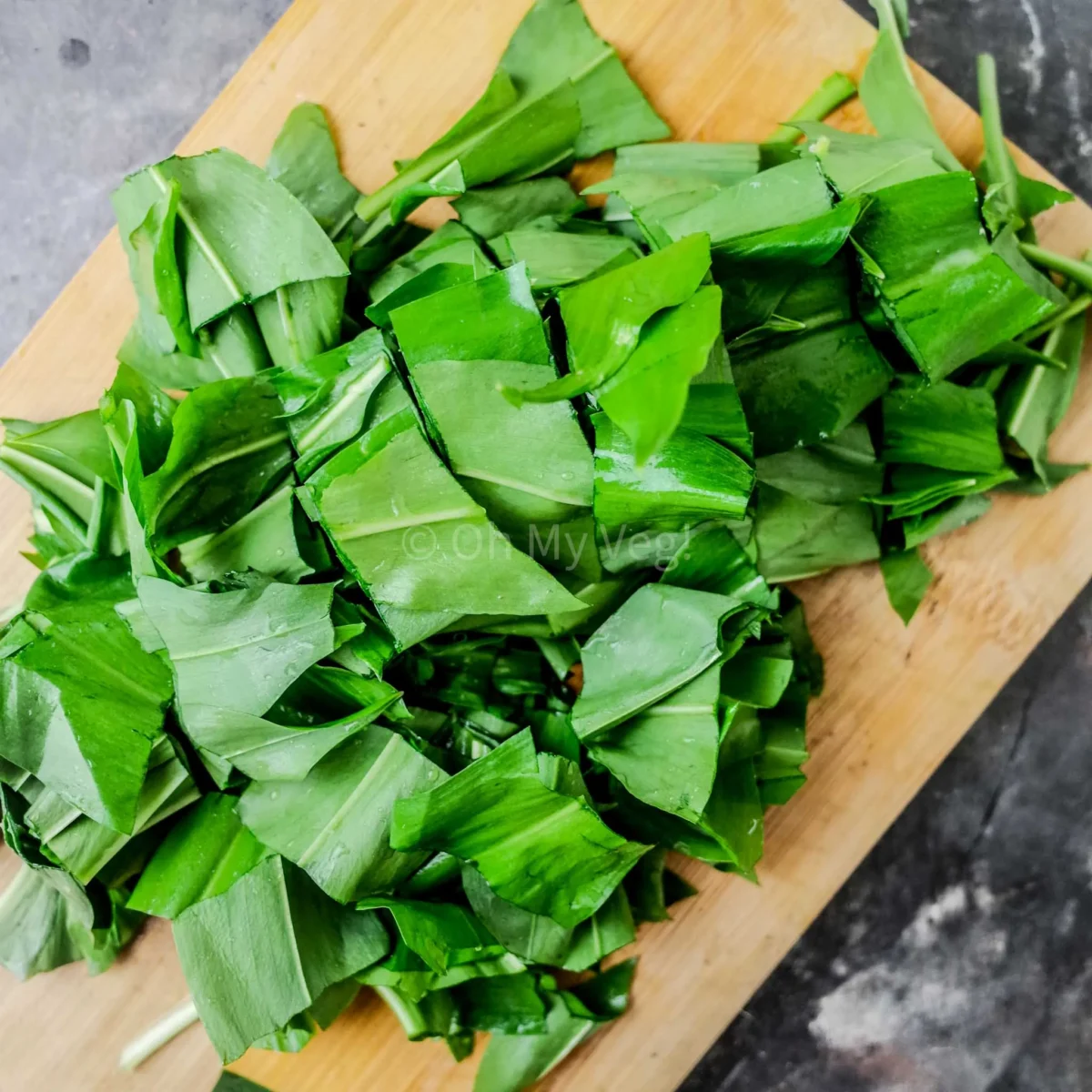
Two: Roughly chop the leaves (it makes the pesto easier to blend!).
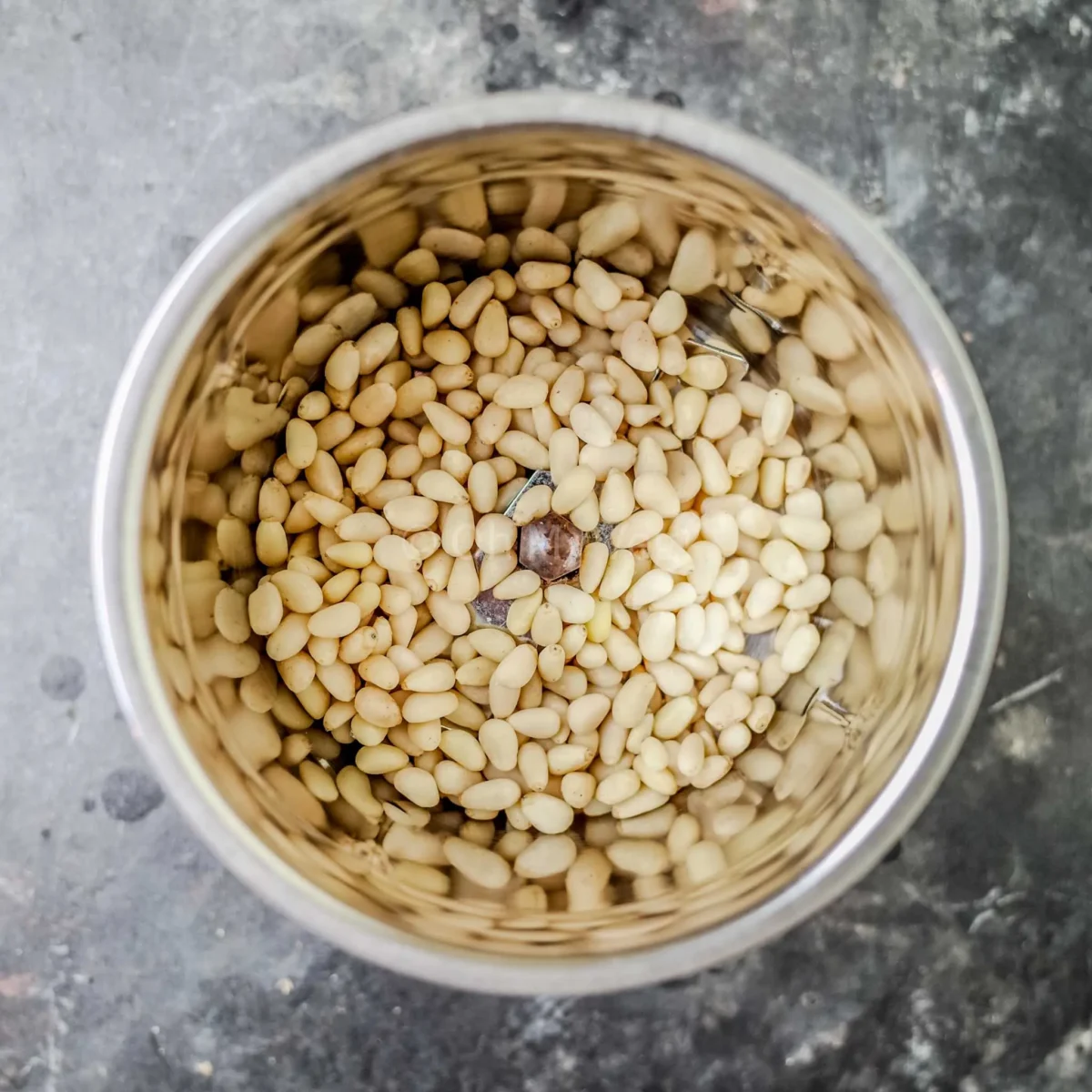
Three: Add pine nuts to a small food processor.
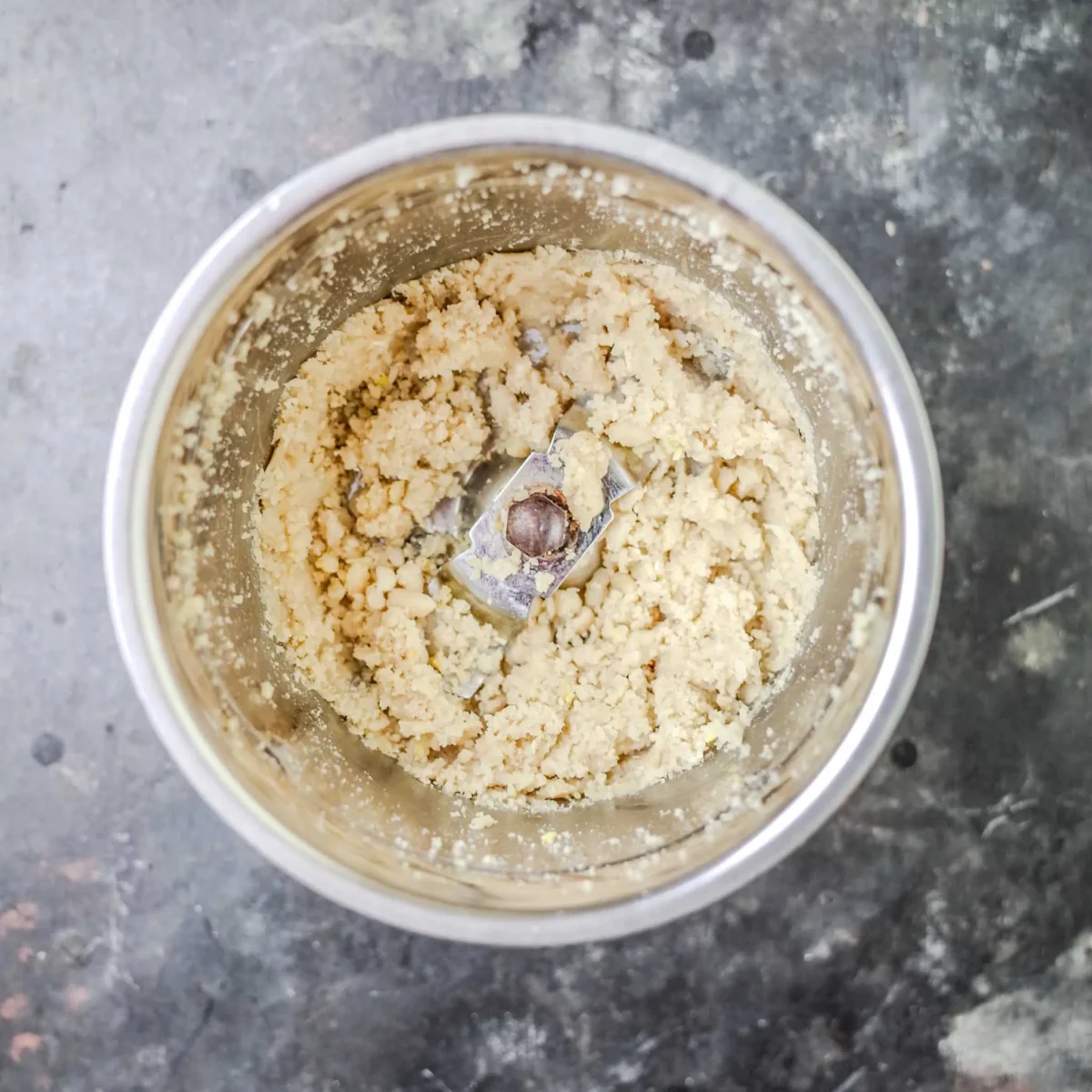
Four: Blend the pine nuts to a coarse, chunky paste.
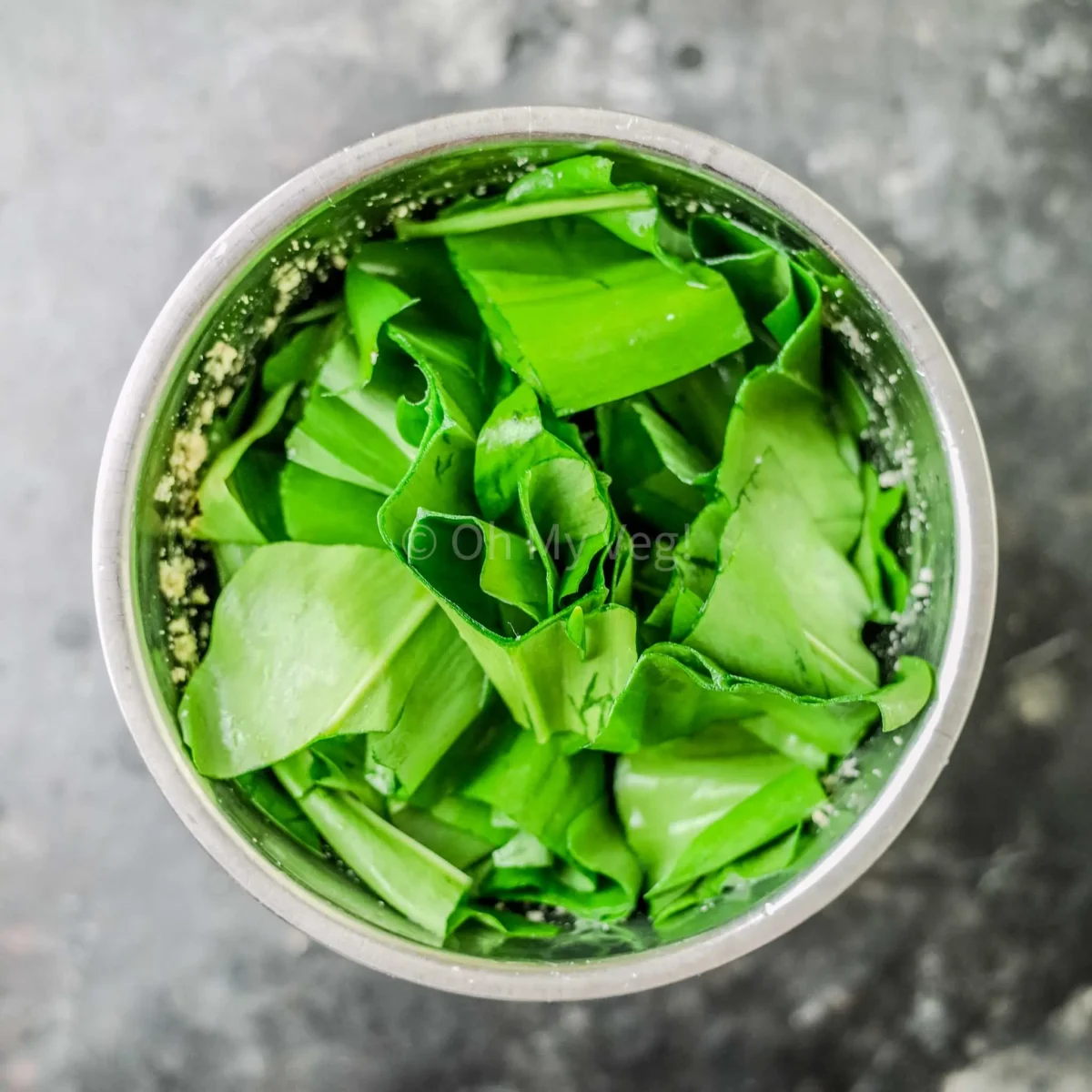
Five: Add the wild garlic leaves to your food processor.
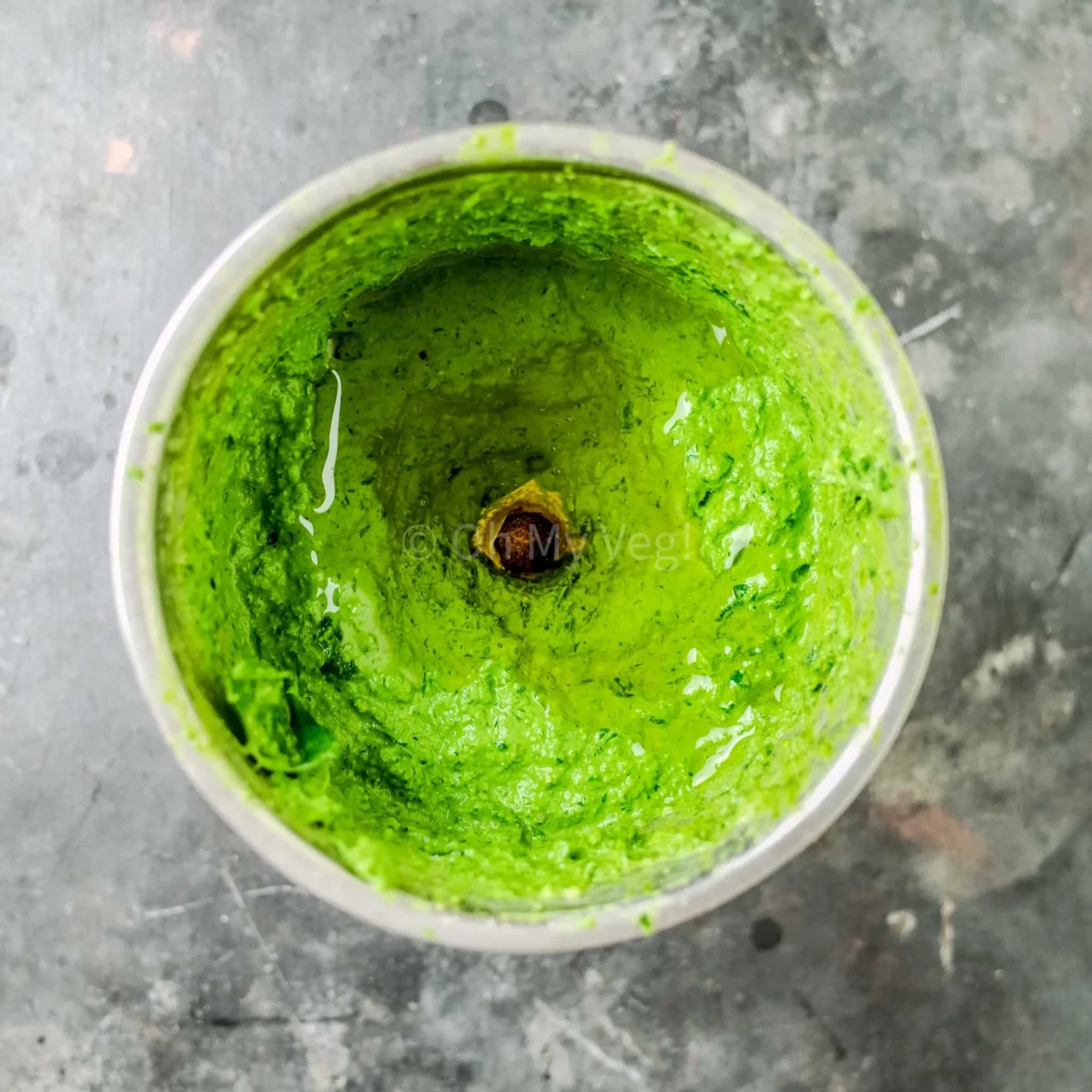
Six: Pulse in short bursts to finely chop the wild garlic. Once you have a paste, add extra virgin olive oil.
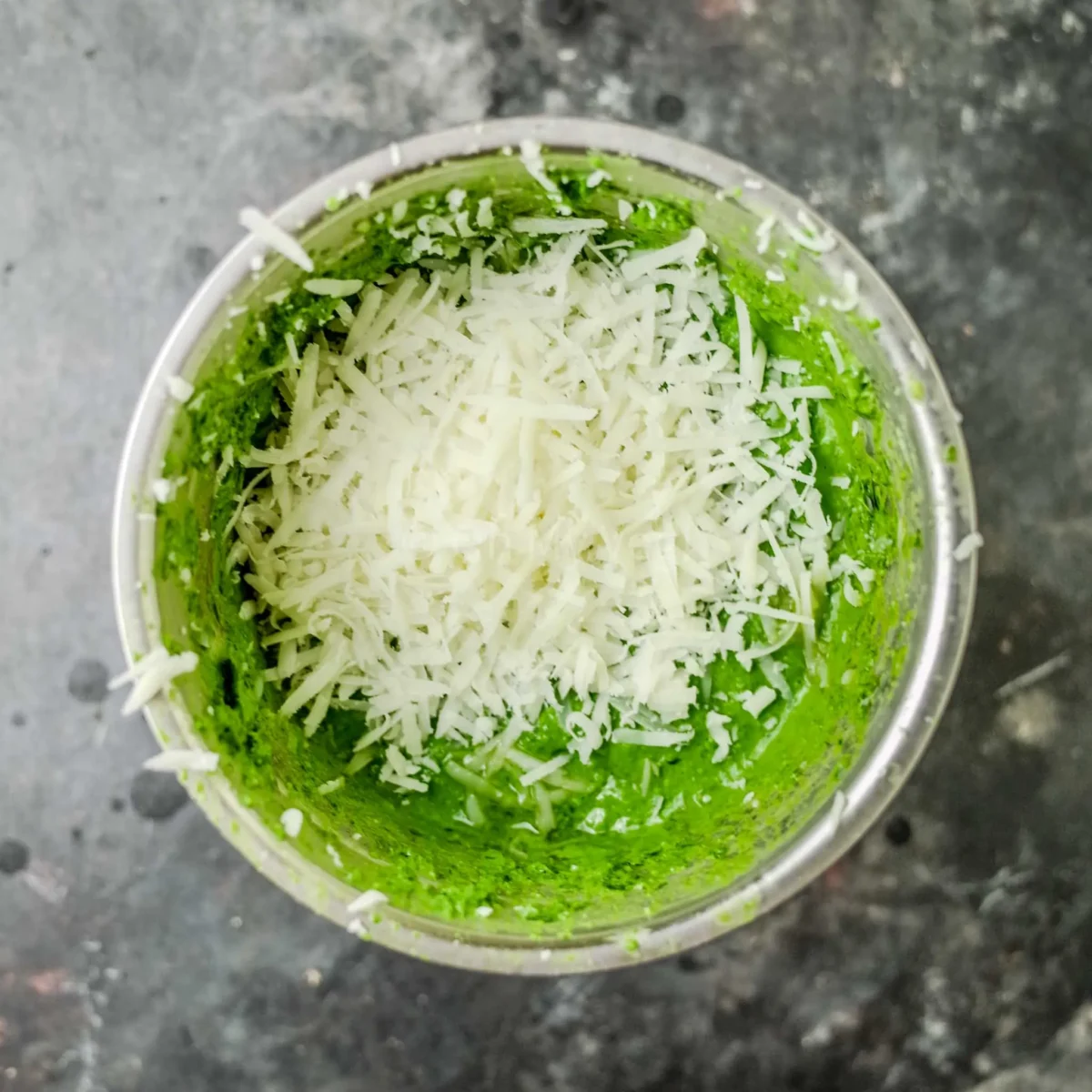
Seven: Pulse the sauce again to incorporate the olive oil. Next, grate vegetarian pecorino into the pesto. Stir through.
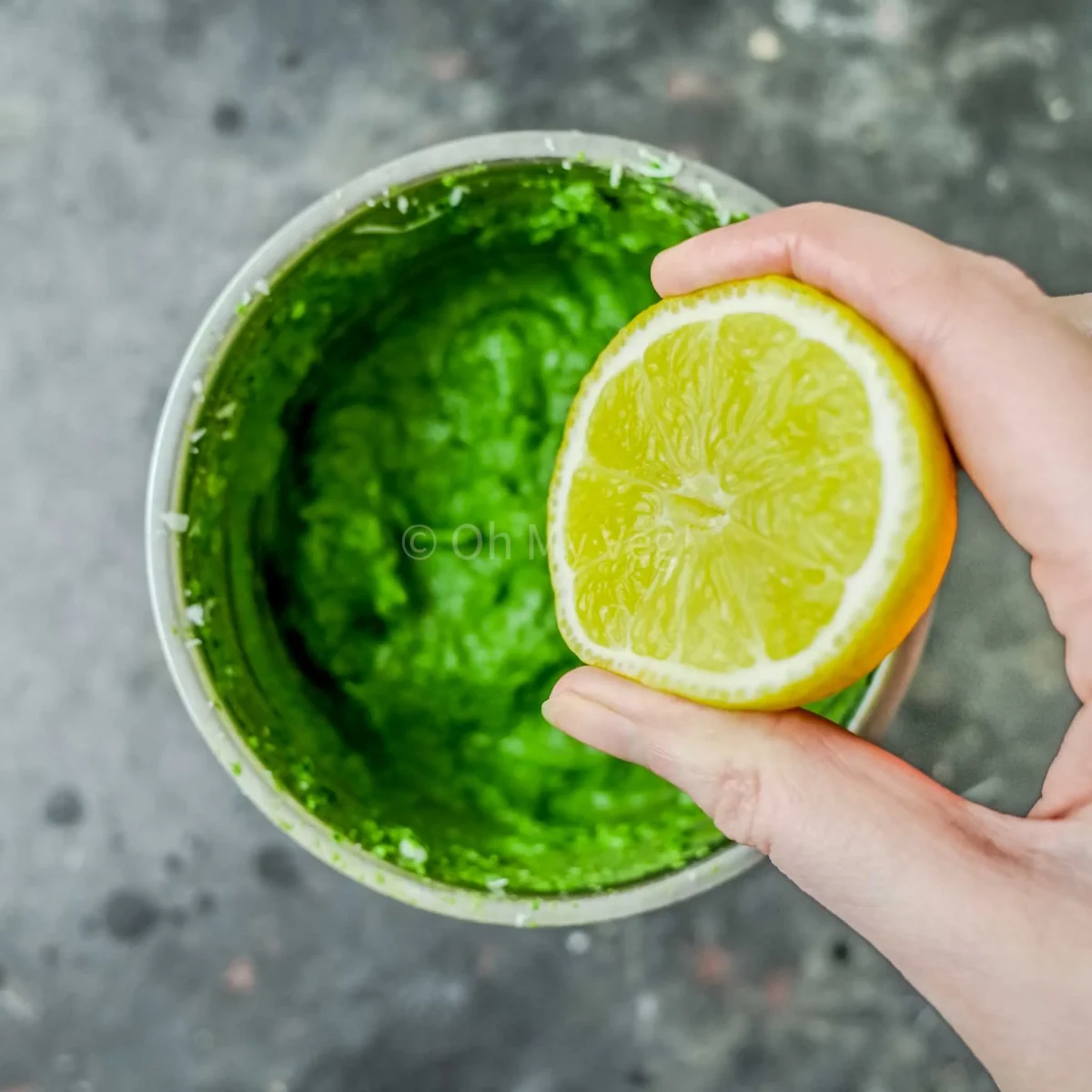
Eight: Finish your wild garlic pesto with a good squeeze of lemon. Check for seasonings, and add fine sea salt, more olive oil, or more lemon juice as needed.
Remember, the complete recipe (with ingredient quantities and instructions) can be found at the bottom of this page. You can also print or save the recipe, adjust the servings, and more from there!
What Tools You’ll Need to Make Wild Garlic Pesto
My recipe is geared toward using a food processor — it yields the best results — but that’s hardly the only way to make pesto.
If you don’t have a food processor, you can try these other tools:
- Mortar and pestle: This is the traditional Italian way. It’s very economical, yet time-consuming (and you’ll need both endurance and strength!). Tastes fantastic.
- Knife and chopping board. The most accessible, because everyone has these! If you like a more rustic pesto (and have time to spare … I’m talking about 30 minutes), this is the option for you.
- Mezzaluna. If you haven’t heard of this … don’t worry. A mezzaluna, also called an Italian rocking knife, is a specialised tool that makes the “knife and board” method a little faster, and creates a slightly better chop.
- Immersion blender. Quick, easy. Only works with decent-sized batches.
- Blender. Efficient and fast. However, if your blender is prone to overheating, it can cause the pesto to turn bitter and oxidise.
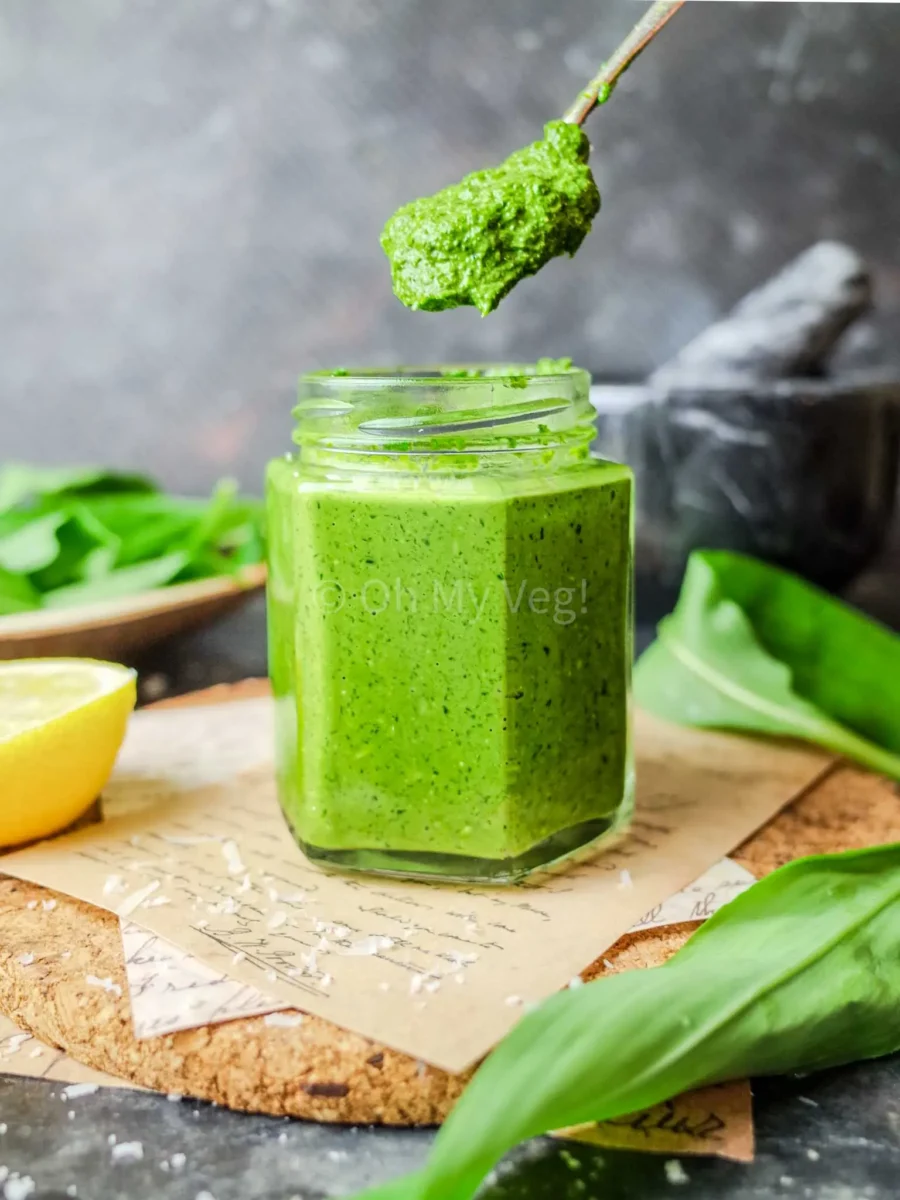
🫙 Storing Wild Garlic Pesto
Wild garlic is a fleeting joy. In the modern world, we’re so used to being able to buy produce no matter the season — not so with foraged foods like wild garlic.
Fortunately, your wild garlic pesto can last you months — well into summer — with the right storage. Here’s two options:
- Fridge: Add a layer of olive oil to the top of the wild garlic pesto to prevent it from oxidising (turning black). Store in a sealed jar for up to two weeks.
- Freezer: Portion the wild garlic pesto into an ice cube tray. Freeze until solid, then pop them out and store them in a freezer bag for up to four months. Label your bag with the recipe name and date.
Personally, I like to make this recipe in bulk (which is shockingly easy: click the “2x” or “3x” button to scale up, or input your exact portion requirement in the recipe card).
That way, I can use some immediately, store some for next week, and keep convenient, pre-portioned servings in the freezer for whenever the family requests some.
🍕 Recipes Using Wild Garlic Pesto
There are SO many ways to use a jar of wild garlic pesto! It’s a truly versatile condiment you’ll never tire of. Here are a few of my favourite ideas:
- Salad dressing: Adjust the consistency of the wild garlic pesto by adding more lemon juice and olive oil, then pour over your favourite salads. My choice would be an Italian-inspired arugula and spinach affair.
- Pesto pasta might be the most obvious option! Why not try this orzo pasta salad recipe created by Cooking Gorgeous, featuring a wild garlic pesto dressing? Swapping out the basil pesto in my spaghetti al pesto or caprese-inspired orzo pesto pasta salad for wild garlic pesto is also straightforward.
- Bread: I’m thinking a wild garlic pesto focaccia, or tear-and-share Bulgarian pitka (created by Cooking Gorgeous) bread stuffed with wild garlic pesto-infused butter.
- Soup: Drizzle a spoonful over my roasted garlic tomato soup for a classic flavour combination, or add a touch more vibrancy to my quintessentially British leek and celery soup.
- Pizza: Add a touch more elegance to basic margherita or cacio e pepe pizza.
- Sandwiches: Use the wild garlic pesto as a spread for wraps, toast, tea sandwiches, or pesto caprese sandwiches.
- Dip: Whether it’s pita, crudites, garlic dough balls, or mushroom arancini … everything tastes better dipped in wild garlic pesto!
If you’ve tried this wild garlic pesto recipe, please drop a comment ✍️ or a star rating 🌟 below to help fellow readers! If you have a question about this recipe, please leave a comment so I can answer you ASAP.
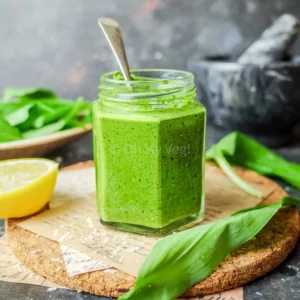
Wild Garlic Pesto

Ingredients
- 100 grams wild garlic
- 40 grams pine nuts
- 4 tablespoons extra virgin olive oil
- 40 grams vegetarian pecorino
- 1 teaspoon lemon juice or to taste
- fine sea salt to taste
Instructions
- Thoroughly wash 100 grams wild garlic. Submerge the leaves in a bowl of cool water, swish around, drain, and repeat as necessary.
- Roughly chop the leaves.
- Add 40 grams pine nuts to a food processor. Blend to a coarse, chunky paste.
- Add the wild garlic leaves to the food processor. Pulse a few times, until the wild garlic is finely chopped/blended.
- Pour in 4 tablespoons extra virgin olive oil. Blend for a few seconds, just to incorporate the oil.
- Next, finely grate 40 grams vegetarian pecorino into the pesto. Stir-in.
- Finish the pesto with 1 teaspoon lemon juice, or to taste. Taste and adjust as necessary — this is a great time to season with fine sea salt to taste.
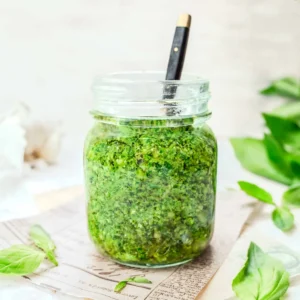
- Transfer the wild garlic pesto to a small glass jar. Refrigerate for up to two weeks (or freeze in ice cube trays).



Great, so fresh tasting and easy enough to make after a day out. Consistency was perfect, maybe next time I’ll try it with almonds instead of pine nuts for a bit of variation.
Fantastic feedback, Lewis, thank you! If you’d like to use almonds, I recommend roasting/toasting them first to bring out more depth of flavour.
Thank you, that’s a good idea! Really was delicious, going to try the garlic butter next, just waiting for a day off to pick some more leaves.
Wish I’d picked more last time I was out, it’s a huge patch so not making that mistake again. Planning to freeze some butter as well, making the most of it while it lasts 👍
Wild garlic is just coming to the end of its season here, so you’ll have to be speedy! It’s always a good idea to pick slightly more than you think you’ll need … I always end up regretting it later if I don’t.
Please let me know how you like the wild garlic butter recipe and happy cooking, Lewis 😀