
Moong and Masoor Dal
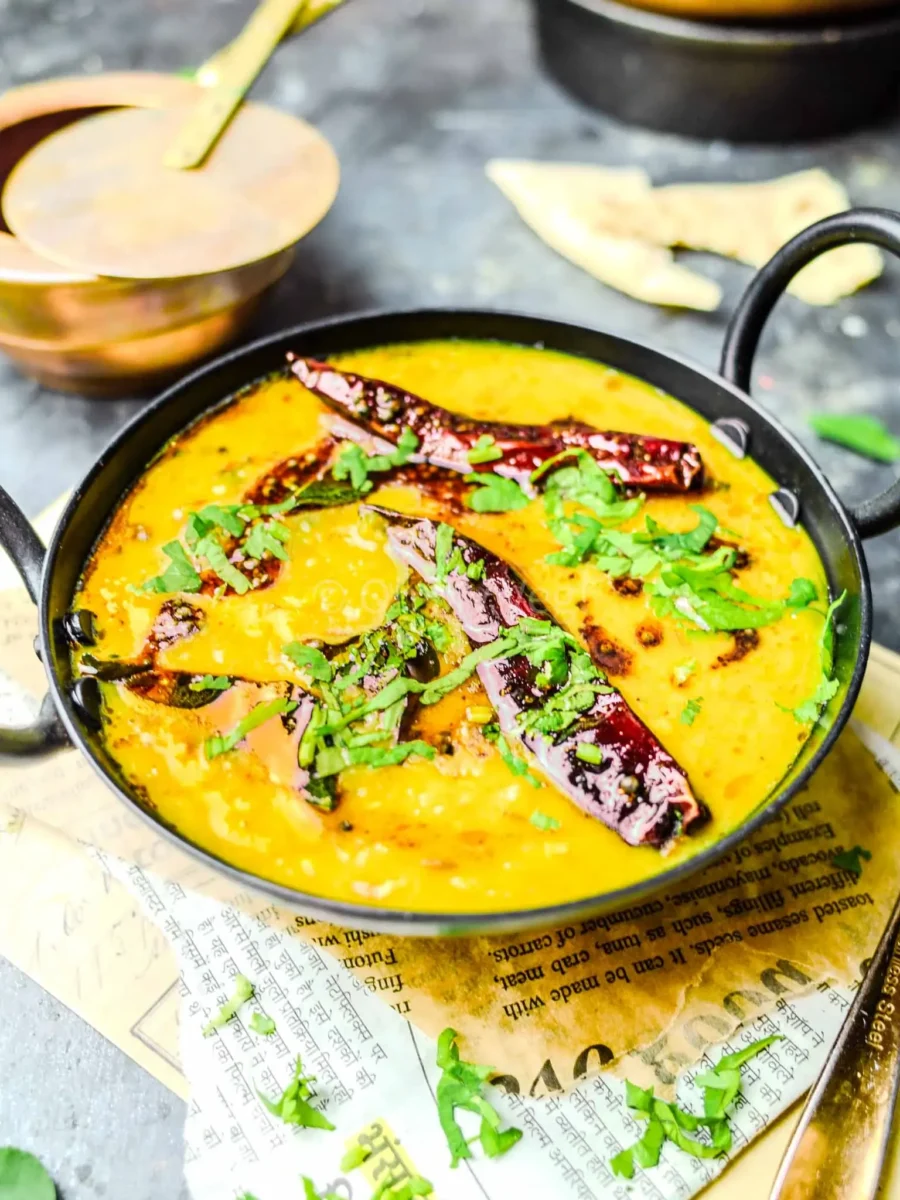
This moong and masoor dal is the weeknight dinner recipe you’ve been waiting for: two lentils that cook in a flash, simmered until they break down into creamy comfort, then finished with a sizzling tadka that sends the aroma of cumin and curry leaves wafting through the kitchen.
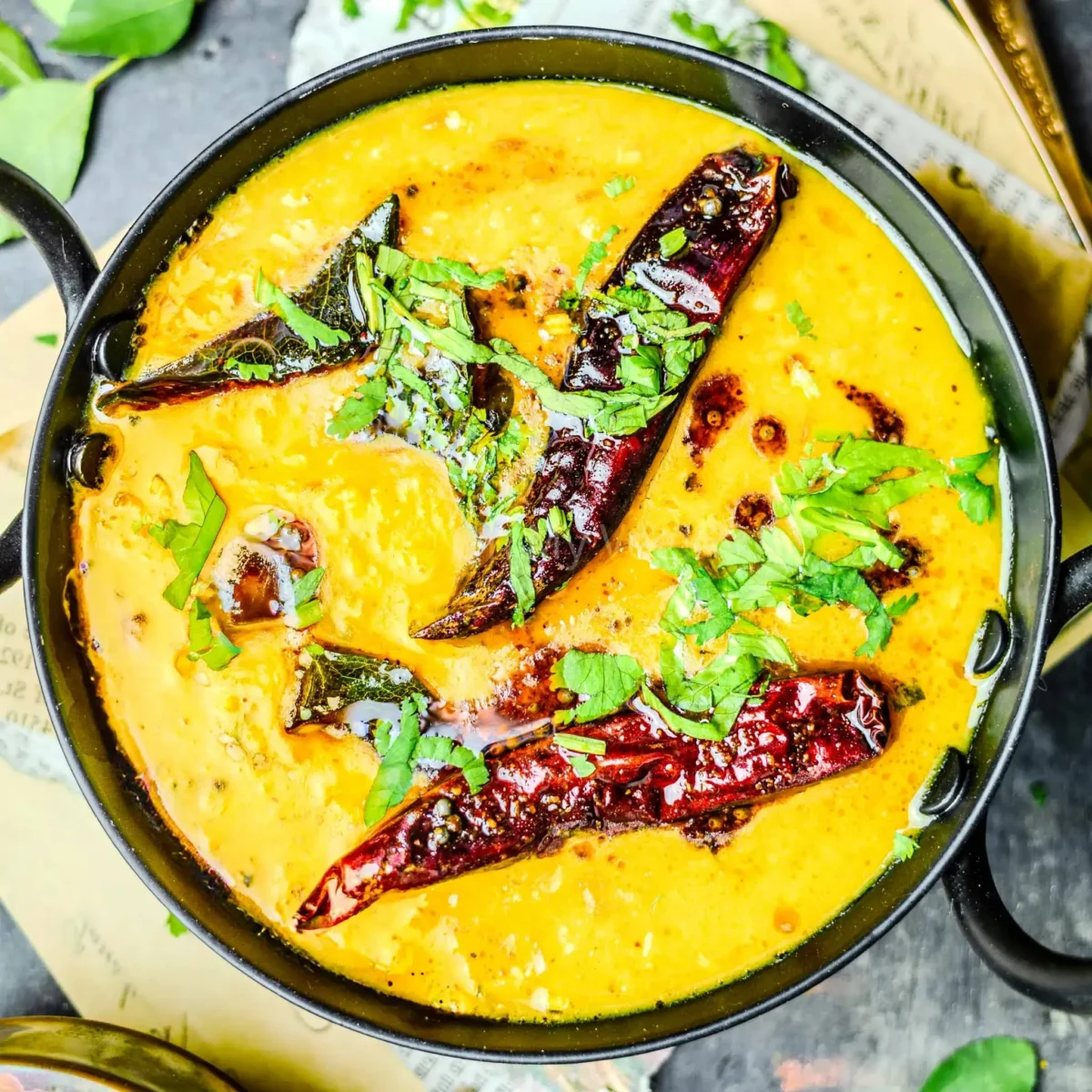
Here’s the scene in my kitchen as I type this: A pot of dal is bubbling away on the stove. Sunny gold and red lentils are melting into a buttery, creamy soup. The air is thick with turmeric and garlic. I’m already hungry!
Then comes the tadka — oil simmering in a tiny pan, mustard seeds popping like fireworks, curry leaves hissing as they hit the heat, and dried red chillies darkening to burgundy as they infuse the fat with fiery heat. Once I pour it over the dal, the whole dish will transform to a whole new level.
The crackle, the scent, the glossy slick of spiced oil on top that signals layers of flavour. I’ve been known to stand over the pan inhaling deeply like a dal-obsessed fool, but soon enough … you’ll be doing the same thing!
I’ve shared Maharashtrian lentil recipes before — dal bhaji and drumstick dal — but this is a proper North Indian recipe more reminiscent of Punjabi home cooking.
Often called “mixed dal” (because it literally mixes two types of lentils), this isn’t like the dhaba-style mixed dal, which uses four or more lentils. This is a home-style feast, and for such a humble food, feast is the appropriate word.
These two varieties of pulses taste phenomenal together: earthy, creamy, warmly spiced, with a top note of toasted cumin, subtle sourness from tomatoes, caramelised sweetness from onions, and a touch of citrus from the curry leaves. It’s built of layers of flavour, which is what Indian cookery is all about.
This could be your kitchen scene, too. Let’s dive into how to make that a reality.
❤️ Why You’ll Love This Moong and Masoor Dal Recipe
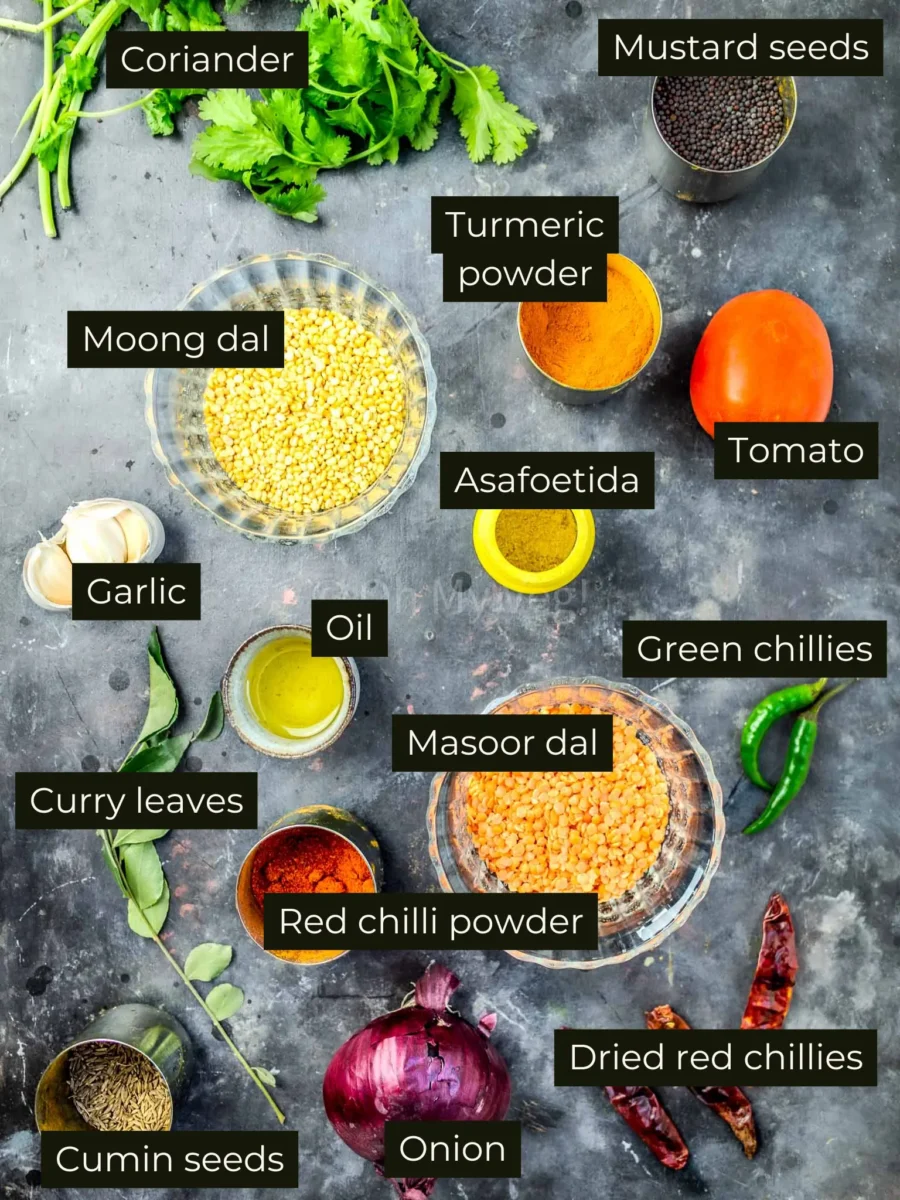
🍅 Ingredients You’ll Need For Moong and Masoor Dal
With the exception of a few aromatics and herbs, this meal is made almost entirely from cupboard ingredients with a long shelf life, like lentils and spices. It’s my go-to when I don’t have anything in the fridge.
Let’s explore the ingredients that make this dish utterly mouth-watering:
For the Dal
- Masoor dal (red lentils) are small, coral-coloured lentils with a mild flavour. The quickest-cooking of all the bunch, they’re earthy and grounding.
- Moong dal is otherwise known as split and skinned mung beans. Nutty and mild, they bring an incredibly buttery, melt-in-the-mouth texture to our dal.
- Water is for cooking the dal. You can adjust the amount depending on whether you’re serving with roti (thicker) or rice (thinner).
- Oil: Any neutral oil works. I use sunflower. You could also use ghee (clarified butter) for extra richness, but the recipe wouldn’t be vegan.
- Cumin seeds bloom in the hot oil, releasing a warm, slightly peppery aroma.
- Asafoetida mimics the punchy flavour of alliums.
- Onion melts into the dal, adding sweetness and body.
- Garlic gets soft and sweet as the dal cooks, infusing everything with an irresistible aroma and flavour.
- Green chillies bring heat, yes, but also a fresh, sharp, apple-like flavour that varies wildly from red chilli powder and dried chillies (see, building more layers!).
- Tomatoes add a gentle acidity that brightens the whole pot of lentils.
- Turmeric powder is earthy, slightly bitter, and turns everything a beautiful yellow.
- Coriander powder provides a lemony note that complements the earthiness of the lentils.
You’ll also need salt to taste. Salt lets the flavours come alive, boosting their natural inherent properties.
For the Tadka (Tempering)
This is where your dal comes ALIVE. Tadka is a Hindi word that refers to the act of tempering spices in hot oil.
As it goes, this is an understated combination for a tadka: just a few basic essential spices.
- Oil is essential for blooming spices. Again, use the neutral stuff. It gets screaming hot, so you want something with a high smoke point.
- Mustard seeds pop and crackle when they hit the hot oil, releasing a nutty, sharp flavour. Think of them as bursts of sharp heat.
- Curry leaves are non-negotiable. They release an indescribable aromatic fragrance — at once citrusy, slightly nutty, and incredibly moreish. Never cooked with them? You’re in for a treat! Find curry leaves at your local Indian store or on Amazon. Skip the dried stuff (unfortunately, tasteless).
- Dried red chillies don’t add much heat, but they do bring smoky depth.
- Red chilli powder is where the tongue-tingling heat lives. Adjust based on your preferences; Kashmiri chilli powder is much milder.
Garnishing your bowl of moong and masoor dal with fresh coriander (cilantro, for my U.S. folks) is a must — unless you’re one of those poor souls who has the coriander-tastes-like-soap gene! It adds a pop of colour and a beautifully bright, fresh, lemony herbaceousness.
Adapting This Recipe For Allergies and Dietary Requirements
Did I forget to mention one of my favourite things about this recipe?
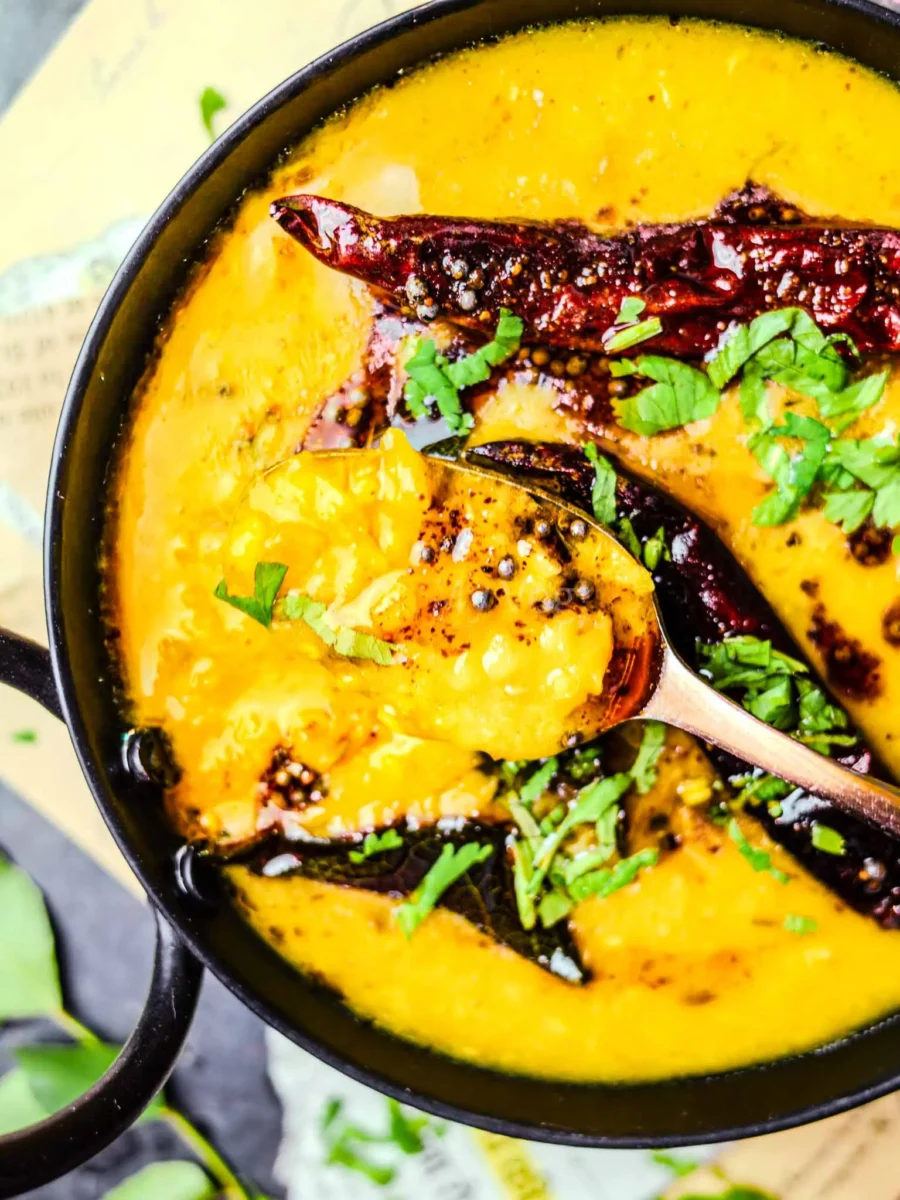
This moong and masoor dal is naturally vegan, gluten-free, nut-free, and soy-free. I often receive messages from my readers, saying: “What should I cook at a dinner party with guests that have [insert dietary requirements here]?” This moong and masoor dal recipe is a fantastic answer.
While not an allergy, if you’re avoiding onions and garlic (perhaps for religious or digestive reasons), you can make this work. It already has asafoetida, which is a tried-and-tested substitute for alliums in Jain cookery.
Hing, as it’s known in Hindi, gives you that savoury, onion-garlic depth without the negative effects some believe the alliums have.
Just skip the onions and garlic entirely, and add a pinch more hing in the tadka instead. (P.S.: Check out my vrat recipes for dishes free from onions or garlic.)
Substitutions and Adaptations
Lentils: You can swap either of the lentils for chana dal or toor (arhar/turvar/pigeon pea) dal instead, but you’ll need to cook the dish for longer.
If you don’t have curry leaves, skip them rather than substituting. No curry leaves are better than adding dry (tasteless) or bay leaves (vastly different aroma). Make a note to grab some next time you’re near an Indian grocer. They’re available year-round, although many shops also sell frozen. Surprisingly, these retain flavour much more effectively than fresh curry leaves.
You can swap red chilli powder for cayenne if you must, although it’s typically a little spicier, so use less.
Readers with a lower spice tolerance will want to use Kashmiri chilli powder, which has a beautiful colour and depth of smokiness without much heat. Skip the green chillies.
Prefer it spicier? Double the green chillies. Add extra red chilli powder to the tadka. Or serve with fresh sliced green chillies on the side for people to add as they please.
Want to make it richer? Finish with a knob of butter or a swirl of cream. This isn’t traditional for this particular style of dal, but it does make it taste rather luxurious. Think more dal bukhara territory.
🧑🍳 How to Make Moong and Masoor Dal
This recipe is an easy, one-pot meal.
First, rinse your lentils. Both moong and masoor dal can be dusty (lentils can also contain small stones; although I’ve never experienced this, it’s better to be safe than sorry), so give them a thorough wash until the water runs clear. I usually do this in a fine-mesh sieve, swishing them around with my hand.
After that’s done, we can move on to the cooking! Here are some step-by-step photos from my kitchen showing the process:
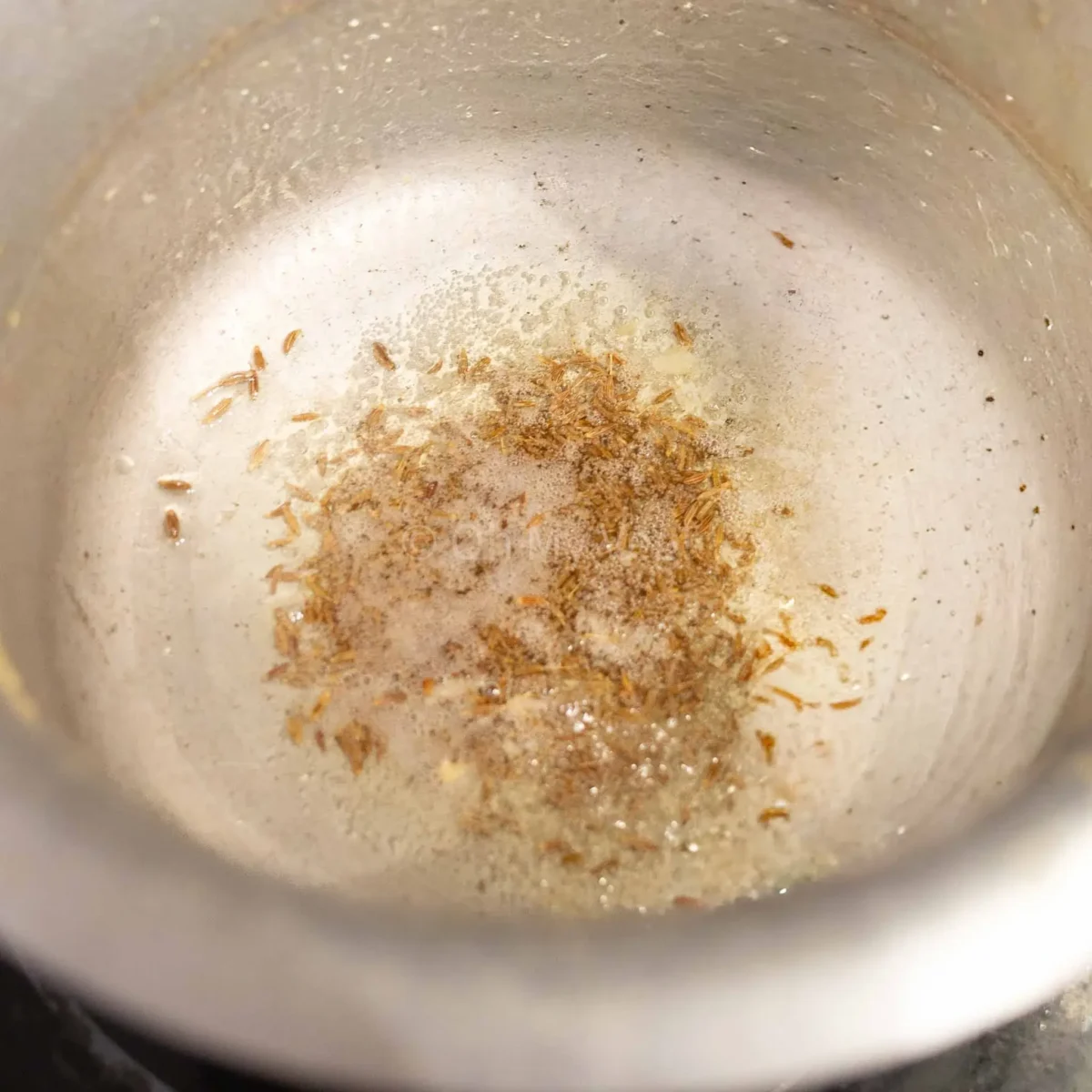
One: In a large saucepan, heat oil. Once hot, add cumin seeds and let them splutter.
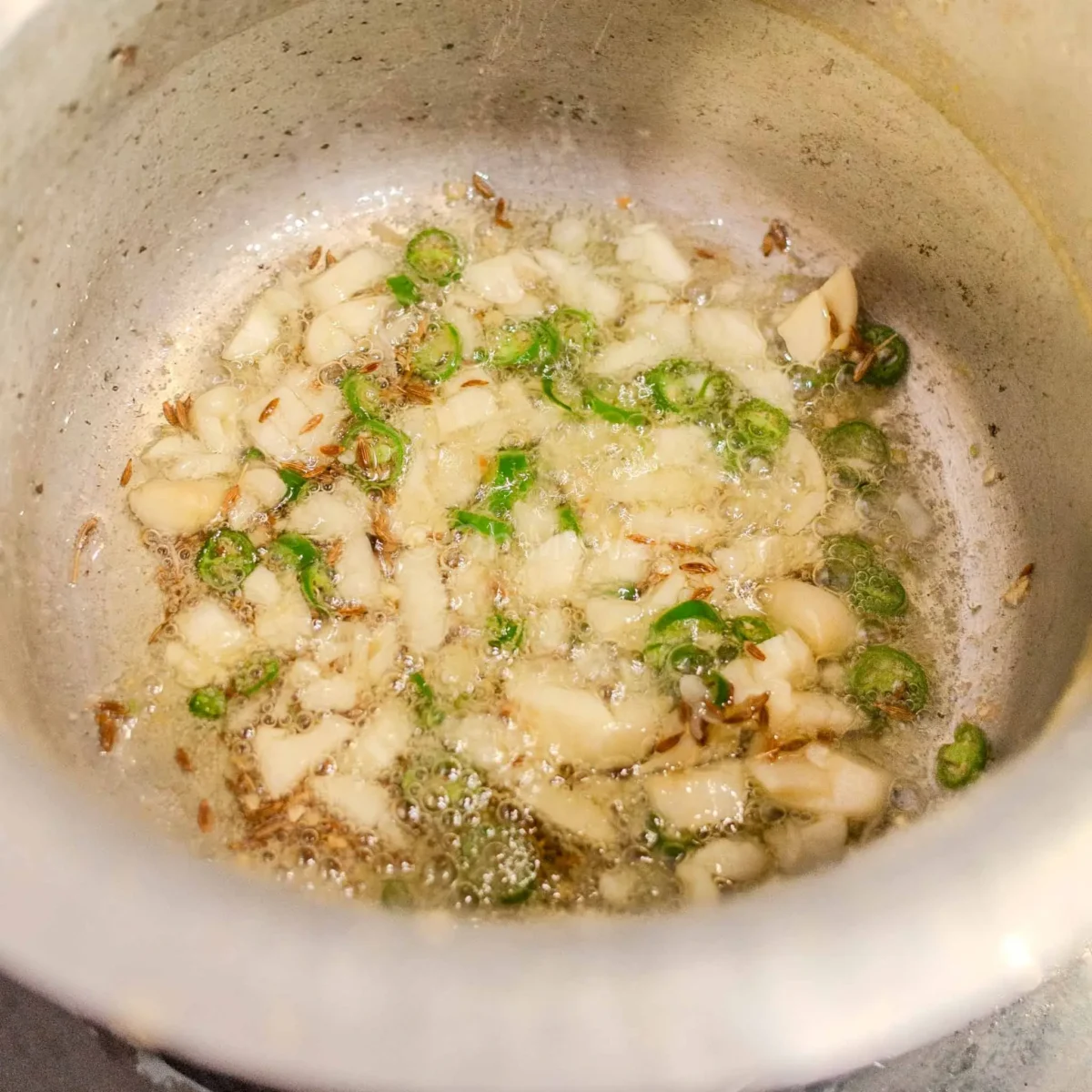
Two: Next, add sliced garlic cloves and green chillies. Gently cook until the garlic smells aromatic, but doesn’t brown.
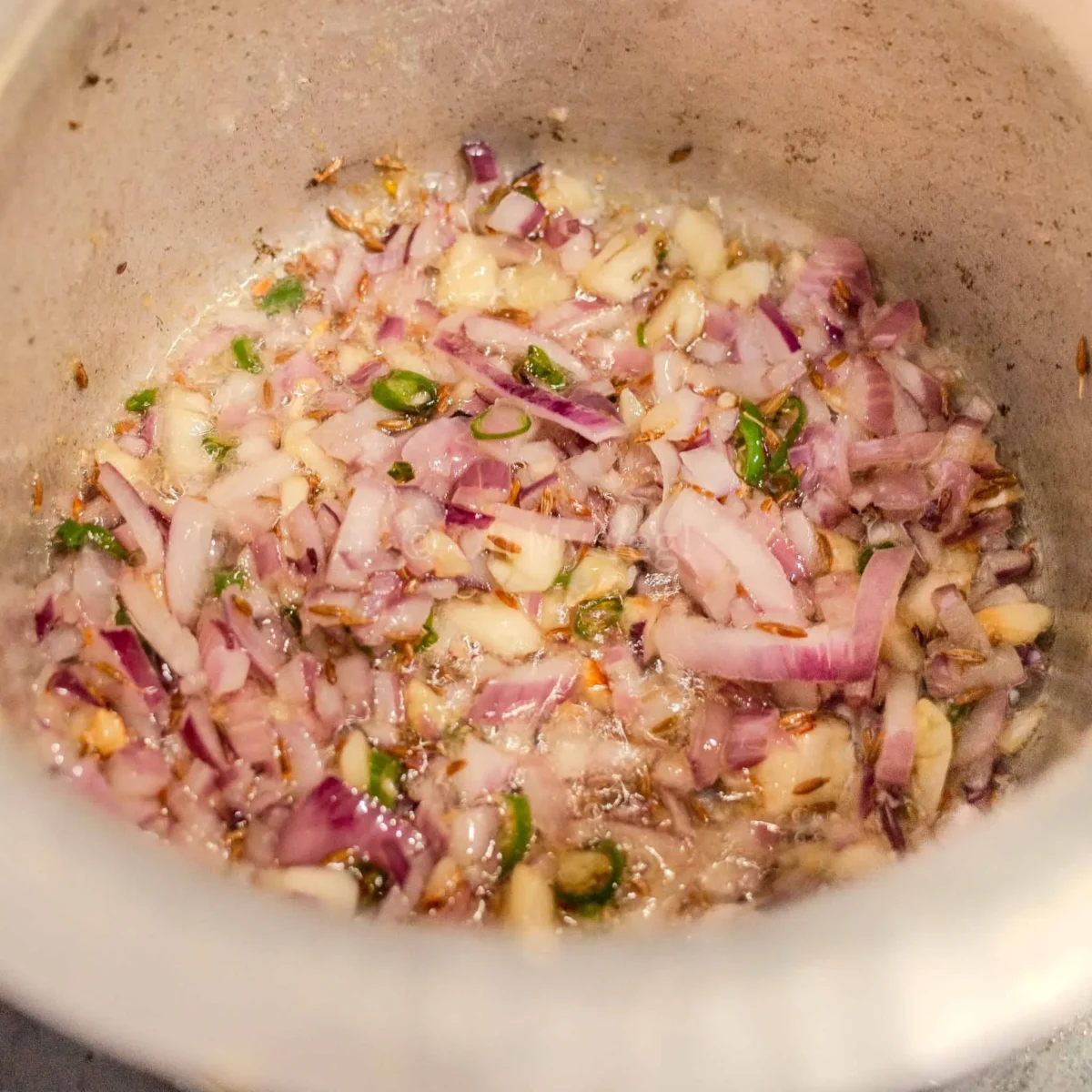
Three: Add finely chopped onions. Let the aromatics cook until slightly translucent.
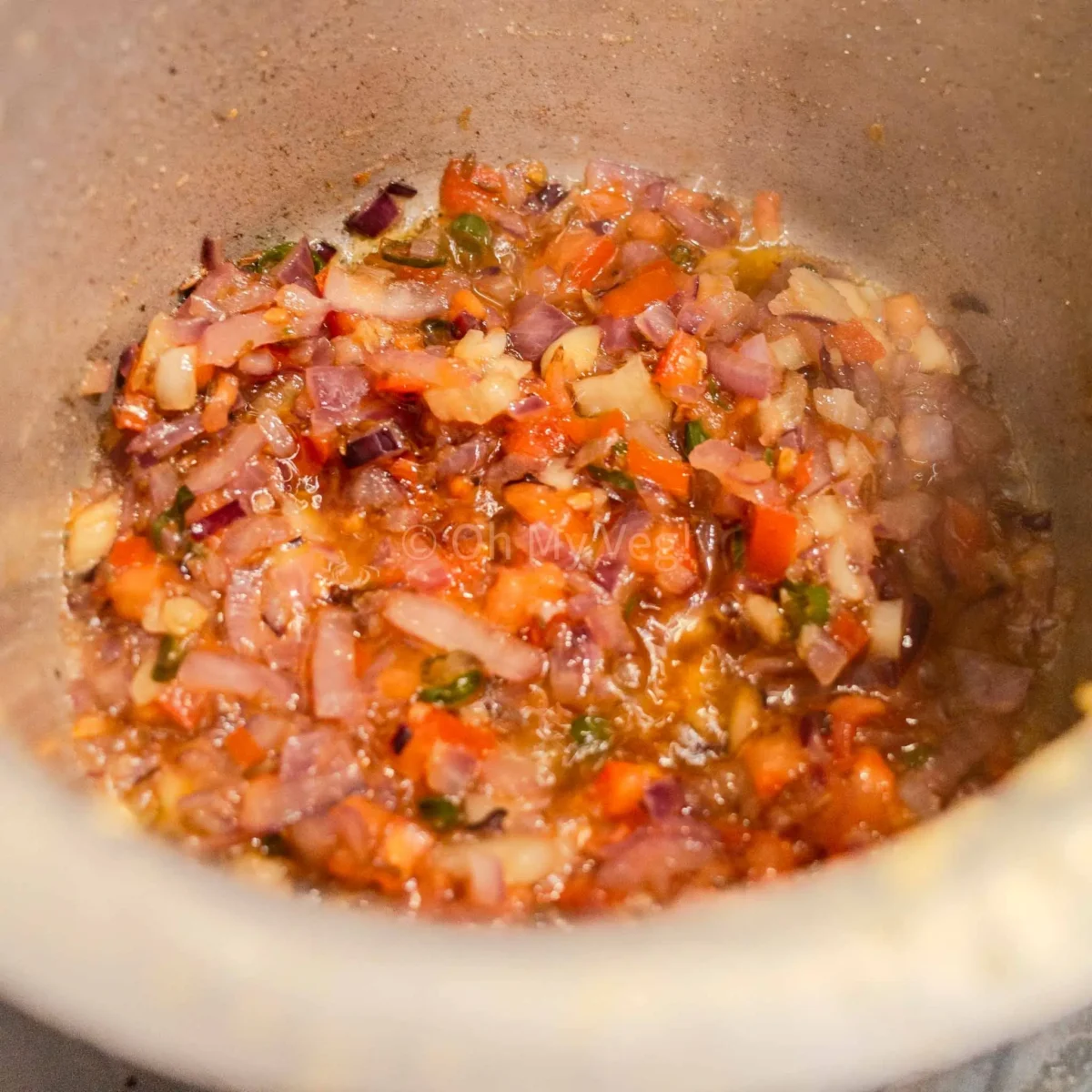
Four: Add finely chopped tomato and salt (helps to soften the tomatoes).
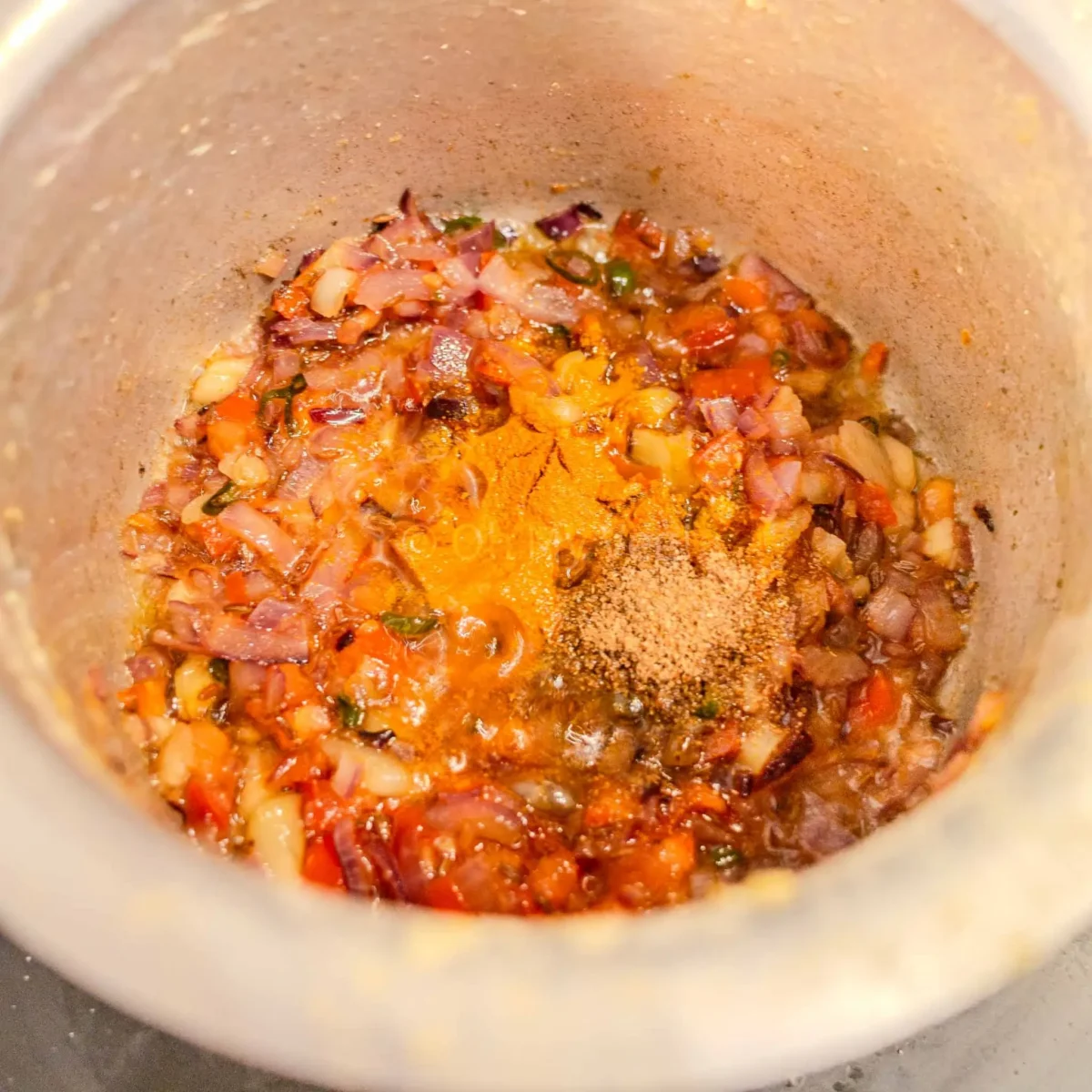
Five: Sprinkle over turmeric powder and coriander powder. Stir into the base.
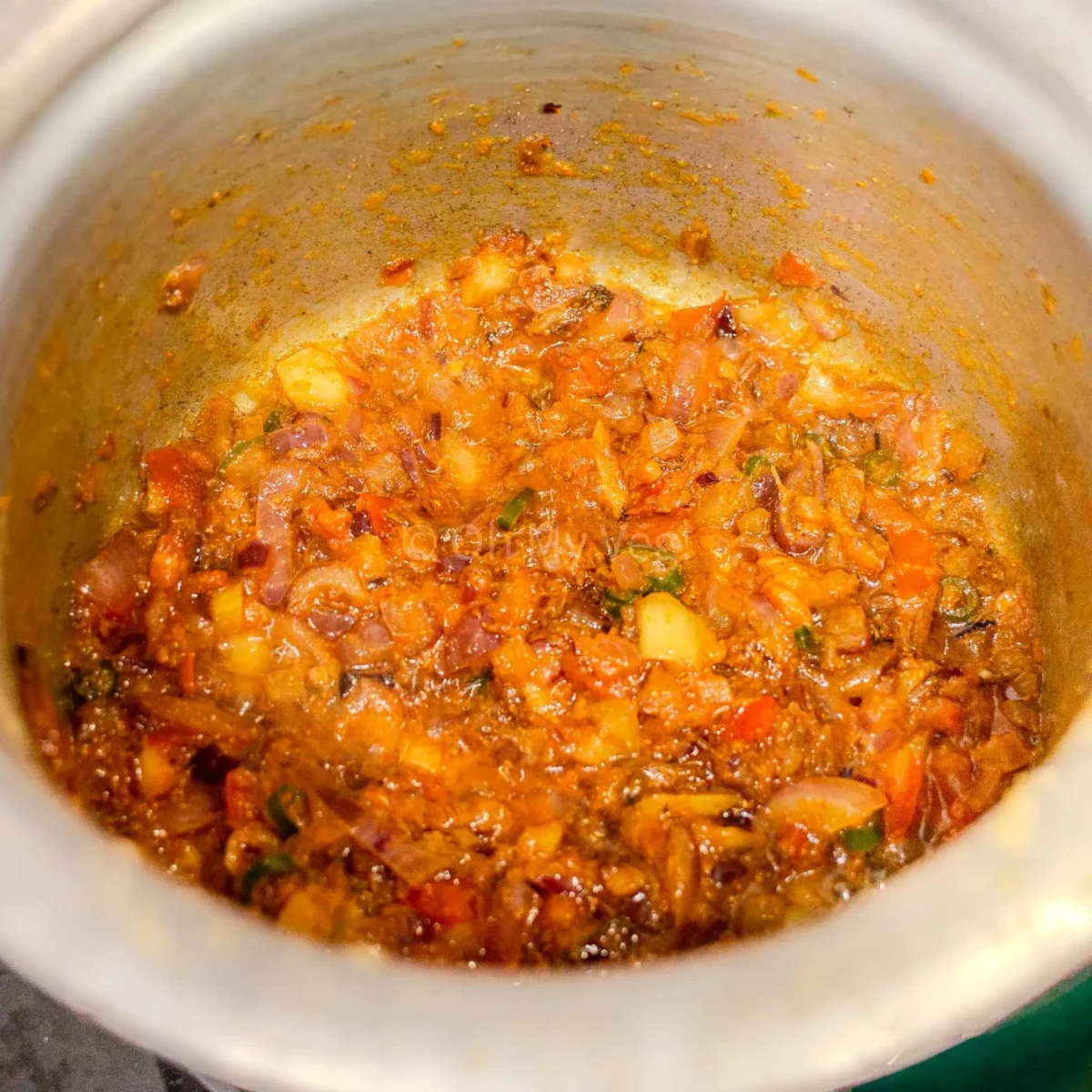
Six: Let the mixture of aromatics and spices cook until the spices are no longer raw and the tomatoes are jammy.
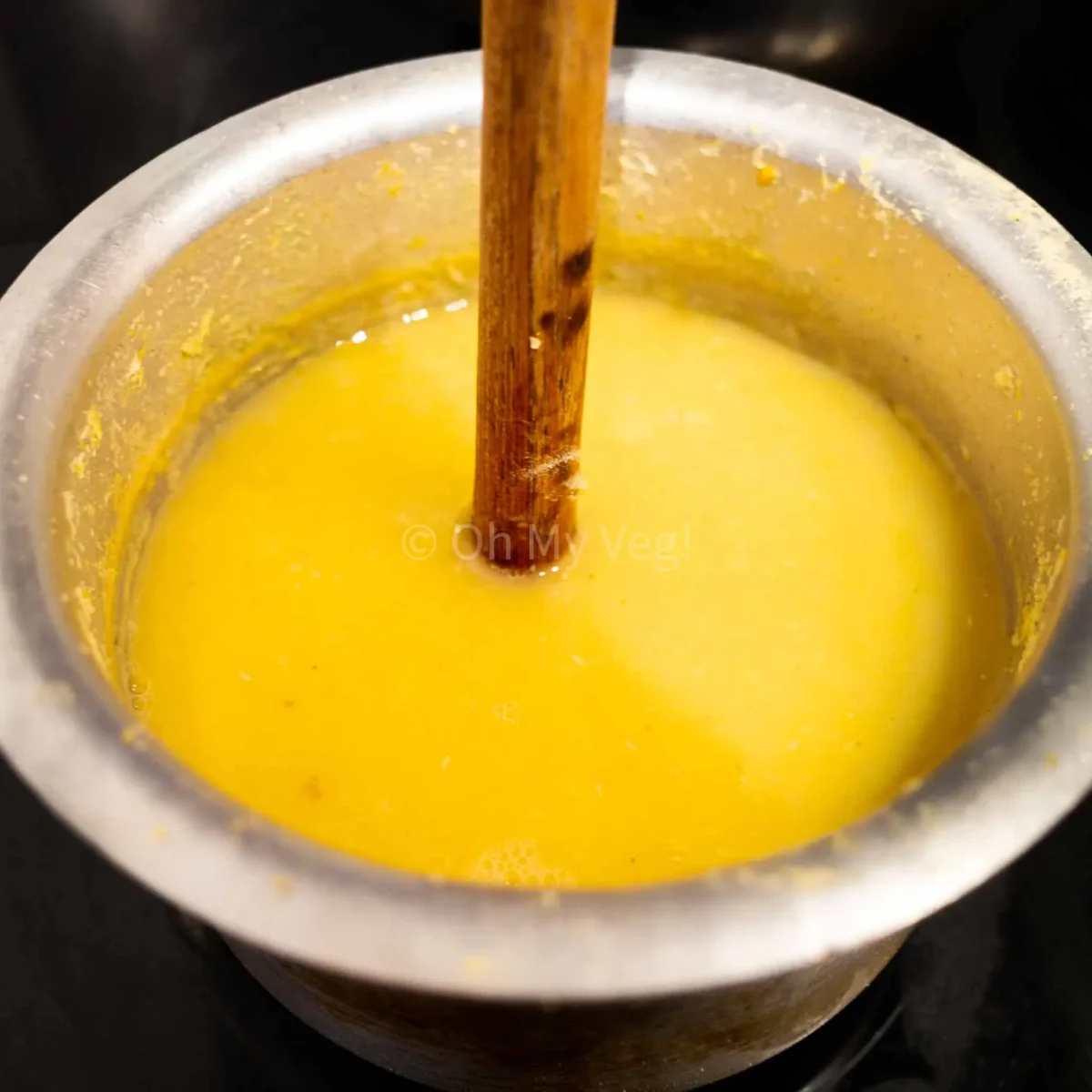
Seven: Add moong and masoor dal to the saucepan along with water. Let this cook, covered, until the lentils have broken down. Whisk with a dal ghotni to make it even creamier.
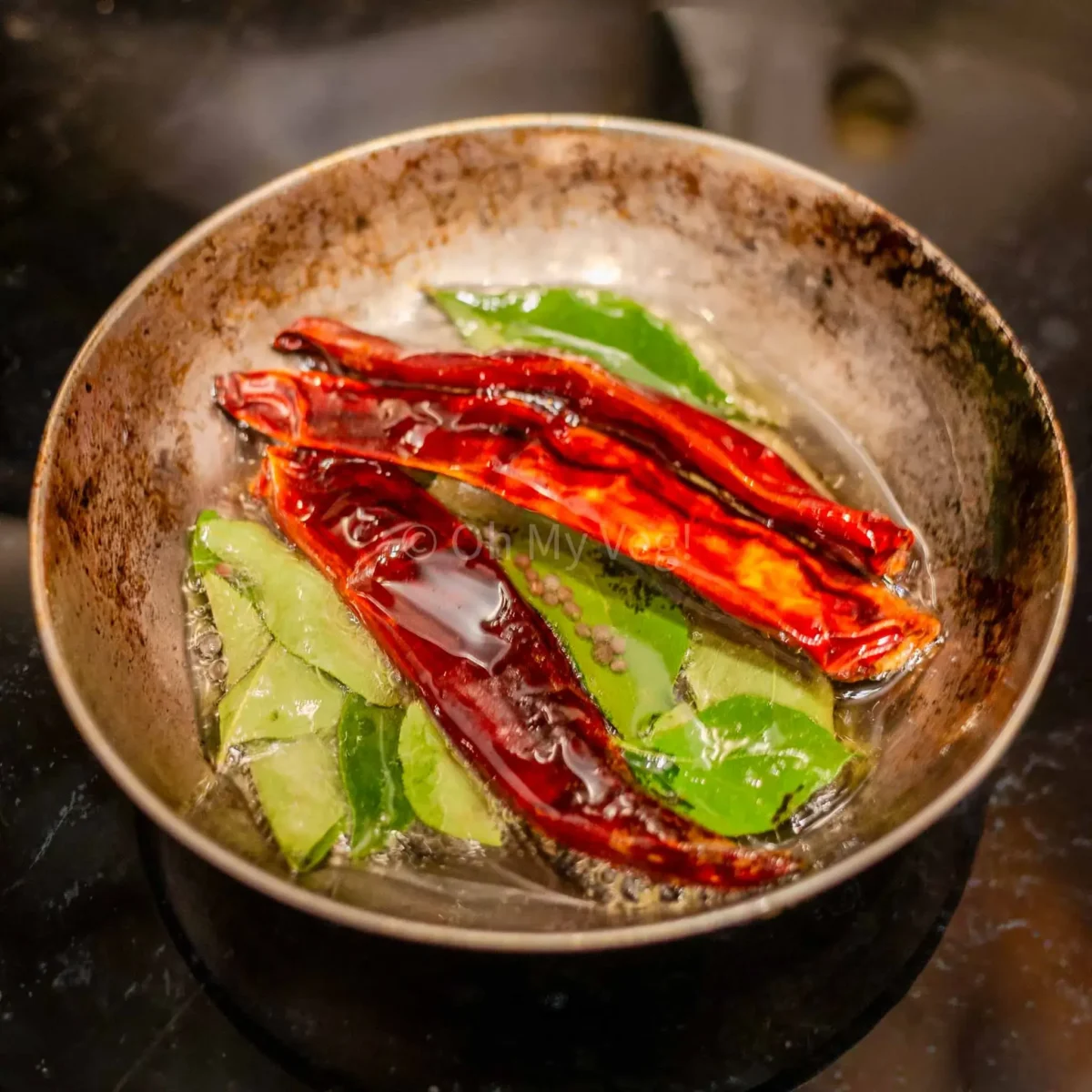
Eight: In a small tadka pan, heat oil. Once the oil is hot, add the mustard seeds. Let them pop. Next, add the curry leaves (careful, they splutter) and dried red chillies. Let them infuse.
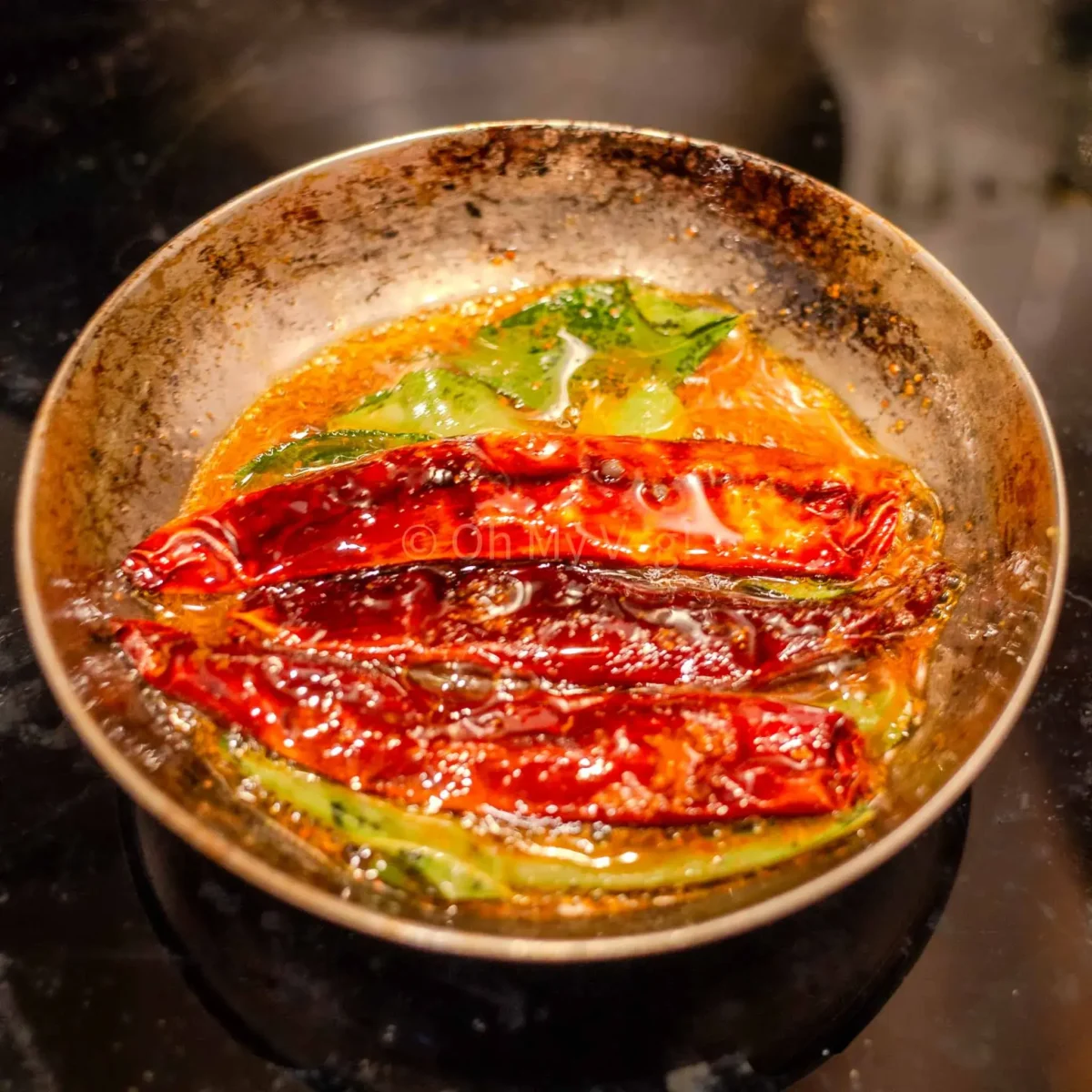
Nine: Turn off the heat and add red chilli powder. Stir it into the oil.
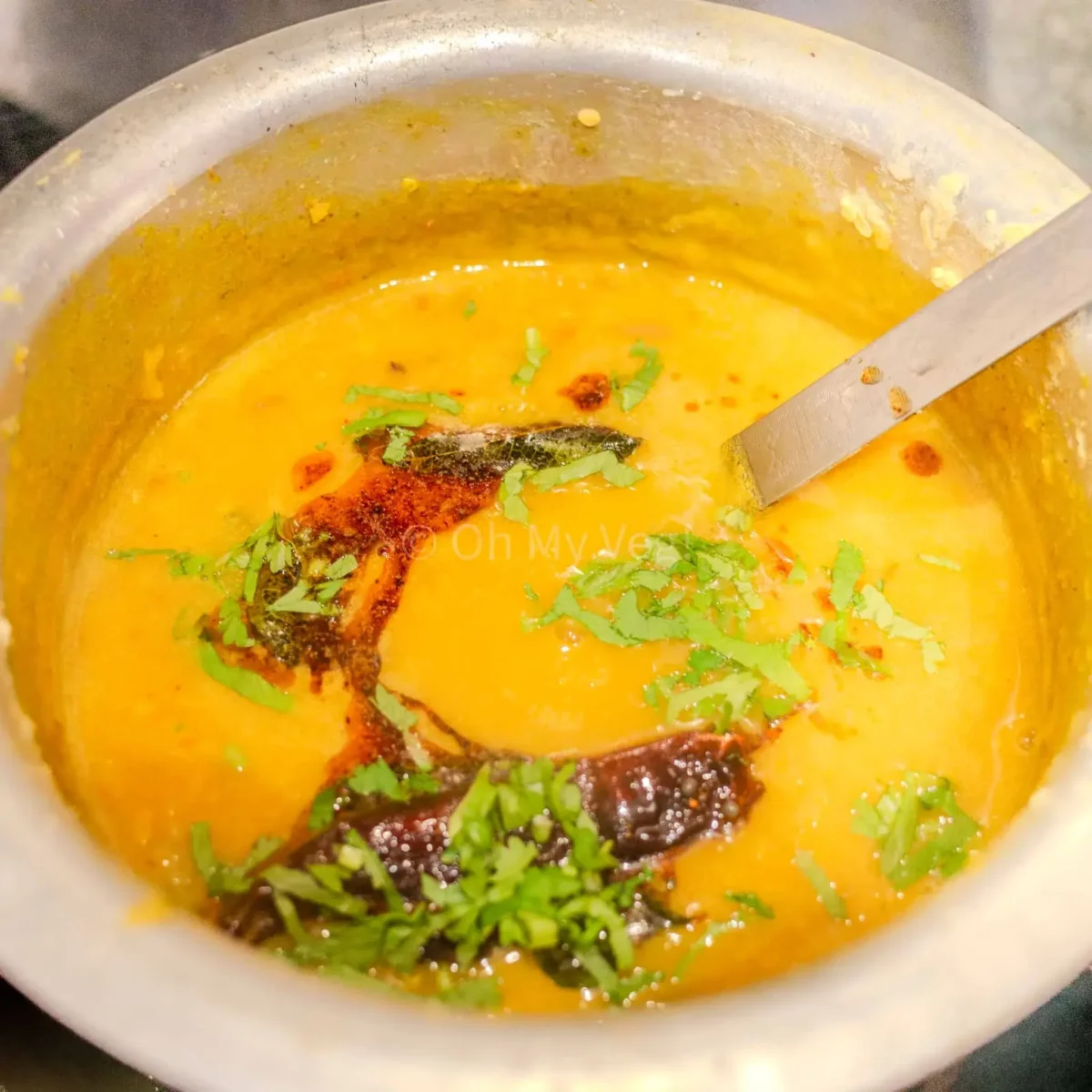
Ten: Pour the tempering over the moong and masoor dal. Garnish with freshly chopped coriander (cilantro) and serve.
Remember, the complete recipe (with ingredient quantities and instructions) can be found at the bottom of this page. You can also print the recipe, save the recipe, adjust the servings, and much more from there!
❄️ Storing Moong and Masoor Dal
Fridge: Up to four days in an airtight container.
Reheating: Dal thickens as it sits, so when you reheat it, add a splash of water. Reheating the dish directly on the stove is best; top with chopped coriander to make the dish feel new and exciting again.
You could also use a microwave-safe bowl, add water, and heat in 1-minute intervals, stirring between each one, but it’s trickier to control the consistency.
Freezing: Let the dal cool completely, then portion into freezer-safe containers or bags (bags are great if you’re low on freezer space). It’ll keep for up to three months and freezes very well, with no textural loss. I suggest freezing the moong and masoor dal sans tadka. Making a fresh tempering takes seconds and makes all the difference.
Defrost: Overnight in the fridge, ideally. It can also be heated directly from frozen. Reheat as suggested above, on the stove.
🍚 Serving Suggestions For Moong and Masoor Dal
The classic pairing (famous for a reason, right?) is with steamed basmati rice and a dollop of ghee on top. Simple, traditional, comfort food personified. Add a side of crispy fire-roasted papad (poppadom) plus sharp lime pickle, and you’ve got a proper meal.
If you have leftover rice and dal the next day, I like to make a quick jeera fry from the rice to freshen it up.
Alternatively, serve it with fresh-off-the-tawa roti/chapati or paratha. Tear the bread, scoop the dal, eat, and repeat!
For a more substantial meal, pair it with aloo methi (potato with fenugreek leaves). The slight bitterness of methi cuts through the dal’s richness beautifully. Any vegetable dish works well; Maharashtrian smoked aubergine curry (vangyache bharit), for example.
Appetisers like pakora or onion bhaji complete the experience.
If you’ve tried this moong and masoor dal recipe, please drop a comment ✍️ or a star rating 🌟 below to help fellow readers! Additionally, if you have a question, please drop a comment, and I’ll do my best to answer ASAP.
Moong and Masoor Dal

Ingredients
- 1 tablespoon neutral oil
- 1 teaspoon cumin seeds
- 6 cloves garlic finely sliced
- 2 green finger chillies I use jwala; finely sliced
- 60 grams onion (60g = about half a medium onion)
- 40 grams tomatoes
- fine sea salt to taste
- ½ teaspoon turmeric powder
- 1 teaspoon coriander powder
- 60 grams masoor dal
- 60 grams moong dal
- 800 ml water for cooking dal
For the Tadka (Tempering)
- 1 tablespoon neutral oil
- ½ grams black mustard seeds
- 1 sprig fresh curry leaves
- 3 dried red chillies
- ½ teaspoon red chilli powder
- coriander leaves to garnish, optional
Instructions
Cook the Moong and Masoor Dal
- First, thoroughly rinse 60 grams masoor dal and 60 grams moong dal in cold water. Wash until the water runs clear.
- In a large saucepan, heat 1 tablespoon neutral oil over medium flame.
- Add 1 teaspoon cumin seeds to the oil and let them crackle. Next, add 6 cloves garlic (sliced) and 2 green finger chillies (sliced). Cook until the garlic and chillies smell aromatic.
- Next, add 60 grams onion (finely chopped). Continue cooking, stirring now and then, until the onion turns translucent.
- At this stage, add 40 grams tomatoes (chopped) and fine sea salt (to taste), plus ½ teaspoon turmeric powder and 1 teaspoon coriander powder. Cook the mixture, stirring frequently, until the tomatoes have softened and become slightly jammy.
- Add the rinsed lentils to the saucepan along with 800 ml water. Cover your pan and cook for around 20 minutes, until the lentils have softened and broken down. You can go in with a dal ghotni (whisk) to make them even creamier.
Make the Tempering
- Heat 1 tablespoon neutral oil in a small tadka pan. Once hot, add ½ grams black mustard seeds. Let them pop.
- Now, add 1 sprig fresh curry leaves (careful, they splutter) and 3 dried red chillies. Let them become aromatic.
- Turn off the heat and add ½ teaspoon red chilli powder. Stir in.
Bring it all Together
- Pour the tempering over your cooked dal. Check seasoning and adjust. Garnish with chopped coriander leaves, to taste. Serve hot.


