Pinsa Margherita Might Be Tastier Than Pizza (Recipe)
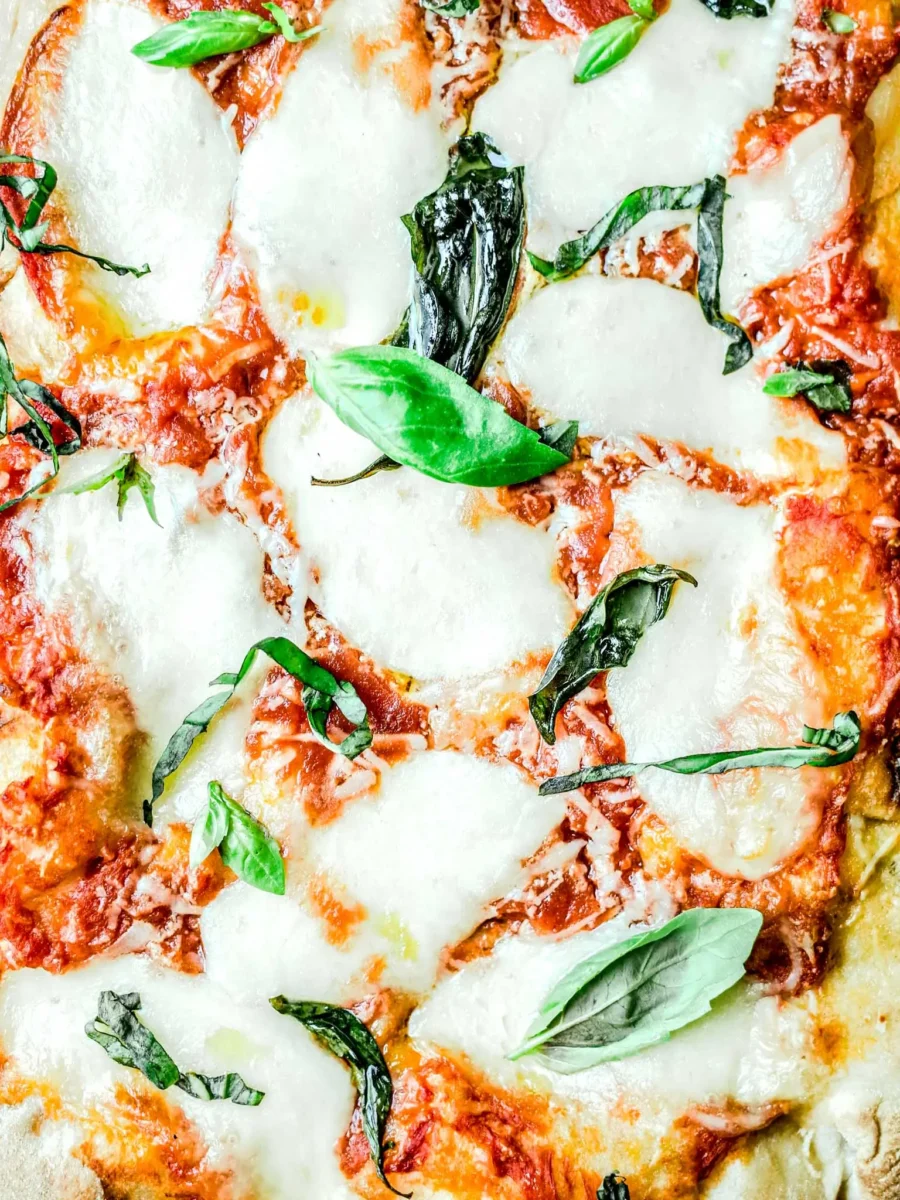
A light, crispy crust. Tomato sauce — just the best-quality tomatoes, crushed by hand — gooey fresh mozzarella, and the bright flavours of fresh basil. This is the authentic Roman version of pizza, called pinsa margherita. It’s your new favourite meal.
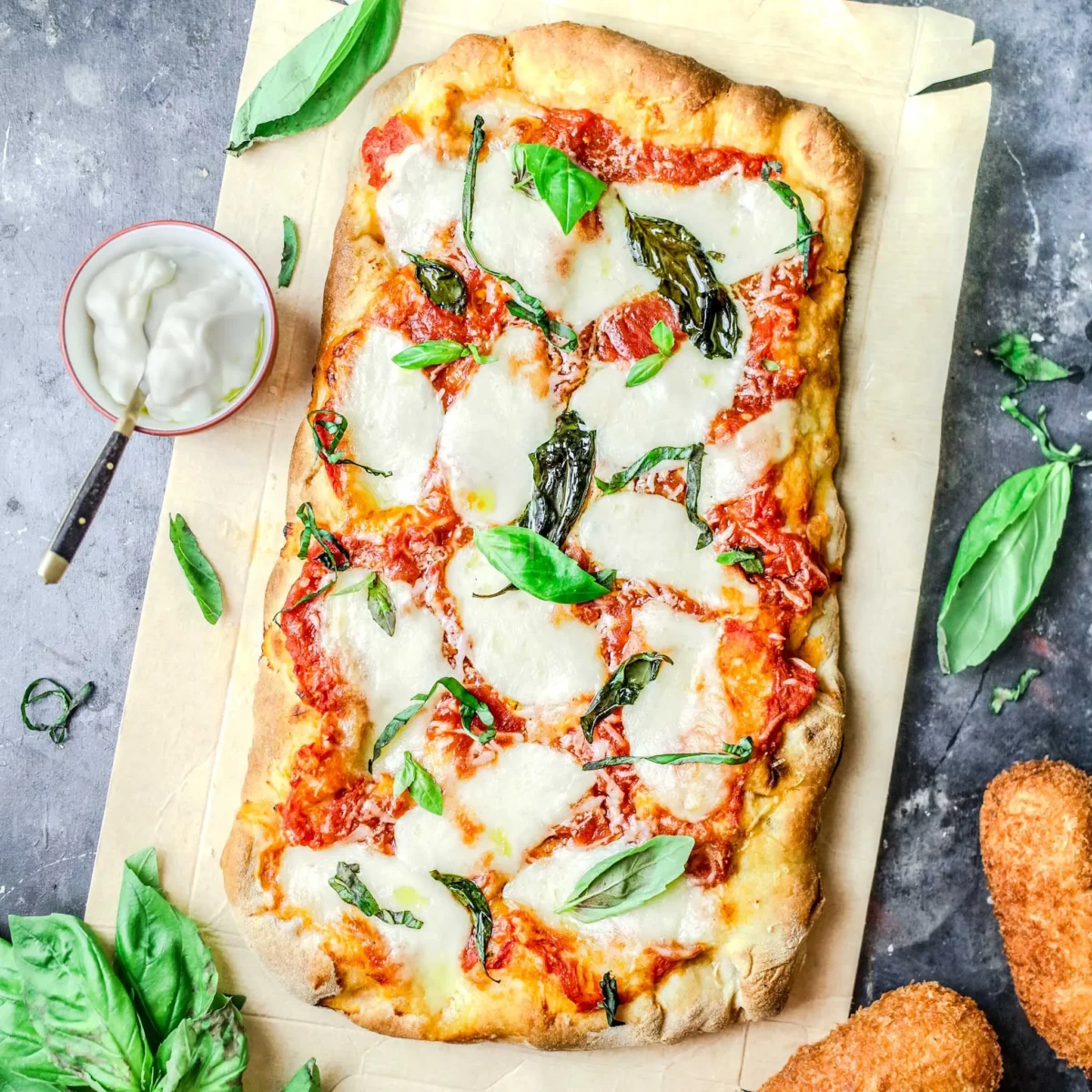
Is there anything better than a quintessential Italian pizza? Well, yes, actually — pinsa margherita is light, crispy, full-flavoured, cheesy, and even tastier than its more familiar cousin.
As the saying goes, “all roads lead to Rome” … and all roads lead to this Pinsa Romana recipe, too! It’s the perfect choice for a cosy date night in, a party (everyone can add their own toppings), or even a cold packed lunch (it tastes just as good cold as it does hot).
Now, I usually write a longer introduction full of tempting descriptions and interesting titbits, but … seeing the photos I took of that pinsa margherita has got my mouth-watering, and I can’t wait to make another (or two) … right now!
So, why don’t we jump straight into the important stuff: what exactly is Pinsa Romana? And, most pertinently, how do you make it?
❤️ Why You’ll Love This Recipe
🤔 What is Pinsa Romana?
If you’ve never heard of pinsa, you wouldn’t be alone. Despite being an age-old recipe dating back to the ancient Romans, pinsa has only gained popularity outside Italy relatively recently.
The word “pinsa,” which is sometimes spelt “pinza,” comes from the Latin verb “pinsere,” meaning “to stretch.” That’s because it’s gently stretched into an oval shape, rather than tossed or rolled.
Pinsa is a flatbread famed for its light, crispy texture.
Historically, the dough was made with a blend of cereal flours: millet, barley and spelt. It was widespread amongst farmers and other country people, who would top it with simple ingredients like olive oil, salt, and rosemary (Hey — sounds like focaccia!).
Nowadays, the dough is mostly made with a combination of wheat, soy, and rice flour.
The vital addition of sourdough lends a distinctive tangy flavour and irresistible aroma, while high-water-content dough (80%+) makes for an easily digestible, gloriously airy crust.
Pinsa vs Pizza: What’s the Difference?
They might look similar, but pinsa and pizza are markedly different beasts (or breads!).
- While pizza is round, pinsa is oval or rectangular. This is the most immediately obvious physical difference.
- Pizza is famously made by tossing the dough in the air to stretch it into shape. Conversely, pinsa is gently pressed into shape on a worksurface, using your fingers.
- The dough is made with different flours: pizza uses wheat (00 pizza flour, or, in Italian, farina di grano tenero tipo 00) while pinsa uses a mix of wheat, soy, rice, or barley. As a result, pinsa has less gluten.
- Hydration: pinsa sits at around 80% hydration, while pizza dough usually has 50-60% hydration. This affects the taste, texture, and cooking method.
- Neapolitan pizza is known to be cooked hot and fast, while pinsa is cooked at lower, slower temperatures (making it a fantastic option for the home cook).
- Whereas pizza dough is fermented for 24 hours, the traditional pinsa dough is fermented for 48 to 72 hours, lending a lovely flavour.
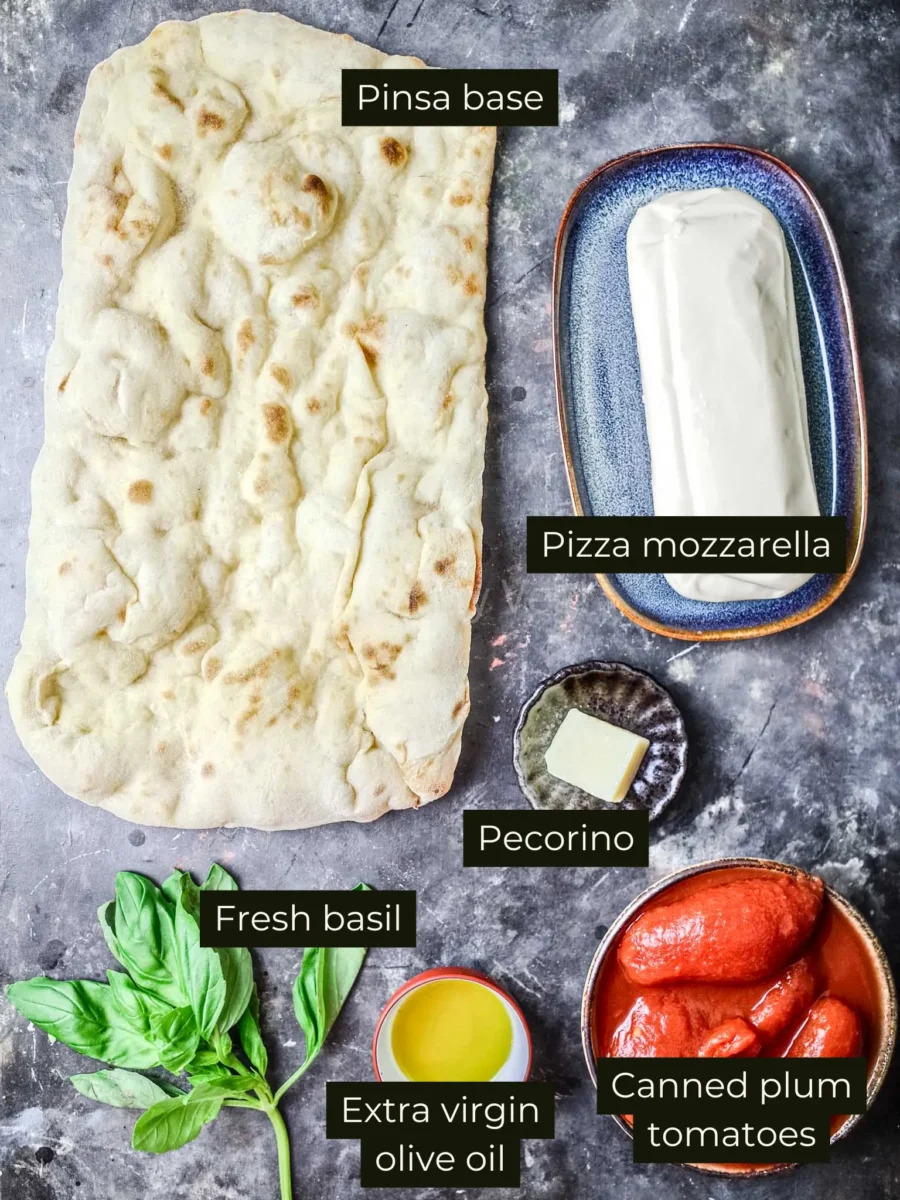
🍕 Ingredient Notes
You’ll need just six ingredients to make this tempting pinsa margherita:
- Pinsa base: You can buy a pinsa base from a few different places, including The Original Pinsa Romano (via Amazon), Marco Alimentari, Costco, Mulino Bianco (via Amazon), Dell’Ugo (via Amazon), and even U.K. supermarkets Tesco or Asda. Alternatively, you can make pinsa dough at home — recipe coming soon!
- Canned peeled tomatoes for the base of our margherita sauce. Ideally, for authenticity, you should use San Marzano dell’Agro Sarnese-Nocerino DOP, a variety of tomatoes grown in the volcanic soil of Mount Vesuvius. The flavour is unbeatable! For the budget-conscious, or if you can’t find these locally, any canned peeled tomatoes are a-okay.
- Olive oil — use the best Italian-sourced extra virgin olive oil you can afford.
- Pizza mozzarella is a firmer variety of mozzarella than the common type, packed with water. While the latter makes pinsa (and pizza) soggy, pizza mozzarella is gorgeously creamy, melty, and stretchy. You can use either mozzarella di bufala (buffalo mozzarella) or fior di latte (cow’s milk mozzarella), but I prefer the former.
- Fresh basil is essential for any good margherita!
- Pecorino is my Italian hard cheese of choice, as it’s usually vegetarian (except for Pecorino Romano DOP and Pecorino Sardo DOP, which both contain animal-based rennet, as decreed by their “Protected Designation of Origin” [DOP] status). It has a salty, pungent flavour. You can skip this or replace it with vegetarian-friendly Parmesan.
A touch of fine sea salt is also essential, to bring out the savoury flavours of the tomatoes and cheese.
Adapting for Allergies and Dietary Requirements
This pinsa margherita recipe is nut-free and vegetarian.
Depending on the pinsa base or dough you use, it can also be soy-free.
To make pinsa margherita vegan and dairy-free, use your favourite vegan mozzarella. I prefer one with great meltability, such as GreenVie, MozzaRisella, Violife, or I Am Nut OK.
Skip pecorino or use a vegan parmesan alternative, such as GreenVie ParmVeggio or Violife. A homemade nutritional yeast or nut-based parmesan would also work.
To make gluten-free pinsa, you’d have to make the dough yourself with gluten-free flour, rice flour, and soy flour. Although I haven’t tried it, Sandra from Fun Without Gluten has posted a recipe for a gluten-free pinsa base you may want to try.
🍄🟫 Fun Recipe Variations
I’ve chosen to keep things understated and crowd-pleasing with a simple, delicious margherita-style pinsa topping.
There’s no reason why you can’t have some fun with it, though! Here are some of my favourite add-ons to this pinsa margherita:
- Mushrooms of any kind, including chestnut mushrooms (cremini), wild mushrooms, white button, or chanterelles. Avoid tinned mushrooms and sauté them first to release excess moisture.
- Vegan pepperoni is a fun addition for children and adds a little spice. Here in the U.K., I use the Quorn Vegan Deli Pepperoni for all sorts of recipes, including mouth-wateringly good pizzaiolo pasta!
- Artichokes pair well with a margherita — use canned or jarred, then pat dry and slice before adding them on top.
- Roasted red peppers add a touch of sweetness.
- Crushed chilli flakes are an easy way to bring a little spice for people who enjoy piquant flavours.
- Black olives are savoury and salty, working well with the Italian flavours.
♨️ How to Make Pinsa Margherita (Step-by-Step Photos)
Because we’re using a store-bought pinsa base, this recipe is ready in less than 15 minutes … no kidding!
It’s such a straightforward recipe that even beginners or children would feel comfortable. Perfect for a pizza party … or should I say pinsa party?
If you’re making the pinsa dough from scratch, you’ll need to start a few days before to reap the benefits of that delicious fermented flavour.
For the margherita toppings, I’ve kept things extremely classic and authentic by following the rules of The True Neapolitan Pizza Association … and let me tell you, those Italians know what they’re talking about!
I’ve included step-by-step photos straight from my kitchen alongside the written instructions. You can always refer back to these while cooking to make sure everything looks right.
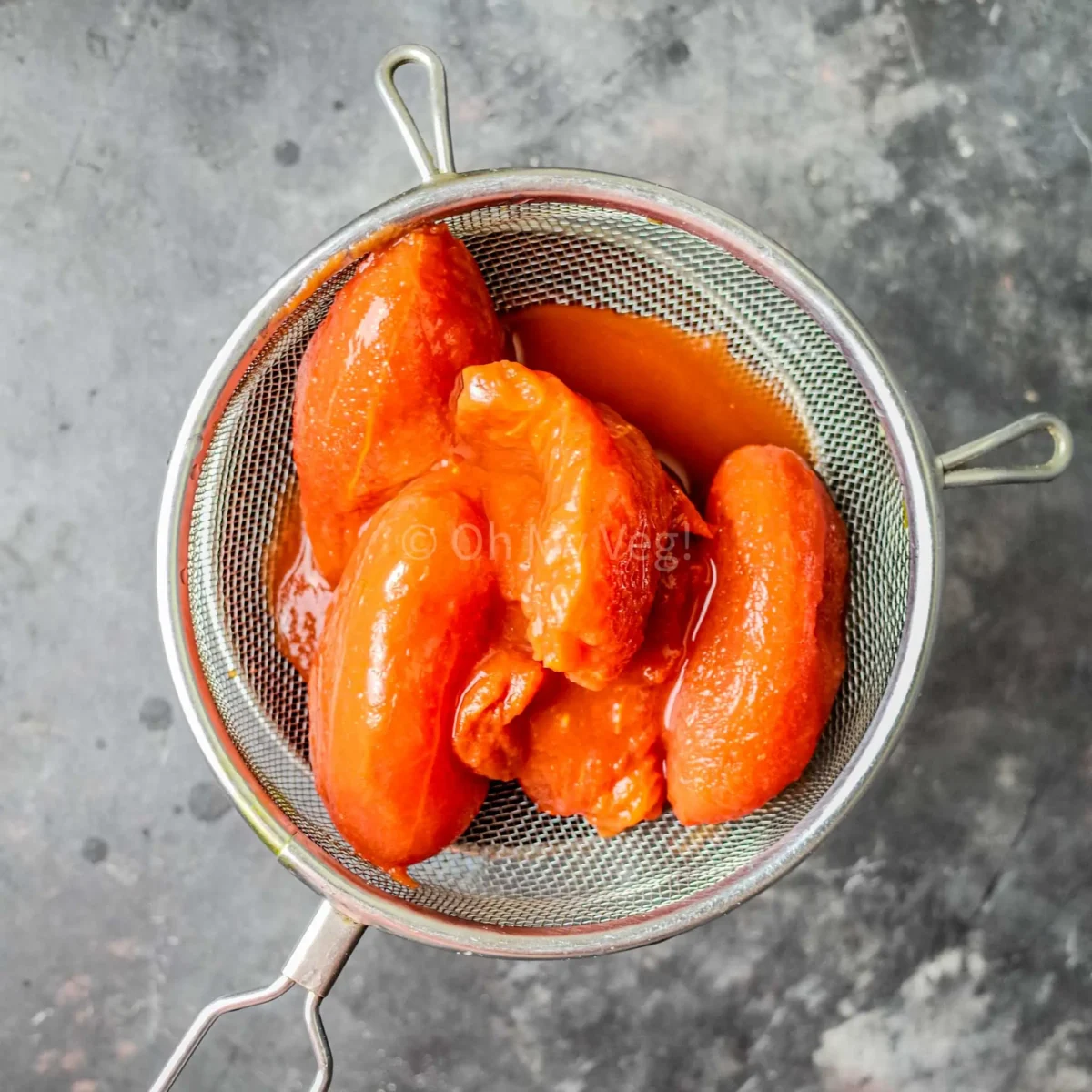
One: Strain off excess liquid from the canned tomatoes (you can use this for another dish). My preferred method is to set a sieve over a bowl.
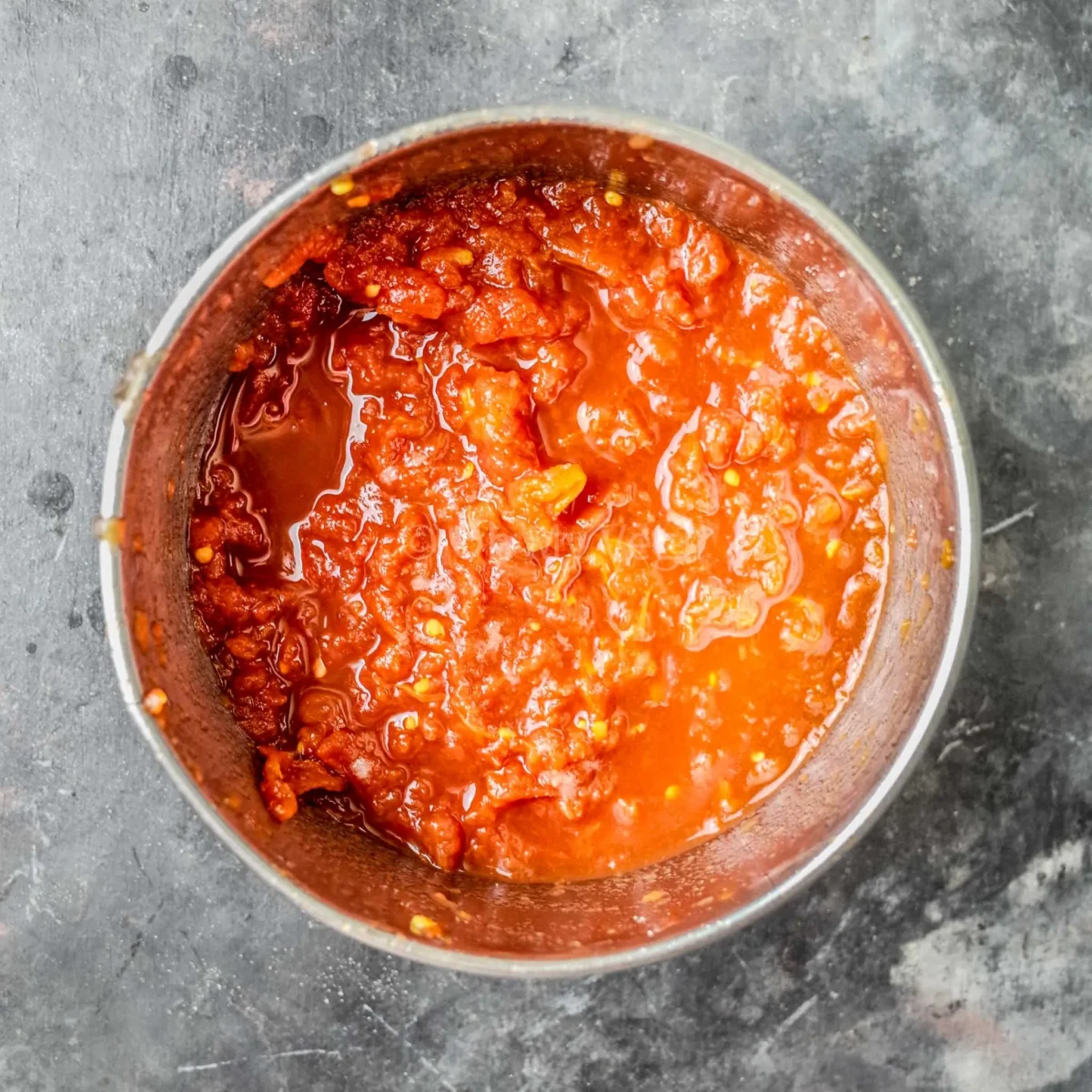
Two: Add the canned tomatoes, sans juice, to a small bowl. Use your hands to break up the tomatoes. The sauce shouldn’t be smooth, but aim for even-sized pieces.
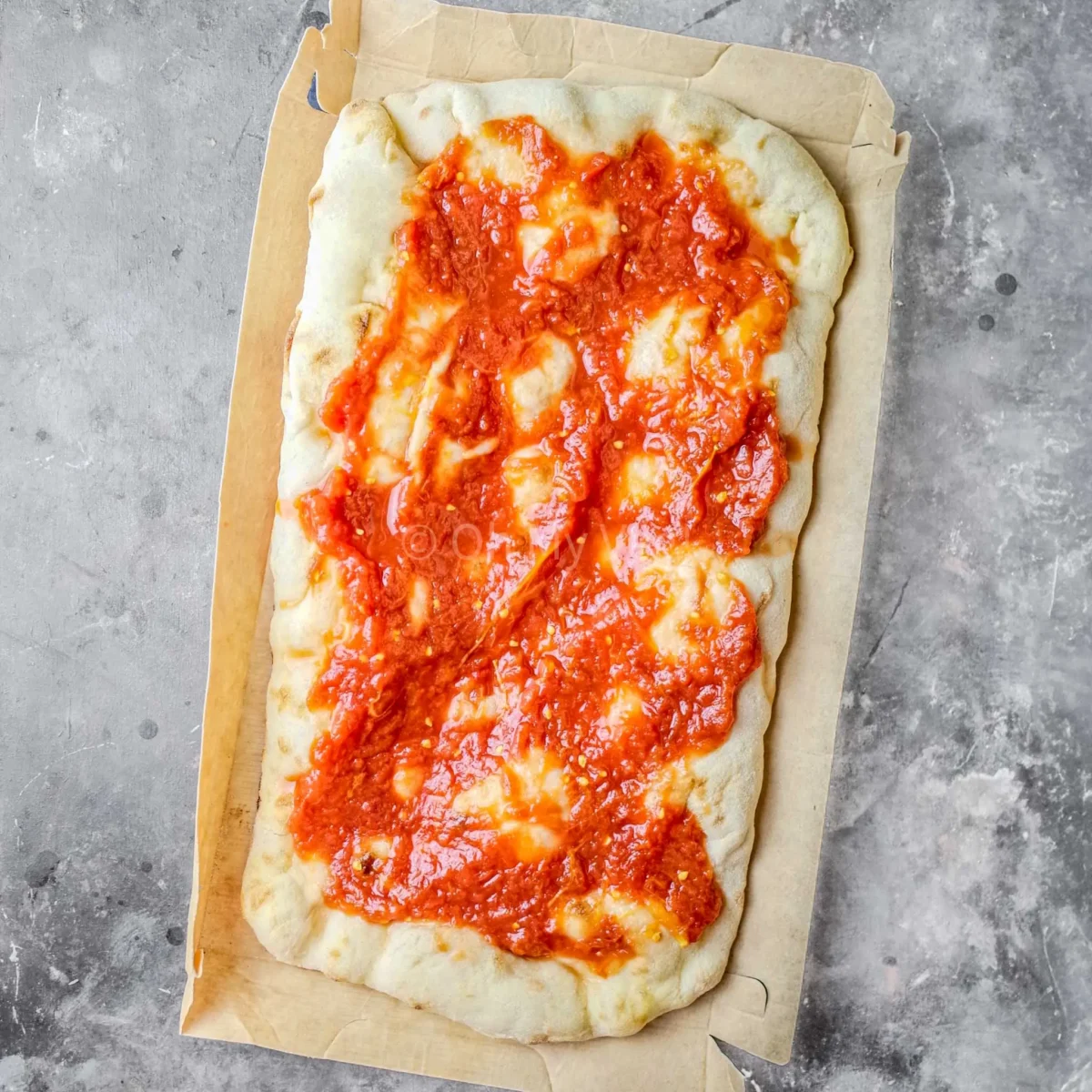
Three: Spread the crushed tomatoes over the pinsa base, leaving a little bare dough on the sides (for your crusts).
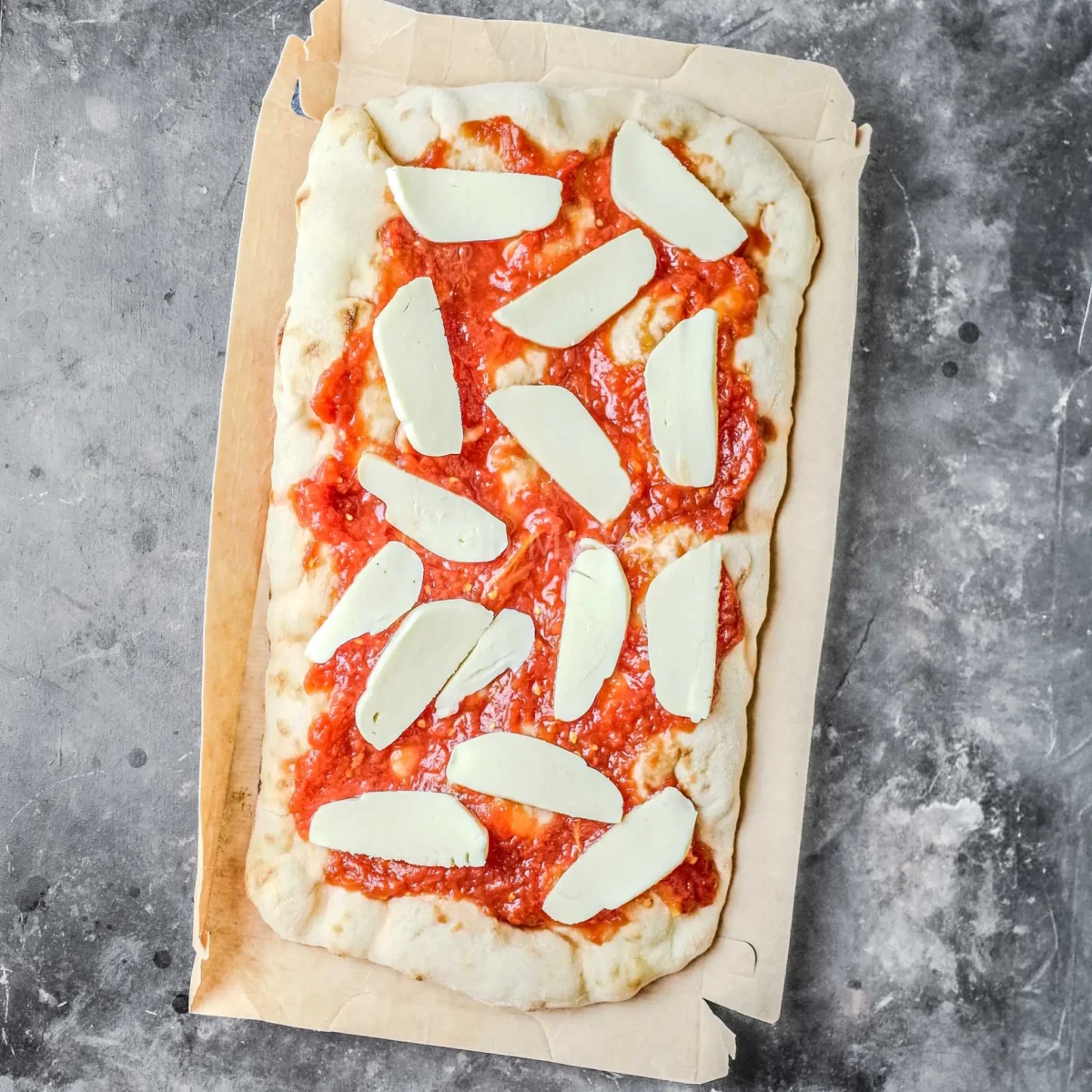
Four: Slice the pizza mozzarella into long crescents. Arrange over the tomato base.
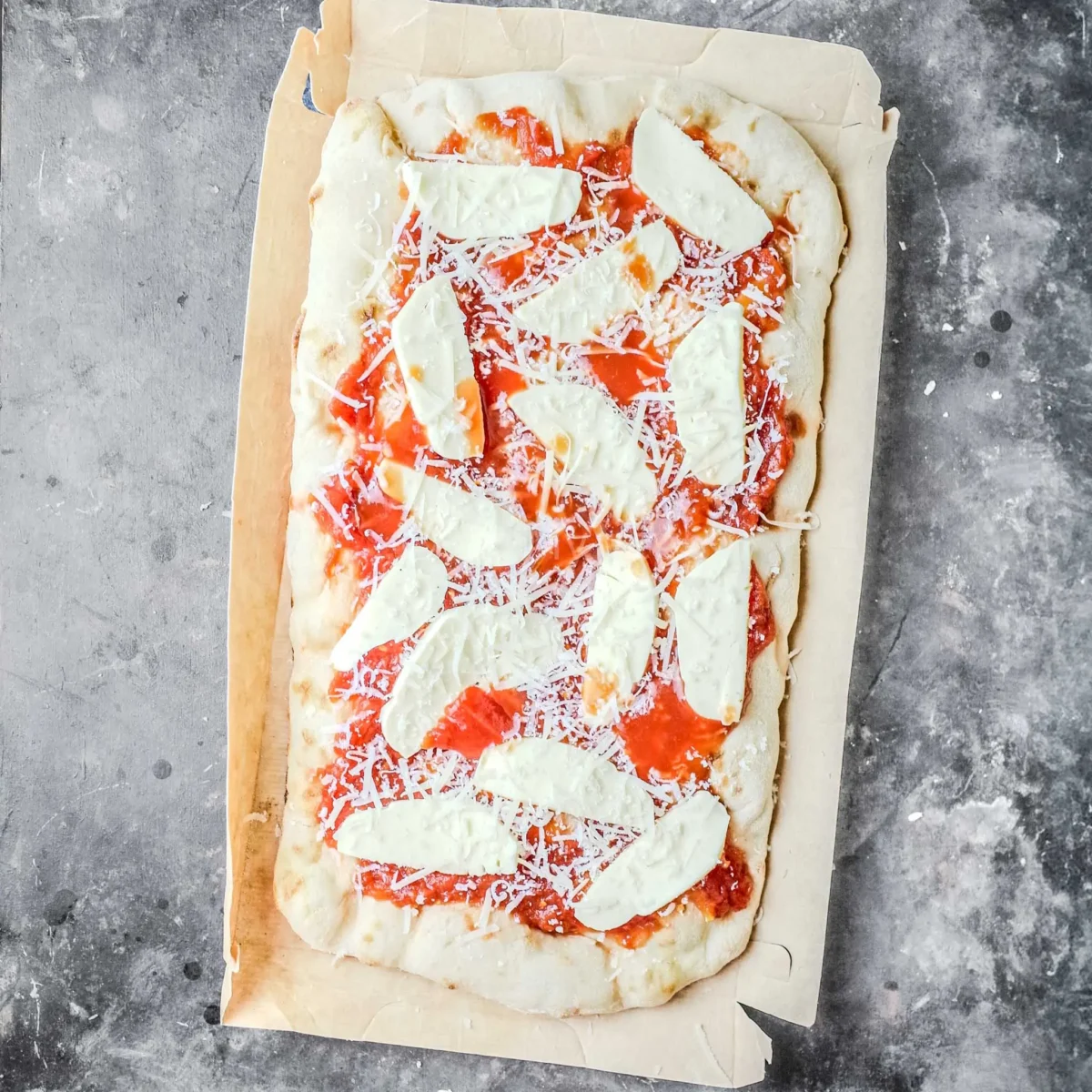
Five: Grate pecorino cheese on top, ensuring the cheese is spread evenly over the pinsa.
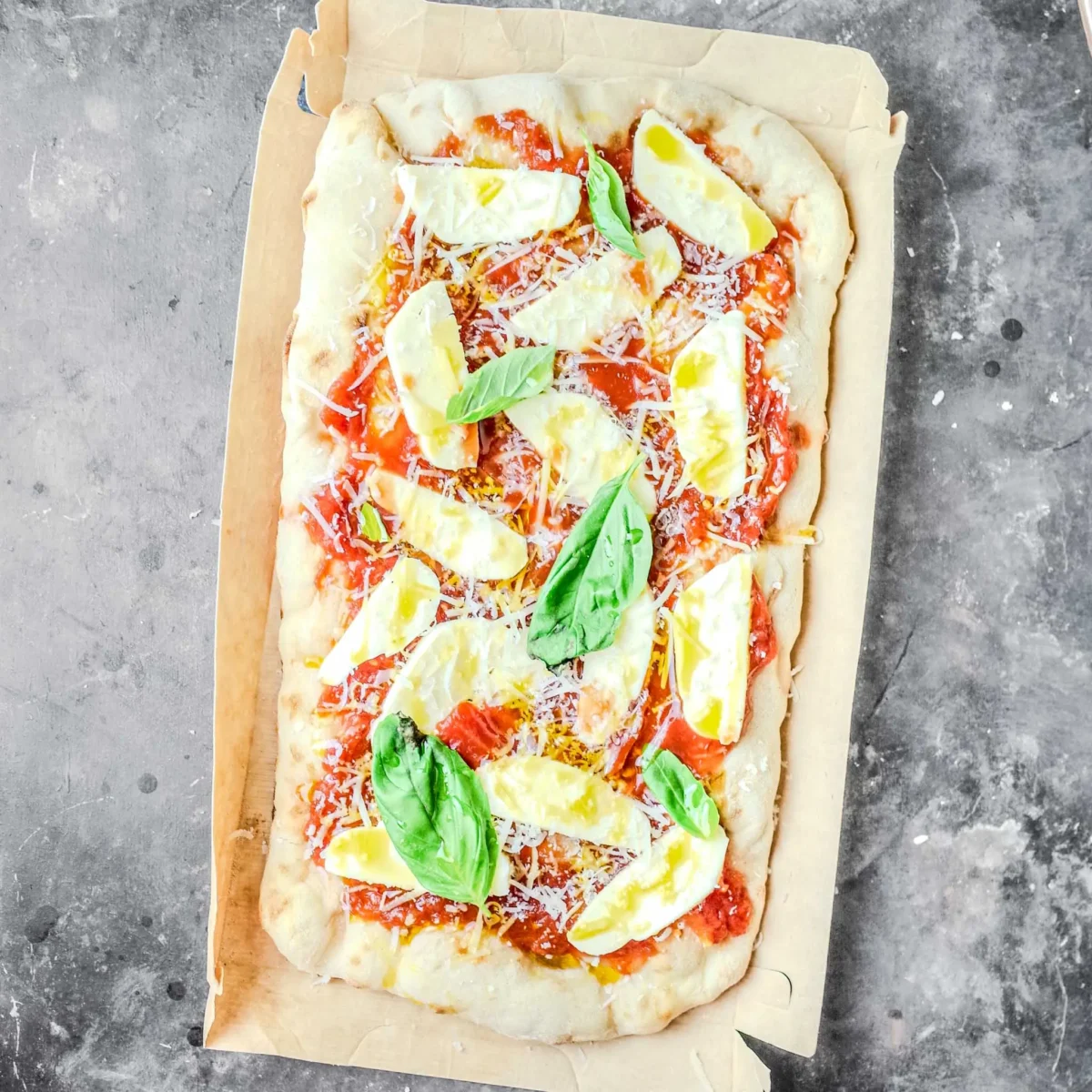
Six: Drizzle the pinsa with extra virgin olive oil, then top with fresh basil leaves. Roughly tear or keep them whole, depending on size.
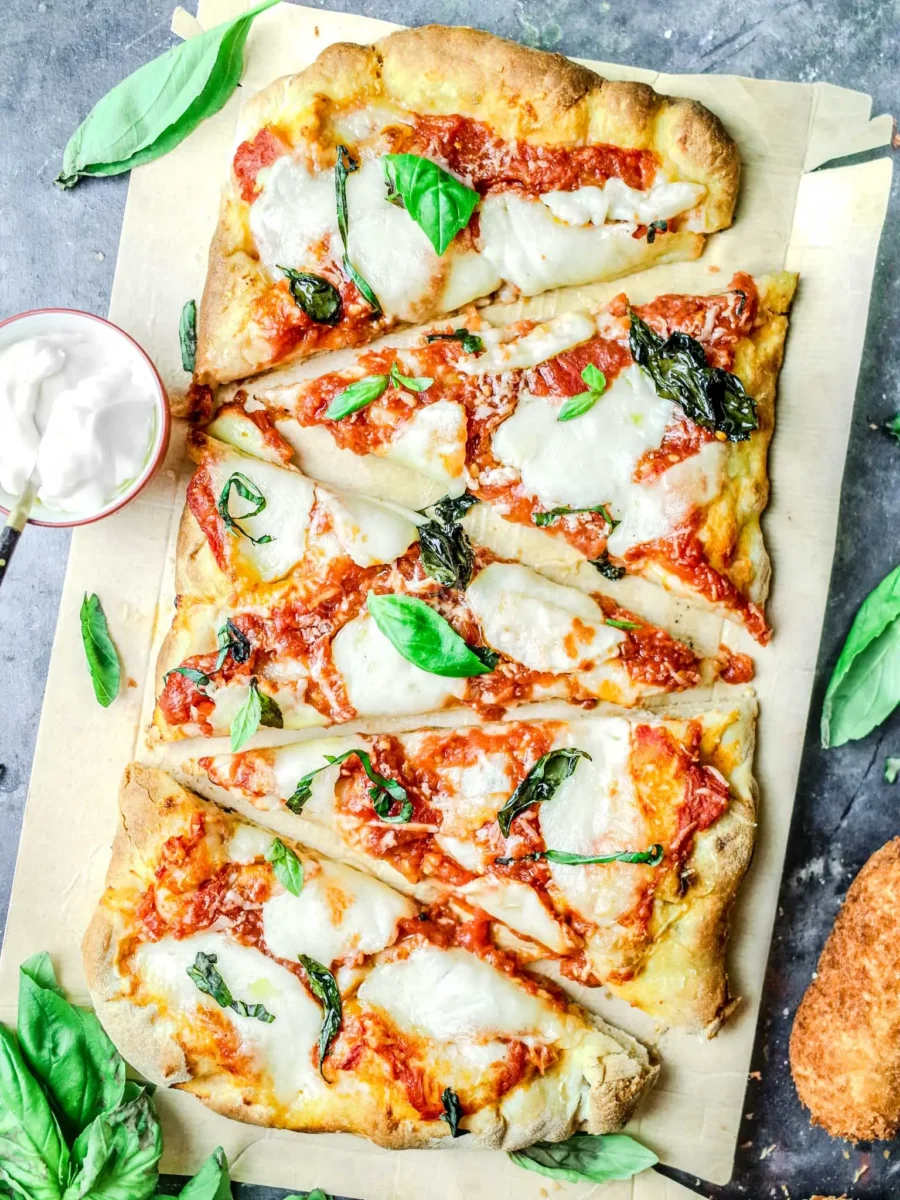
Seven: Place the pinsa in a preheated oven (260°C, or 500°F) and cook for 5 minutes, or until the crust is crisp and golden, the cheese has melted, and it smells irresistible. 😋
Remember, the complete recipe (with ingredient quantities and instructions) can be found at the bottom of this page. You can also print or save the recipe, adjust the servings, and more from there!
💡 Top Tips From the Pinseria
Pinseria = a restaurant specialising in pinsa, just as a pizzeria specialises in pizza. Here are my best pinseria-worthy tips:
- Use pizza mozzarella (low-moisture, block mozzarella) vs regular (high-moisture, water-packed) mozzarella. This prevents excess water from leaking out onto your pinsa base and making it soggy. Please don’t use grated mozzarella; pre-shredded cheese often contains anti-caking agents that can negatively affect the texture of our food.
- Crush the tomatoes by hand for an authentic texture. An ultra-smooth sauce doesn’t “stick” to the pinsa base well and isn’t as much of a joy to eat — much of the pleasure comes from the small bits of tomato!
📦 Storing Leftovers, Making Ahead, Freezing
🡆 Fridge: Cool, then cut into slices and transfer to an airtight container. For less mess, wrap the individual slices in tinfoil or reusable beeswax wrap. Pinsa Margherita will keep refrigerated for up to 3 days.
🡆 Freezer: Cool, then cut into slices. Wrap in two layers of tinfoil or plastic wrap, then place in a freezer-safe bag, labelled with the recipe name and best-before date. Pinsa Romana can be frozen for 3 months.
🡆 Reheat: In an air-fryer, oven, or pizza oven, just until warmed through. If reheating from frozen, defrost the pinsa overnight in the fridge.
🡆 Make ahead: If you’re using a store-bought pizza base, this recipe takes so little time it’s barely worth making ahead. To save a little time, crush the tomatoes in advance and store them, refrigerated, up to 5 days before you plan to cook the pinsa margherita.
🥗 Serving Suggestions for Pinsa Margherita
Start with appetisers! I usually go for something indulgent and deep-fried, like herby pesto arancini or carb-o-licious, cheesy crocchette di patate (Italian potato croquettes).
Next, I like to balance out the rich, creamy cheesiness of the pinsa margherita with a fresh salad. I’d go for a spinach-and-arugula green salad, balsamic pasta salad, or a crisp-sweet arugula-and-pear salad.
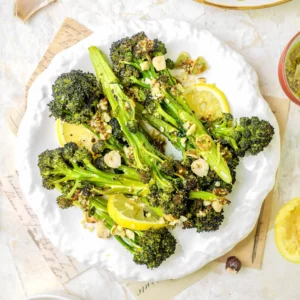
A side of green vegetables wouldn’t go amiss either — think parmesan-crusted asparagus or roasted tenderstem broccoli.
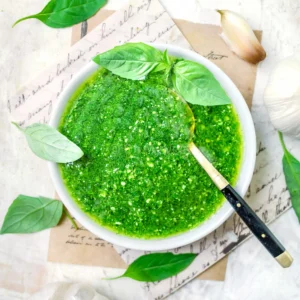
Finally, I always serve pinsa margherita with a dip on the side. Depending on my mood, I go for a homemade garlic aioli (for dipping the crusts!) or a fresh basil pesto for drizzling (soooo much better than store-bought). For parties or occasions, I choose a selection of different dips: hot honey, creamy ranch, truffle oil, hot sauce … the sky is the limit!
If you’ve tried this pinsa margherita recipe, please drop a comment ✍️ or a star rating 🌟 below to help fellow readers! Additionally, if you have a question, please drop a comment, and I’ll do my best to answer ASAP.
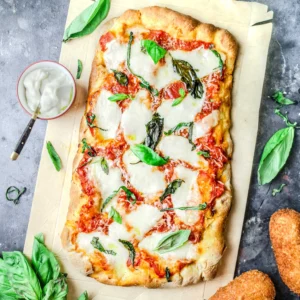
Pinsa Margherita

Ingredients
- 1 can peeled plum tomatoes San Marzano dell’Agro Sarnese-Nocerino DOP
- 1 pinsa base
- 120 grams block mozzarella
- 10 grams vegetarian pecorino
- 1 tablespoon extra virgin olive oil
- fine sea salt to taste
- 1 sprig fresh basil
Instructions
- Preheat your oven to 260℃ (500℉).
- Place a sieve over a bowl. Tip 1 can peeled plum tomatoes into the sieve. Strain off the excess liquid from the tomatoes (you can save this for a pasta dish!).
- Add the strained plum tomatoes to a bowl. Use clean hands to crush the tomatoes into a sauce. It doesn't have to be smooth.
- Place 1 pinsa base on a large oven or pizza tray.
- Use a spoon to spread the crushed tomato sauce over the pinsa base. Leave a gap on the edge of the pinsa base, to make a "crust."
- Slice 120 grams block mozzarella into crescents. Arrange on top of the tomato base.
- Finely grate 10 grams vegetarian pecorino over the pinsa.
- Drizzle the pinsa margherita with 1 tablespoon extra virgin olive oil, then sprinkle with fine sea salt to taste. Add ½ sprig fresh basil, with the leaves roughly torn/chopped, on top.
- Bake the pinsa margherita for 5 minutes, or until the crust is golden and crisp, while the cheese is bubbly and melted. Once cooked, serve with the remaining ½ sprig fresh basil scattered over the surface.