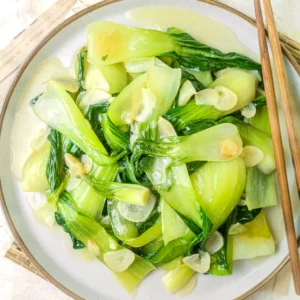
Bihun Goreng (Indonesian Fried Vermicelli)
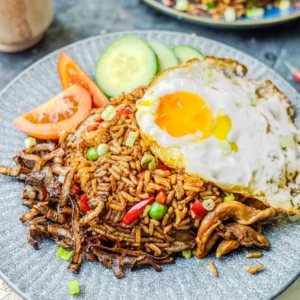
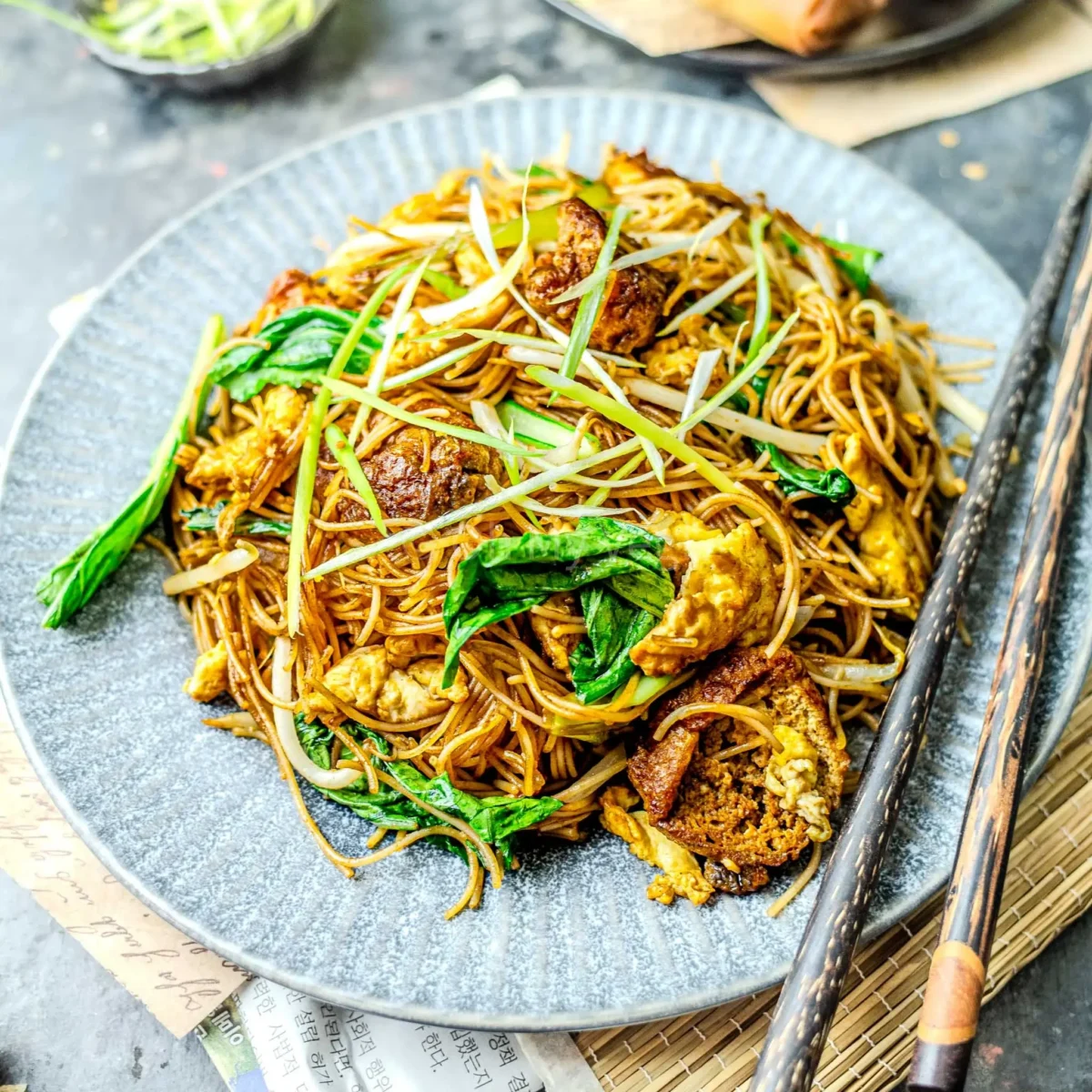
Thin rice vermicelli tossed with eggs, tofu, and whatever greens you’ve got, all coated in dark, sticky-sweet kecap manis that soaks into the protein and clings to every noodle — this is your new favourite dish, also known as bihun goreng.
I’m 14 years old, armed with a new wok, a bottle of soy sauce, and a lot of enthusiasm. I make a rudimentary version of mushroom chow mein, which I soon declare the “best thing ever,” and go on to cook on an almost daily basis.
That was the start of my obsession with noodle recipes. Living in a small seaside town with a tiny Asian population, I wouldn’t meet tantanmen ramen or paneer hakka noodles until years later, let alone bihun goreng.
Bihun goreng, an Indonesian dish that literally means “fried rice noodles,” is one of those street food dishes that you can order from the roadside pretty much anywhere in the country.
It’s equally beloved in the neighbouring countries of Singapore and Malaysia, where it might be called bee hoon or mee hoon instead.
There’s no one set recipe for bihun goreng; vegetarian versions like this one are abundant, but you’re equally likely to find shrimp or beef-based meatballs stirred into the noodles.
I’ve gone with spongy tofu puffs, which soak up all that delicious sauce. Oh, right, the sauce — let’s go on a quick detour, and I’ll get back to the other ingredients later!
Kecap manis, a sweet soy sauce unique to Indonesian cuisine, is doing most of the heavy lifting here. If you’ve never cooked with it before, imagine regular soy sauce combined with molasses: thick, sticky, sweet, and dark.
Vegetarian oyster sauce, regular light soy sauce, and ground white pepper bring savoury depth, salty umami, and warm spice, respectively, keeping things balanced.
The sauce doesn’t just soak into our plant-based protein, making it intensely flavoursome, but also coats our delicate rice noodles completely.
The whole thing comes together in less than fifteen minutes. Hot wok, then those other ingredients I promised to get back to — shallots, sizzling as they hit the oil; garlic slices; ribbons of scrambled eggs; crunchy beansprouts … and the fresh, tender, sweetness of choi sum.
My kitchen smells like a proper Indonesian warung when I’m making this. And the plates are cleared in mere seconds. I don’t go quite as far as to make bihun goreng every other day (there’s far too much recipe testing going on around here nowadays!), but it is tempting!
❤️ Why You’ll Love Indonesian Bihun Goreng
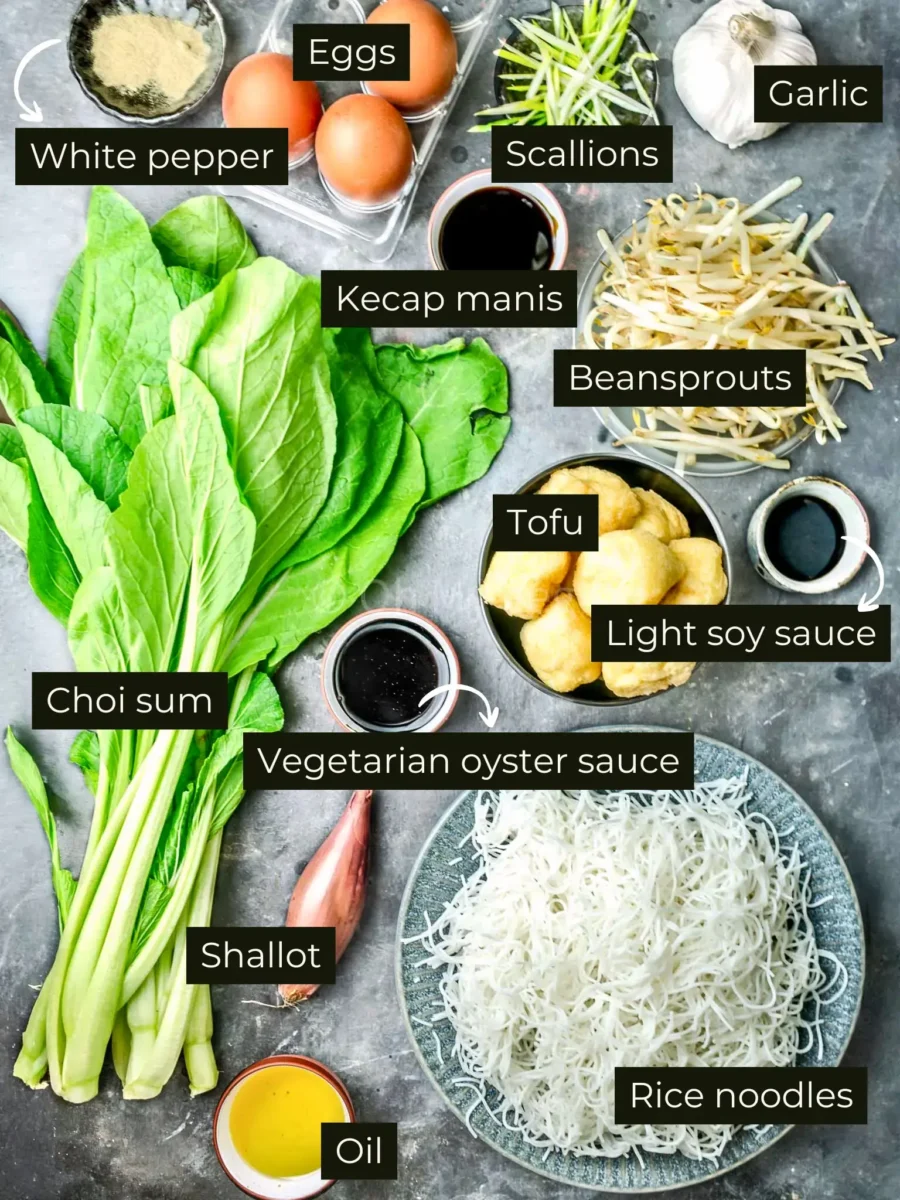
🍜 What Ingredients You’ll Need For Bihun Goreng
I used to think that Indonesian stir-fried noodles, such as bihun goreng, were much more complex than Chinese dishes like mei fun.
The truth is, it’s not. It’s actually just as easy to make for beginners as expert stir-friers (Is that a thing? It should be!).
There may seem like a lot of ingredients, but don’t get overwhelmed. I’ve split it into two here:
For the Scrumptiously Savoury Sauce
You’ll only need four ingredients. Bihun goreng keeps things simple, which lets the complexity of kecap manis do all the talking.
- Kecap manis, AKA Indonesian sweet soy sauce. It’s thick as treacle and dark as midnight (if your noodles aren’t gloriously brown, you haven’t used enough!). It’s what gives bihun goreng that characteristic stick-sweet coating and tempting flavour. Can’t find it locally? Don’t fear: I’ll explore your options in the subheading below.
- Vegetarian oyster sauce is the savoury, umami backbone of this whole dish. Also called mushroom stir-fry sauce, it’s packed with natural umami and hints of sweetness. I couldn’t do without this ingredient and use it in countless Asian recipes, so it’s 100% worth having in your pantry.
- Light soy sauce cuts through the sweetness with real saltiness.
- Ground white pepper has a mild warmth that sits at the back of your throat.
Now For that Stir-Fry …
You’ll need the noodles, the aromatics, the protein, and the vegetables:
- Rice noodles are thin, delicate, and naturally gluten-free. You can buy them pre-soaked (as I did this time) or dried (in which case they don’t need cooking, just soaking in hot water).
- Neutral oil with a high smoke point for carrying our flavours. Think sunflower oil, canola oil, or groundnut oil.
- Banana shallot is sweeter and more delicate than onions; offers a real aromatic base.
- Garlic perfumes the whole dish with a lovely pungent, savoury aroma.
- Eggs get scrambled directly in the wok. They create lovely golden ribbons of richness (and extra protein). Skip them for a vegan eggless recipe.
- Tofu is our protein powerhouse. It’s charred until smoky, then soaks up the sauce. I’ve used deep-fried tofu puffs (they have a real spongy quality that shines here), but either homemade extra-firm tofu or store-bought is fine too; give it a press first.
- Choi sum are Chinese greens with tender leaves and crunchy stems. The leaves are buttery and silky, while the stems offer a fresh bite.
- Beansprouts are added right at the end, so they stay beautifully crunchy. A stir-fry staple.
- Scallions (spring onions, to you and me) are scattered over the top for freshness and a bit of sharpness.
🔄 Substitutions
Use whatever vegetables you can. Seriously — bihun goreng is a forgiving recipe. Chinese cabbage and tomatoes are common additions at street food stalls. At home, you can add pak choy (bok choi), gai lan, broccoli, carrots, green beans, bell peppers … anything that usually belongs in a stir-fry.
Not eating eggs? They add richness and those pretty golden bits, but they’re hardly essential. You can mix in turmeric-scrambled tofu to mimic eggs. Or just add more tofu in general!
For rice noodles, you’re ideally looking for the thin, round variety here. If you can only find wider rice noodles (sometimes called rice sticks or pad Thai noodles), the recipe will work, but you’ll need to soak them for longer.
🫙 Help! I Can’t Find Kecap Manis
It’s becoming easier to find kecap manis in large grocery stores — In the U.K., Sainsbury, Waitrose, and M&S sell the sauce. The ABC brand is by far the most widespread.
If you have an Asian shop nearby, it’s worth a trip. You’re almost guaranteed to find it.
However, if you’re far from a large grocery store or specialist food shop, your best bet might be to order kecap manis from Amazon or other online retailers.
As a last resort, you can make a kecap manis substitute at home. Mix regular soy sauce with palm sugar (or brown sugar) — roughly two parts sugar to three parts soy — and heat it gently until it thickens.
While this won’t be identical, it’ll get you close enough that you can still eat delicious noodles tonight rather than waiting until you’ve ordered the proper stuff online.
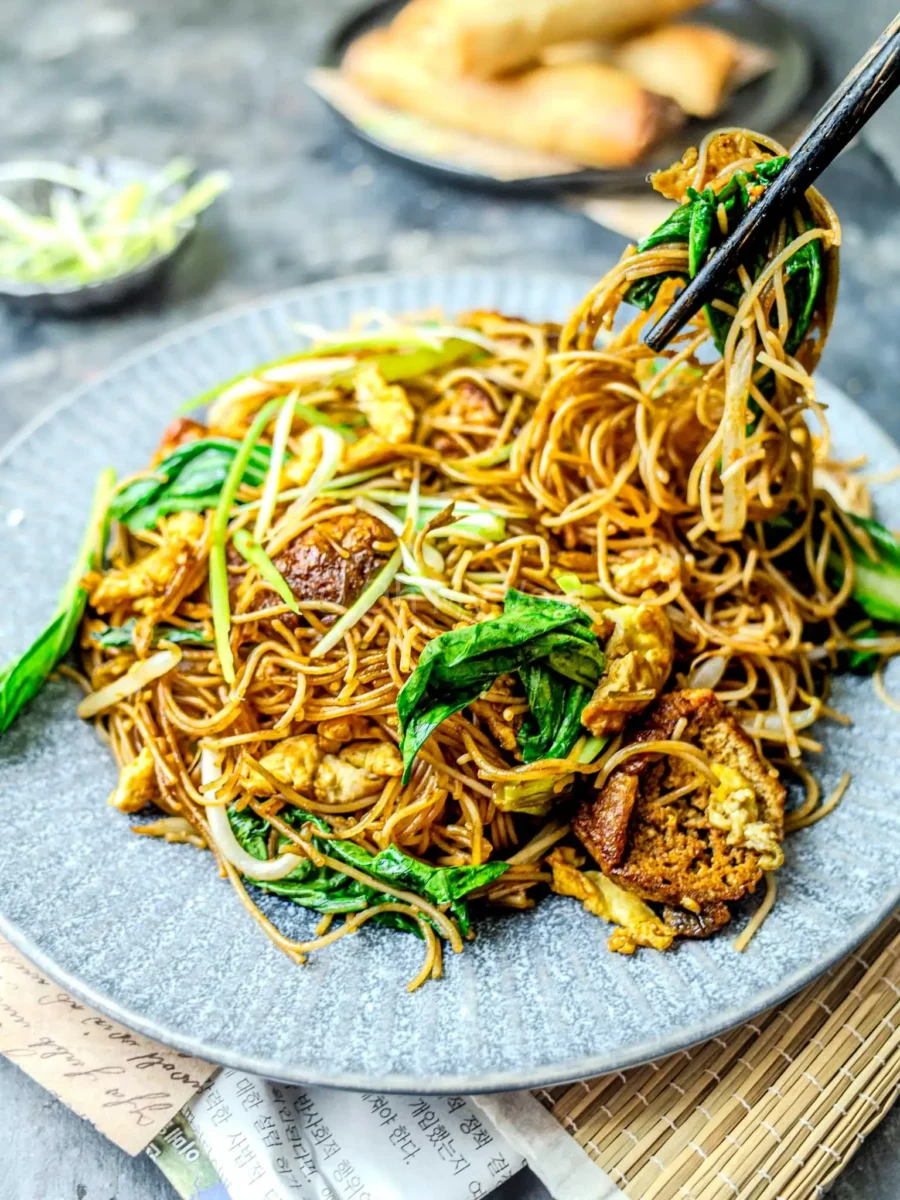
Adapting This Recipe For Allergies and Dietary Requirements
This recipe is already 100% vegetarian and nut-free. The rest is easily worked around.
Making bihun goreng vegan is beyond simple. Leave out the eggs — that’s it.
You’ll still have all the benefits of plant-based protein from tofu, but, if you like, you can also add vegan meatballs. The meat version are a traditional part of bihun goreng, so it won’t feel out of place.
As for the rest of the recipe, the sauce is naturally plant-based, unlike most recipes; I specifically use vegetarian oyster sauce. You won’t feel like you’re missing a thing!
To make the recipe gluten-free, you’ll need to hunt down a gluten-free version of kecap manis, or make your own by mixing tamari with palm sugar. You’ll also need to replace light soy sauce with tamari and possibly a little extra salt.
Unfortunately, it’s not really possible to make bihun goreng soy-free. The sauces are too critical to the flavour.
However, fundamentally, stir-fries are brilliantly adaptable — if something doesn’t work for you, swap it for something that does, and the deliciousness stays intact!
🧑🍳 How to Make Bihun Goreng (Step-by-Step Photos)
The reason I became so enamoured with noodle stir-fries in the first place is how easy they are to cook, even for beginners.
This one takes less than 20 minutes, putting it firmly in the “I can make this after a long day” camp!
However, it’s crucial to get everything prepped and ready before you turn the heat on (I’ve factored this into my timings, don’t worry!). This saves you the stress of frantically chopping ingredients while others burn.
Let’s see the step-by-step photos from my kitchen:
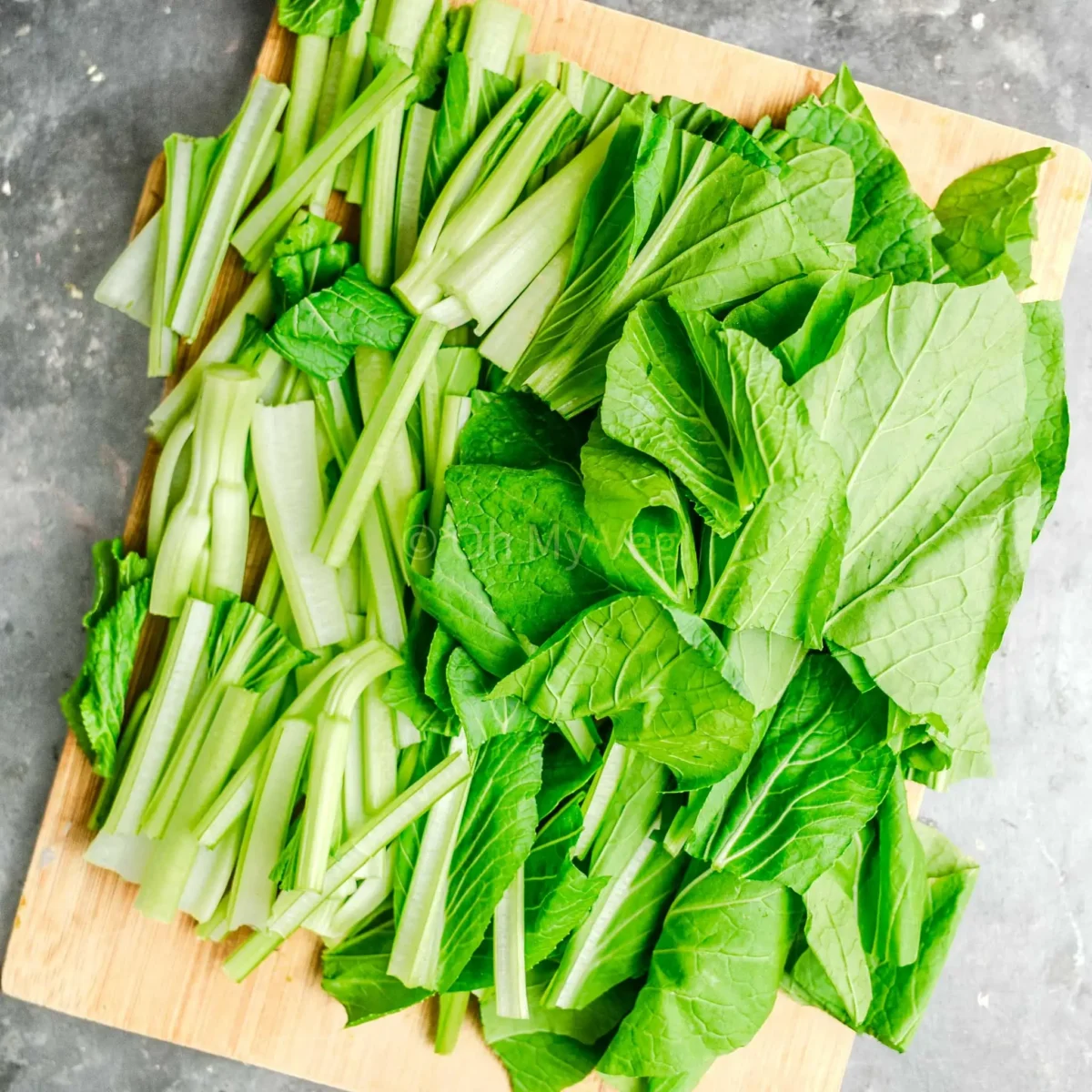
One: Prepare the choi sum. Wash thoroughly, drain well, then cut the stalks into 2-inch-long pieces. Cut the leafy green parts into two.
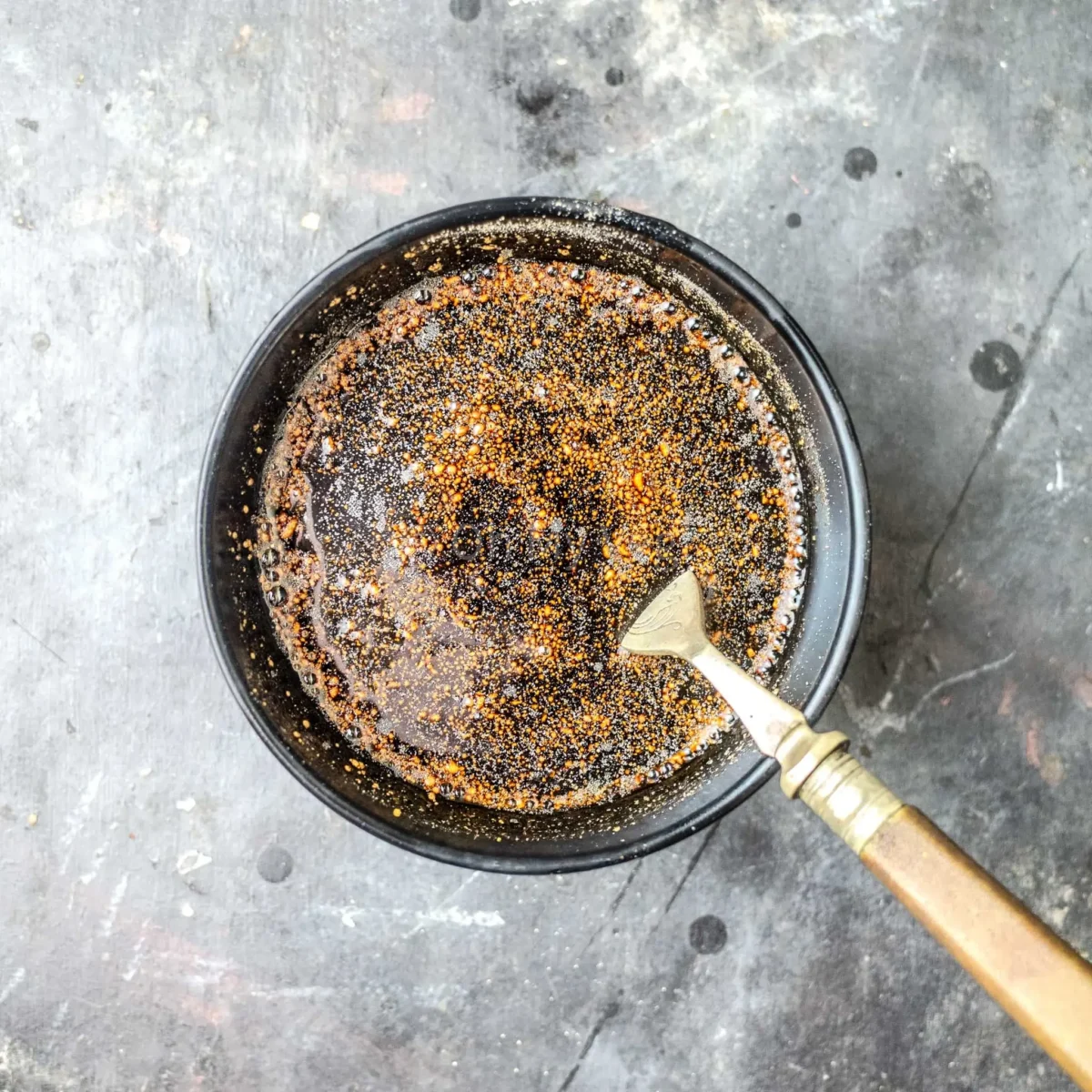
Two: Mix in a small bowl, combine kecap manis, vegetarian oyster sauce, light soy sauce, and ground white pepper to make a stir-fry sauce.
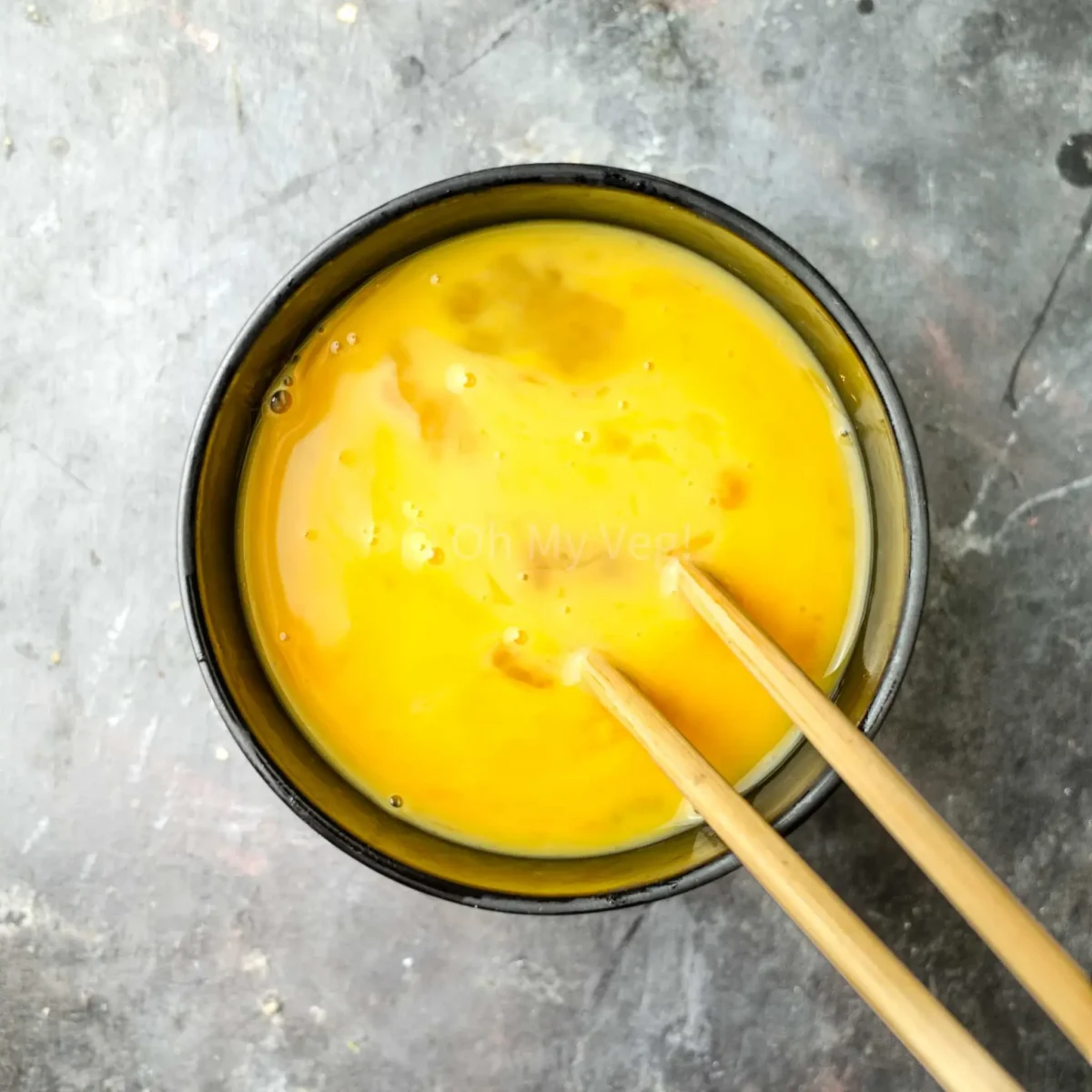
Three: Crack eggs into a bowl and whisk.
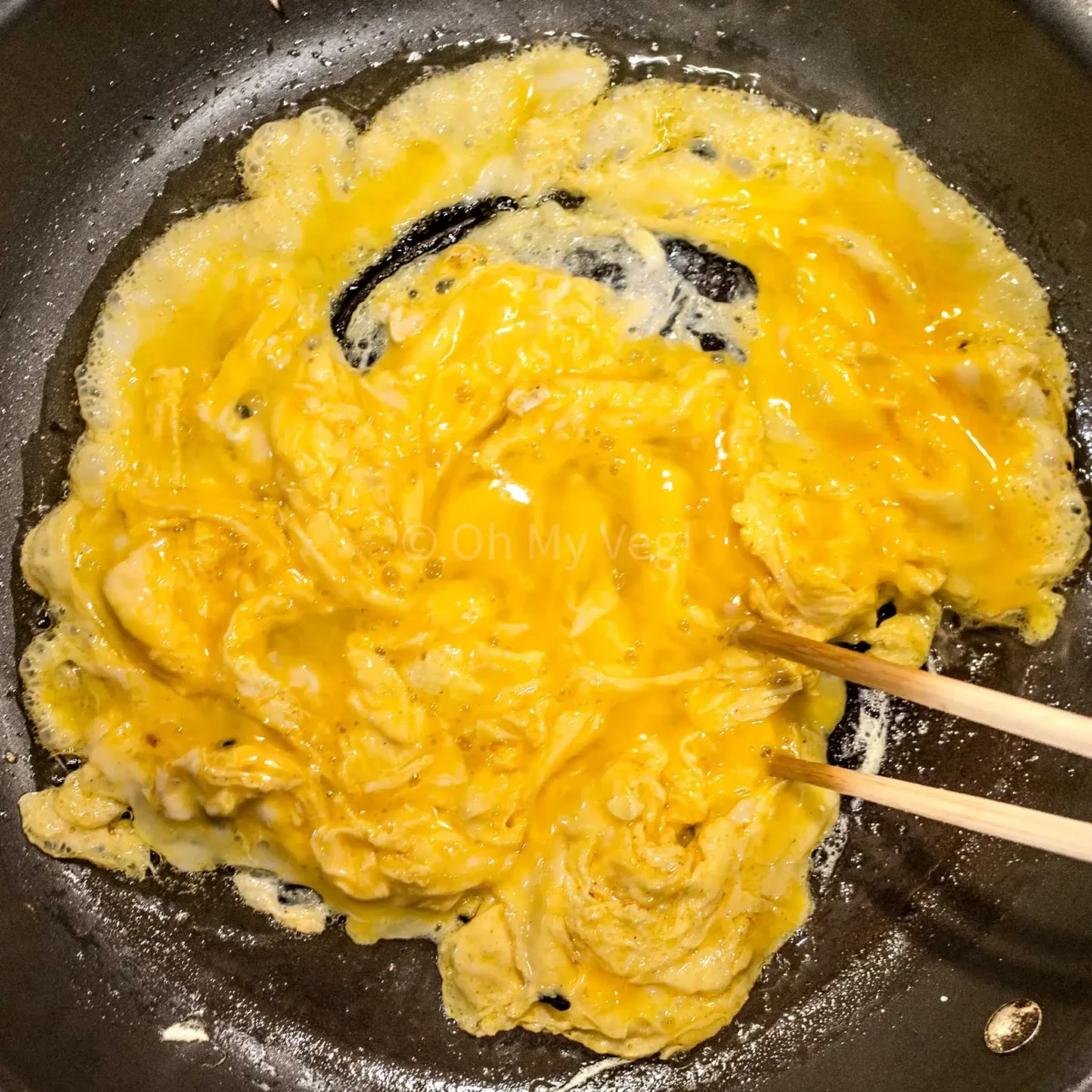
Four: Heat oil in your pan or wok. Allow to heat, then add the eggs. Immediately begin to scramble.
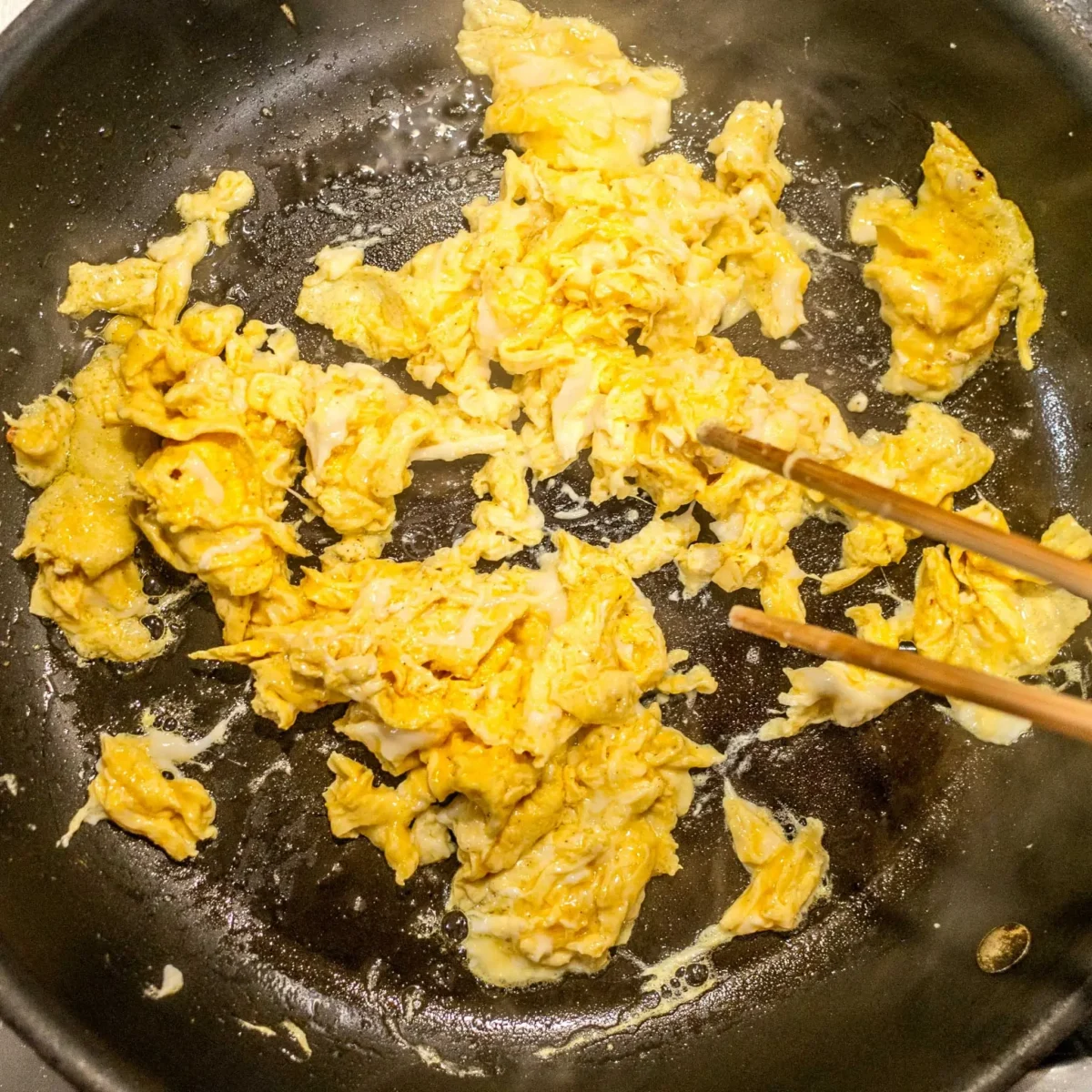
Five: We want “hard” scrambled eggs for this recipe. Once scrambled, set aside for later.
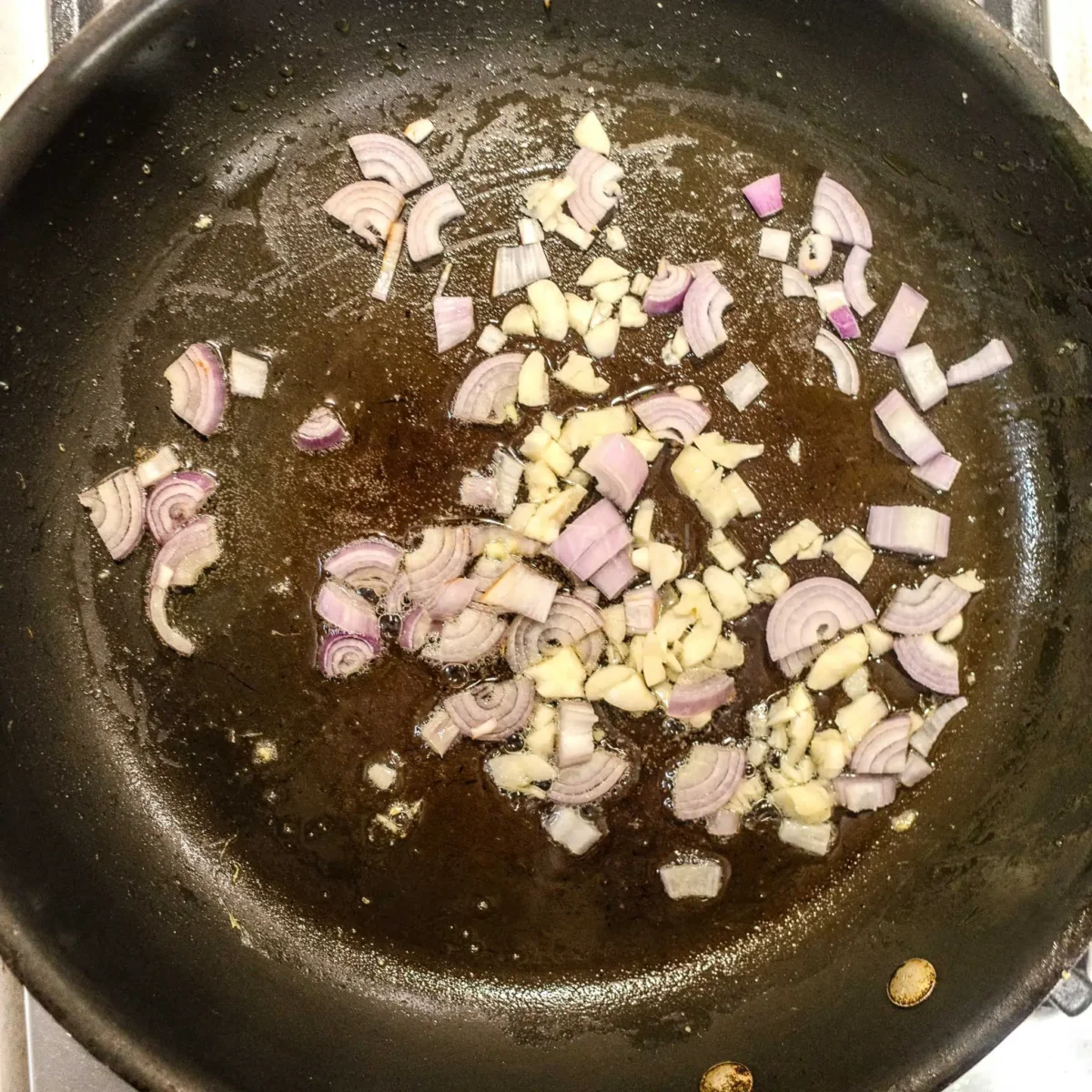
Six: To the same pan, add more oil. Once hot, add your chopped shallots and garlic.
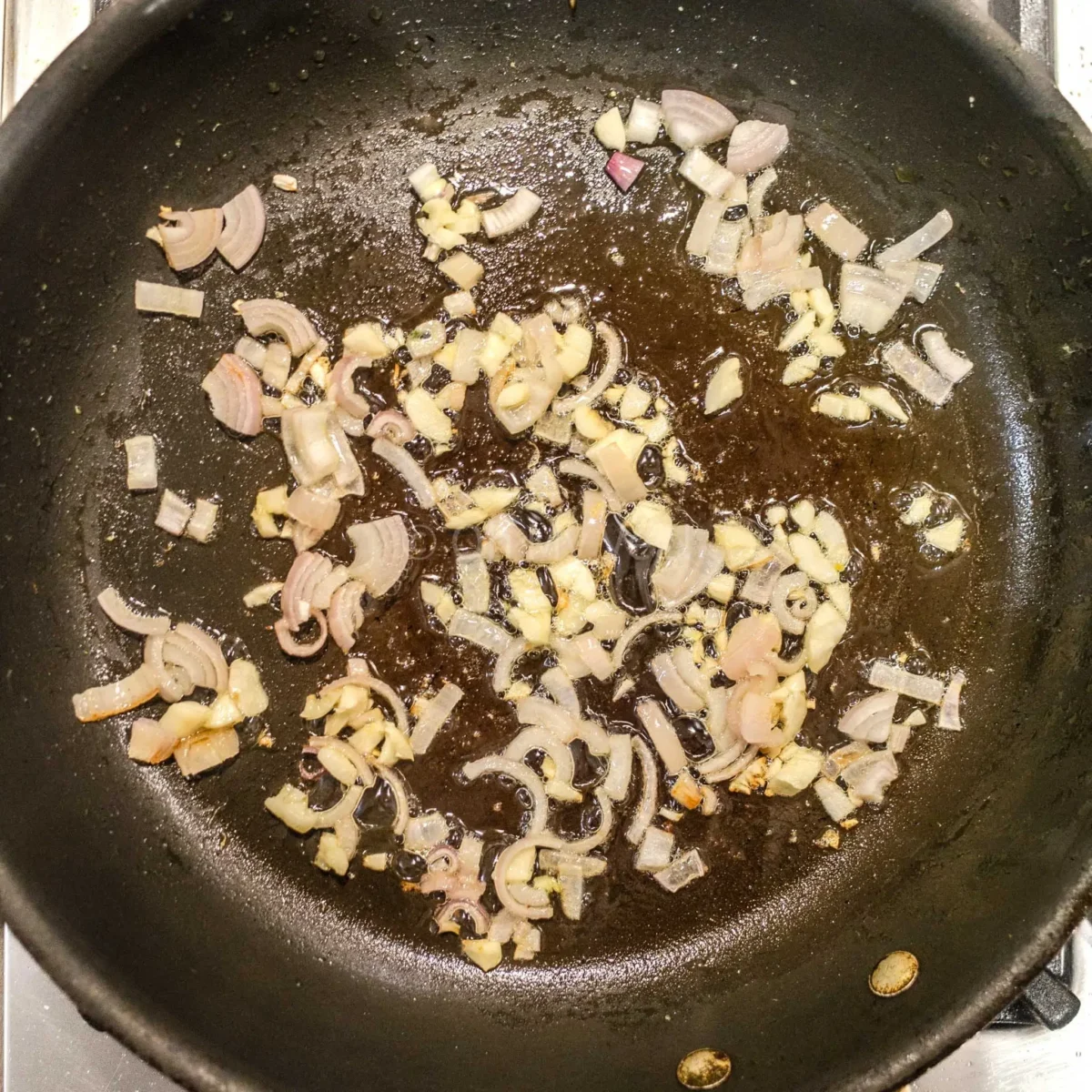
Seven: Stir-fry the aromatics until softened, fragrant, and slightly browned.
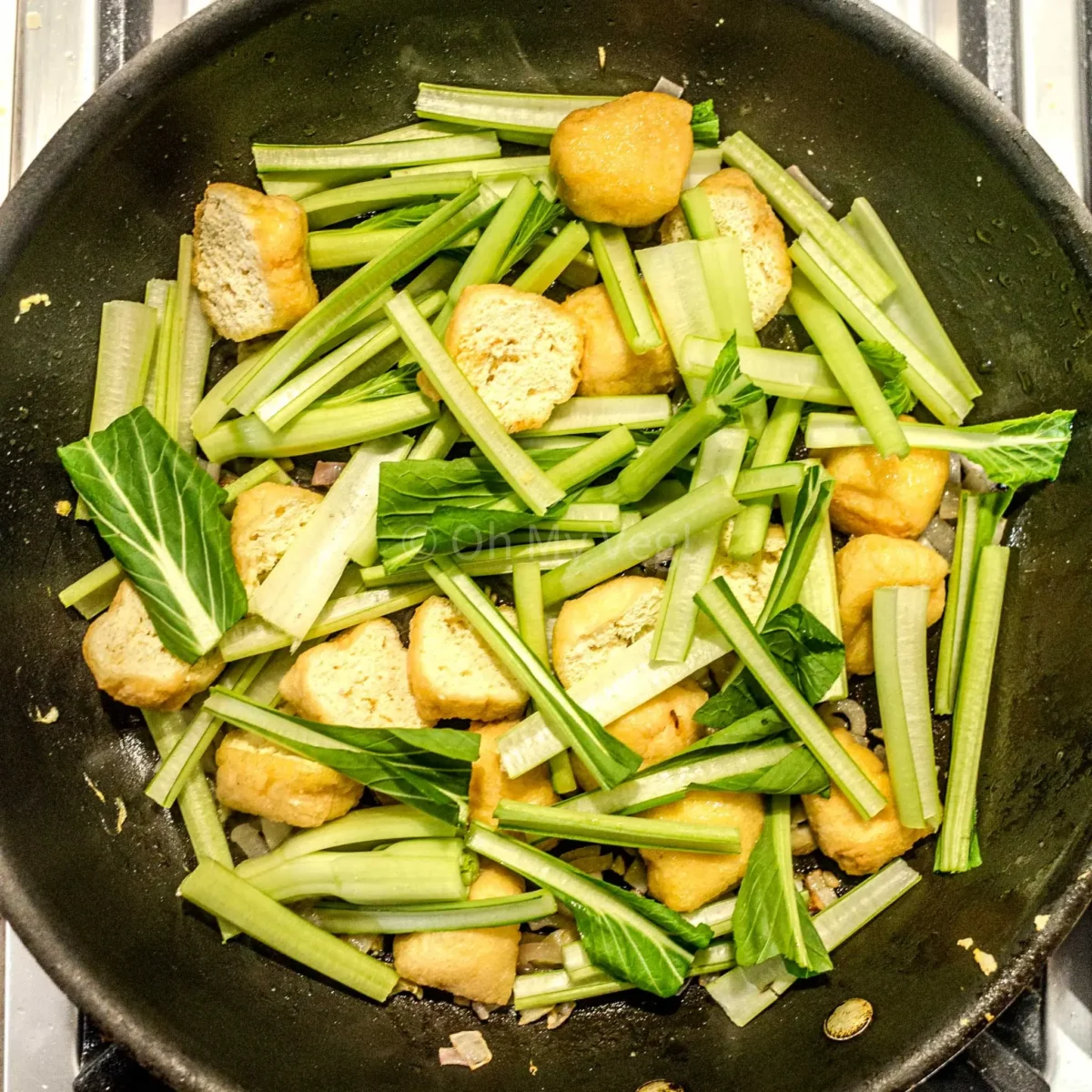
Eight: Add the stalks of the choi sum and tofu to the pan.
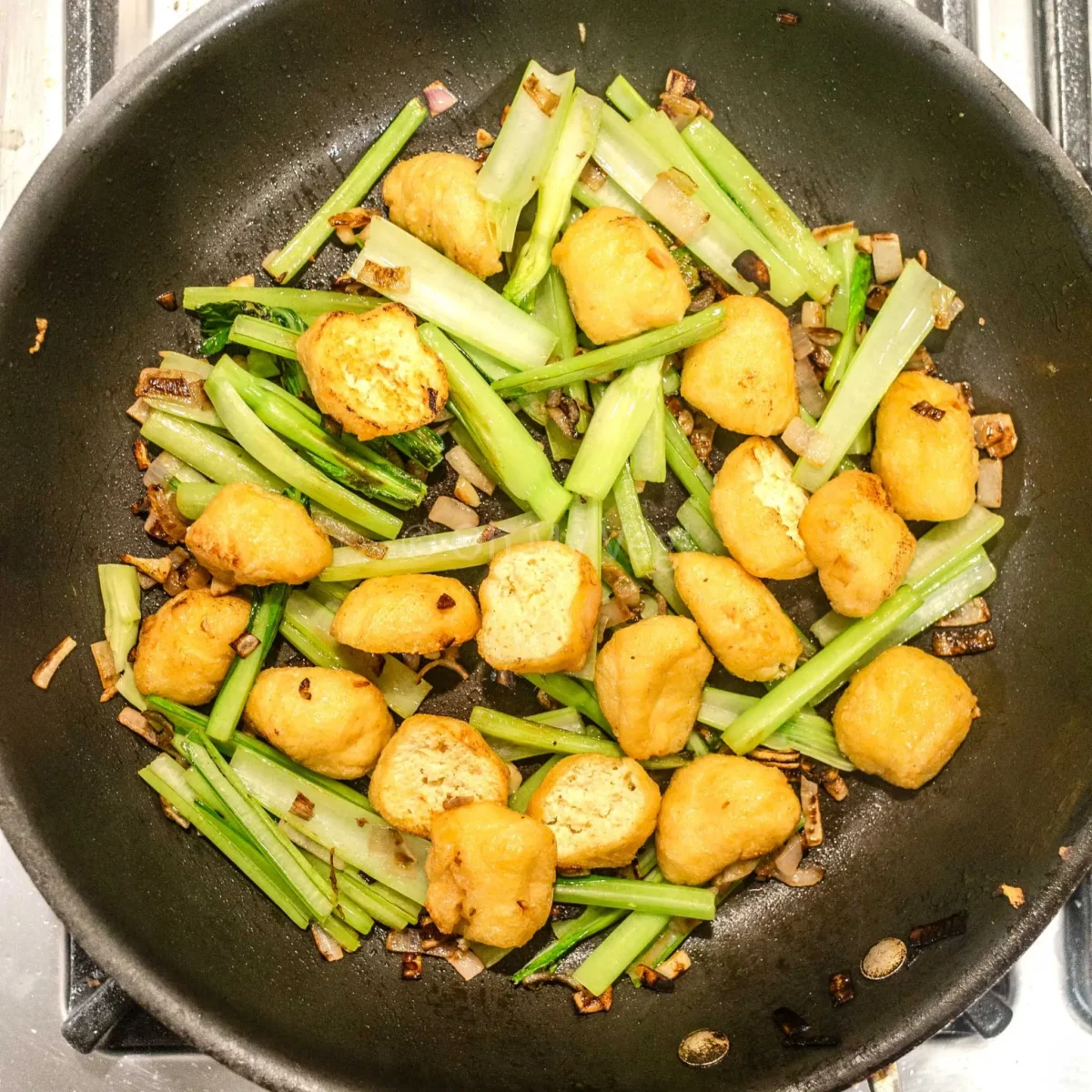
Nine: Stir-fry for a few minutes, until the edges are charred and smoky.
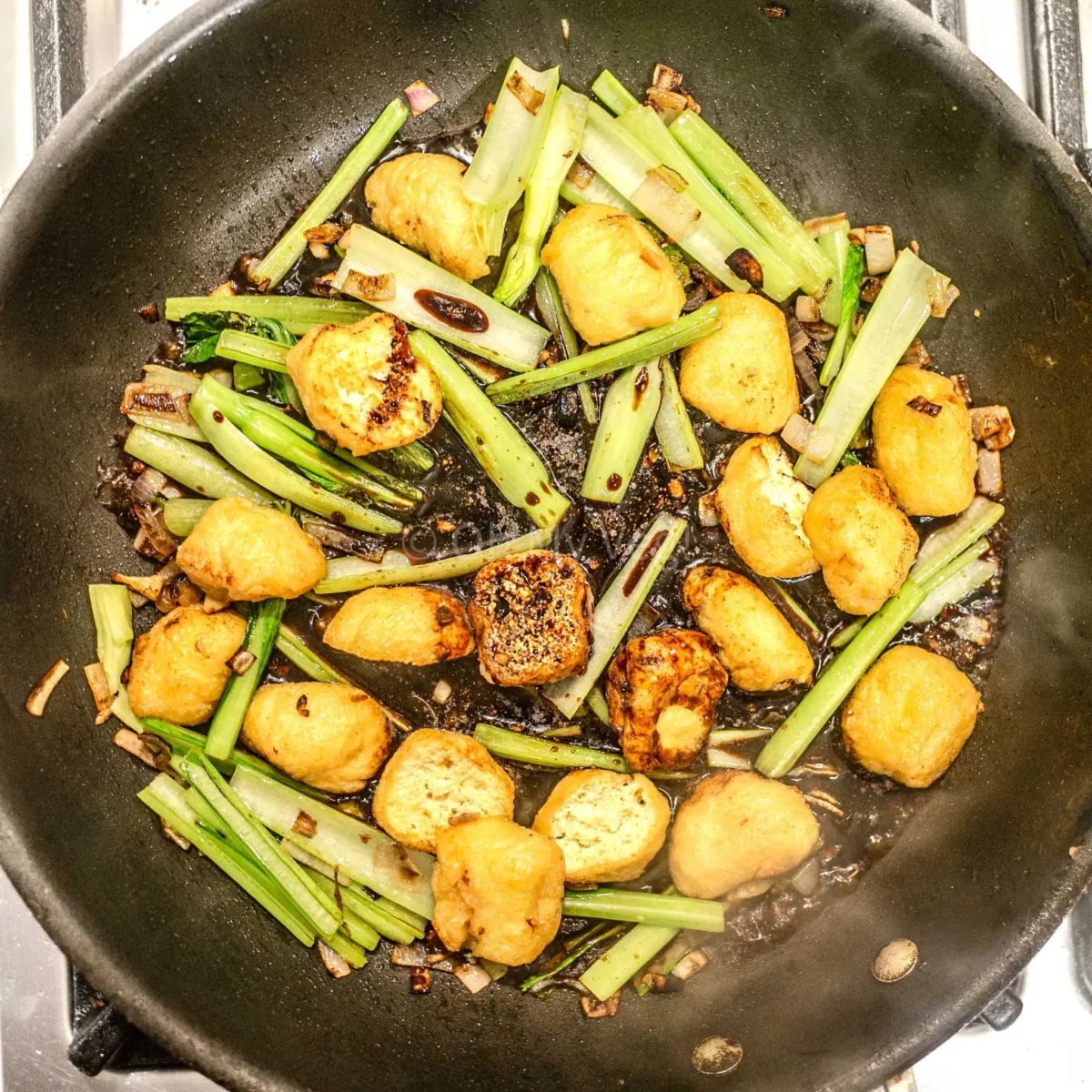
Ten: Add the stir-fry sauce to the pan.
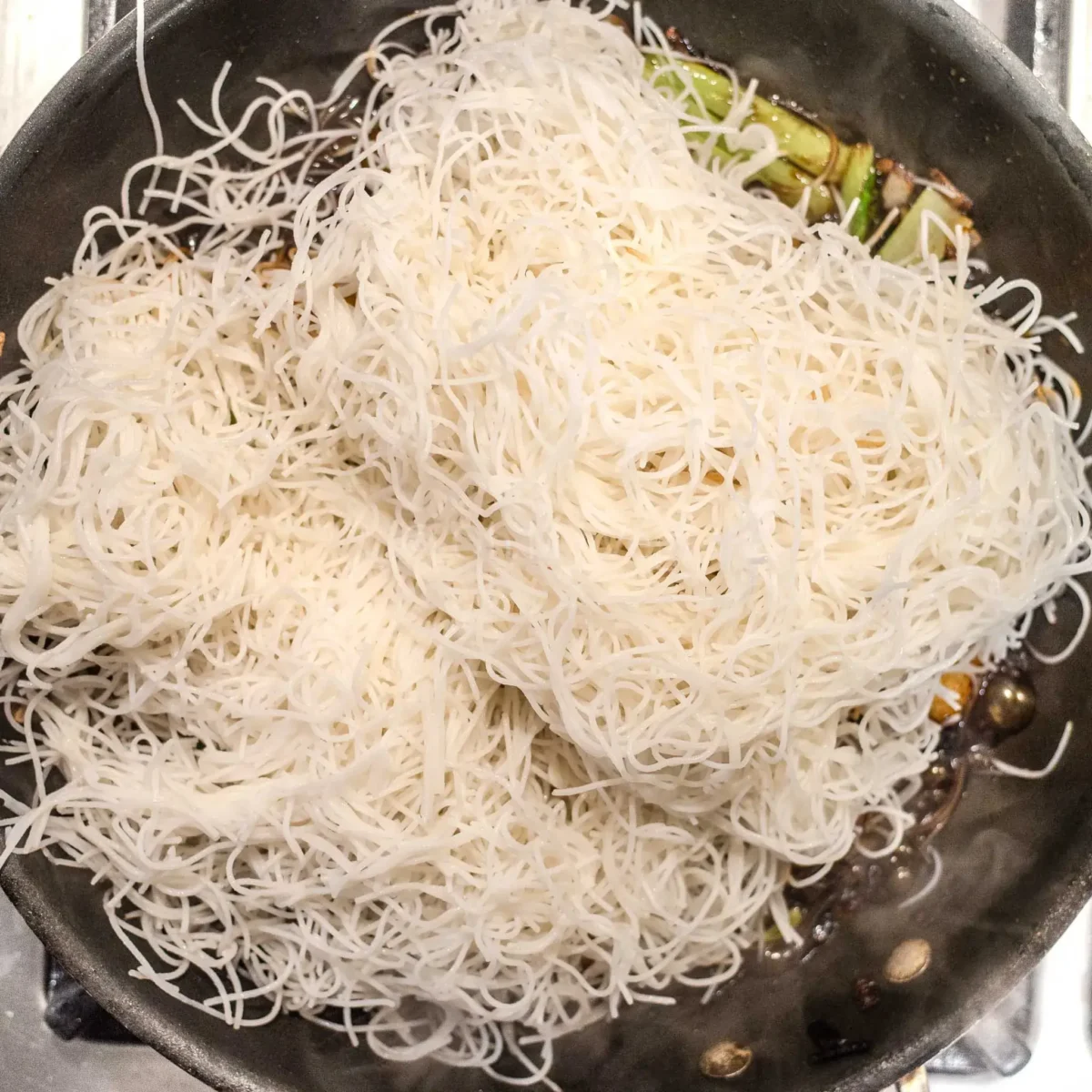
Eleven: Add your soaked rice noodles to the pan — more info on how to do this below.
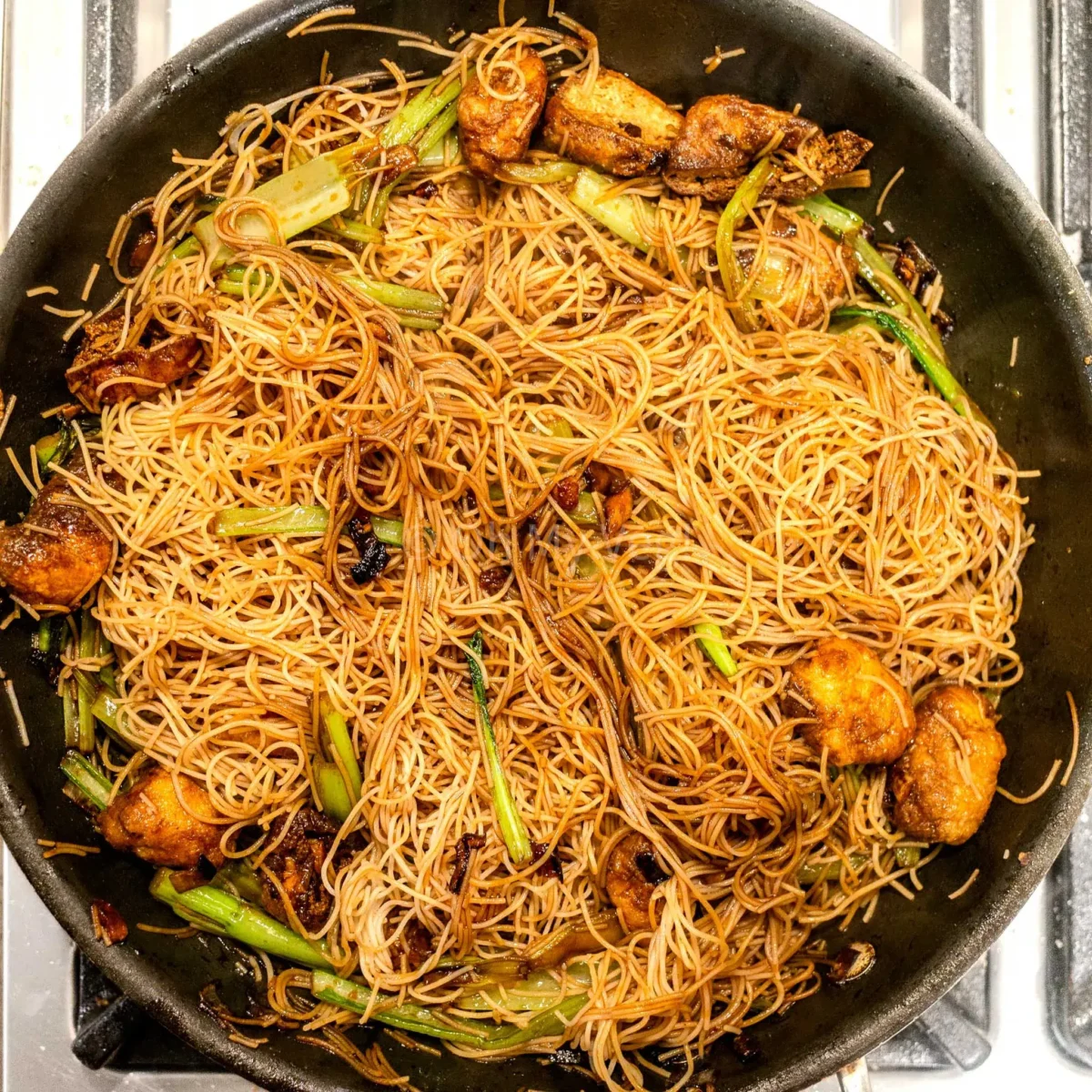
Twelve: Toss the noodles to coat them with the stir-fry sauce.
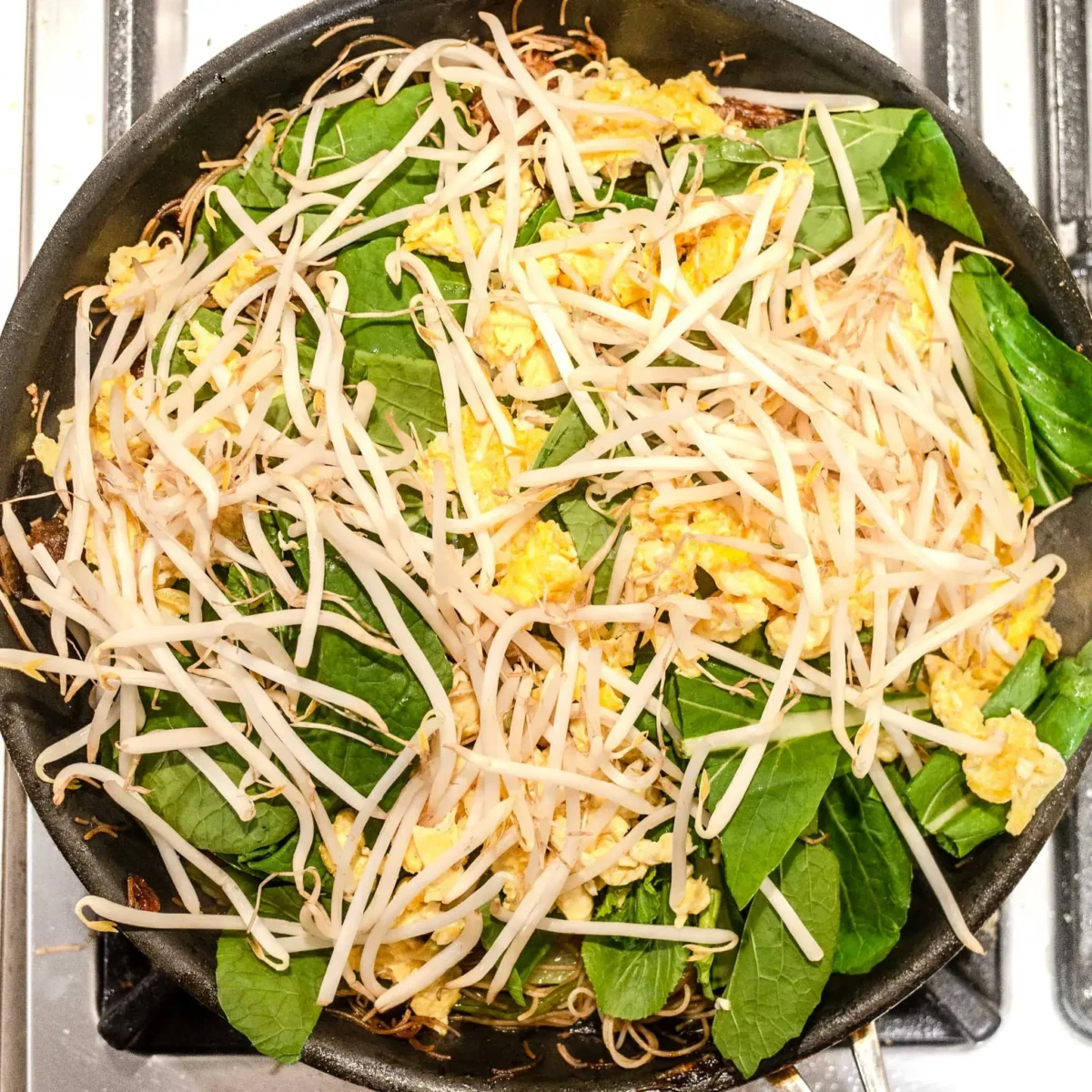
Thirteen: Add the scrambled eggs back into the pan, then add bean sprouts and choi sum leaves.
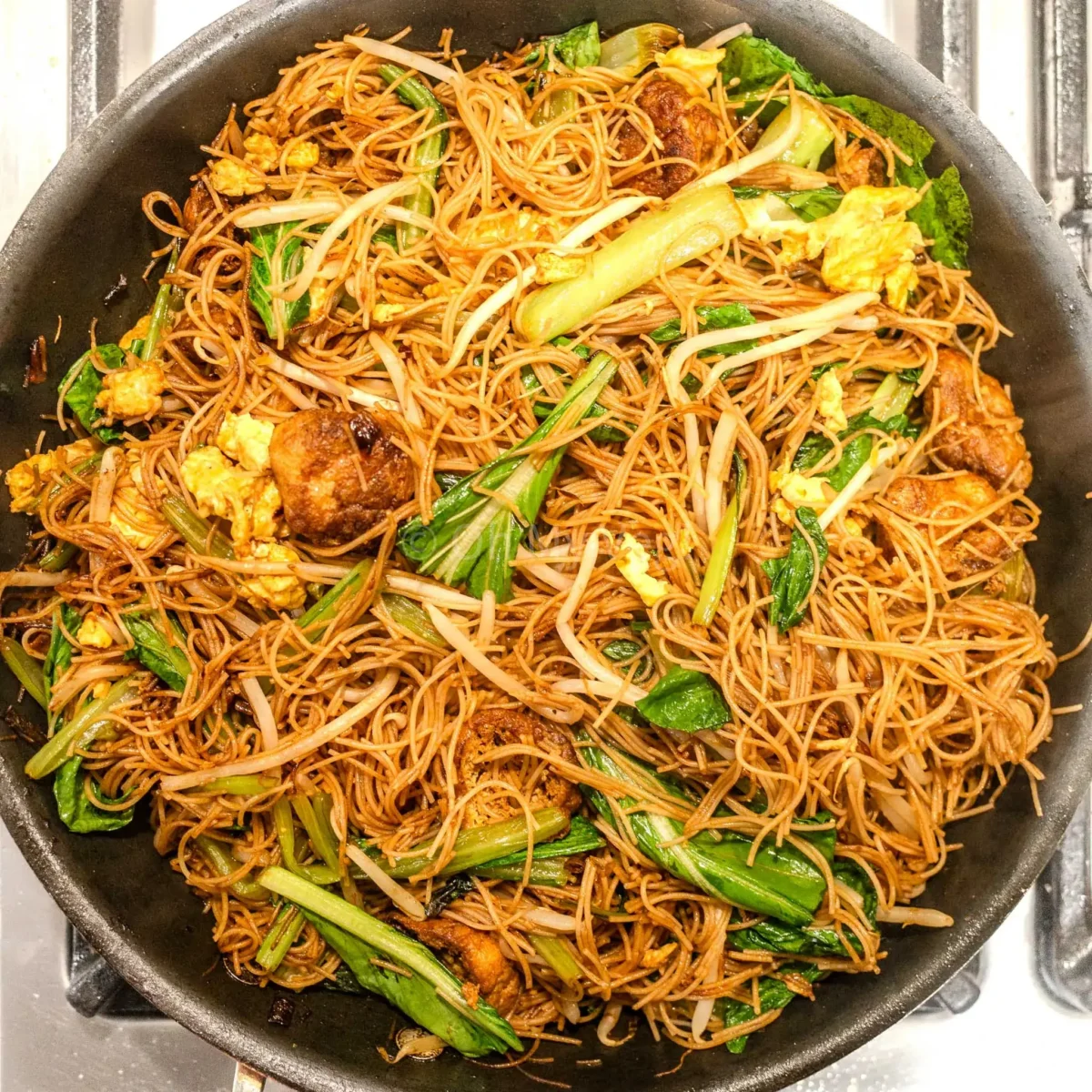
Fourteen: Cook the bihun goreng for an additional 30 seconds, then switch off the heat and garnish with scallions.
Remember, the complete recipe (with ingredient quantities and instructions) can be found at the bottom of this page. You can also print the recipe, save the recipe, adjust the servings, and much more from there!
🤔 How to Cook Rice Noodles
Although I used ready-to-use pre-soaked rice noodles this time, you can as easily make bihun goreng with dried rice noodles, as I do in vegetable mei fun.
Rice noodles don’t need cooking, per se.
Instead of cooking them like pasta or egg noodles, soak them in hot water for around 10 minutes. When you drain the water, they should be soft and pliable.
They’ll finish cooking with flash stir-frying in the wok. Easy peasy!


⭐ Top Tips For Perfect Bihun Goreng
- Soak your noodles properly. If you’re soaking your noodles at home, use hot water — not boiling hot and definitely not cold. Leave the noodles for 10 minutes. Whatever you do, don’t boil them.
- Actually drain the noodles. Give them a good shake in the colander, maybe even press them gently with your hands. Waterlogged noodles steam rather than fry, and you miss out on the caramelised bits that make this dish so moreish.
- Mix your sauce before you start cooking. Have it ready in a little bowl next to the hob so you can just pour it in. Discovering you’re out of soy sauce while your garlic burns is not a moment I’d recommend experiencing. Yes … I do speak from experience! 🫣
- Your wok needs to be hot. Not medium hot. Properly hot. It’s essential for that smoky flavour that enriches any stir-fry.
- Keep things moving constantly. It’s called stir-fry for a reason. Keep everything moving around the pan so nothing burns and everything cooks evenly.
- Beansprouts go in last. Once added, stir-fry for thirty seconds, maybe forty-five if you’re feeling generous. Any longer and they go limp and soggy, which is no fun. You want crunch.
- Taste it before you serve. Different brands of kecap manis vary wildly in sweetness. Have a quick taste, adjust with more soy sauce if it needs salt, or a pinch of sugar if it’s too salty.
❄️ Storing Bihun Goreng
Fridge: Cool, then pack into an airtight container and store for 2-3 days.
Reheat: In a wok or large frying pan. You may need to add a tablespoon of water to loosen things up. The microwave works too — cover it, heat in 30-second bursts, stir between each one — but it won’t have quite the same texture as fresh from the wok.
Surprisingly, bihun goreng tastes great cold, too. I actually took it to the cinema with me to see the LOTR extended editions (yes, I’m a total geek). It was fantastic (the films and the food!).
I don’t recommend freezing noodles. Unfortunately, the texture suffers.
🥠 Serving Suggestions For Bihun Goreng
Bihun goreng doesn’t strictly need anything else: with the carbs, protein and vegetables, it’s a complete meal.
However, the stir-fry is greatly elevated by a dollop of spicy sambal or equivalent chilli sauce on the side. There’s no intrinsic spiciness to the dish (aside from white pepper), so this really adds another layer of depth, in my opinion.
Other widespread and popular accompaniments include crispy fried shallots and tangy acar — the Indonesian version of Indian mixed vegetable pickles (achar).
Make a meal out of it by deep-frying rice paper to make vegan prawn crackers and serving with a creamy tofu satay curry.
If you’ve tried this bihun goreng recipe, please drop a comment ✍️ or a star rating 🌟 below to help fellow readers! Additionally, if you have a question, please drop a comment, and I’ll do my best to answer ASAP.
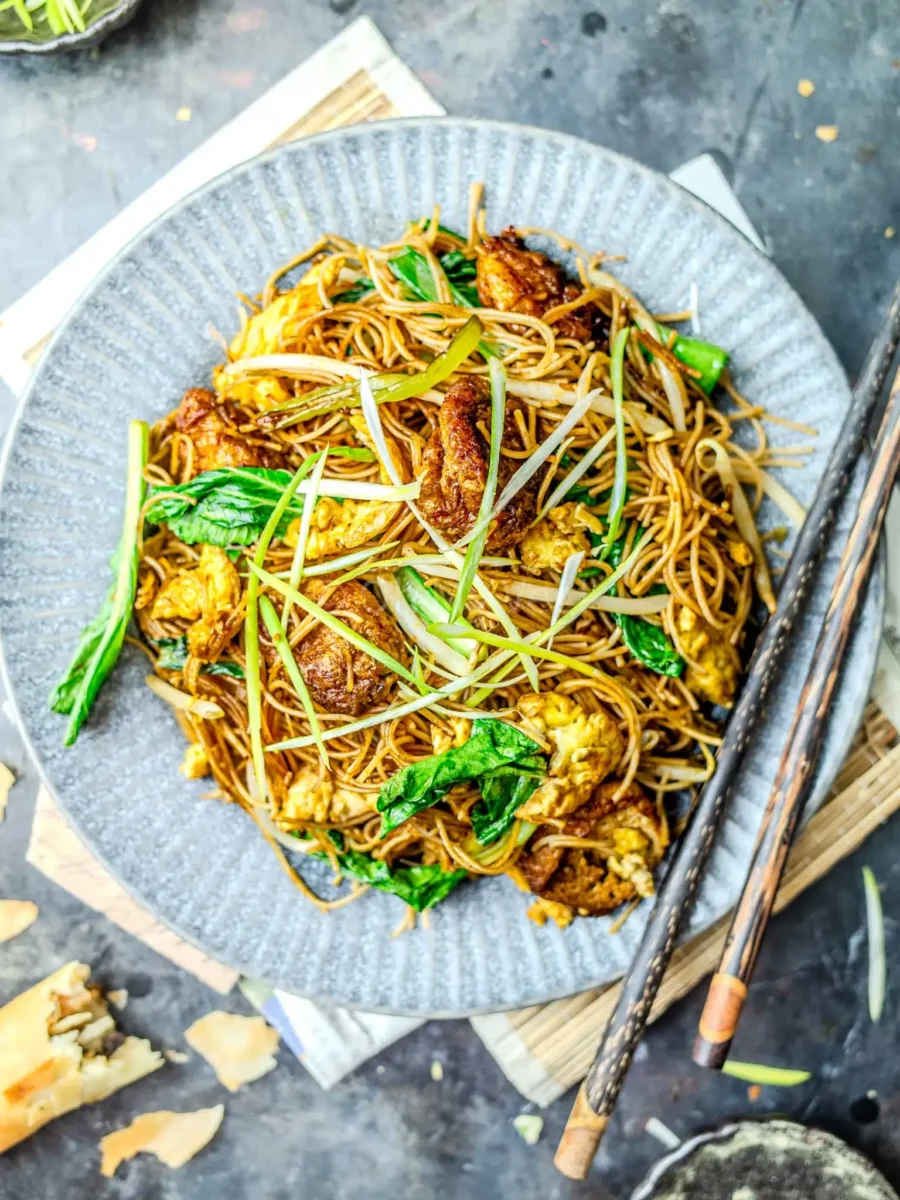
Bihun Goreng (Indonesian Vermicelli Stir-Fry)

Ingredients
- 600 grams pre-soaked rice noodles*
Bihun Goreng Stir-Fry Sauce
- 2 tablespoons kecap manis
- 2 ½ tablespoons vegetarian oyster sauce (mushroom stir-fry sauce)
- 1 ½ tablespoons light soy sauce
- ½ teaspoon ground white pepper
Noodle Stir-Fry Ingredients
- 3 medium eggs
- 2 tablespoons neutral oil
- 1 banana shallot (1 banana shallot = 45g), minced
- 3 cloves garlic finely sliced
- 100 grams tofu puffs
- 200 grams choi sum
- 100 grams beansprouts
- 1 scallion finely sliced
Instructions
- Prepare your vegetables. Finely mince the shallots and slice the garlic. Thoroughly wash 200 grams choi sum, then separate the stalks from the leaves. Cut the stalks into 2-inch pieces, and cut the leaves in half.
Make the Stir-Fry Sauce
- Add 2 tablespoons kecap manis, 2 ½ tablespoons vegetarian oyster sauce, 1 ½ tablespoons light soy sauce, and ½ teaspoon ground white pepper to a small bowl. Whisk to combine.
Make the Scrambled Eggs
- Crack 3 medium eggs in a small bowl. Whisk well.
- In a large pan or wok, heat 1 tablespoons Neutral Oil over medium-high flame, until smoking.
- Add the eggs to the pan and immediately scramble them. Due to the high heat, the eggs will cook quickly and set "hard," which is ideal for Asian cuisine. Transfer to a plate once cooked.
Make the Bihun Goreng
- Add an additional 1 tablespoons Neutral Oil to the same pan/wok and heat until smoking.
- Add 1 banana shallot (minced) and 3 cloves garlic (sliced) to the oil. Stir-fry for a few seconds, until softened and aromatic.
- Next, add 100 grams tofu puffs and your choi sum stalks. Toss and stir-fry for a few minutes, until the edges get charred.
- Pour your stir-fry sauce into the pan.
- Immediately add 600 grams pre-soaked rice noodles*. Toss/stir well to mix the sauce evenly into the noodles.
- Add the choi sum leaves, 100 grams beansprouts, and the scrambled eggs to the pan. Stir in and let cook for another 30-60 seconds.
- Turn off the heat and garnish with 1 scallion (finely sliced). Taste and adjust seasoning if needed, then serve.