Manchurian Fried Rice
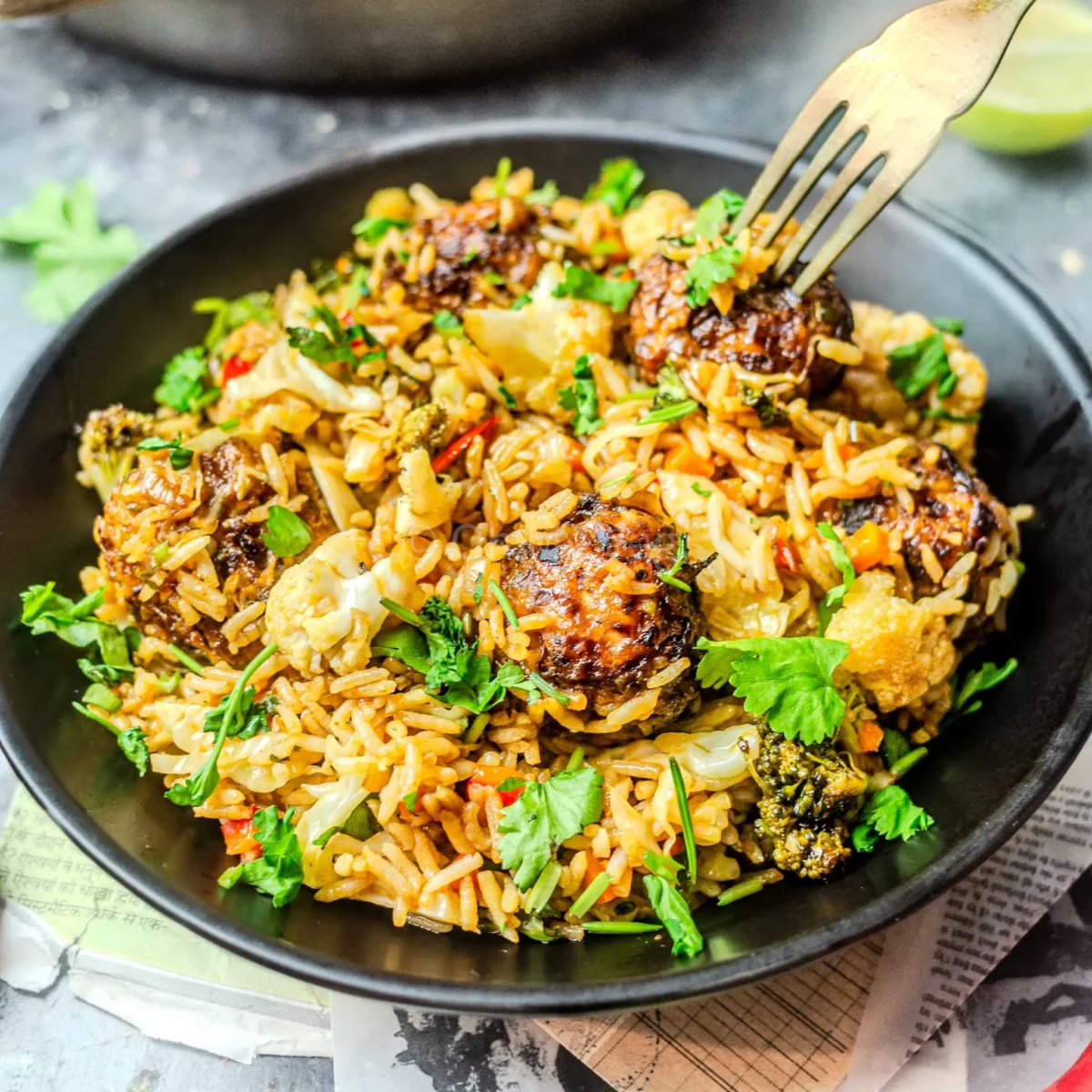
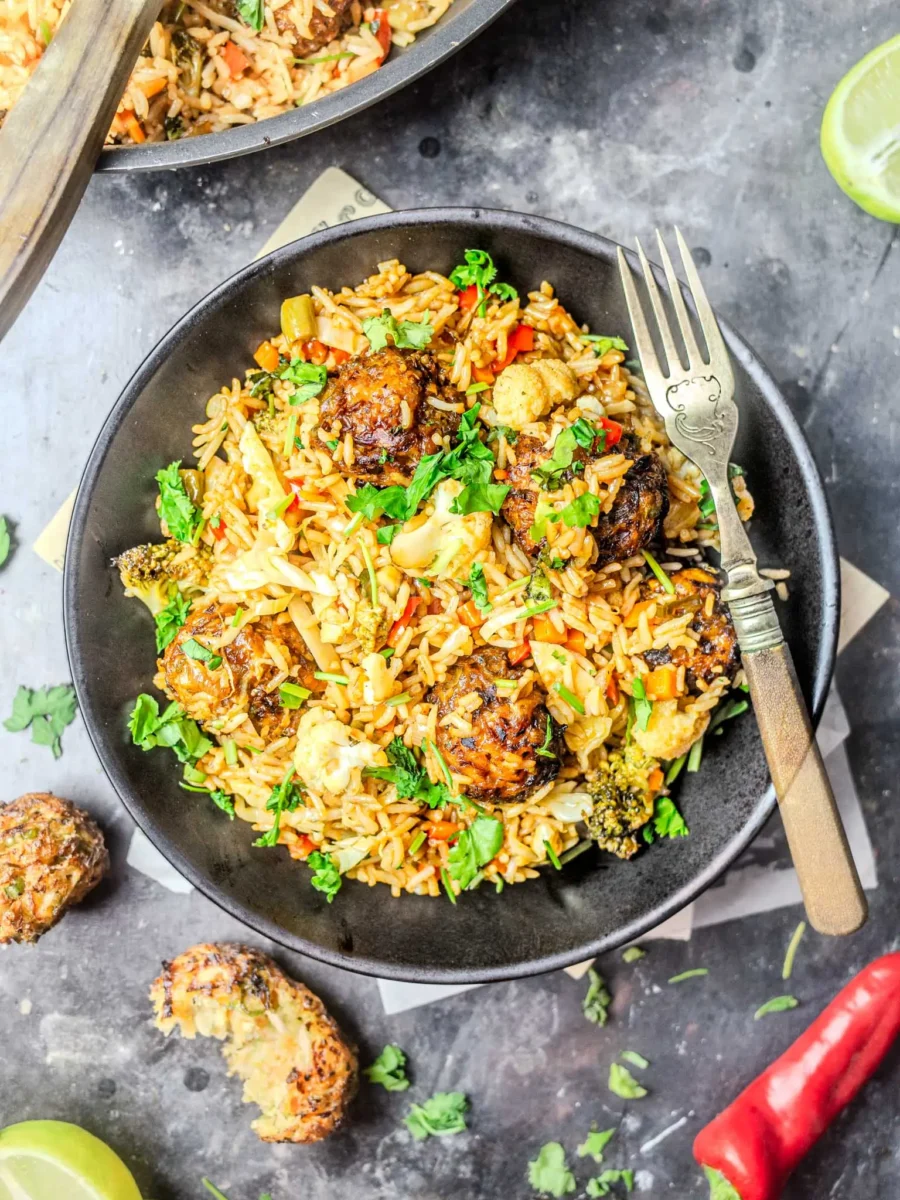
Tangy, fiery Manchurian sauce is just the beginning. Next are the vegetable Manchurian balls — somehow both crispy on the outside and tender on the inside — and fluffy rice. All tossed together over smoking hot heat, this Manchurian fried rice is the ultimate fakeaway meal. Especially when you’re craving street food … but healthier.
I’ve always thought fried rice on its own is a bit sad (unless it’s Thai basil fried rice or Indonesian nasi goreng, but that’s a different story!).
Whenever I order fried rice, I’m always pairing it with something saucy — think massaman tofu curry, restaurant-style chilli paneer, or mushroom Manchurian. You need that contrast to make a proper meal.
Then I had a revelation: Wouldn’t it be easier (and tastier) to combine both into one?
So, on the seventh day, Manchurian fried rice was born. It’s got all the hallmarks of the best Manchurian sauce possibly imaginable — all bold, tangy, sweet, and spicy flavour — plus the obligatory crispy vegetable balls that complete this Indo-Chinese classic.
I like to add extra vegetables in the sauce, too: buttery cauliflower florets, broccoli, green beans, sweet carrots, tender cabbage. The result is LOADED. It feels healthy, but not in a way that seems like a punishment.
Plus, when you toss in some leftover steamed rice, it finishes cooking by soaking up that gorgeous sauce … instead of just sitting under it. There’s no competition, really.
Making vegetable Manchurian and fried rice separately means double the pans, which means double the washing up (urgh). So, I streamlined it: now you get all those intense Indo-Chinese street food flavours without spending all evening at the stove or the sink.
Win-win.
❤️ Why You’ll Love Manchurian Fried Rice
🫑 Ingredients You’ll Need For Manchurian Fried Rice
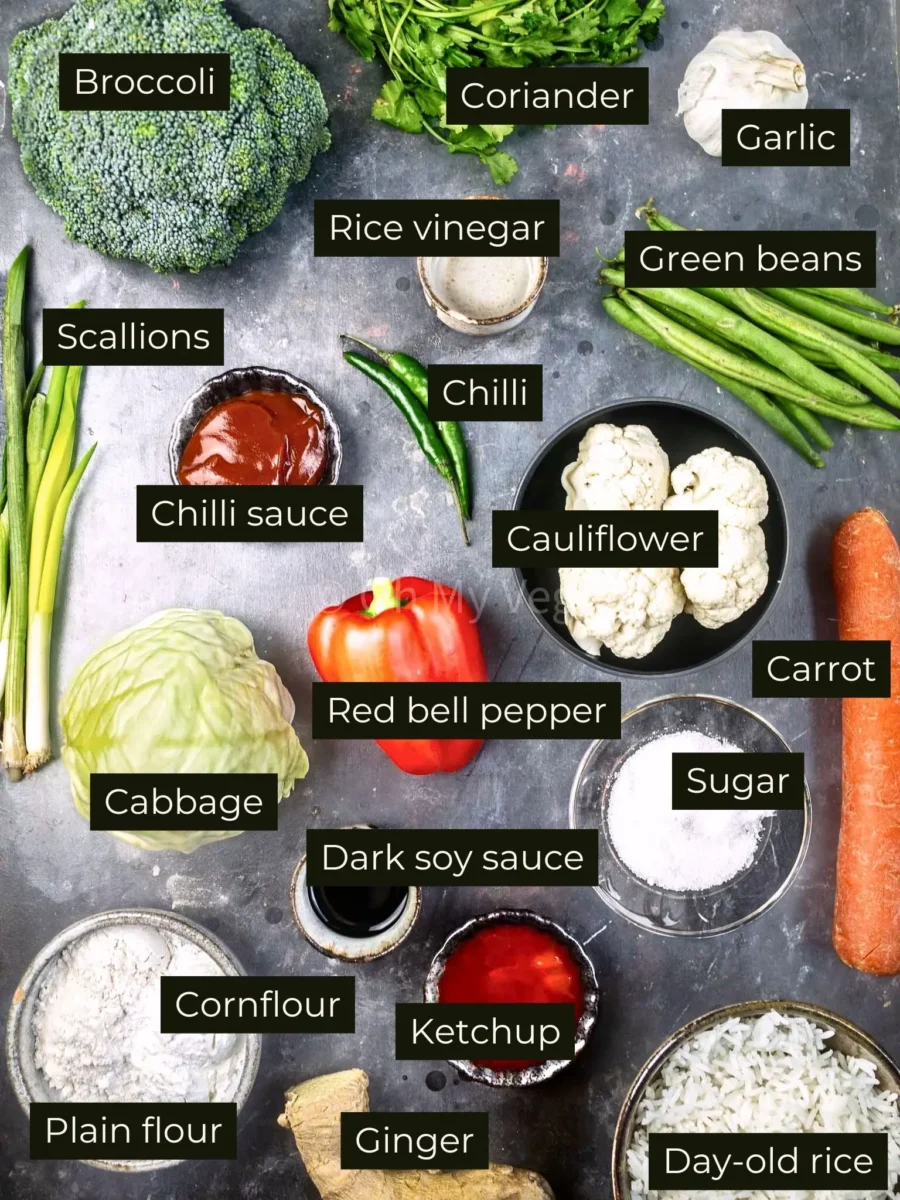
This recipe has three main components: the vegetable Manchurian balls, the glossy sauce, and the fried rice.
Don’t let the ingredients list intimidate you. Most of this is everyday veg (probably languishing at the back of your fridge, if you’re anything like me!) and store cupboard staples.
Any ingredients you’re missing can likely be found at your local supermarket or specialist Asian store.
For the Vegetable Manchurian Balls
- Vegetables, including white cabbage, carrot, green beans, and cauliflower, are the backbone of your Manchurian balls. They’re all finely shredded. Cabbage adds structure. Carrots contribute colour and a touch of sweetness. Green beans (French beans) are fresh and crunchy. Cauliflower brings nuttiness.
- Spring onions (scallions) are fresh, mild, and slightly sharp. Essential for authentic Indo-Chinese flavour.
- Ginger offers warmth and subtle spiciness. Always use fresh (not jarred; it leaves an aftertaste).
- Garlic adds that pungent, savoury depth.
- Salt and black pepper are essential seasonings that make everything else shine.
- Plain flour (maida/all-purpose [AP] flour) is a binder that helps to hold the vegetable mixture together so they don’t fall apart.
- Cornflour makes our veg Manchurian balls extra crispy when fried.
You’ll also need neutral oil for deep frying. Use vegetable oil, sunflower oil, or any neutral-tasting fat with a high smoke point. You can air-fry these Manchurian balls, but you’ll still need to spray them with a little oil.
For the Manchurian Sauce
- Neutral oil for stir-frying your aromatics and vegetables.
- Aromatics, including white onion for sweetness and body, garlic (because you can never have enough garlic) for fragrant butteriness, ginger for peppery heat, and spring onions to create layers of oniony goodness.
- Green chillies offer fruity, sharp heat.
- Green bell pepper is a mainstay in Indo-Chinese food, offering sweetness and crisp freshness.
- Other vegetables such as broccoli, carrots for sweetness, green beans for satisfying crunch, cauliflower for texture, and white cabbage round out the dish with healthy nutrients and vibrant colour.
- Tomato ketchup might seem odd, but it is essential for authentic Indo-Chinese flavour. It brings a complex trio of tanginess, sweetness, and natural umami.
- Dark soy sauce is thick and rich, with a deep, dark caramel colour (and flavour).
- Rice vinegar balances all the sweetness. It makes the sauce just a touch sour.
- Chilli sauce brings all the fiery heat.
- Sugar balances the acidity and heat. Indo-Chinese cuisine is all about the trinity of flavours. Don’t be afraid to use it in savoury foods.
- Fresh coriander (cilantro) is chopped and stirred through at the end. It’s fresh, citrusy, and basically essential in Indian recipes.
You’ll also need a touch of water and cornflour mixed to create a cornflour slurry, which will thicken your sauce to a glossy consistency that perfectly coats each grain of rice..
- Cooked rice is a key ingredient. Use rice that’s been cooked and cooled — ideally day-old rice (always best for fried rice recipes). Freshly cooked rice makes a mushy dish. Use a long-grain rice like basmati or a medium-grain aromatic variety like jasmine rice, sona masoori, or ambe mohar.
Adapting This Recipe For Allergies and Dietary Requirements
Good news! Manchurian fried rice is naturally vegan, dairy-free, nut-free, and vegetarian.
To make this recipe gluten-free, you’ll need to make two swaps. First, exchange plain flour (AP flour/maida) with a gluten-free alternative — try Bob’s Red Mill on Amazon, or visit your local supermarket, which should stock plenty of options.
Secondly, trade standard dark soy sauce for tamari, a naturally gluten-free and umami-rich alternative that can be substituted 1:1.
Finally, check your chilli sauce label carefully; some brands contain wheat as a thickening agent. I use Maggi Masala Chilli sauce, which is labelled GF!
To make the recipe soy-free, you’ll need to substitute the soy sauce with coconut aminos, though the flavour will be slightly different — a bit sweeter and less umami-rich. You may also want to add an extra pinch of salt to compensate. Coconut aminos are naturally GF as well as SF, so this covers multiple allergens.
🌶️ Substitutions and Fun Variations
I always recommend following my recipe as-written. That’s the only way to give it a fair shot!
However, I’m well acquainted with those of you who don’t like following recipes, preferring to use them as inspiration. My Mum is part of your ranks … she’s a natural rule-breaker! If you’re the same, I suggest these variations, which I’ve already tested in my kitchen:
- If you don’t have day-old rice, spread freshly cooked rice on a baking tray and pop it in the fridge for 30 minutes to cool and dry out. It’s not as good as leftover rice from the day before, but it’ll do.
- If you don’t have rice vinegar, use white wine vinegar or apple cider vinegar. They’re a bit more acidic, so use less.
- If you want to use different vegetables in the sauce, be my guest! Mushrooms, baby corn, mangetout (a personal favourite), bok choy, bamboo shoots, or water chestnuts would all work beautifully. Keep the cooking times in mind (some vegetables cook faster than others).
I don’t recommend changing the vegetables in the Manchurian balls. I’ve tested this recipe multiple times, and you risk the balls falling apart if you use a different ratio or quantity of veggies.
- Prefer not to deep-fry? You can bake the Manchurian balls at 200°C for 20-25 minutes, turning halfway, until golden and crispy. They won’t be quite as crunchy, but they’ll still be delicious, and you’ll use far less oil. You can also air-fry the Manchurian balls at 180°C for 10 minutes, turning halfway.
- Different chilli sauce? Sriracha, sweet chilli sauce, or any Chinese-style chilli sauce will work. Each brings its own character, so taste and adjust as you go!
🧑🍳 How to Make Manchurian Fried Rice
Manchurian fried rice comes together in stages.
Think of it as building layers of flavour.
None of it is at all difficult. You’ll make the Manchurian balls, fry them up, stir-fry the sauce with the vegetables, then toss everything with your rice.
If you’re a visual learner, these step-by-step photos right from my kitchen will guide you through each phase:
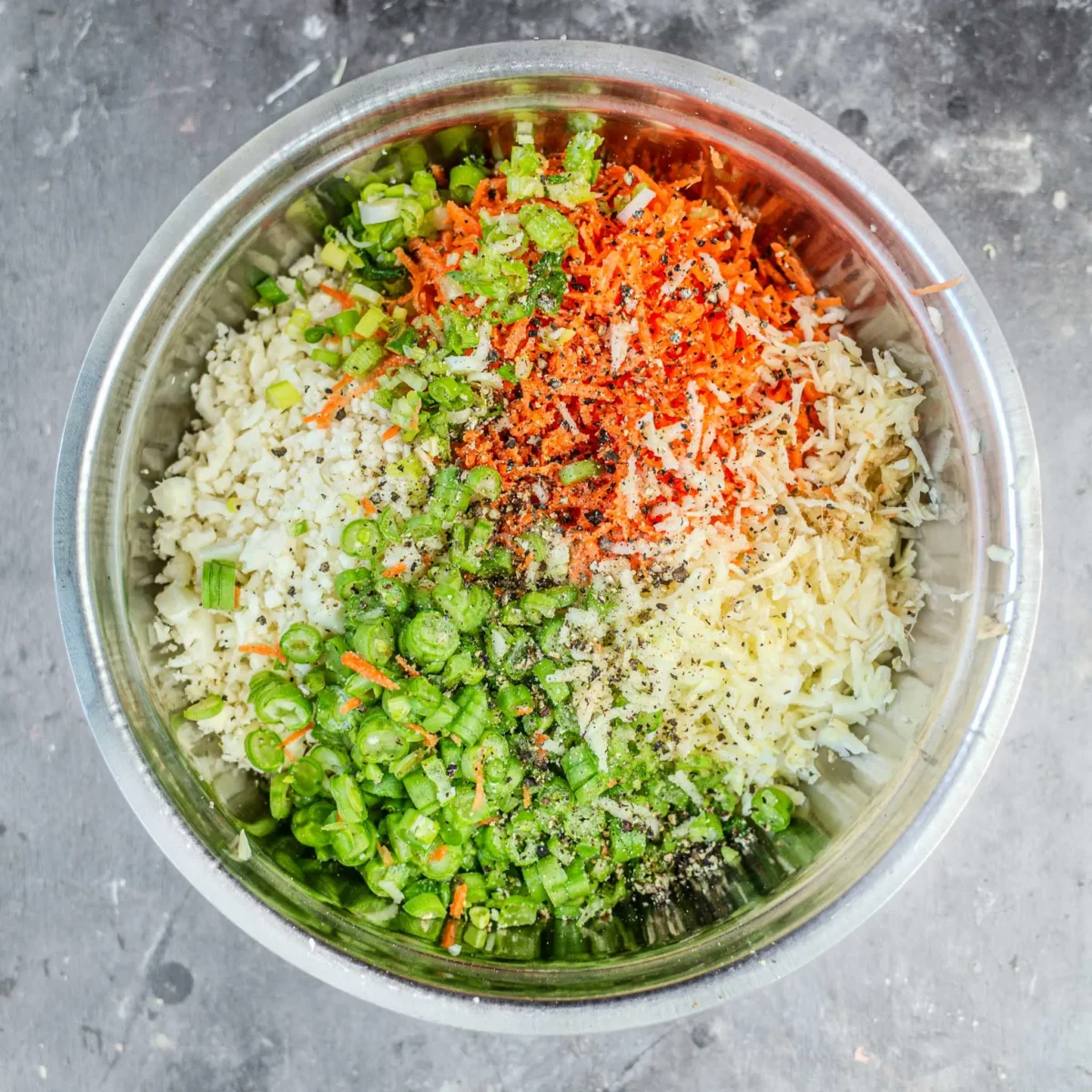
One: Add grated/chopped vegetables to a large bowl: carrot, cabbage, green beans, cauliflower, spring onion, garlic, and ginger.
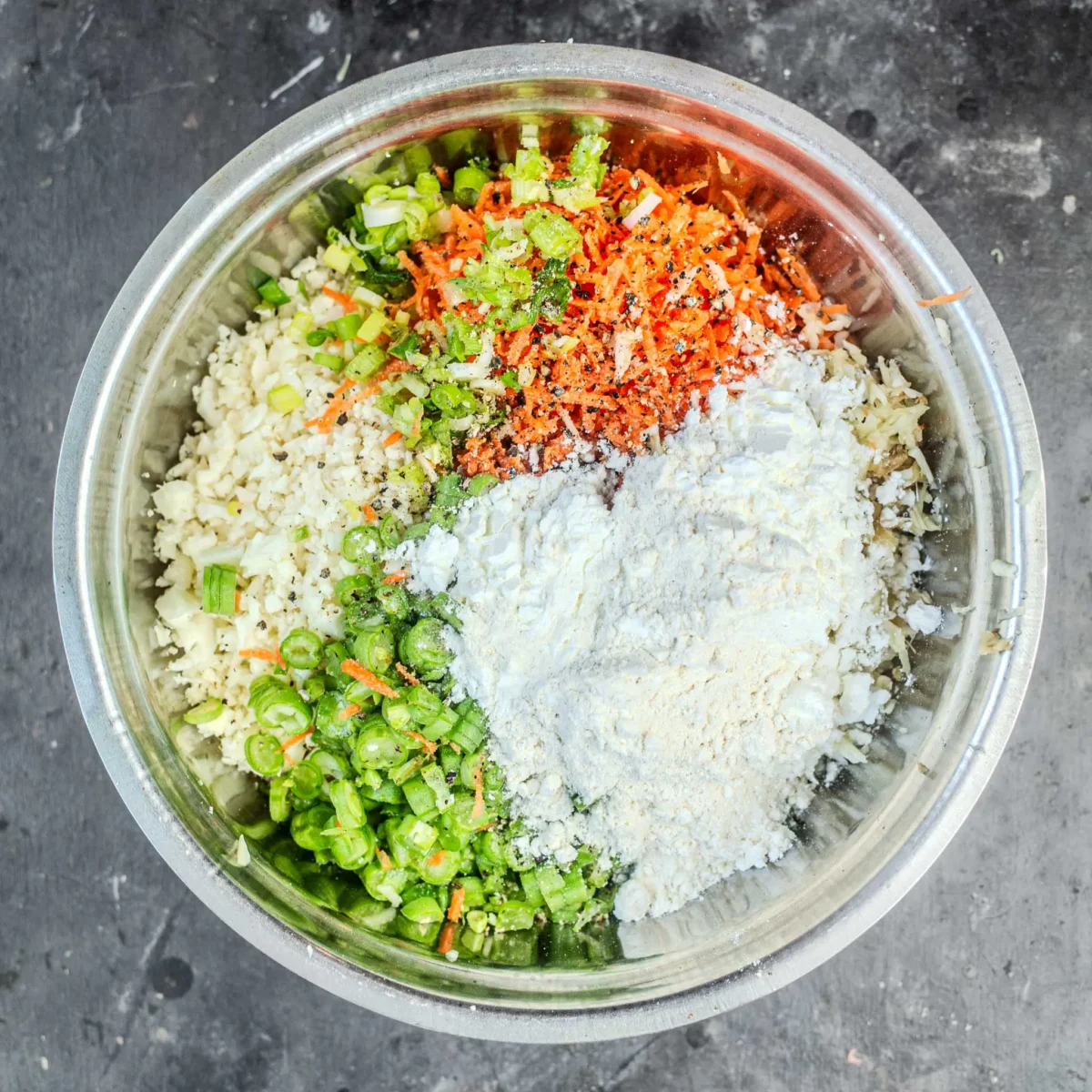
Two: Add seasonings: salt and ground black pepper. Also add the following: plain flour (all-purpose/maida) and cornflour.

Three: Use your hands to mix and combine the mixture. No need to add water; the natural moisture from the vegetables is enough to bind the Manchurian balls.

Four: Take the mixture and roll it into evenly-sized balls. You should get around 12 Manchurian balls from the quantities given in this recipe.

Five: Heat neutral oil in a large kadai, wok, or deep-frying pan to around 175°C (350°F). Add the Manchurian balls and fry until golden brown.
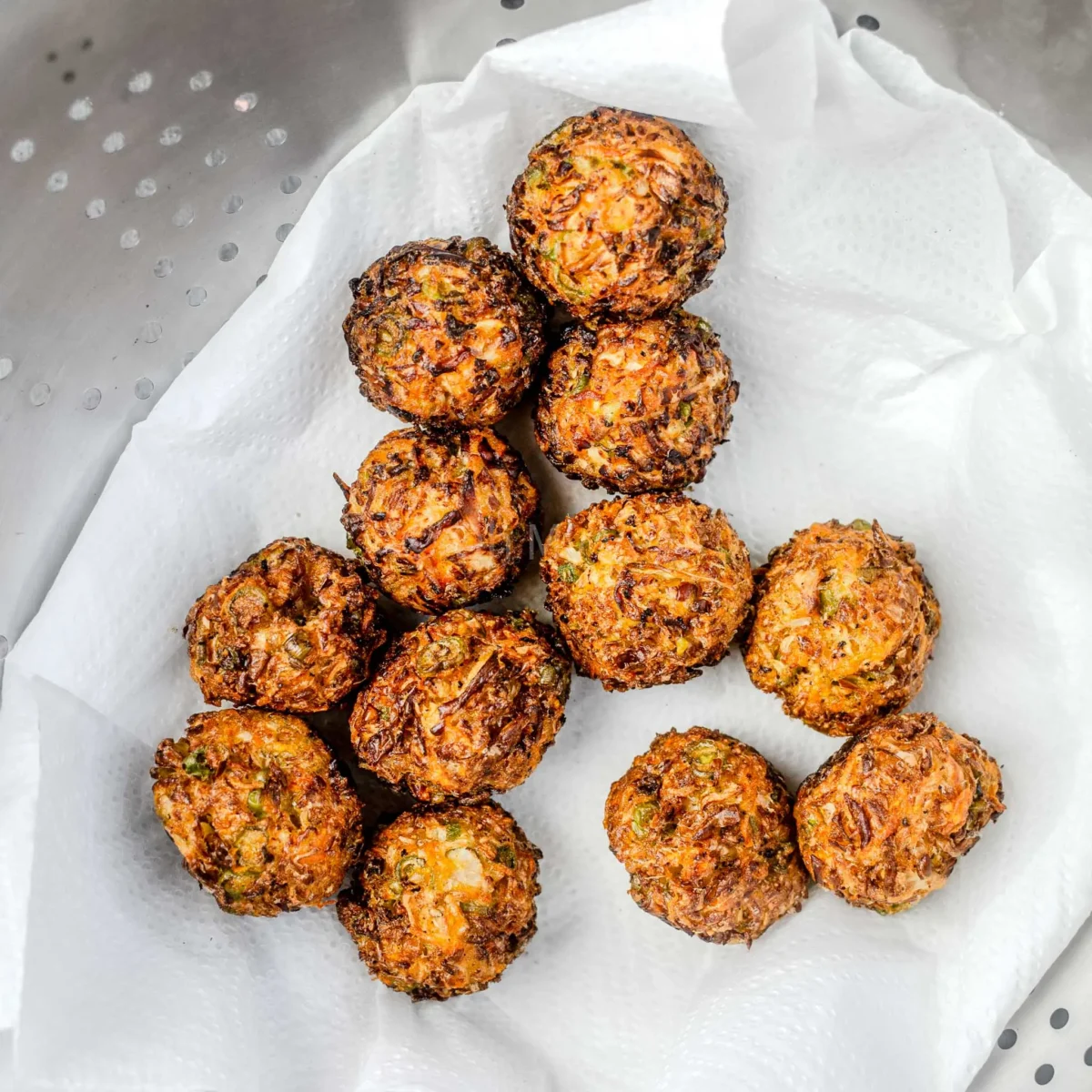
Six: Once all the Manchurian balls have been fried, drain them on kitchen towel and set aside from later.
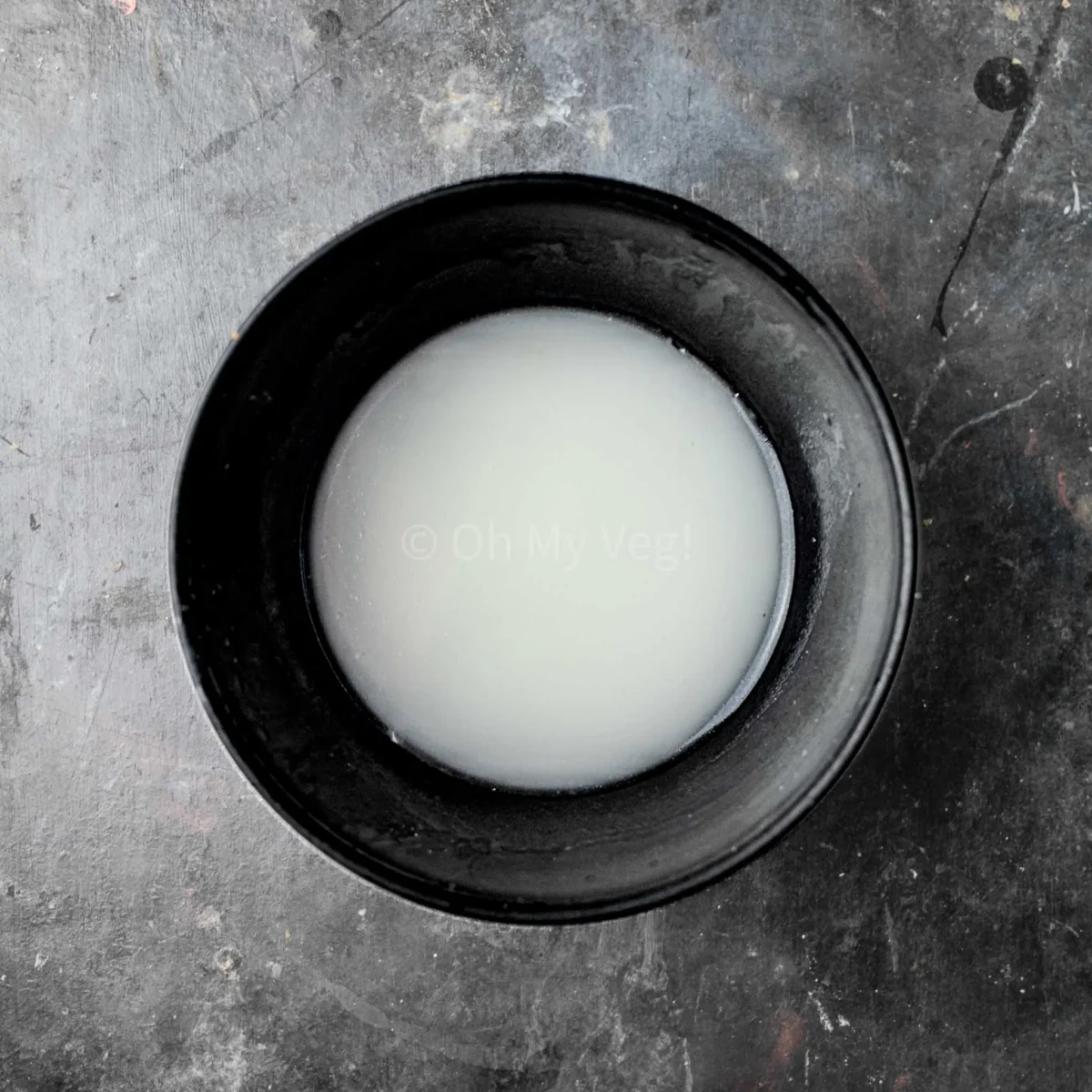
Seven: Make a cornflour slurry by whisking cornflour and water in a small bowl. Set aside.

Eight: Heat neutral oil in a large frying pan, wok, or kadai. Stir-fry onion, ginger, garlic, and green chillies until aromatic.

Nine: Add green beans, broccoli, and cauliflower florets to the pan. Cook until slightly softened.
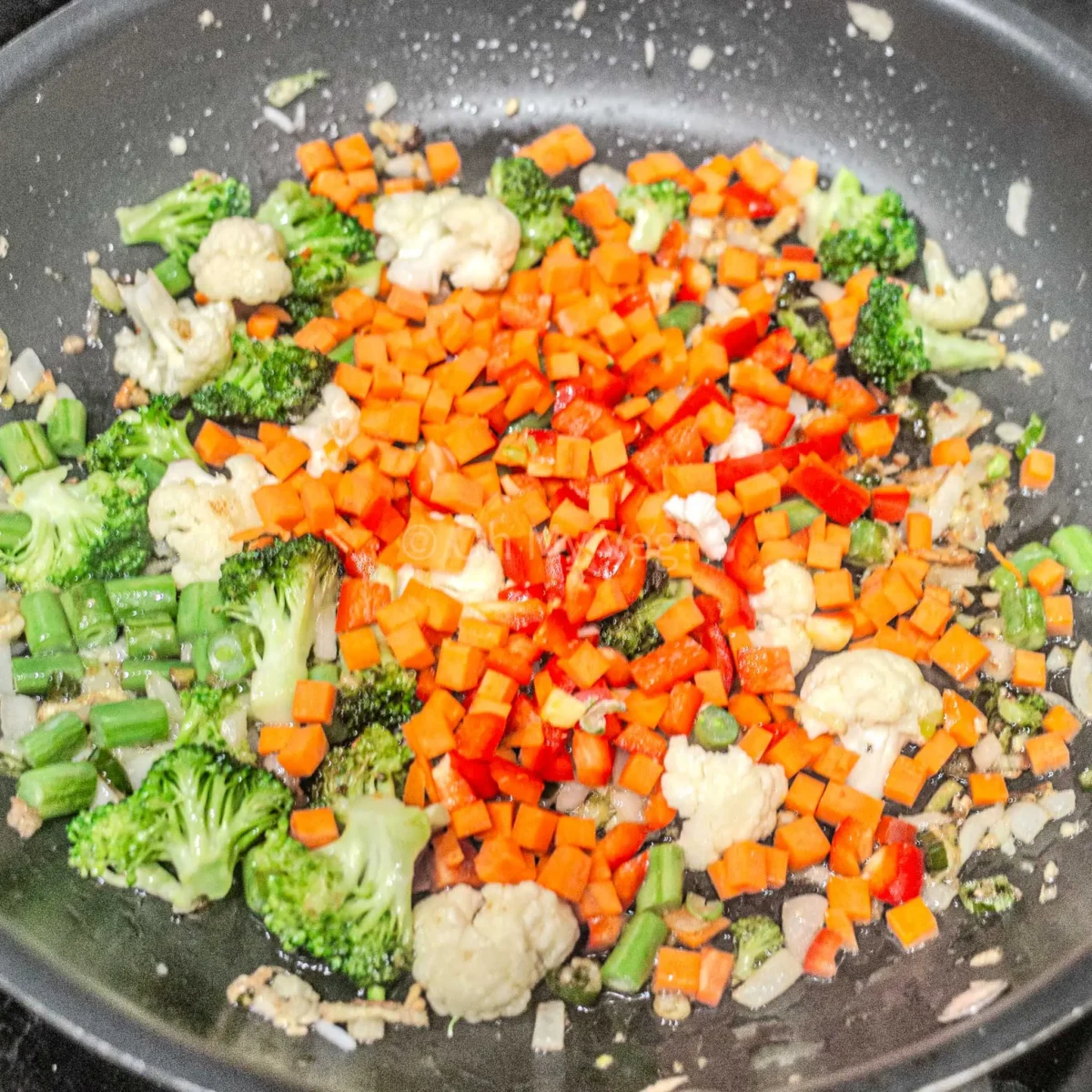
Ten: Next, add finely diced carrots and bell peppers to the pan.
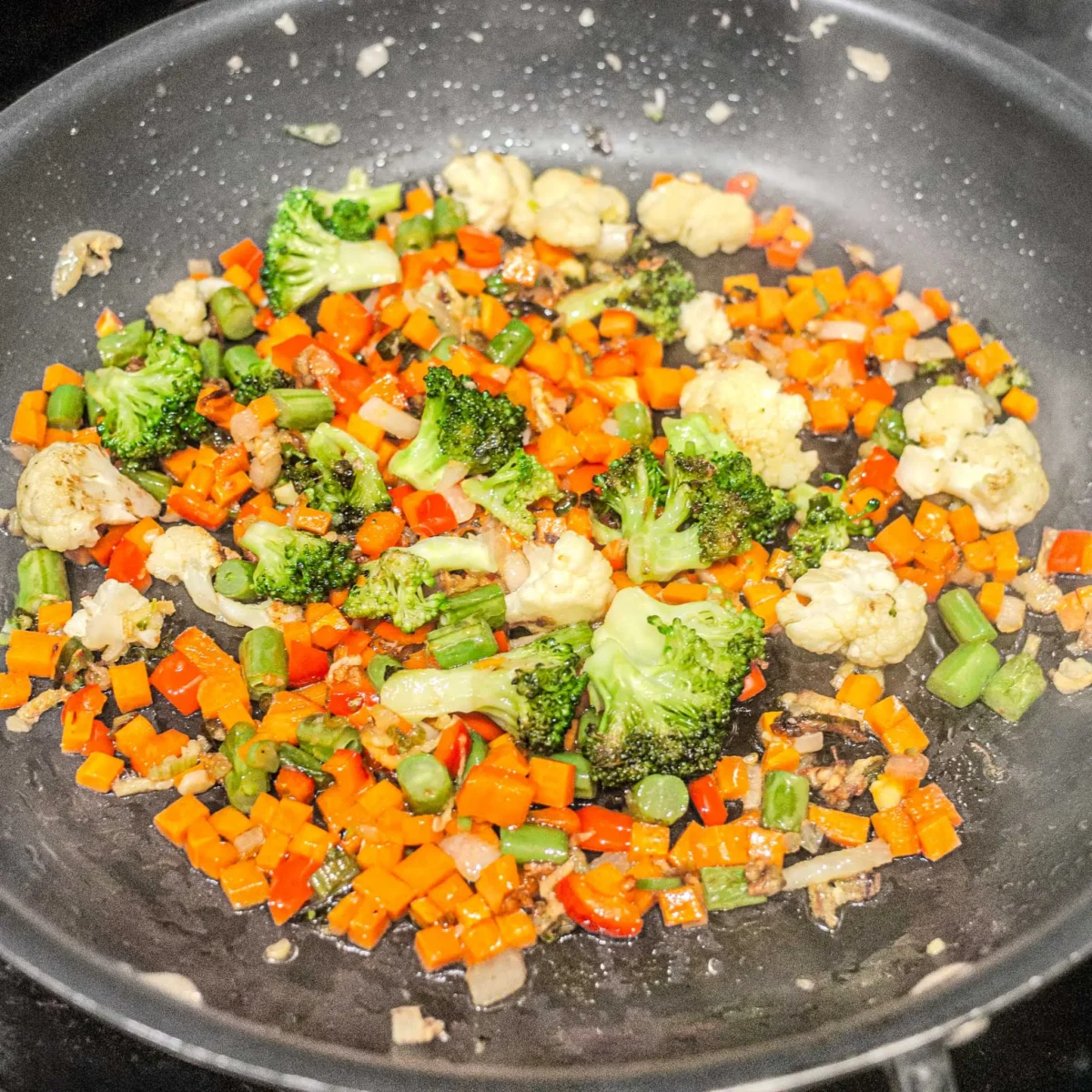
Eleven: Mix the vegetables well and stir-fry until mostly softened.
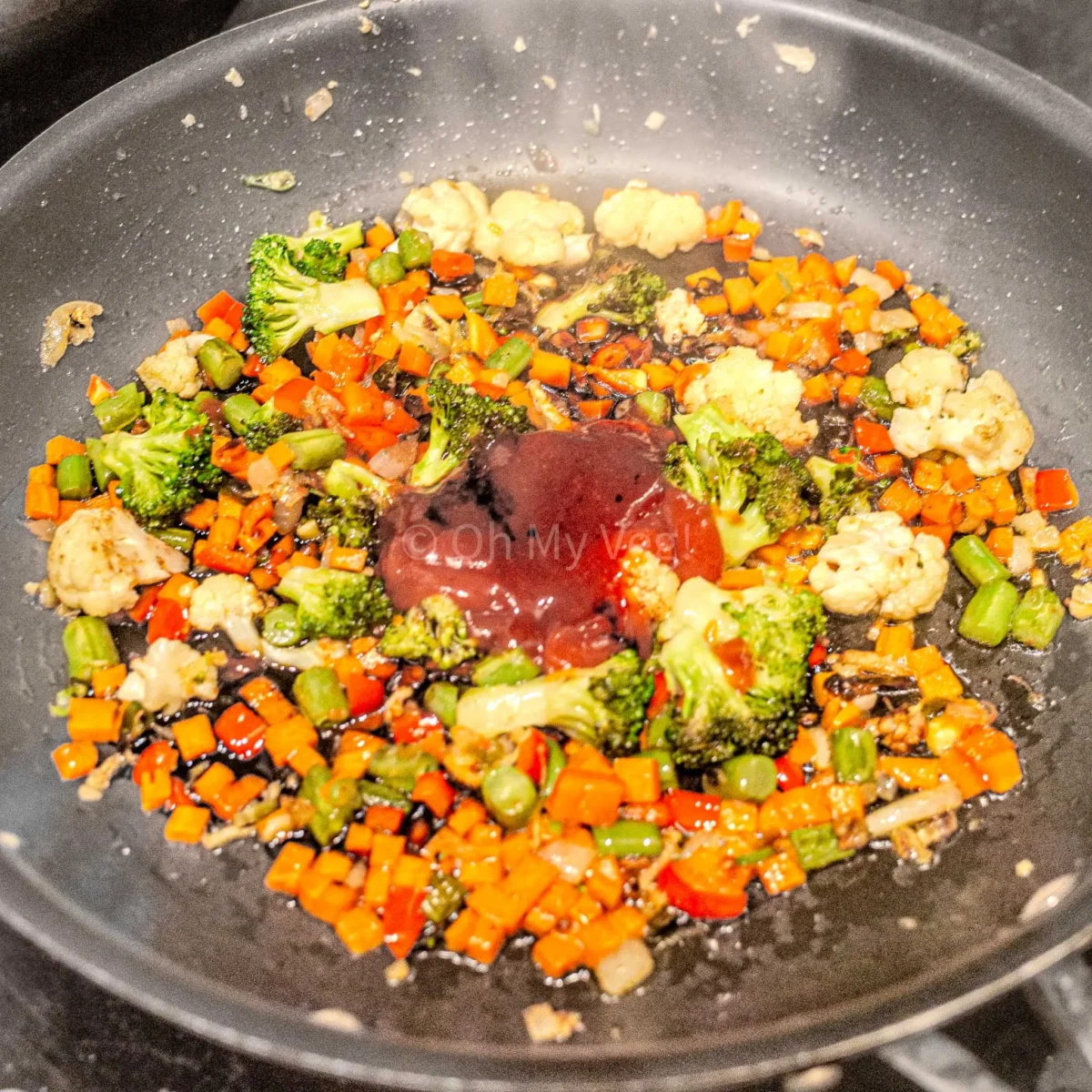
Twelve: Add the Manchurian sauce mixture to the pan: ketchup, dark soy sauce, rice vinegar, chilli sauce, and sugar.
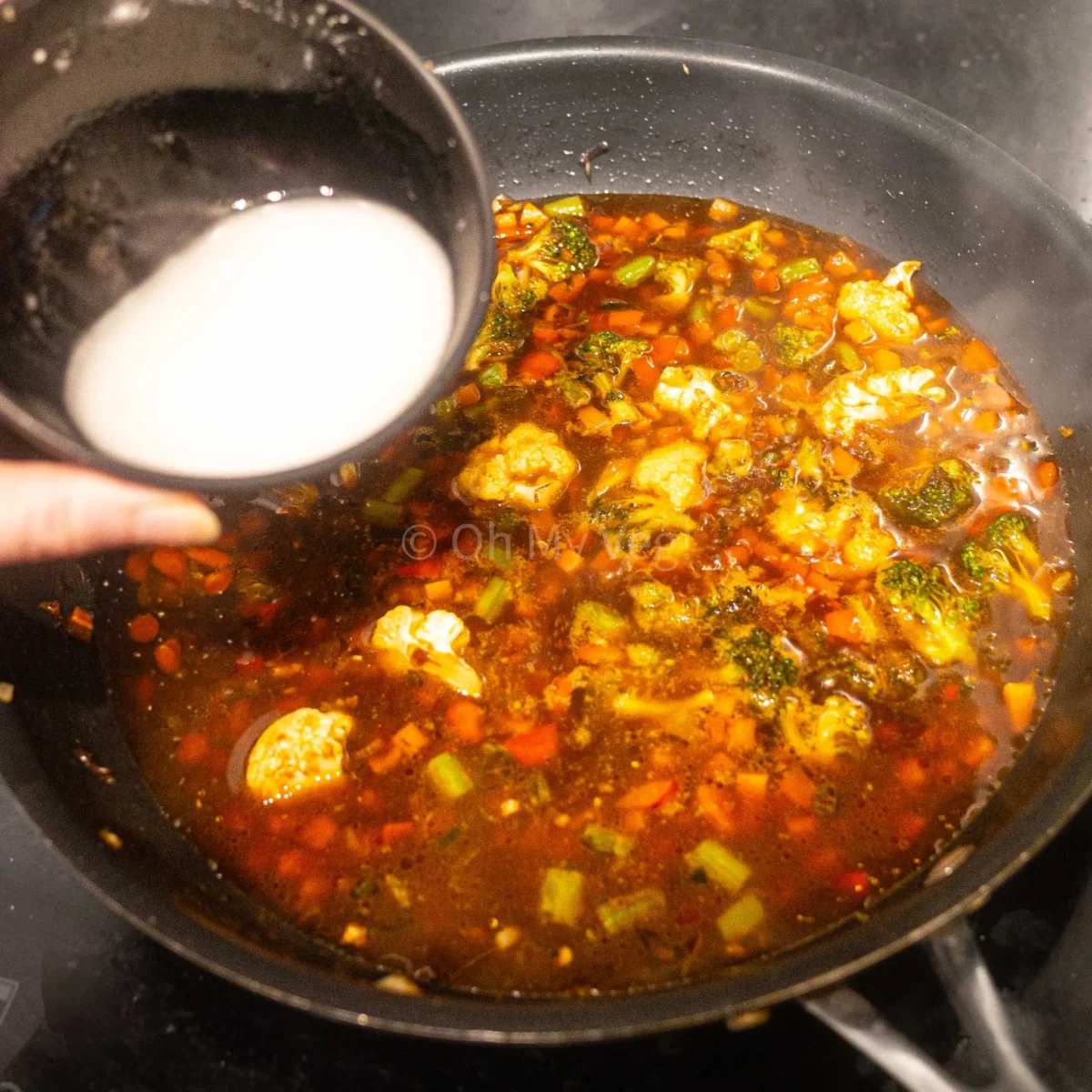
Thirteen: Add water to the pan and mix into the sauces. Next, add the cornflour slurry.

Fourteen: To avoid lumps, continuously stir the cornflour slurry into the Manchurian sauce. It will thicken as it cooks.
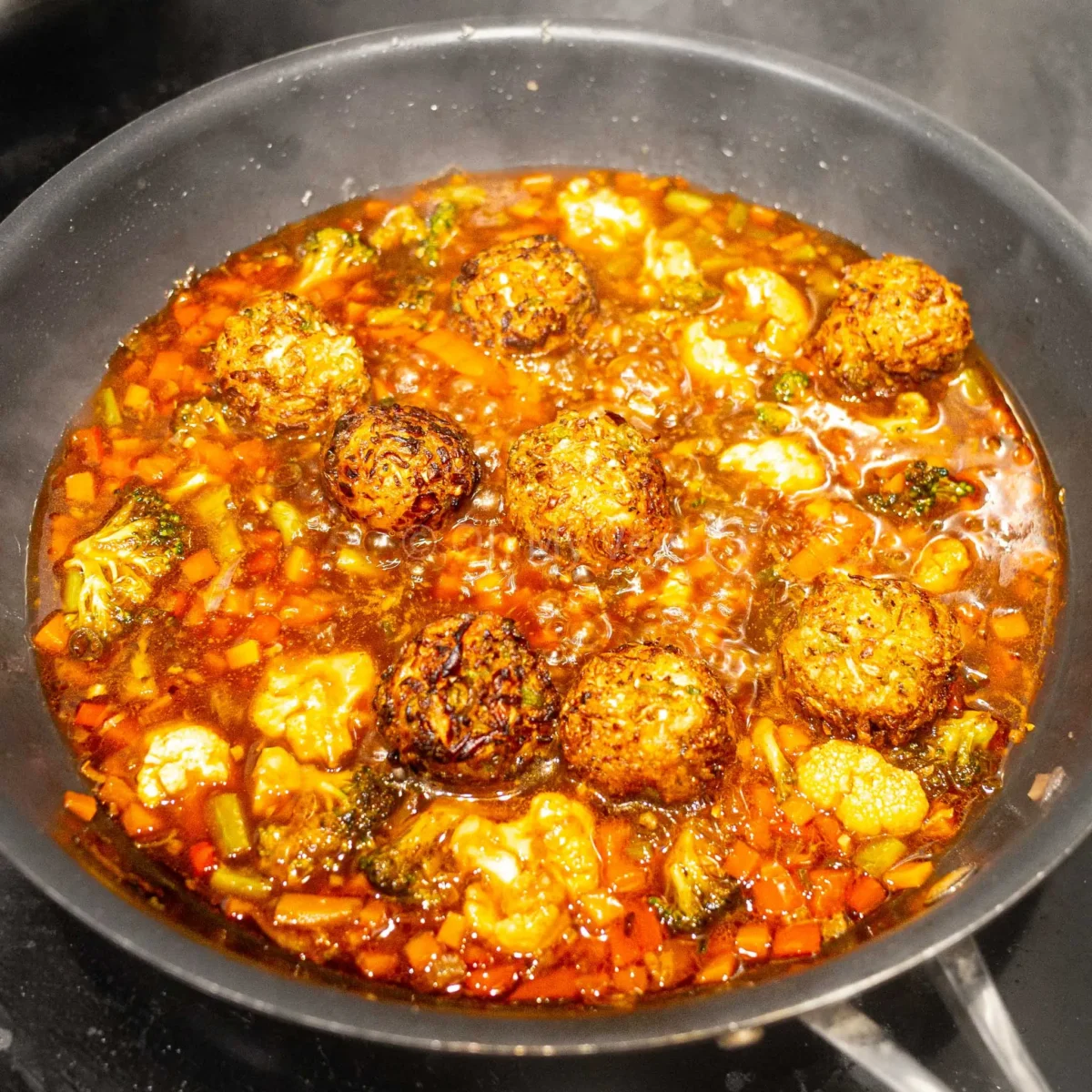
Fifteen: Add the Manchurian balls back into the sauce. Bring to a rolling boil.

Sixteen: Once the sauce is thick and glossy, add shredded white cabbage.
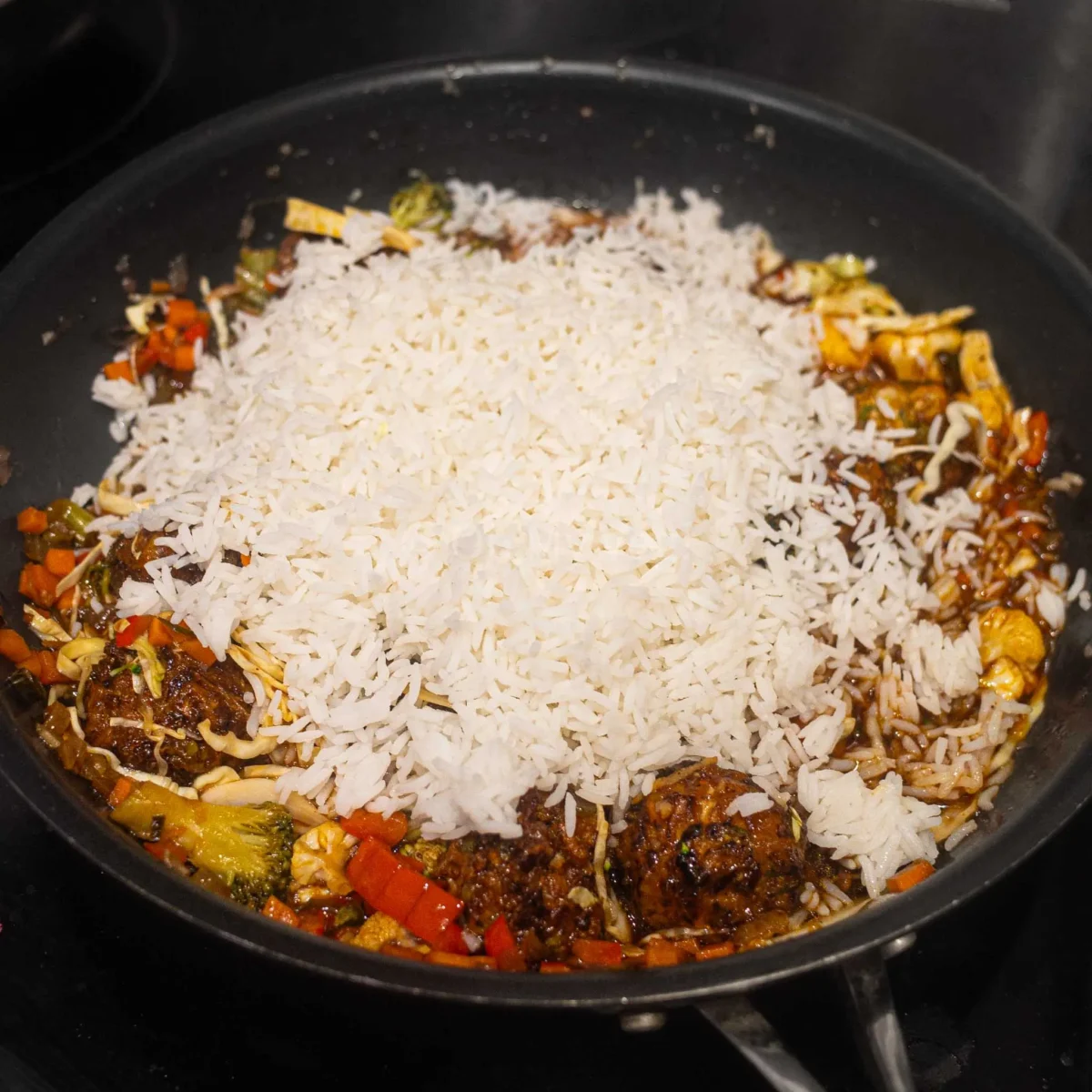
Seventeen: Add day-old cooked rice to the pan.

Eighteen: Stir the rice into the Manchurian sauce. Top with spring onion greens and freshly chopped coriander (stalks and leaves).
Remember, the complete recipe (with ingredient quantities and instructions) can be found at the bottom of this page. You can also print the recipe, save the recipe, adjust the servings, and much more from there!
⭐ Top Tips For Success
First and foremost (seriously, this one can make or break your dish):
- Use day-old rice. This advice applies to all fried rice dishes. Fresh rice is too moist, which will turn your meal into a sticky, mushy mess. Day-old leftover rice is drier, making it ideal for stir-frying. More often than not, when people ask why their fried rice doesn’t taste as it does at the restaurant, this is the culprit.
When I first started making vegetable Manchurian years ago, I ran into a persistent problem: the Manchurian balls would always break as soon as I started the frying process.
Over many years, I’ve found out the cause … and how you can stop the Manchurian balls breaking apart in oil:
- Get your oil at the right temperature. Too cold, and your Manchurian balls will soak up the oil, rather than frying. Too hot, and they risk breaking. Either investing in an oil thermometer or testing the temperature with a small piece of batter is an excellent idea. The oil should reach around 175°C (350°F).
- When frying your vegetable Manchurian balls, don’t crowd the pan. Fry them in batches, so they have the chance to crisp up.
- Avoid constantly moving the balls as they fry. You can accidentally break the Manchurian fritters with your frying spoon while trying to rotate them. Only rotate the balls once they’re golden brown on one side.
If you’re nervous, baking or air-frying the Manchurian balls eliminates many of these issues (although they won’t be quite as crispy or moreish).
Finally, here are a few general tips:
- Prepare all your ingredients before you start cooking the sauce. Once you start stir-frying, everything happens quickly. Having everything chopped and ready (what the French call mise en place) makes the whole process smooth and stress-free.
- Make the cornflour slurry ahead of time. For the same reason as the above. Mix it thoroughly so there are no lumps, and stir it before adding to your sauce as the cornflour settles.
- Don’t overcook the vegetables in the sauce. They should still have some bite. They’ll continue cooking slightly when you add the rice, so aim for tender-crisp.
- Taste and adjust. Indo-Chinese food is all about balance. Too tangy? Add more sugar. Too sweet? A splash more vinegar. Not enough heat? More chilli sauce. Brands vary in saltiness, spiciness, and other seasonings, so this is always a good idea.
🥡 Storing Manchurian Fried Rice
Fridge: Cool, then store in an airtight container and refrigerate for up to 3 days. The vegetable Manchurian balls soften as they absorb the sauce, but far from a bad thing!
Freeze: Cool, portion into individual containers (for easy potential grab-and-go meals!), and freeze for up to 3 months. The texture of rice can be dodgy when frozen and defrosted (read: waterlogged and mushy). That’s why the method you choose for reheating is crucial …
Reheat: In a wok or non-stick frying pan with either neutral or sesame oil. This makes the rice wonderfully crispy again (ideal if your rice is defrosted). I don’t recommend microwaving — it’s only an OK choice if your rice hasn’t been frozen.
I should note that there are food safety concerns around reheating rice. Obviously, fried rice (which is usually made from leftover rice; at least it should be, for the best results!) automatically fails in this regard. If you’re concerned about food safety, I recommend reading an article from The Cleveland Clinic on “How to Prevent Fried Rice Syndrome.”
🥟 Serving Suggestions For Manchurian Fried Rice
Dare I say that the whole point of Manchurian fried rice is that it’s a complete meal and doesn’t need any sides to complete the affair.
However, if you’re feeding a crowd, want to make a proper feast, or you’re just looking for more protein (it might be the only thing this meal lacks in!), here’s what works.
Serve Manchurian fried rice alongside other Indo-Chinese classics like chilli paneer, Hakka noodles (or paneer Hakka noodles, if you want a really good time) and paneer momos.
Add crispy papad, rice crackers, fried momos, chilli paneer samosas, spring rolls, or mushroom wontons on the side for extra crunch.
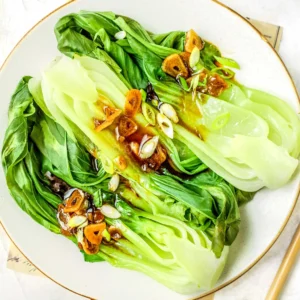
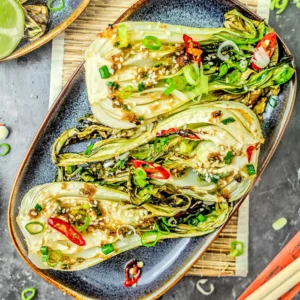
Bring in fresh elements by pairing the Manchurian fried rice with braised bok choy, stir-fried morning glory, or a cooling smacked cucumber salad. Each option cuts through the heavy layered flavours and richness in the most scrumptious manner.
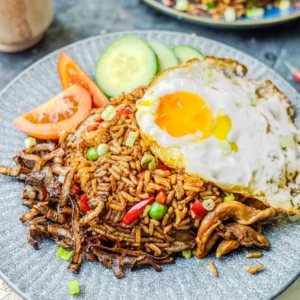
Or, add protein by topping the rice with a crispy fried egg (runny yolk, obviously) or grilled paneer. If you’re vegan, try chickpea croutons or homemade tofu (fried, for the best texture), either incorporated into the stir-fry or served to the side.
Do any of these options appeal to you — trust me, I could have included many more (tofu potstickers or vegetable gyoza, anyone)? If so, please give them a go!
If you’ve tried this Manchurian fried rice recipe, please drop a comment ✍️ or a star rating 🌟 below to help fellow readers! Additionally, if you have a question, please drop a comment, and I’ll do my best to answer ASAP.
🍛 Manchurian Fried Rice

Ingredients
Veg Manchurian Balls
- 150 grams white cabbage grated
- 50 grams carrot (50g = ½ medium carrot), grated
- 40 grams green beans (French beans) finely chopped
- 50 grams caulifllower grated
- 2 spring onion minced
- 1 teaspoon grated ginger minced
- 3 cloves garlic minced
- ¼ teaspoon fine salt
- ¼ teaspoon ground black pepper
- 3 tablespoons plain flour (all-purpose flour/maida)
- 3 tablespoons cornflour
- 1 litre netural oil for deep frying
For the Cornflour Slurry
- ½ teaspoon cornflour
- 3 tablespoons water
Veg Manchurian Sauce
- 1 tablespoon neutral oil
- 40 grams onion (40g = ¼ medium)
- 2 green chillies finely chopped
- 4 cloves garlic minced
- 1 inch ginger minced
- 25 grams green beans finely chopped
- 50 grams broccoli cut into small florets
- 40 grams cauliflower cut into small florets
- 50 grams carrot finely chopped
- 40 grams bell pepper finely chopped
- 2 tablespoons tomato ketchup
- 1 tablespoon dark soy sauce
- 2 teaspoon rice vinegar
- 1 tablespoon chilli sauce I use Maggi Masala Chilli Sauce
- 2 teaspoons sugar
- 200 millilitres hot water
- 50 grams white cabbage finely shredded
- 300 grams cooked, day-old rice
For the Garnish
- 2 spring onions minced
- fresh coriander (cilantro) to taste, finely chopped
- ½ lime cut into segements, to serve
Instructions
Make the Manchurian Balls
- To a large bowl, add 150 grams white cabbage (grated), 50 grams carrot (grated), 40 grams green beans (French beans) (finely chopped), 50 grams caulifllower (grated), 2 spring onion (finely chopped), 1 teaspoon grated ginger, and 3 cloves garlic (minced).
- Season the mixture with ¼ teaspoon fine salt and ¼ teaspoon ground black pepper.
- Add 3 tablespoons plain flour (all-purpose flour/maida) and 3 tablespoons cornflour to bind the mixture together.
- Mix everything with your hands. No need to add water; the natural moisture from the vegetables, combined with the added starches, will bind the fritters together.
- Form into 12 evenly-sized Manchurian balls.
Cook the Manchurian Balls*
- Heat 1 litre netural oil in a large deep-fat fryer, kadai, or wok, until it reaches 175°C (350°F).
- Carefully add 4 Manchurian balls to the oil, and fry until golden and crispy.
- Drain any excess oil from the Manchurian balls on a wire rack. Repeat with the remaining batches.
Make the Cornflour Slurry
- In a small bowl, whisk ½ teaspoon cornflour and 3 tablespoons water until combined. Set aside.
Make the Manchurian Fried Rice
- In a large wok, heat 1 tablespoon neutral oil over medium-high heat.
- Add 40 grams onion (finely chopped), 2 green chillies (finely chopped), 4 cloves garlic (minced), and 1 inch ginger (minced). Stir-fry until softened and aromatic.
- Add 25 grams green beans (finely chopped), 50 grams broccoli (small florets), and 40 grams cauliflower (small florets) to the pan. Stir-fry until slightly softened, 1-2 minutes.
- Next, add 50 grams carrot (finely diced), and 40 grams bell pepper (finely chopped) to the pan. Stir-fry for another 2 minutes.
- Now, add the sauces to your pan: 2 tablespoons tomato ketchup, 1 tablespoon dark soy sauce, 2 teaspoon rice vinegar, 1 tablespoon chilli sauce, and 2 teaspoons sugar. Mix well.
- Pour in 200 millilitres hot water.
- Slowly drizzle in the cornflour slurry you prepared earlier, stirring continuously. After a few minutes, the mixture should begin to thicken.
- Add the fried Manchurian balls back into the sauce and bring it to a rolling boil.
- Scatter 50 grams white cabbage (finely shredded) over the sauce. Cook for 30 seconds – 1 minute.
- Tip 300 grams cooked, day-old rice over the sauce.
- To mis the vegetables and sauces into the rice, toss your wok and stir the ingredients.
- Cook for an additional minute or two over high heat, then garnish with 2 spring onions (finely chopped) and fresh coriander (cilantro) (finely chopped).
- Serve with ½ lime, cut into quarters, to serve.