
Glass Noodle Stir Fry
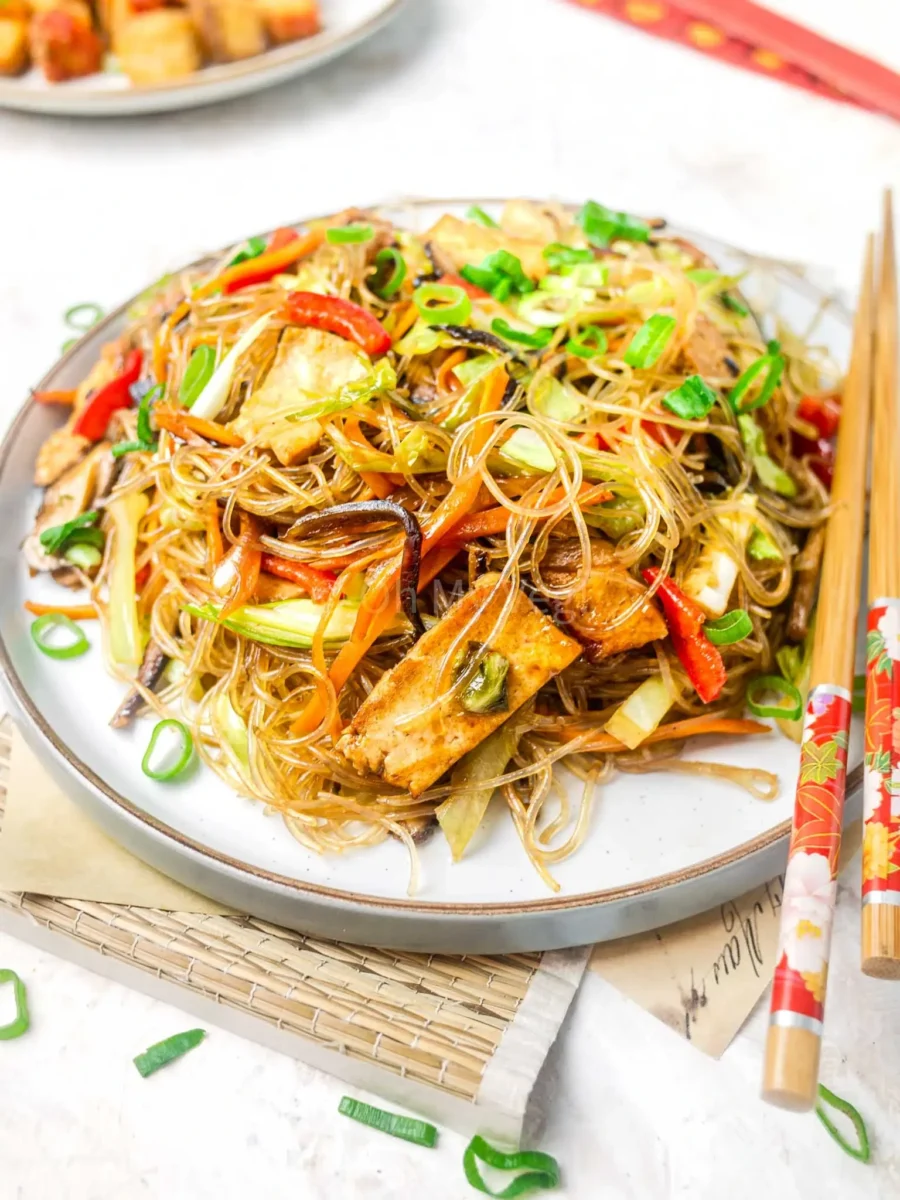
What happens when you want takeaway vibes without the wait (or the delivery fees)? Answer: this glass noodle stir fry, which fulfils every craving: slippery, glossy noodles tangled with crisp vegetables, meaty mushrooms, and golden tofu. All in a savoury-sweet, umami-rich sauce, of course.
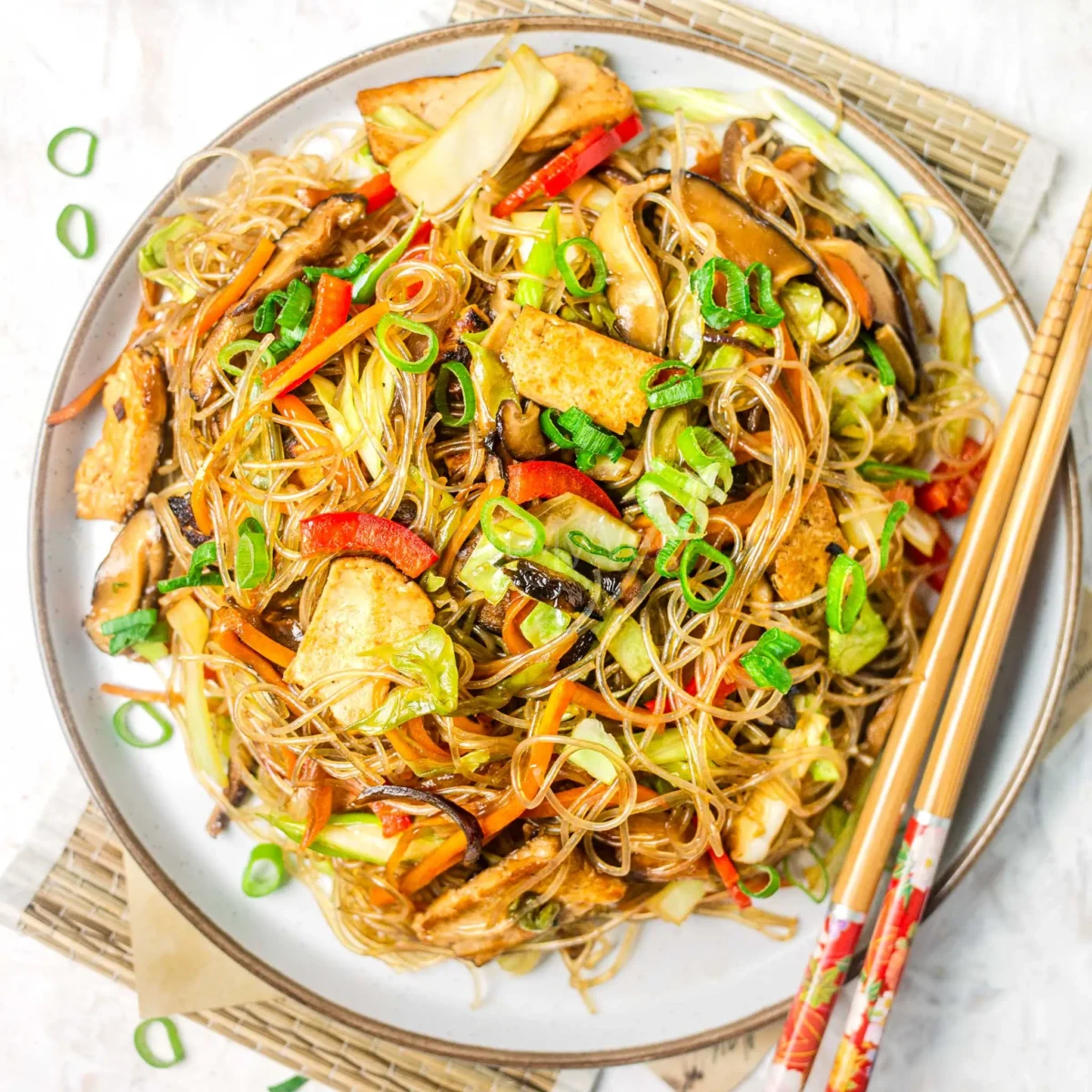
Glass noodle stir-fries are popular across Asia — from Korea’s sweet and glossy japchae to Thailand’s pad woon sen bursting with lime and umami.
Each country has its own take on these slippery, translucent noodles, the last as delicious as the next.
Classic Chinese flavours inspire this version. Imagine a savoury-sweet soy-based sauce, toasted sesame oil drizzled at the end, and that high-heat wok sizzle that makes everything taste like you never want to stop eating … no MSG needed!
Noodle dishes like this are how I learnt to cook (technically, mushroom chow mein was the first … I still have photos of it somewhere, but they’re far too embarrassing to share!). They are so quick and easy — perfect for beginners.
When I was a teenager, the singular Asian store in my city was a treasure trove — the only one for miles on end. For the Asian population, accessing traditional ingredients locally must have been a lifesaver.
For me, coming home with bags of exciting ingredients (glass noodles included) to experiment with was the foundation of my cooking journey.
All these years later, I’m still cooking noodle recipes on a weekly basis. Can you blame me, with delicious dishes like this on offer?
🤤Why You’ll Love Glass Noodle Stir Fry
🍜 What Ingredients You’ll Need for Glass Noodle Stir Fry
To bring this dish together, you’ll need the noodles, protein, vegetables, and sauces.
But first, let’s address a nagging question some of you may have:
What Are Glass Noodles?
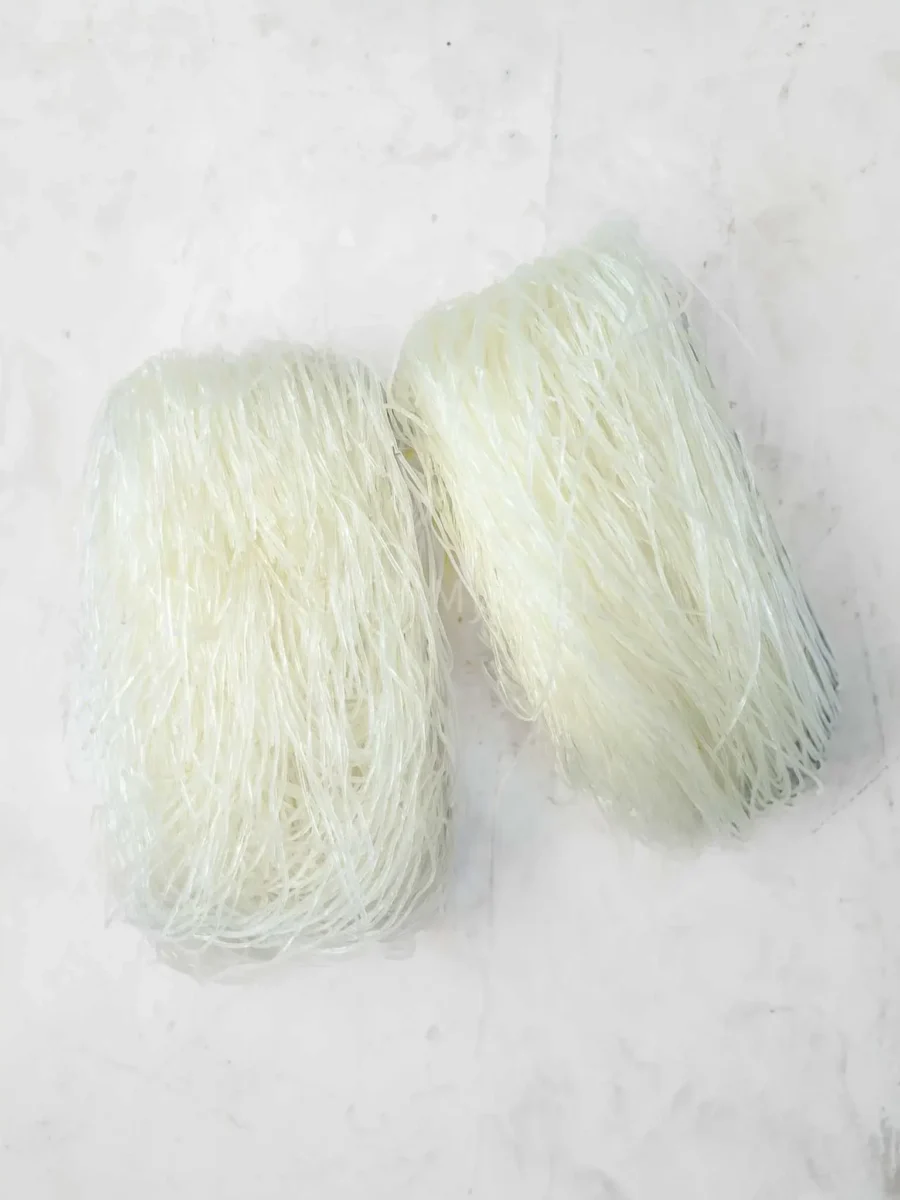
Glass noodles (sometimes called bean thread noodles or cellophane noodles) are an Asian noodle that’s translucent when cooked — hence the moniker.
They’re mostly made from starches. Mung bean starch is among the most common varieties, but sweet potato starch, tapioca starch, or potato starch is also frequently used.
The ones I used were a combination of cornflour and pea starch; mixing two or more starches is a typical practice.
Unlike wheat-based noodles (like the kind we use for honey garlic noodles, soy sauce bean sprout noodles, or paneer hakka noodles), glass noodles have little intrinsic flavour.
That’s not a flaw — much like tofu, thanks to their natural flavouring, they’re the perfect vessel for soaking up sauces and seasonings.
Glass noodles are sold in brittle bundles of dried noodles. They look similar to rice noodles or vermicelli (I use them in vegetable chow mai fun), but don’t confuse the two … they have a unique texture that’s bouncy, tender, and slippery. Sweet potato-based glass noodles are a standout (renowned for their chewiness).
Similar to rice noodles, however, glass noodles don’t require boiling. A quick 10-minute soak in warm (not hot) water is enough to “cook” the noodles (although we’ll be stir-frying these quickly too).

The Main Players
- Glass noodles: Slippery and bouncy, these noodles are unlike any other variety and excellent at absorbing all the sauce we’ll add later.
- Oil: Since we’re stir-frying, you’ll need a neutrally flavoured oil with a high smoke point. I suggest avocado, canola (rapeseed), or sunflower oil.
- Tofu: Soaks up the sauce and adds protein, without feeling heavy. Use a firm or extra-firm tofu to ensure the protein holds up to stir-frying. Opt for either homemade tofu (easier than you’d believe!), or store-bought; I used a chilli-marinated extra firm tofu for even more oomph.
- Shiitake mushrooms: These bring proper umami depth and a natural meatiness that’s less pronounced in other mushroom varieties.
- Carrots: Cut into thin matchsticks, they add a compelling sweetness and crunch to the stir-fried glass noodles.
- Cabbage: A fantastic way to add bulk to your noodles at low cost (I use the same hack for vegetable gyoza) … but cabbage also provides crunch and a tender, buttery flavour. I use white cabbage, but napa cabbage also works.
- Bell pepper: You’ll only need a small amount — for a visual “wow” factor and for the touch of sweetness.
- Red onion: White or brown onion would also be fine.
- Garlic: Sliced thin so the moment it hits the oil, you get the fragrance infused into the stir-fry and intense garlic hits when you eat (I love it!).
- Spring onion: For garnish (sliced diagonally because it looks fancy!). Also called green onions or scallions.
- Sesame oil: A small drizzle right at the end of the dish is enough to add an unmistakable nutty, toasted aroma that’ll light up the kitchen.
For the Sauce …
Our sauce is a classic Cantonese-style stir-fry sauce — not too different to the one I use in my famous restaurant-style plain chow mein, or other Chinese recipes.
It’s simple, but delivers all the dynamism you need.
- Light soy sauce: Salty and full of umami, but with a clean, uncomplicated flavour.
- Dark soy sauce: Much deeper and richer in flavour than its lighter counterpart, it boasts a sweet caramel flavour, intense richness, and incredible savoury notes.
- Mushroom stir-fry sauce: AKA vegetarian (it’s vegan, but often branded as vegetarian on the label) oyster sauce. This just amps up the umami even more!
- White sugar: A small amount is enough to elevate and balance the dish.
- Salt: Light soy sauce is pretty salty, but I often add a pinch of extra salt for seasoning.
🌿 Cooking for Allergies and Dietary Requirements
My recipe for stir-fry glass noodles is vegan, egg-free, and nut-free. That’s often not the case with glass noodle dishes you’d eat in a restaurant, but I pride myself on always providing allergy-friendly options for my readers.
So, while this recipe isn’t gluten-free or soy-free, it is adaptable.
To make the recipe gluten–free, swap soy sauce for tamari, a gluten-free alternative that can be used in a 1:1 ratio. This mushroom stir-fry sauce I use (linked) is naturally gluten-free as well as vegan, but if you use a different brand, do check.
To make the recipe soy-free, swap the soy sauces and vegetarian stir-fry sauce for coconut aminos. The dish will have a different flavour, but that’s unavoidable. You’ll also need to use a lentil-based “tofu” or other plant-based protein (like pea protein).
🧑🍳 How to Make Stir Fry Glass Noodles (Step-by-Step Photos)
Depending on how fast you are at chopping vegetables, this dish can be on your plate in less than 15 minutes.
The actual cooking happens fast. Really fast. It’s imperative to get everything prepped before you turn on the hob: all vegetables chopped, sauce mixed, tofu cubed … the full mise en place.
Then, it’s easy peasy. Here are some step-by-step photos (with descriptions!) to help you:
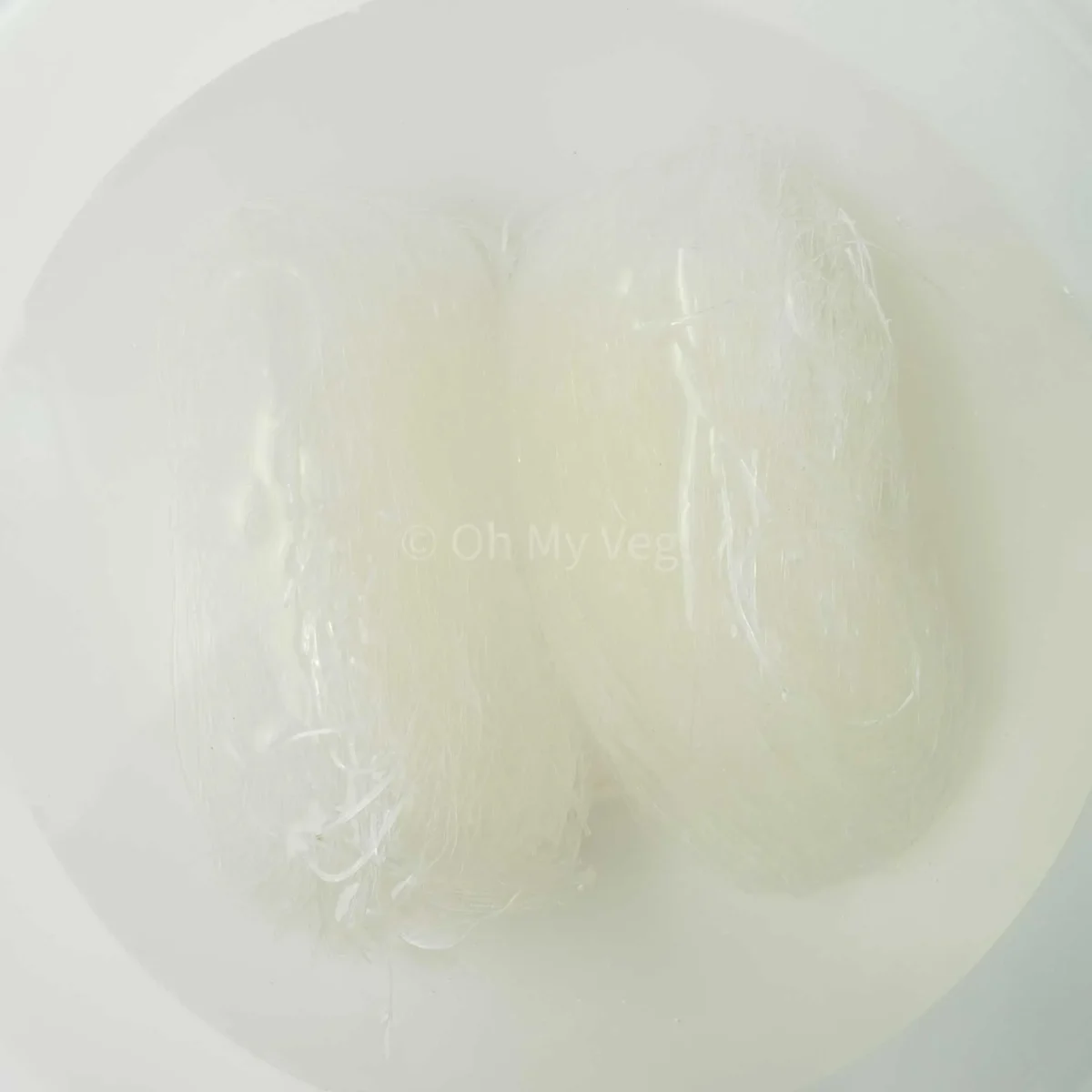
One: Soak your glass noodles in warm (not hot) water for around 10 minutes. The soaking time varies depending on the ingredients; check the packet for details.
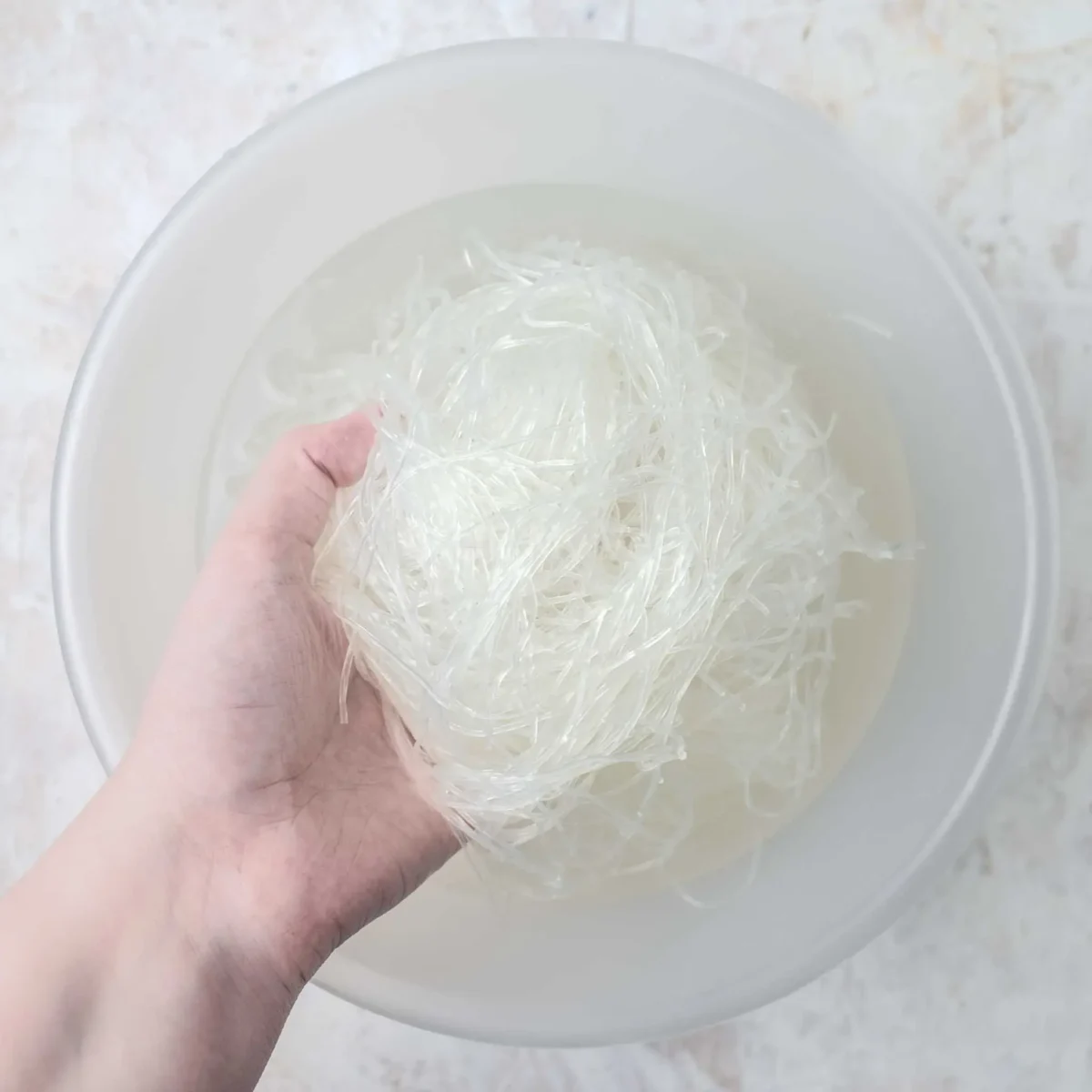
Two: Once the noodles are soaked, they will have changed colour to an off-whiteish and swollen in size. Once soaked, drain and set aside.
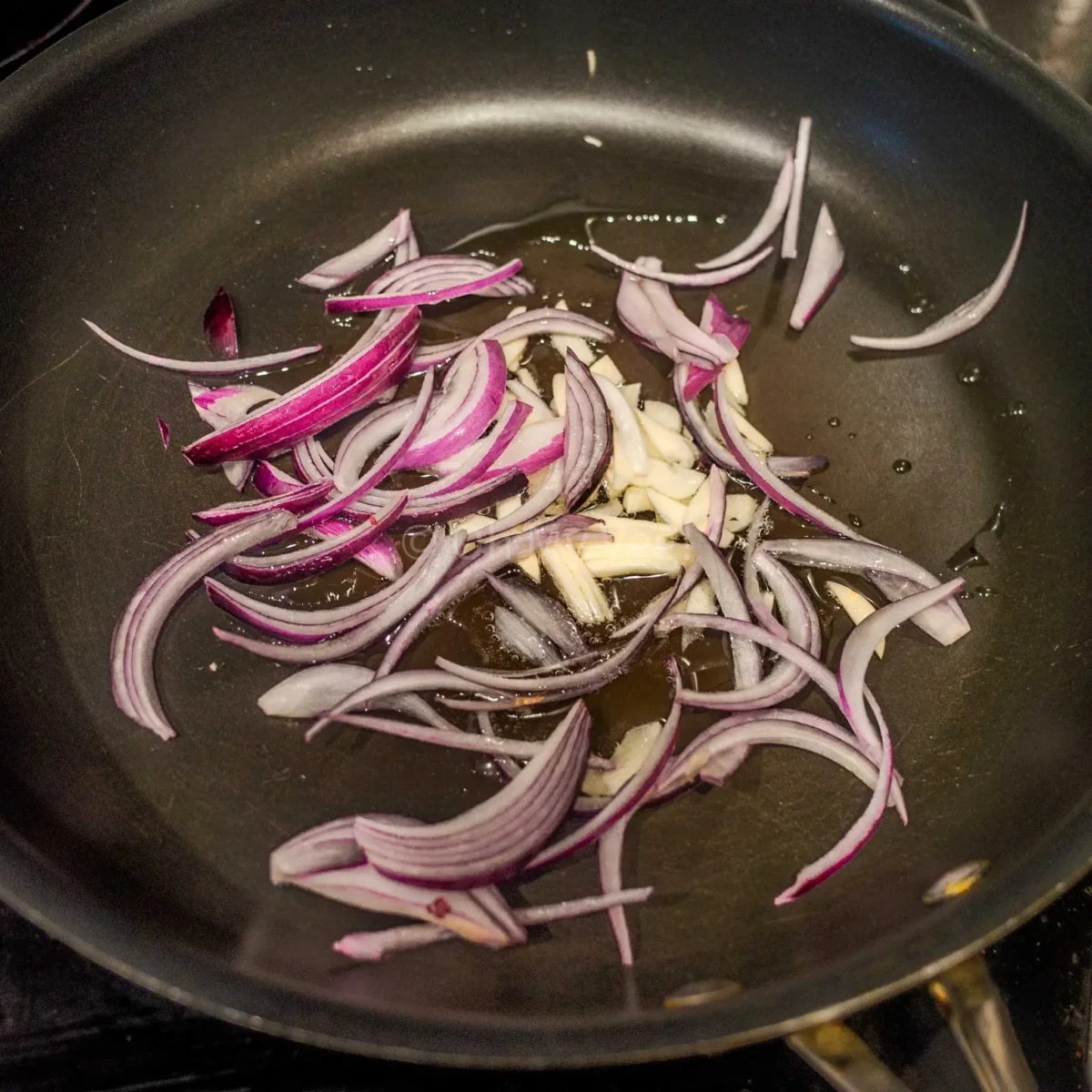
Three: In a large frying pan or wok, heat oil. Bring it to smoking point, then add your garlic, and red onion. Stir-fry until aromatic.
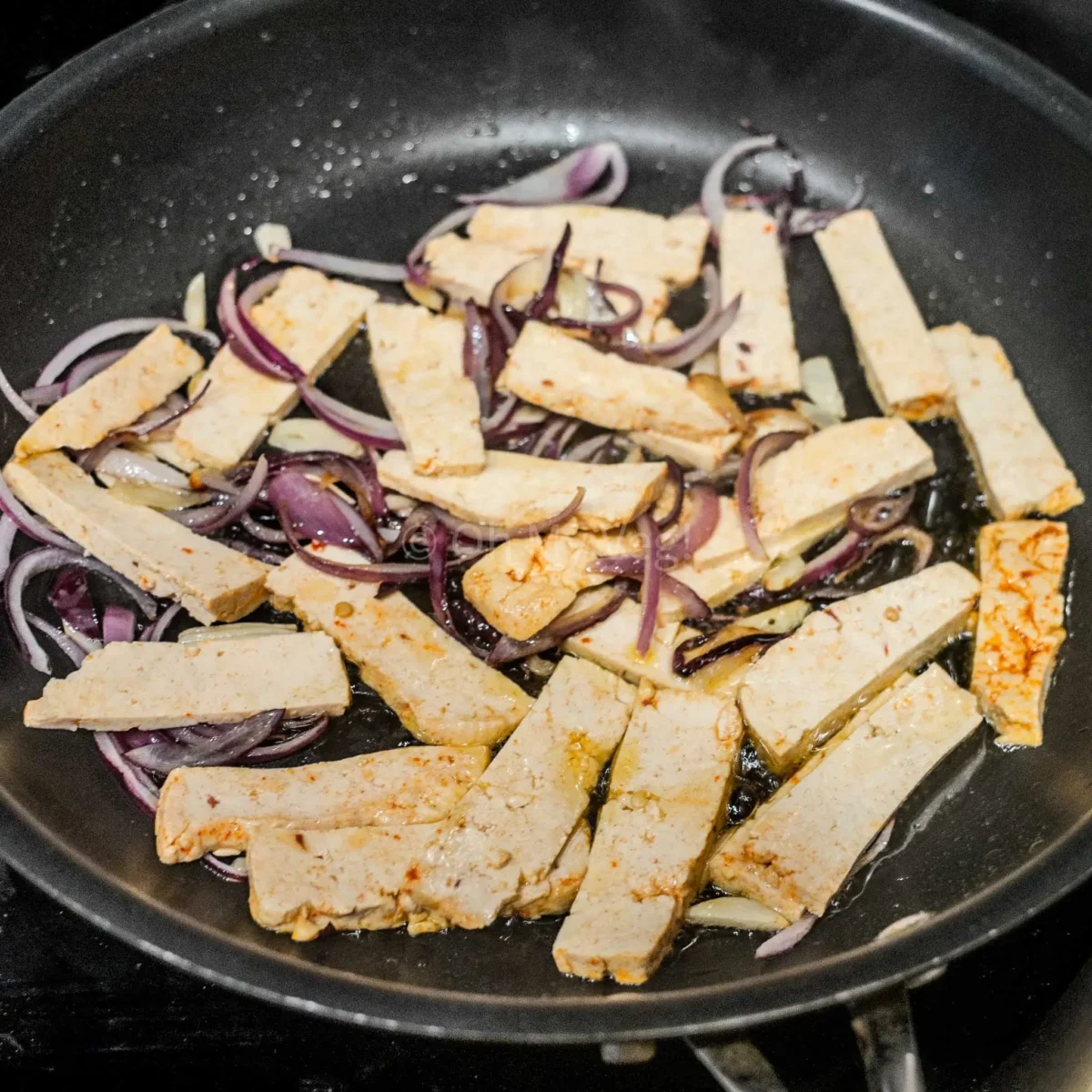
Four: Add the sliced tofu to the pan. Stir-fry until the tofu is slightly fried and charred on the edges (I love the smoky wok hei flavour!).
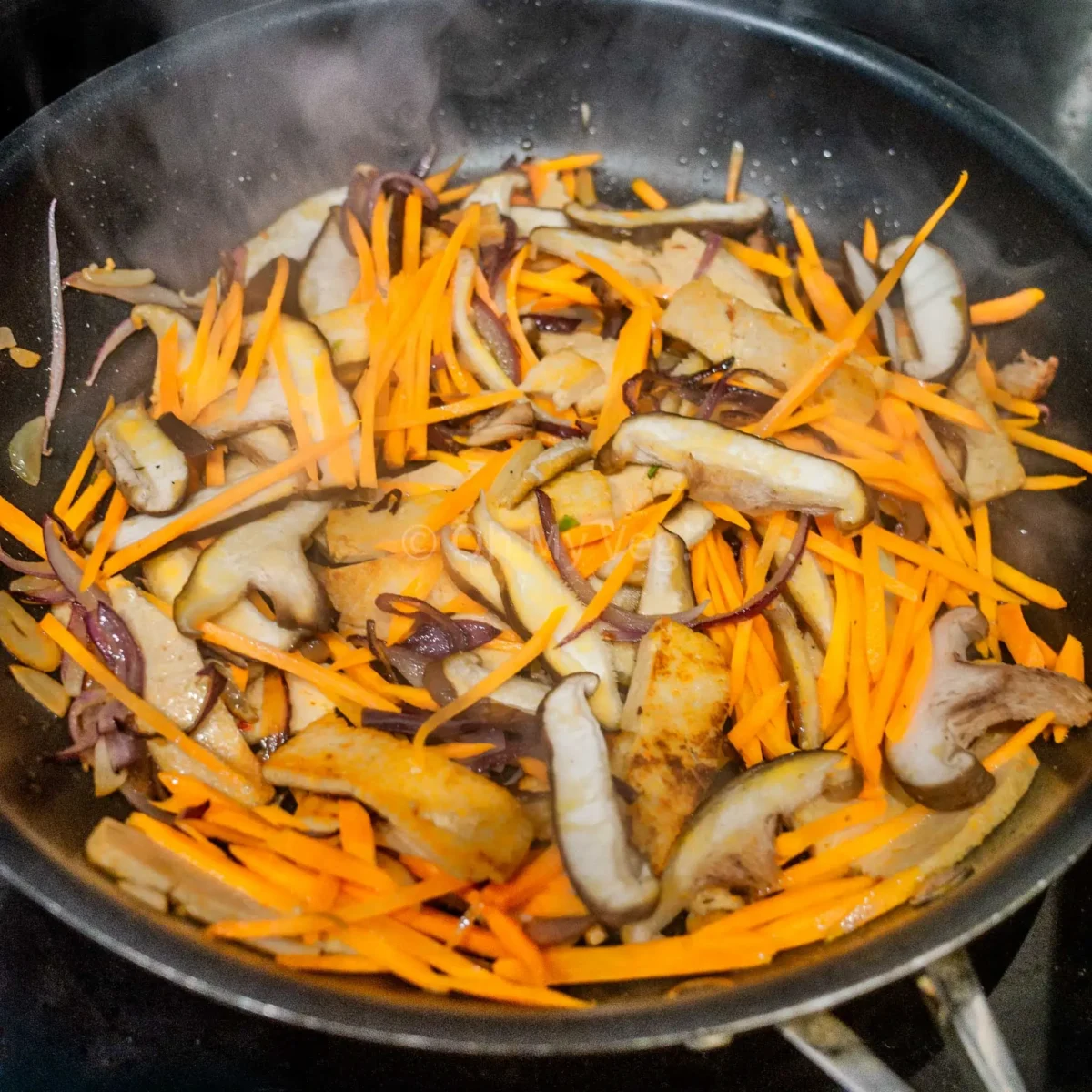
Five: Add the carrots and shiitake mushrooms to the pan. Continue stir-frying until both have slightly softened.
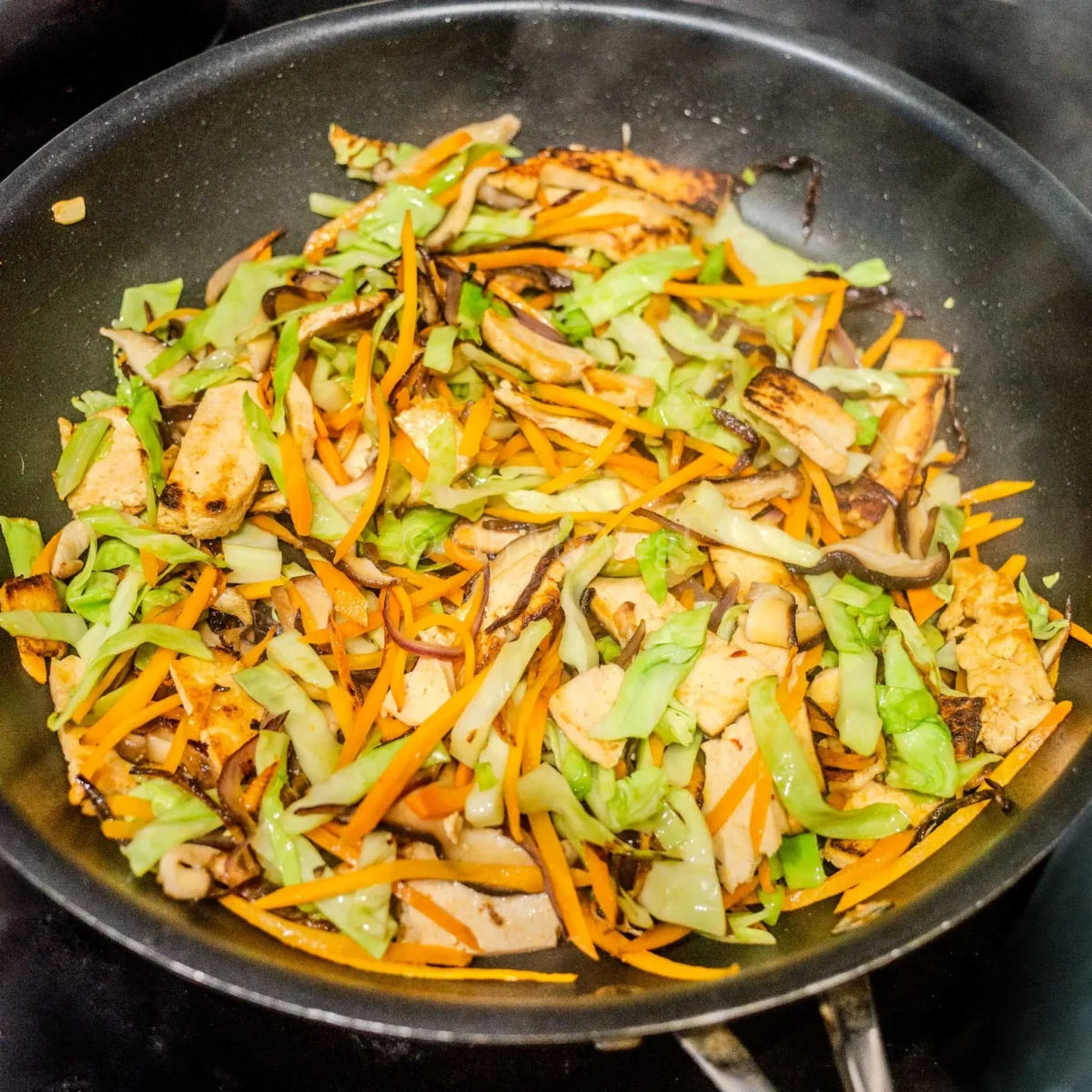
Six: Add sliced cabbage and mix it through.
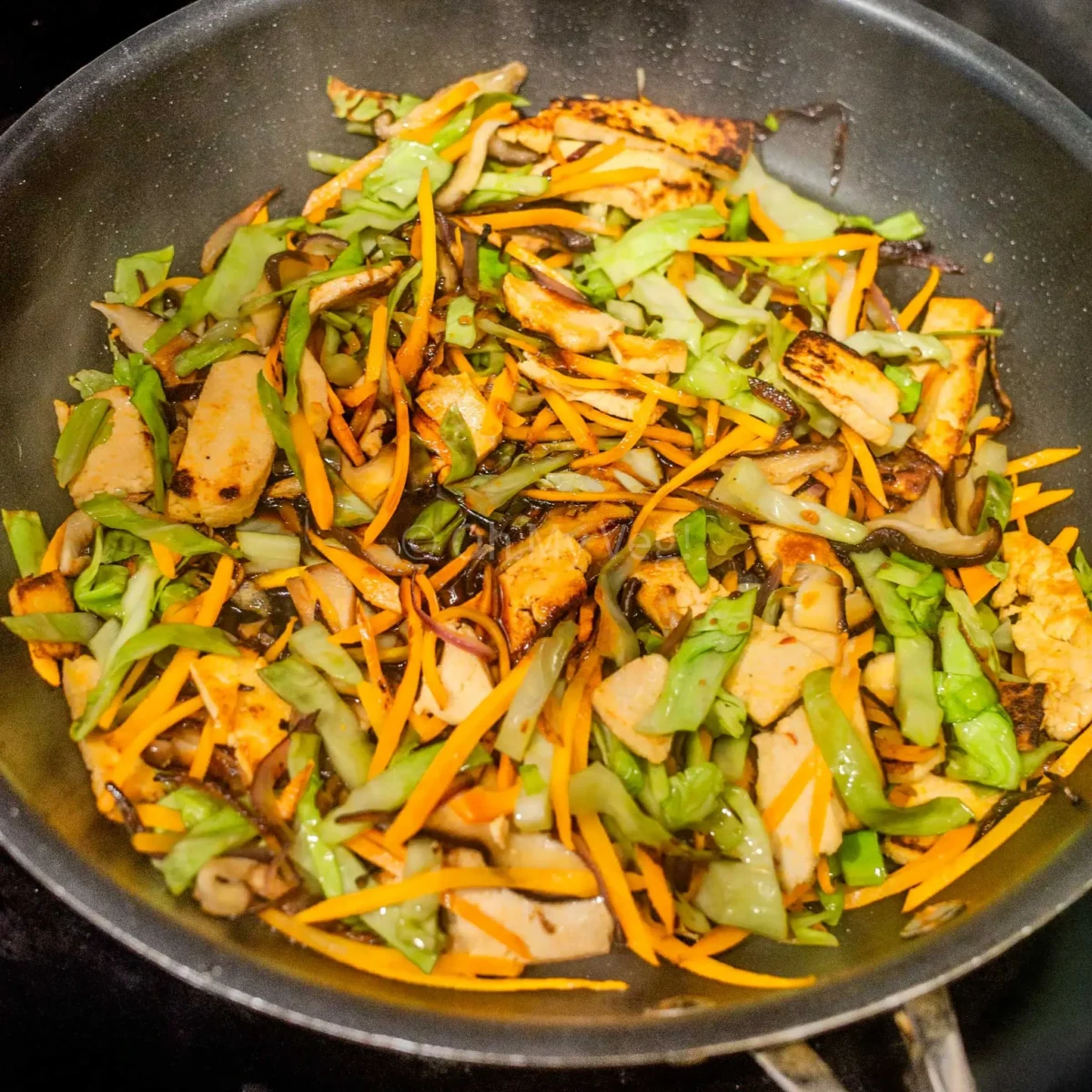
Seven: Add the prepared sauce to the pan (light and dark soy sauce, mushroom stir-fry sauce [vegan oyster sauce], white sugar, and salt).
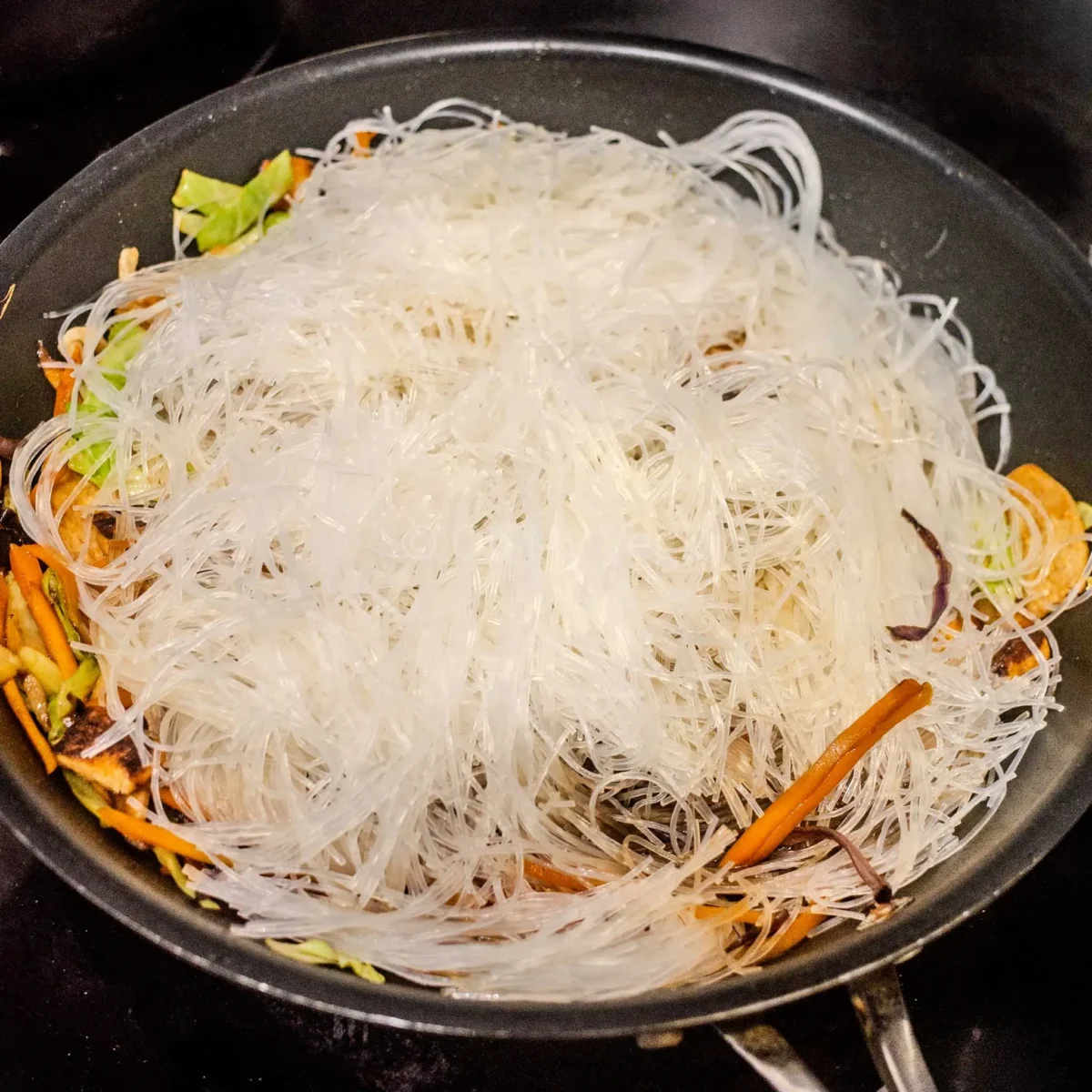
Eight: Immediately add the soaked glass noodles. Toss the pan to coat the noodles in the sauce and disperse the vegetables.
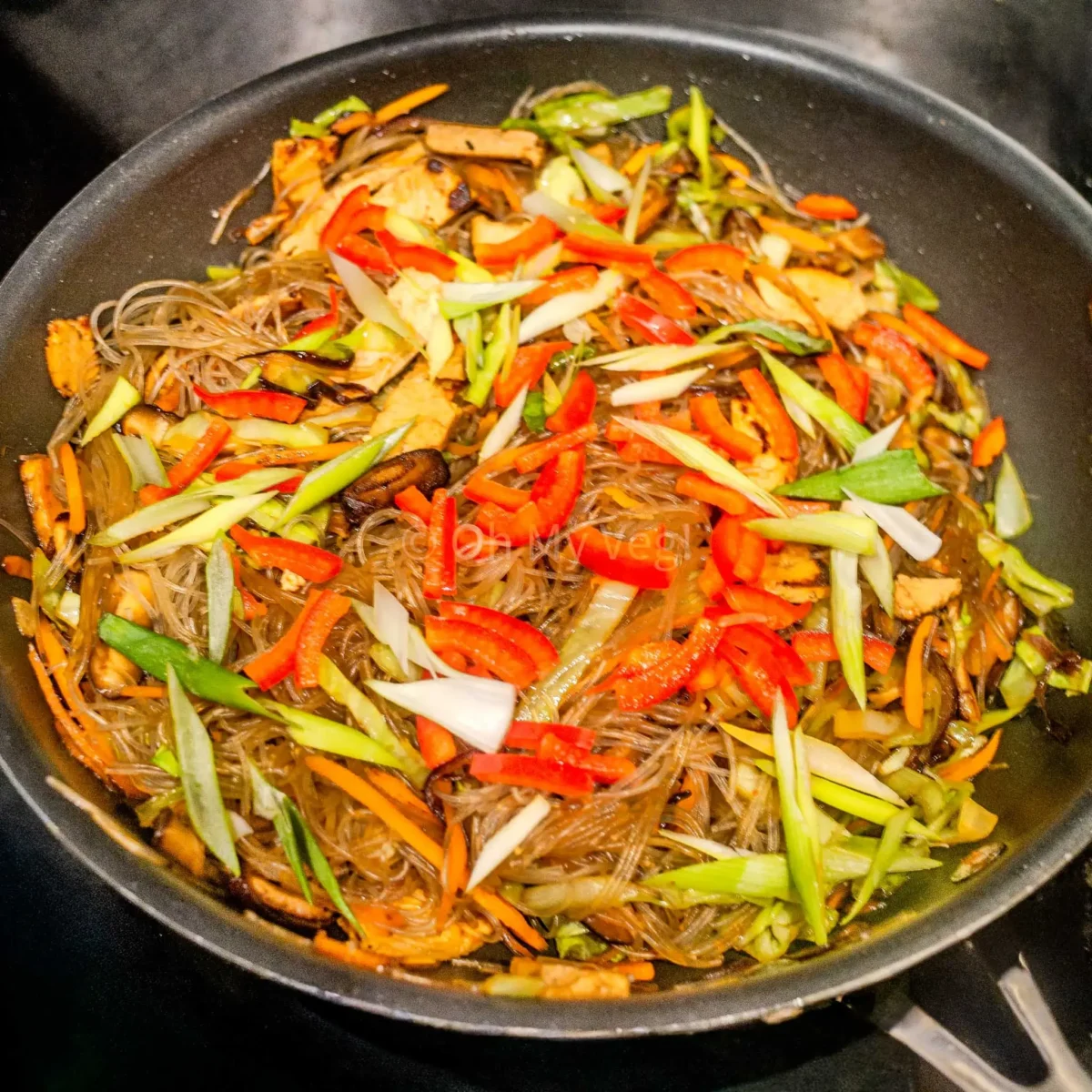
Seven: Add the red bell peppers and spring onion whites. Let them cook for around 30 seconds — we want to retain that crunch.
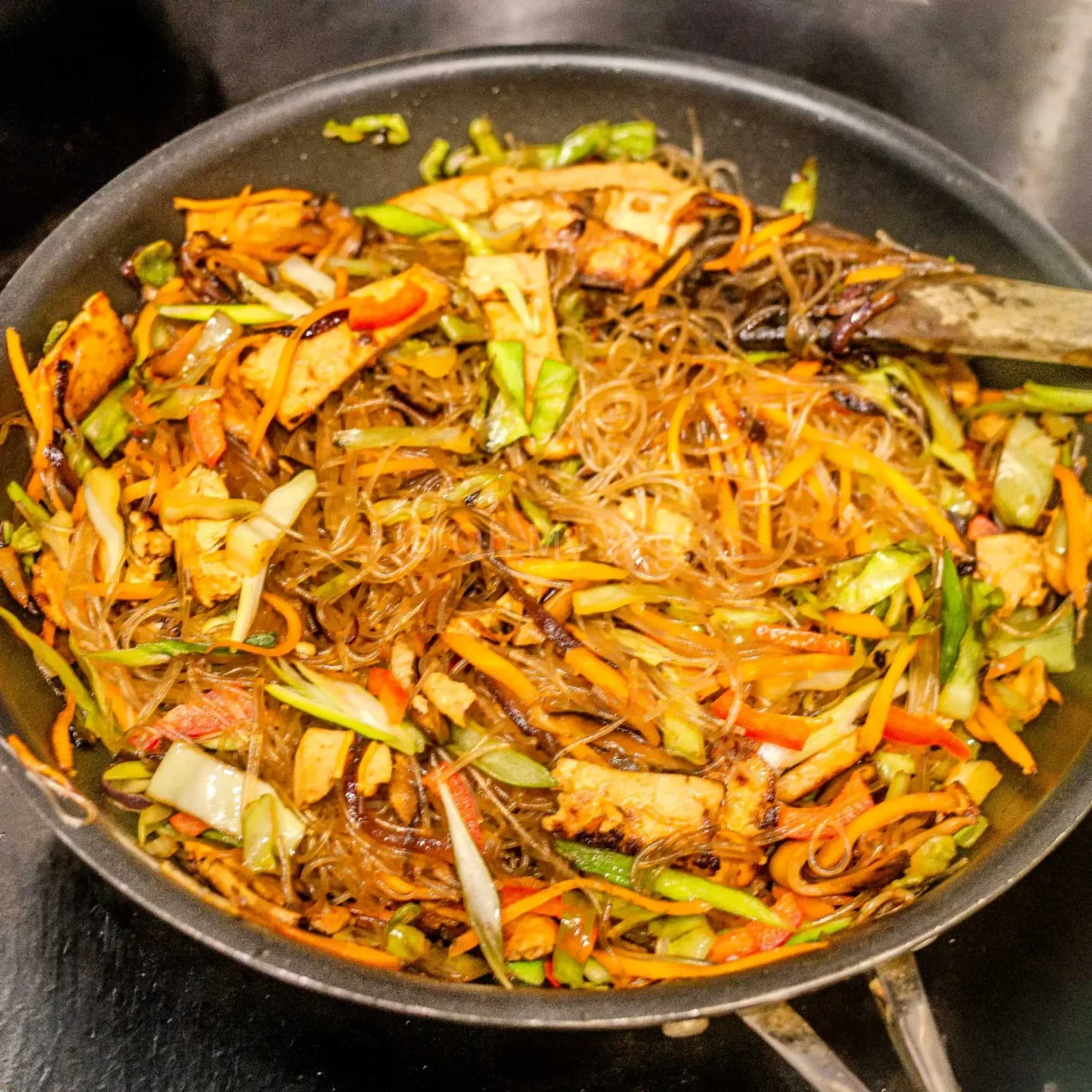
Eight: Turn off the heat and give the noodles a final toss. Garnish with sesame oil and spring onion greens before serving.
Remember, the complete recipe (with ingredient quantities and instructions) can be found at the bottom of this page. You can also print the recipe, save the recipe, adjust the servings, and much more from there!
⭐My Top Tips for Stir Fry Success
- Have everything ready before you start cooking. Crucial. Stir-frying waits for no one. High heat and quick cooking that requires you to stir and toss the name regularly means there’s no time to faff about looking for ingredients or chopping them.
- Cut the vegetables uniformly. For glass noodles, my preference is julienned matchsticks. Nobody wants raw carrots and soggy cabbage … similar sizes mean everything cooks at the same rate.
- Don’t overcrowd the wok! Too much in the pan means everything steams instead of getting the restaurant-style wok hei (breath of the wok; heat, char, and smokiness) that makes these noodles taste phenomenal. If you want to double the recipe, cook in batches.
- Keep the heat high. Don’t be timid. You want that sizzle and slightly charred edges. It adds an unbelievable dose of flavour. And flavour is what we need!
- Taste and adjust. Before serving, taste a bit (all good chefs do it!). Need more salt? Add a pinch or a splash of light soy sauce. Want more sweetness? Add a pinch of sugar. This recipe is pretty divine, if I do say so myself, but your palate knows best.
🥡Storing Glass Noodle Stir Fry
Stir-fried glass noodles keep brilliantly in the fridge for 3-4 days in an airtight container.
Cold glass noodle stir fry straight from the fridge is a legitimate lunch option, by the way … I absolutely love it!
But, to reheat, add a tiny splash of water, cover, and microwave in 1-minute bursts until piping hot. Or, tip it back into a hot wok and stir-fry again until heated through. This is my preferred option, as it gives you that fresh-cooked texture.
Freezing isn’t recommended, as the dish’s texture declines once thawed. Luckily, glass noodle stir-fry is so quick to make that there’s minimal benefit to meal prepping.
Furthermore, you can always use the handy toggle on my recipe card to adjust the serving size if storage is a concern. The more you know!
🥠Serving Suggestions For Glass Noodle Stir Fry
This dish has everything: protein, carbs, and plenty of vegetables all in one bowl. That makes it a highly satisfying standalone meal.
But, if you’re feeding a crowd or want the full fakeaway feast, serve the noodles with crispy spring rolls, vegan fried mushroom wontons, or an Asian cucumber salad (to cut through the richness).
If you’ve tried this glass noodle stir fry recipe, please drop a comment ✍️ or a star rating 🌟 below to help fellow readers! Additionally, if you have a question, please drop a comment and I’ll do my best to answer ASAP.
🍜 Glass Noodle Stir Fry Recipe

Ingredients
- 200 g glass noodles 2 bunches
- 1 ½ tablespoon neutral oil
- 3 cloves garlic sliced
- 50 g onion sliced
- 150 g extra firm tofu cut into pieces
- 80 g carrot (80g = 1 medium), julienned
- 50 g shiitake mushrooms sliced
- 100 g cabbage sliced
- 2 spring onion sliced on a diagonal
- 20 g red pepper sliced
- 1 ½ teaspoon sesame oil
For the Glass Noodle Stir Fry Sauce
- 2 tablespoons light soy sauce
- 1 ½ teaspoon dark soy sauce
- 2 tablespoons mushroom stir-fry sauce or vegan oyster sauce
- 2 teaspoons white sugar
- 1 pinch salt
Instructions
Make the Sauce
- In a small bowl, combine 2 tablespoons light soy sauce, 1 ½ teaspoon dark soy sauce, 2 tablespoons mushroom stir-fry sauce, 2 teaspoons white sugar, and 1 pinch salt.
Soak the Noodles
- In a large bowl, soak 200 g glass noodles in warm (not hot) water. Soak for around 10 minutes. Depending on the ingredients, you may need to soak them for less or more time.
- Once the noodles have soaked, drain them and set aside. Start the rest of the recipe while you wait.
Prep the Vegetables
- If you haven't already, prep all of the vegetables and aromatics.
Stir-Fry the Glass Noodles
- Add 1 ½ tablespoon neutral oil to a large wok over high heat. Once the oil is smoking hot, add 3 cloves garlic (sliced). Stir-fry for a second, then add 50 g onion (sliced).
- Once the onion is aromatic, add 150 g extra firm tofu. Stir-fry until the tofu is golden and slightly charred on the edges (for that delicious smoky taste).
- Add 80 g carrot (julienned) and 50 g shiitake mushrooms (sliced), stir-frying until the vegetables are slightly softened.
- Next, add 100 g cabbage (sliced) and stir-fry for a few seconds. Toss to mix it through the other vegetables.
- Tip the prepared sauce into the wok and immediately add the soaked and drained glass noodles. Toss the wok to mix the noodles into the sauce and distribute the vegetables.
- Add 2 spring onion (sliced on the diagonal) and 20 g red pepper (sliced) to the pan. Stir them in and turn off the heat (they'll cook in the residual heat, but we want that crunch).
- Finish the noodles with a drizzle of 1 ½ teaspoon sesame oil, then serve.



Very adaptable recipe, all the flavour of a high end Chinese restaurant in less time than it takes to order. Great instructions too, loved it!
That’s high praise Louise! Thank you very much. I’m so glad to hear the recipe was a success with you 🙂