Cabbage Pakora Instantly Upgrades Veg to Crispy Perfection
Who can resist the crunchy, crispy allure of Indian pakora? That’s a trick question — the answer is no one! This recipe for cabbage pakora forgoes the typical ingredients, swapping them for a ravishing mix of sweet cabbage, onions, and lip-smacking spices.
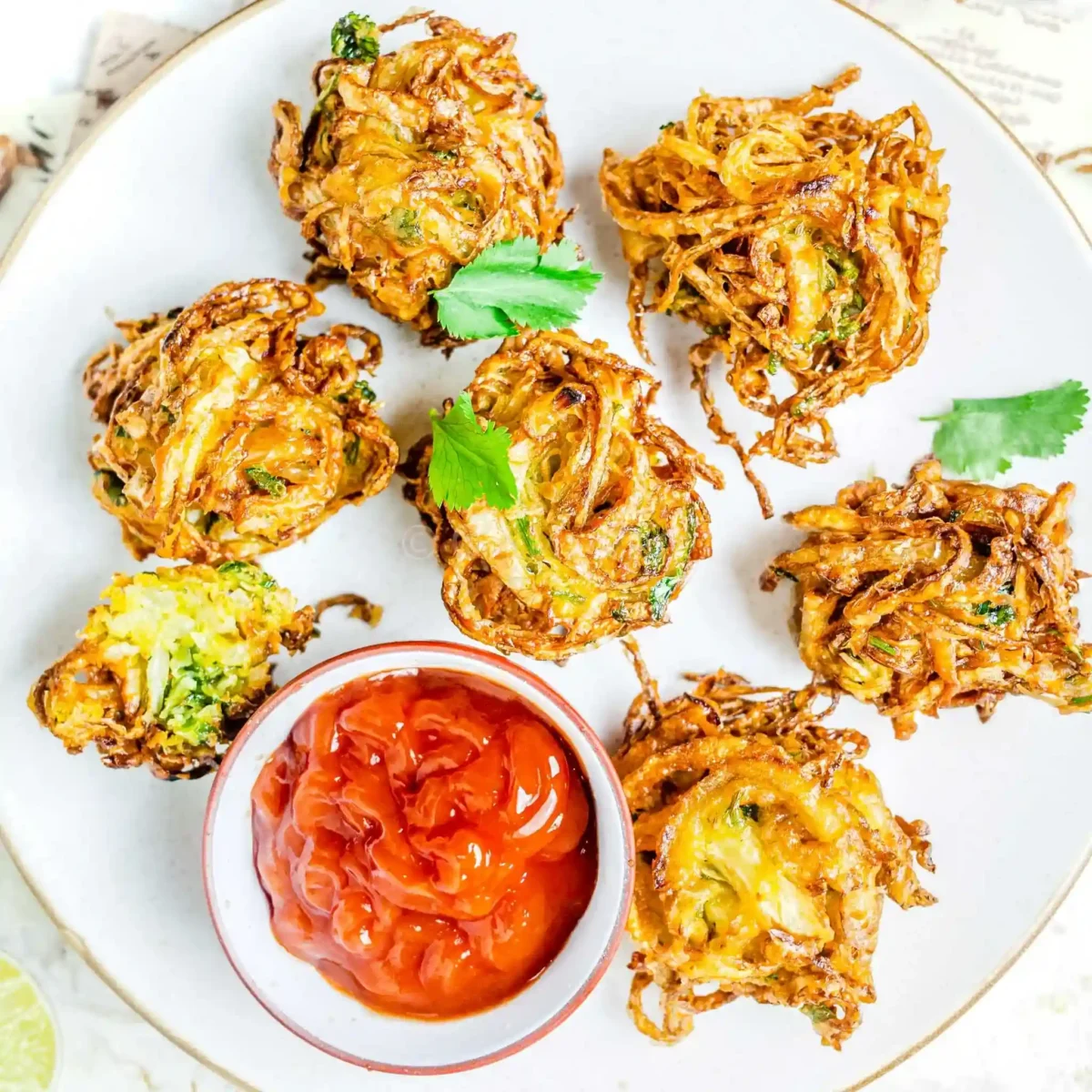
Pakora: A beloved treat known by a hundred names (pakoda, bhajiya, bhaji) and loved by a billion people, all across the globe!
The characteristic flavour of pakora comes from the spiced chickpea-flour batter, which imparts a gorgeous nutty, earthy, and deeply savoury flavour to the fritters. It also has the added benefit of being naturally gluten-free.
Almost any vegetable or protein can work in pakora — by far the most famous is onion bhaji, which makes a star appearance on every Indian restaurant menu in the West. The authentic version (kanda bhaji) sells out day after day on the bustling streets of Mumbai.
Cabbage pakora, on the other hand, are almost criminally underrated.
Shredded cabbage boasts a natural sweetness that contrasts beautifully with the sharpness from green chillies, citrusy fresh herbs, and thyme-scented spices.
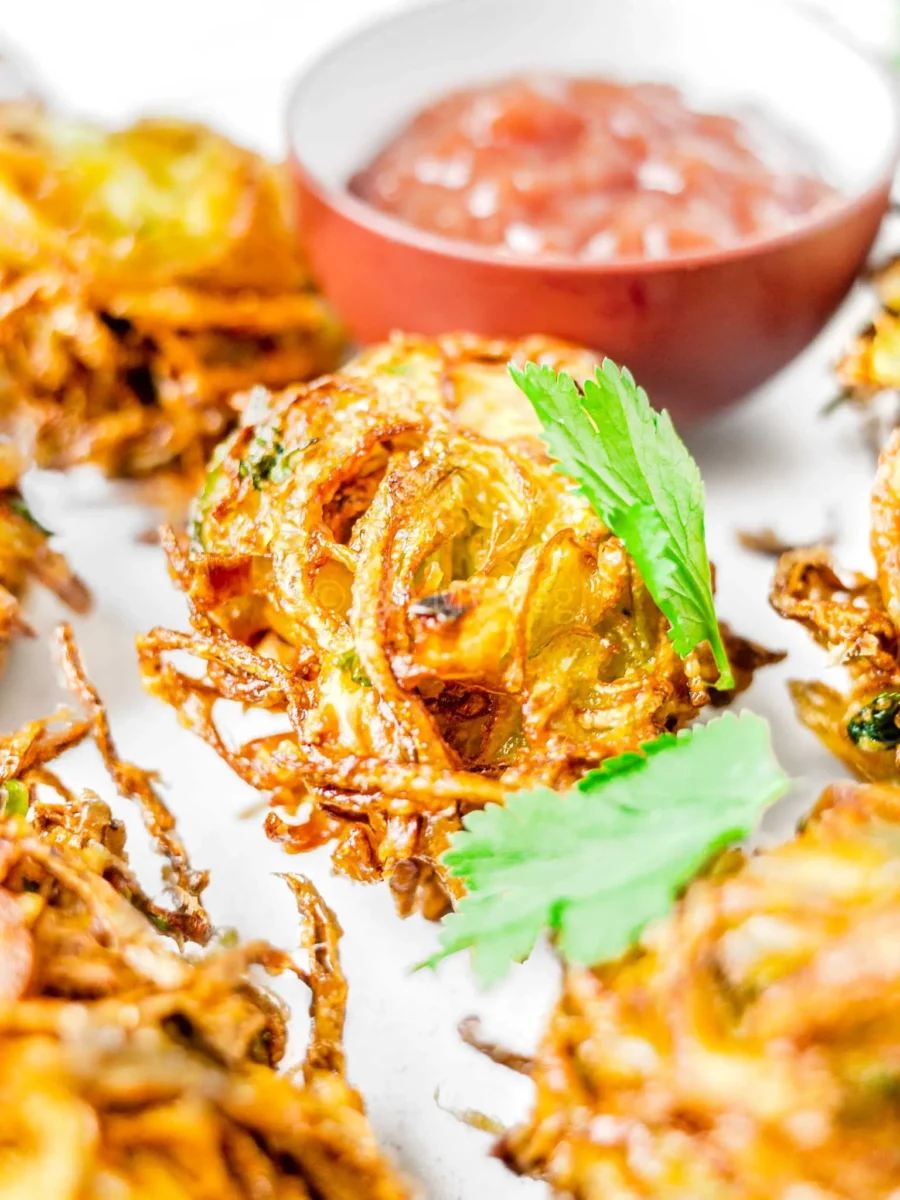
Not to mention the texture: earthy-shatteringly crispy (really!) all the way through. Just imagine dipping one into a yoghurt mint sauce, green chutney, or just good old ketchup. Yum. A whole plate just for me, please! How many for you?
❤️ Why You’ll Love This Recipe
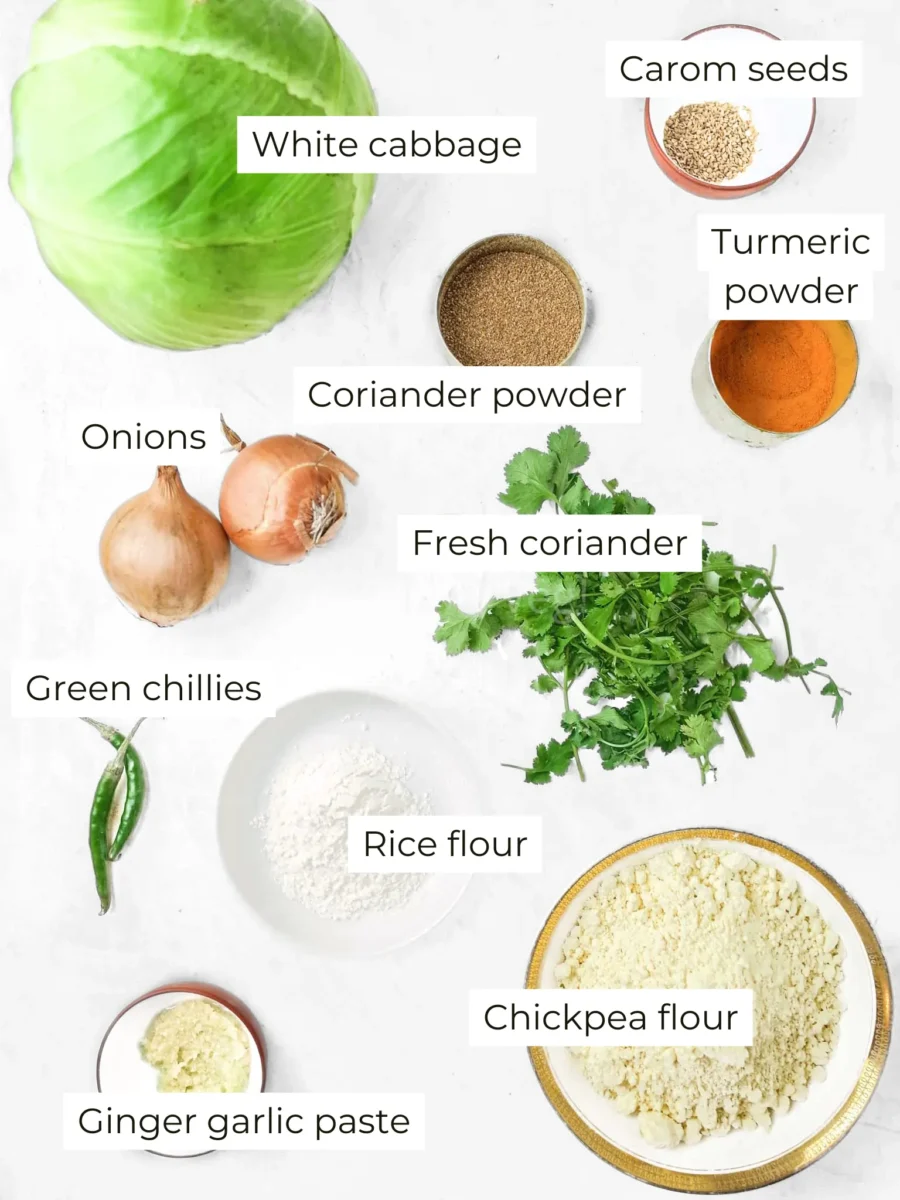
🥬 You’ll Need These Ingredients (Substitutions + Useful Info!)
- White cabbage is our main star! You could also use savoy cabbage, sweetheart cabbage (hispi/pointed cabbage), red cabbage, or napa cabbage, but white cabbage has the crispest leaves.
- White onion adds a touch more sweetness to the pakora. You could use shallots, leeks, or just more shredded cabbage in its place.
- Green chillies offer sharp, fruity heat. I use thin jwala chillies for all my Indian recipes. If those aren’t available, substitute with Thai bird’s-eye chillies (significantly spicier), serrano peppers (slightly milder), or jalapeños (much milder), depending on your spice tolerance.
- Carom seeds (ajwain) are pleasantly bitter, with overtones of oregano. They add so much beautiful aroma to the pakora when crushed between your palms.
- Ginger garlic paste builds on the pungent, buttery flavours. I always advise making your own (use a food processor and a touch of oil if necessary), as store-bought tends to be acidic. Can be omitted and replaced with a pinch of asafoetida (hing).
- Turmeric powder yields a stunning sunny yellow colour and peppery notes.
- Coriander powder is earthy and warming.
- Chickpea flour is our binding for the fritters! Also known as garbanzo bean flour, gram flour, or besan. It’s nutty, earthy, and toasty.
- Rice flour makes our cabbage pakora just a touch crisper. It’s worth it!
- Fresh coriander (cilantro) peppers the cabbage fritters with a lemony, citrusy freshness. If you ask me, it’s a must (unless you are genetically disposed to find it soapy!).
- Neutral oil (not pictured) is needed to deep-fry or shallow-fry the cabbage pakora. Use oil with a high smoke point, such as refined avocado oil, canola (rapeseed) oil, or sunflower oil. If you’re baking or air-frying the pakora, use your favourite cooking spray.
Of course, you’ll also need a touch of fine sea salt (not pictured) to bring the dish together.
🌱 Allergy Advice and Dietary Information
My recipe for cabbage pakora is 100% gluten-free, nut-free, soy-free, dairy-free, and vegan! In other words, it’s suitable for pretty much anyone, regardless of their dietary needs or preferences.
That’s why it’s a fantastic starter or side dish option — no need to bother with different dishes for different people — the fritters are a real crowd-pleaser.
To make cabbage pakora Jain-friendly, all that’s needed is two straightforward swaps. Firstly, replace the onions with equal amounts of shredded cabbage. Secondly, substitute ginger-garlic paste with a pinch of asafoetida (hing). Now you have a fabulous no-onion, no-garlic alternative to onion bhaji!
🔥 Step-by-Step Photos from My Kitchen: Making Cabbage Pakora
It’s easy as chips to make pakora better than the restaurant — if you don’t believe me, just try it!
The key lies in the ratio of vegetables to batter. Luckily for you, that’s covered in my recipe, so there’s no need for guesswork.
You can find the printable recipe card further down, where you can also adjust the servings. Here, though, is a visual guide for people who learn from seeing, not reading. You can also refer back to it while cooking to make sure each step looks right.
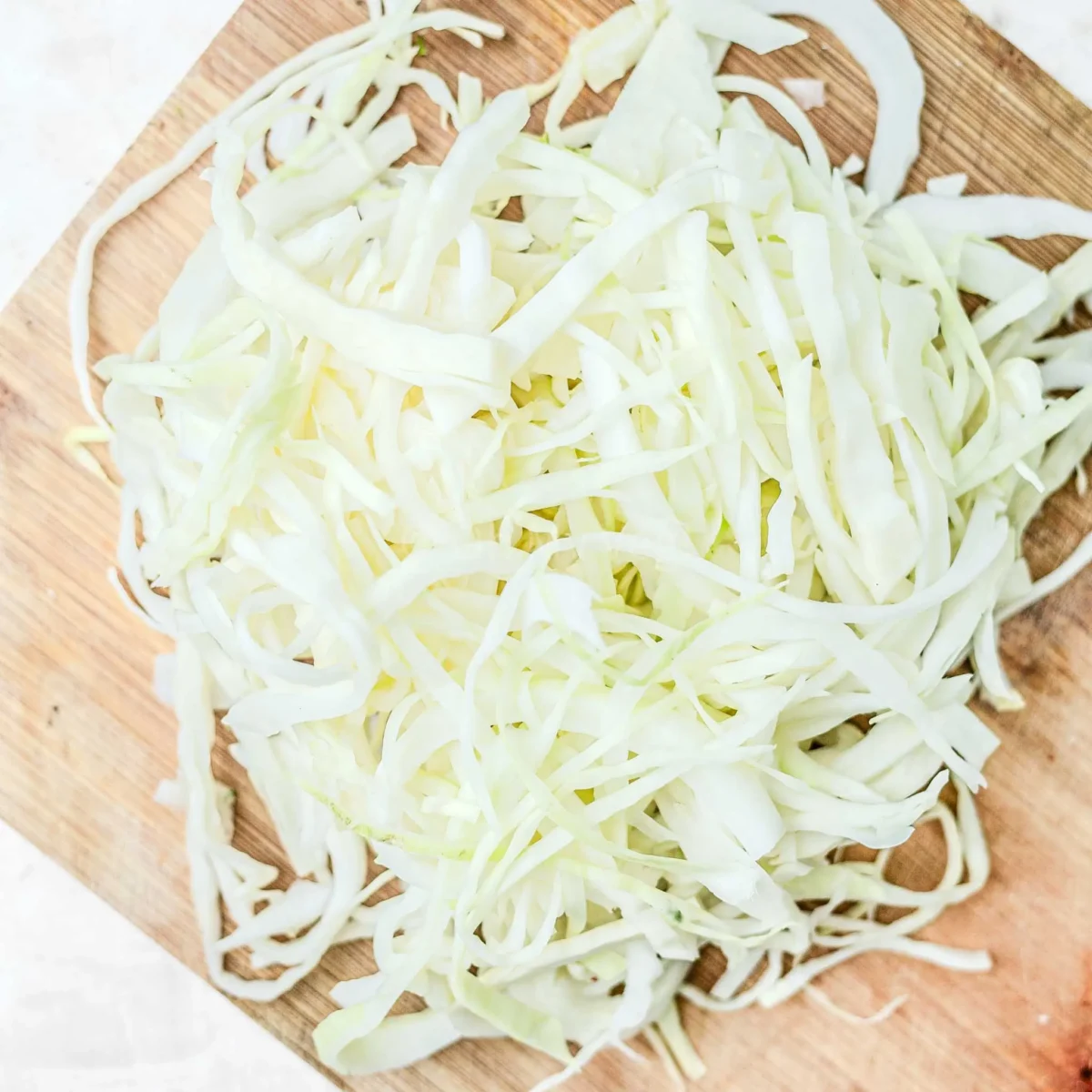
One: Finely slice cabbage, then rinse thoroughly. Drain and dry.
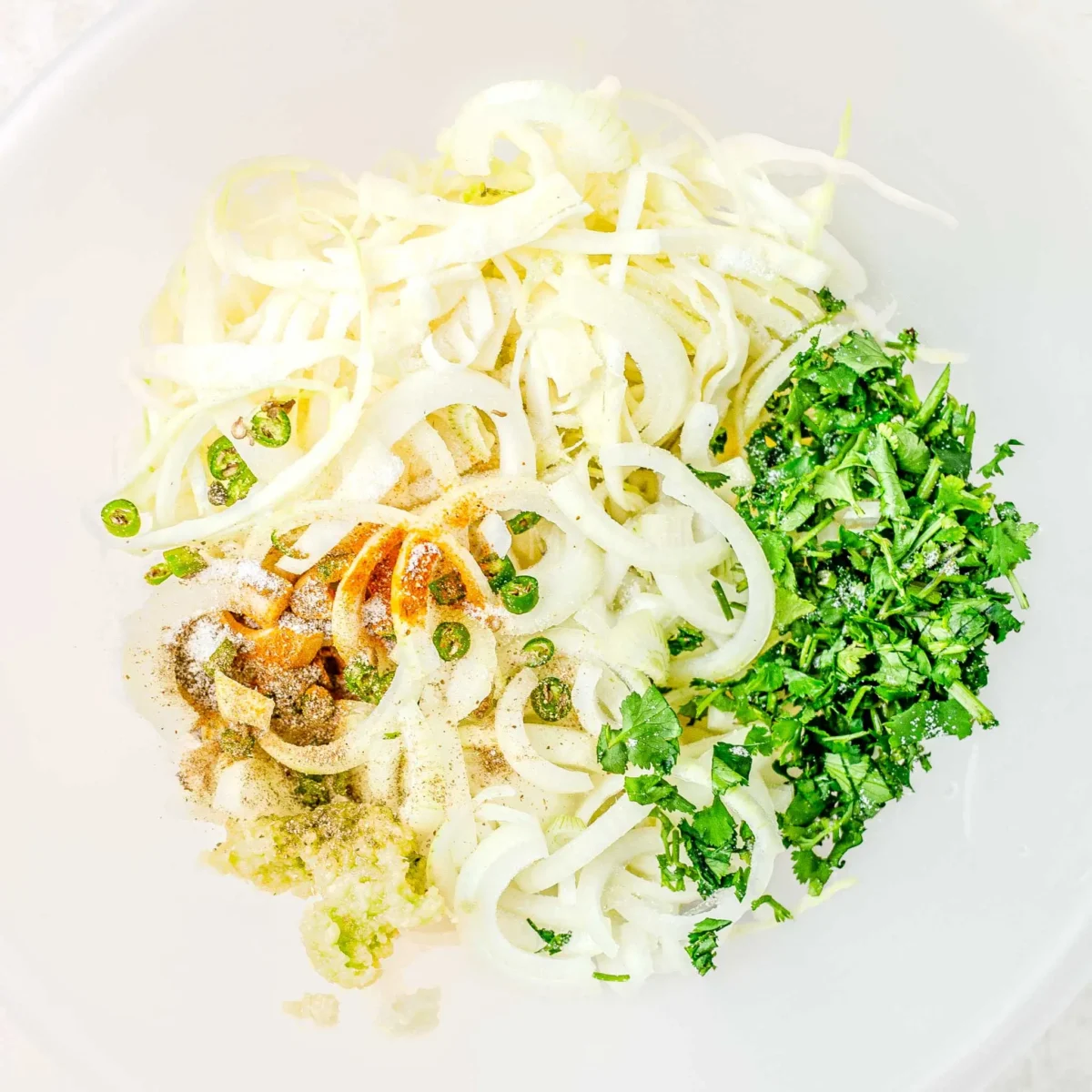
Two: In a large mixing bowl, add the finely sliced cabbage, sliced onions, chopped coriander (cilantro), chopped green chillies, ginger garlic paste, coriander powder, turmeric powder, and salt.
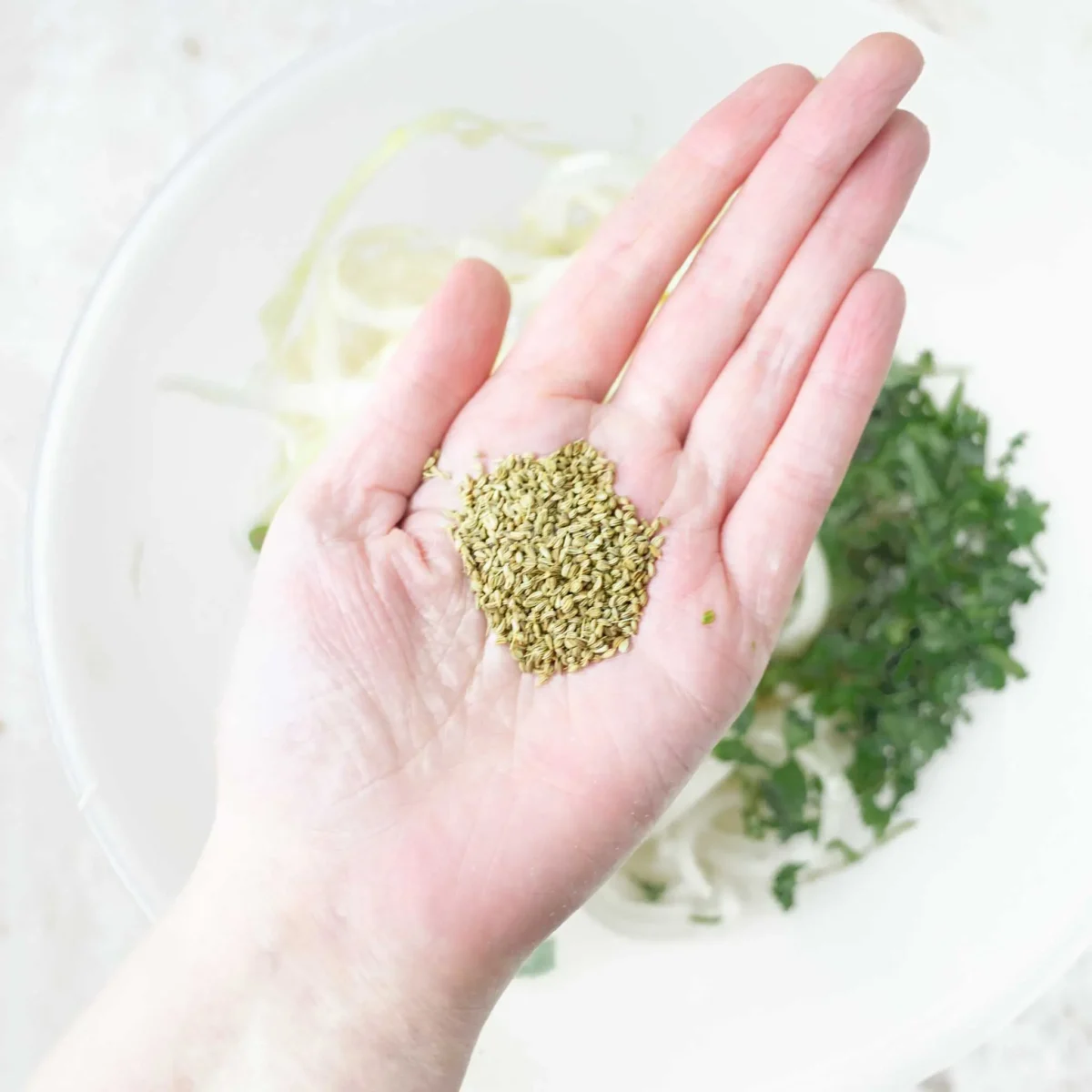
Three: Take carom seeds (ajwain) in your palm. Use your other palm to crush them, releasing the natural oils.
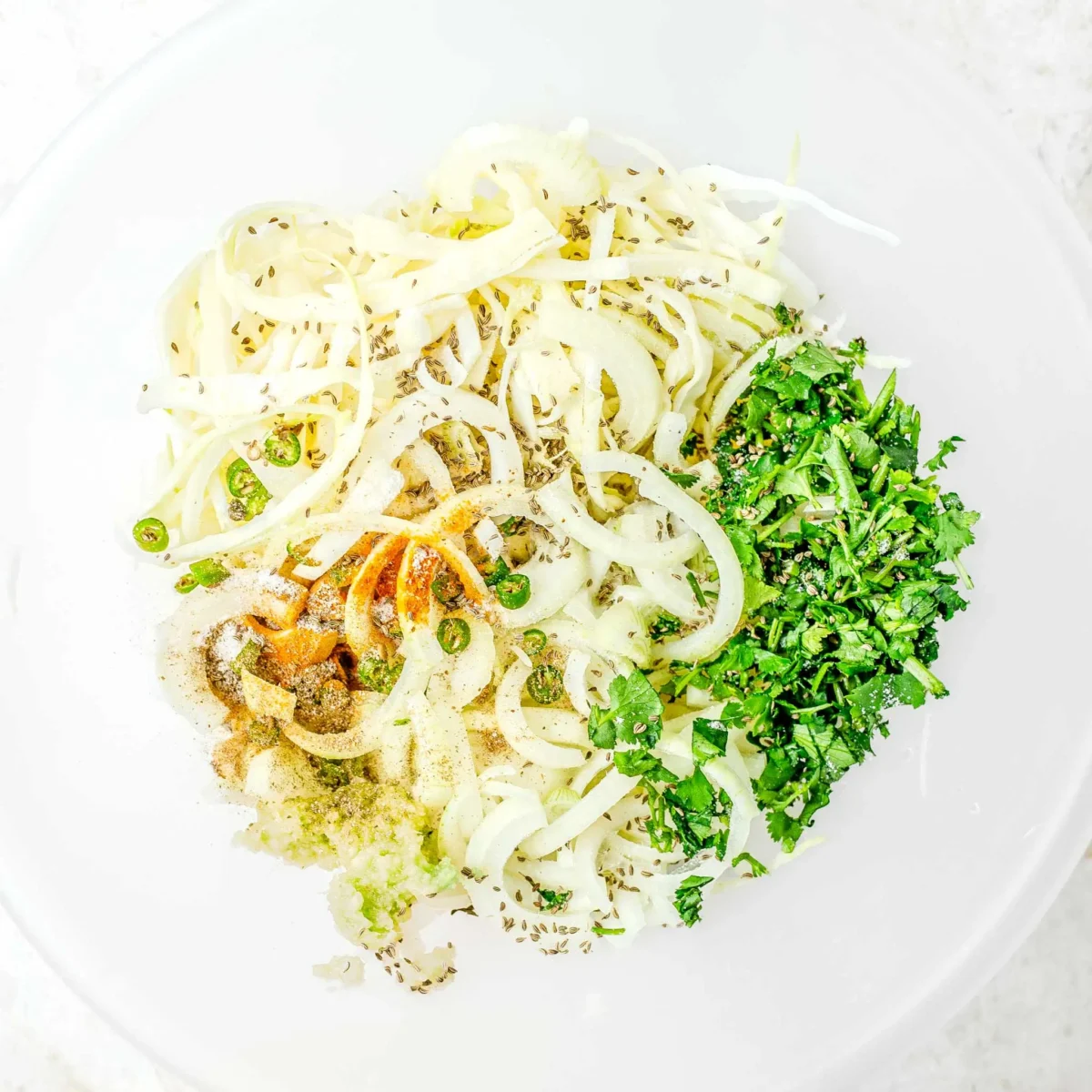
Four: Once crushed, add the carom seeds (ajwain) to the bowl too.
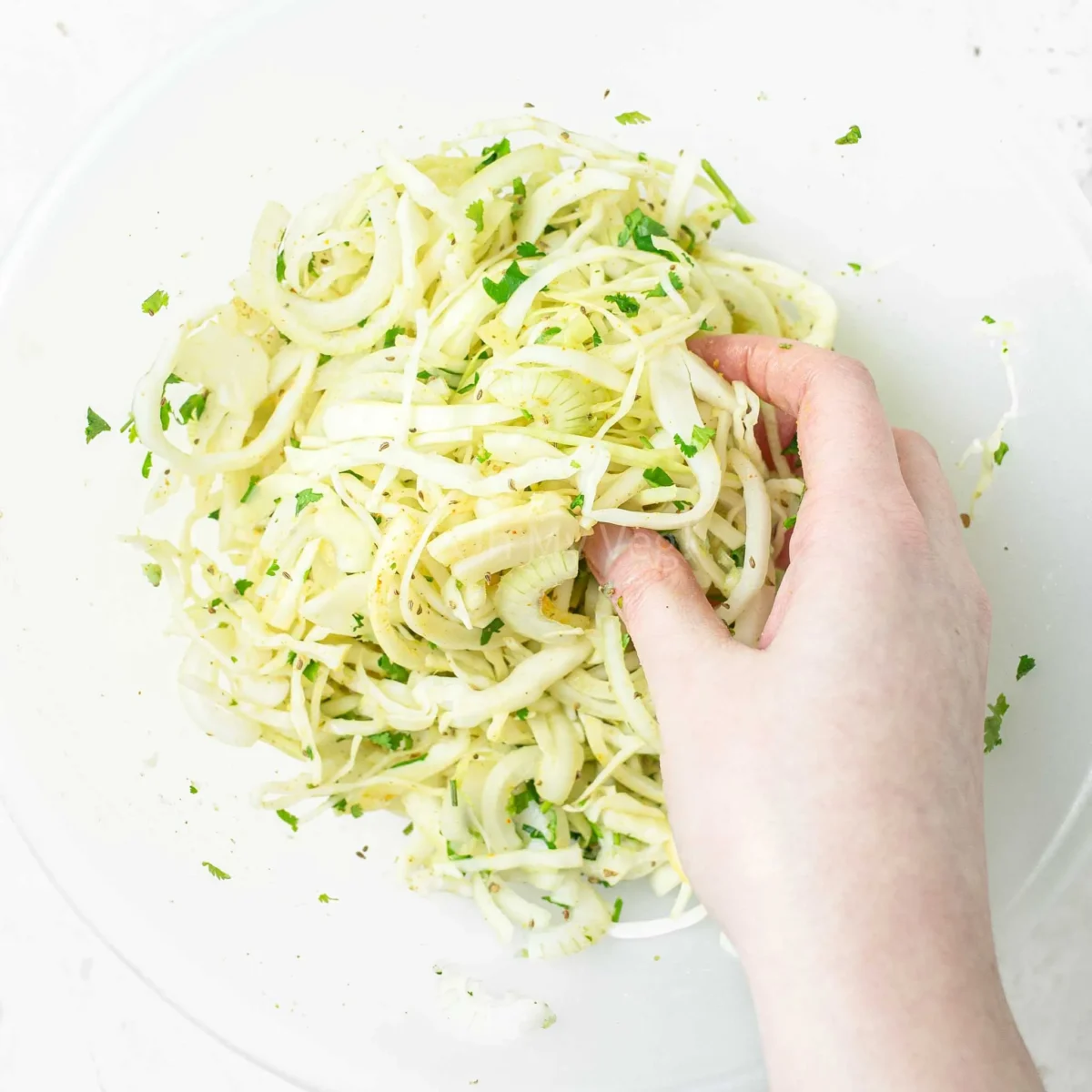
Five: Use your (clean) hands to massage the spices into the finely chopped cabbage and onions.
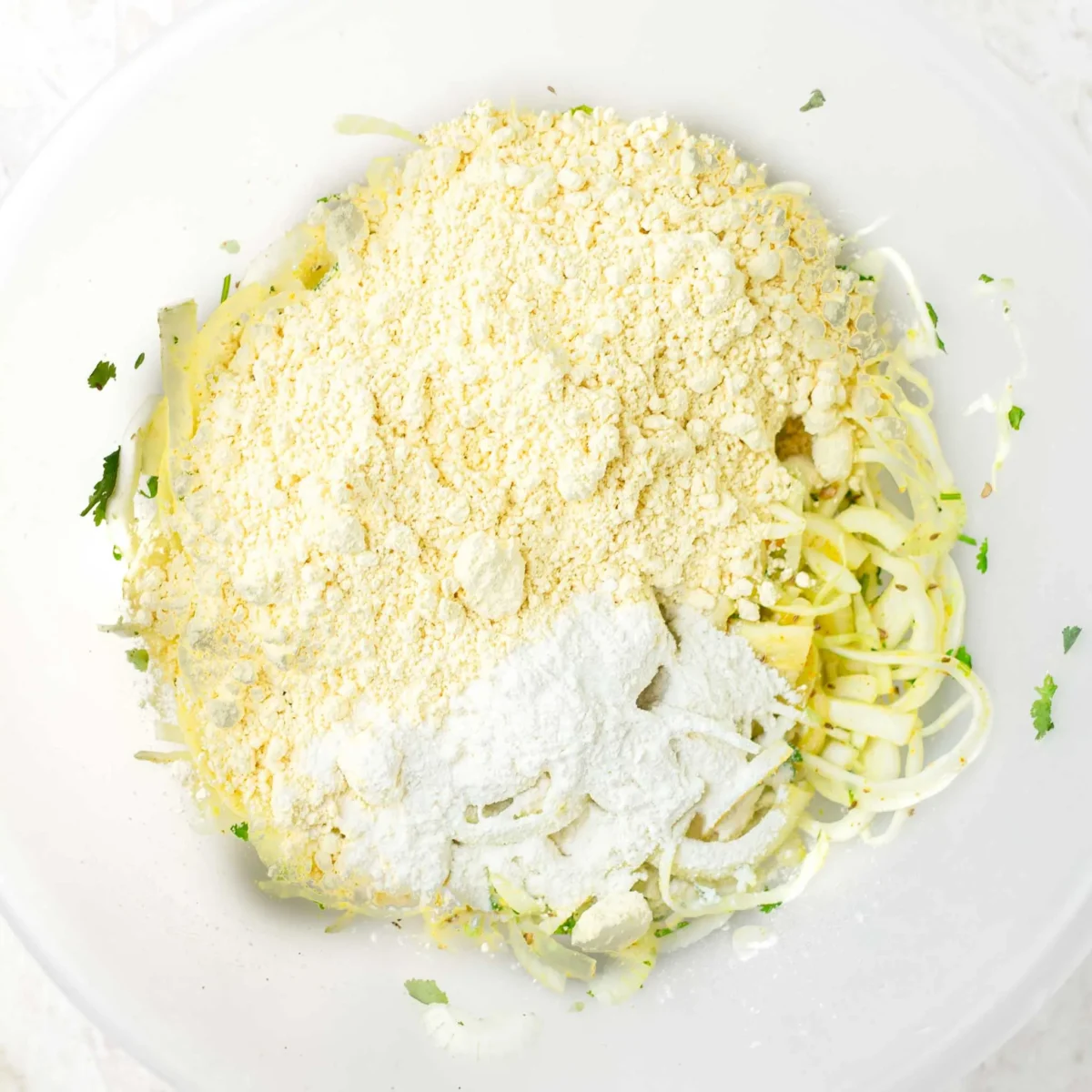
Six: Sieve chickpea flour (besan) and rice flour into the mixing bowl.
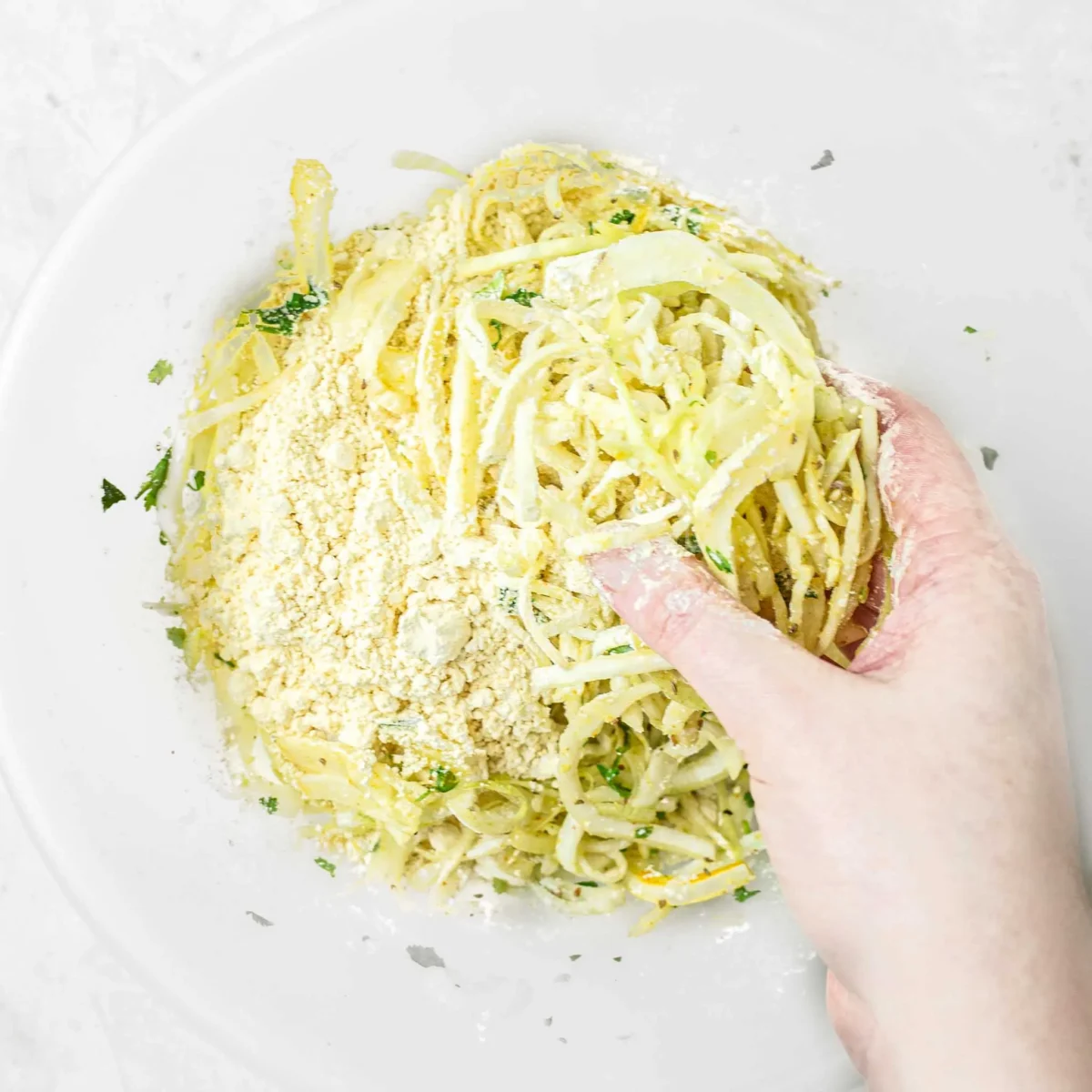
Seven: Again, use your hands to work the flours into the batter. Once worked in, add water and mix again.
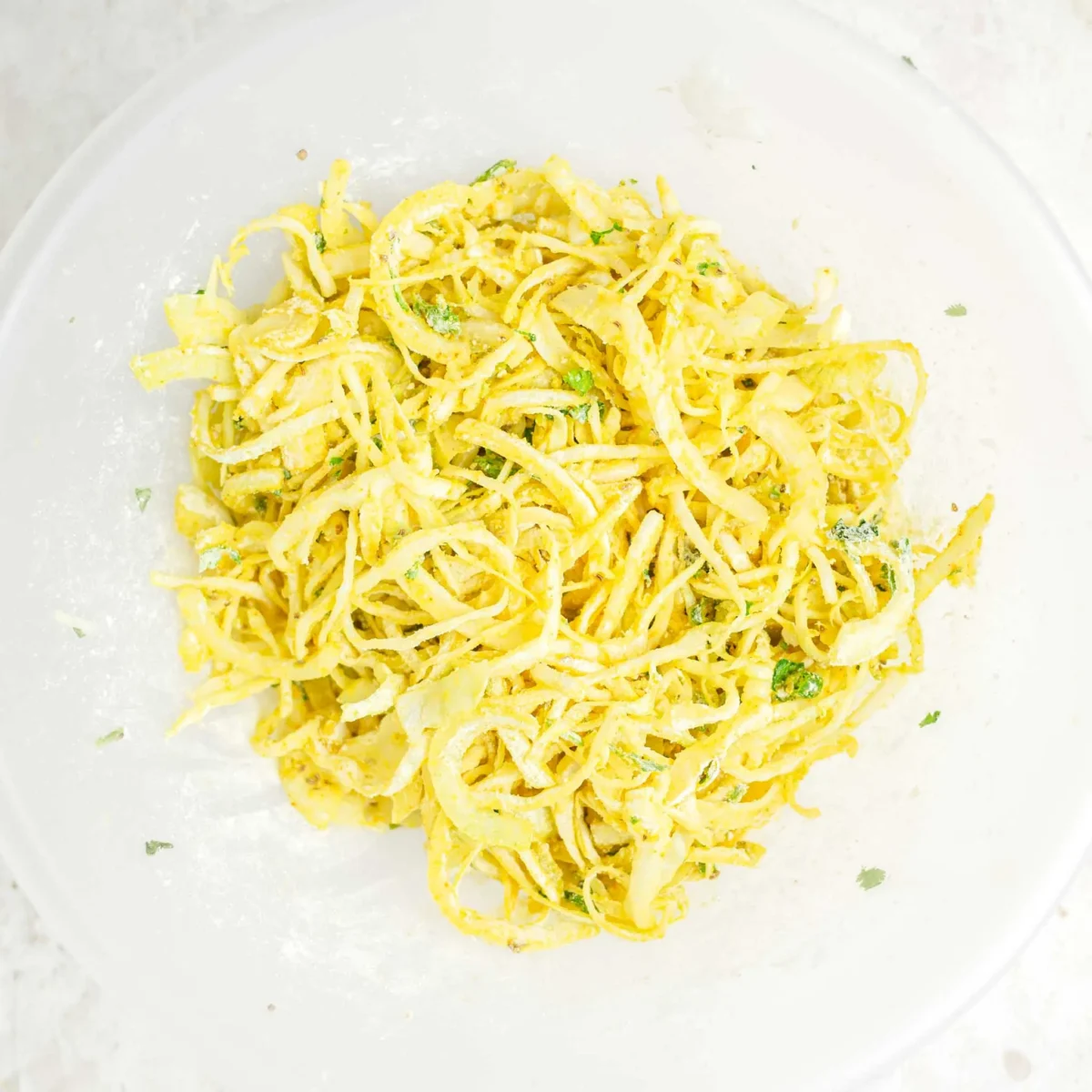
Eight: The mixture should look like this; there’s very little evident “batter,” which makes for crispy pakora. The cabbage and onions are completely coated.
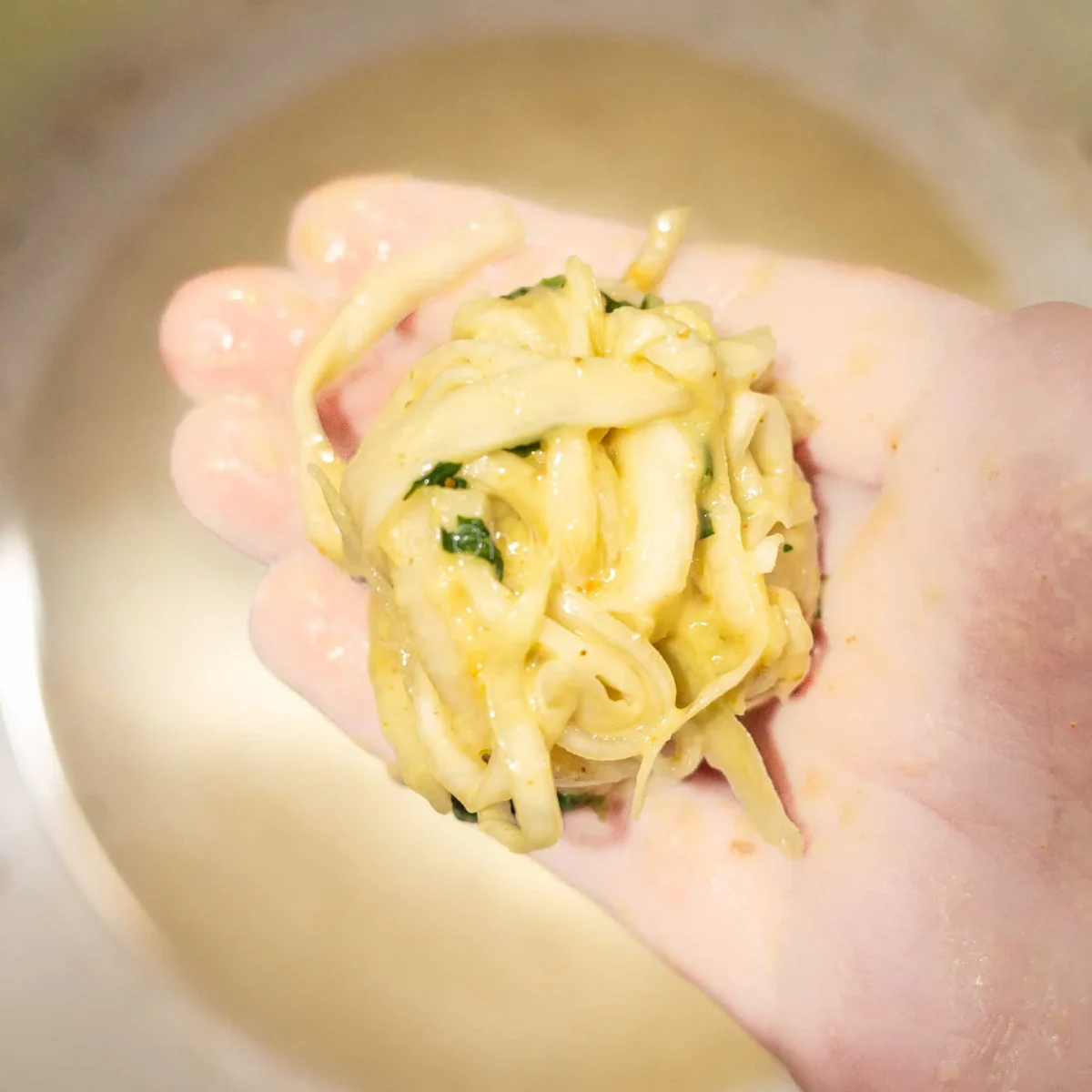
Nine: Heat neutral oil in a large kadai or deep fat fryer. Once the oil is hot, use your hands to take a small portion of the batter and squeeze it into shape.
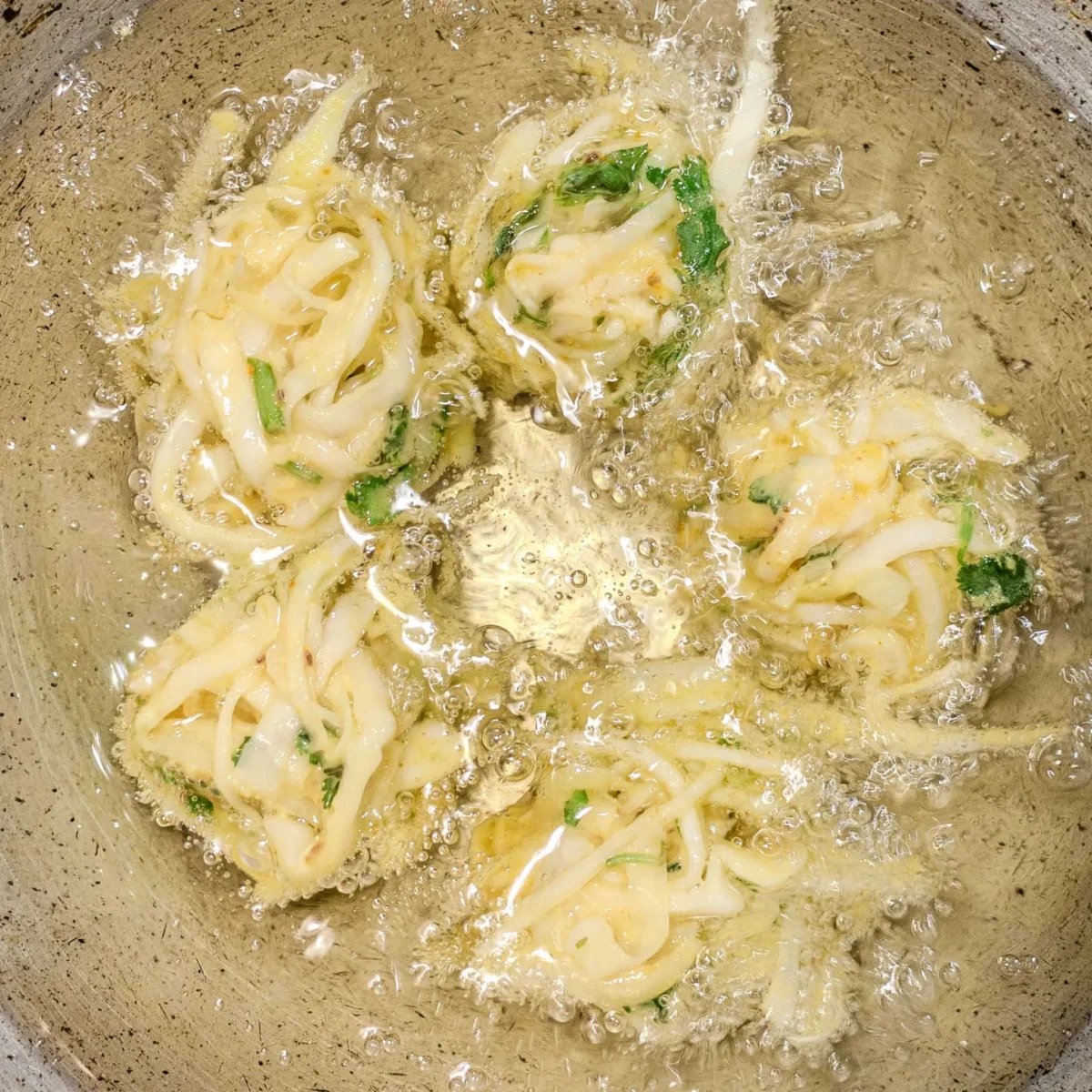
Ten: Add the cabbage pakora to the oil. Don’t overcrowd the pan!
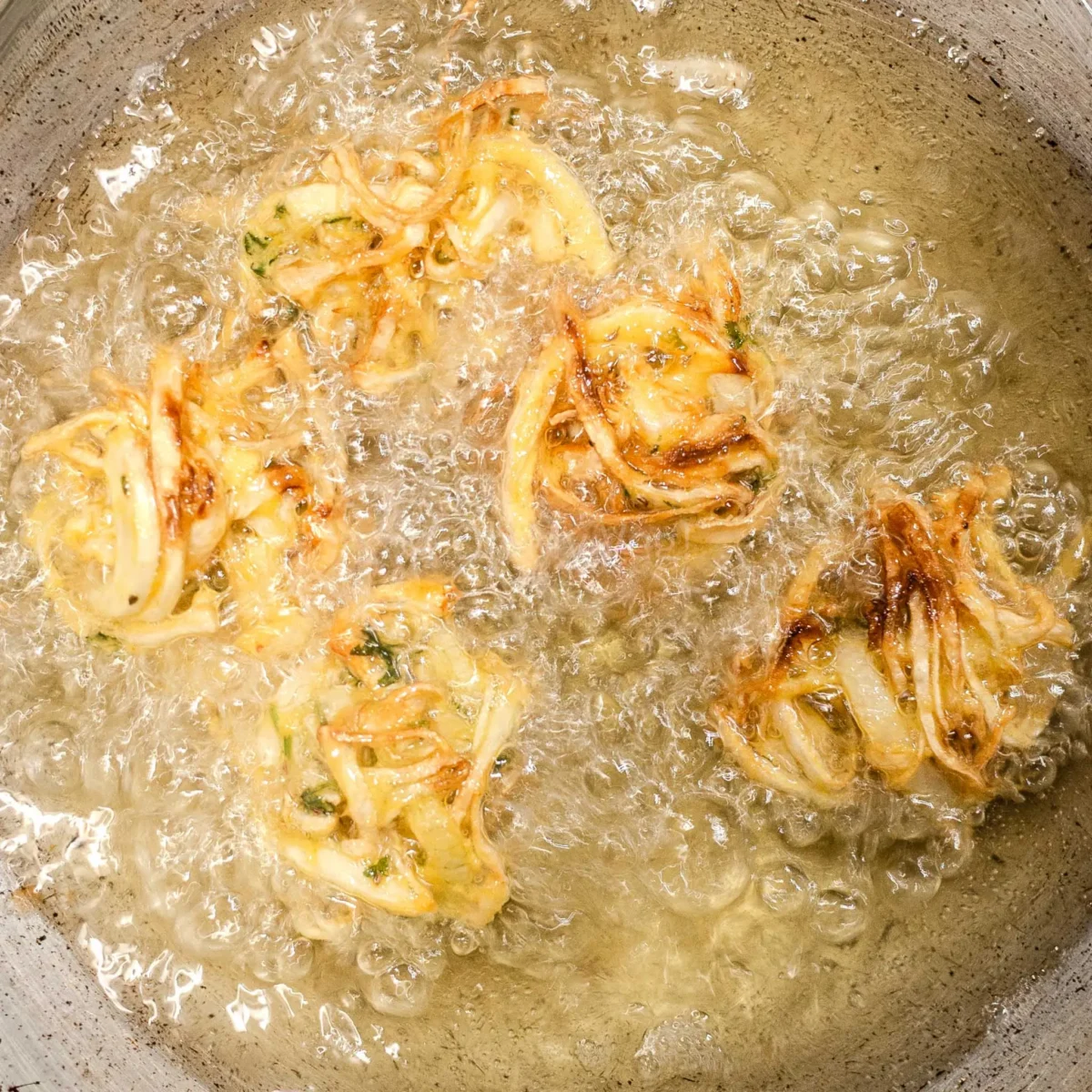
Eleven: Continue frying the pakora with minimum disturbance. Once they turn golden, carefully rotate them and continue frying.
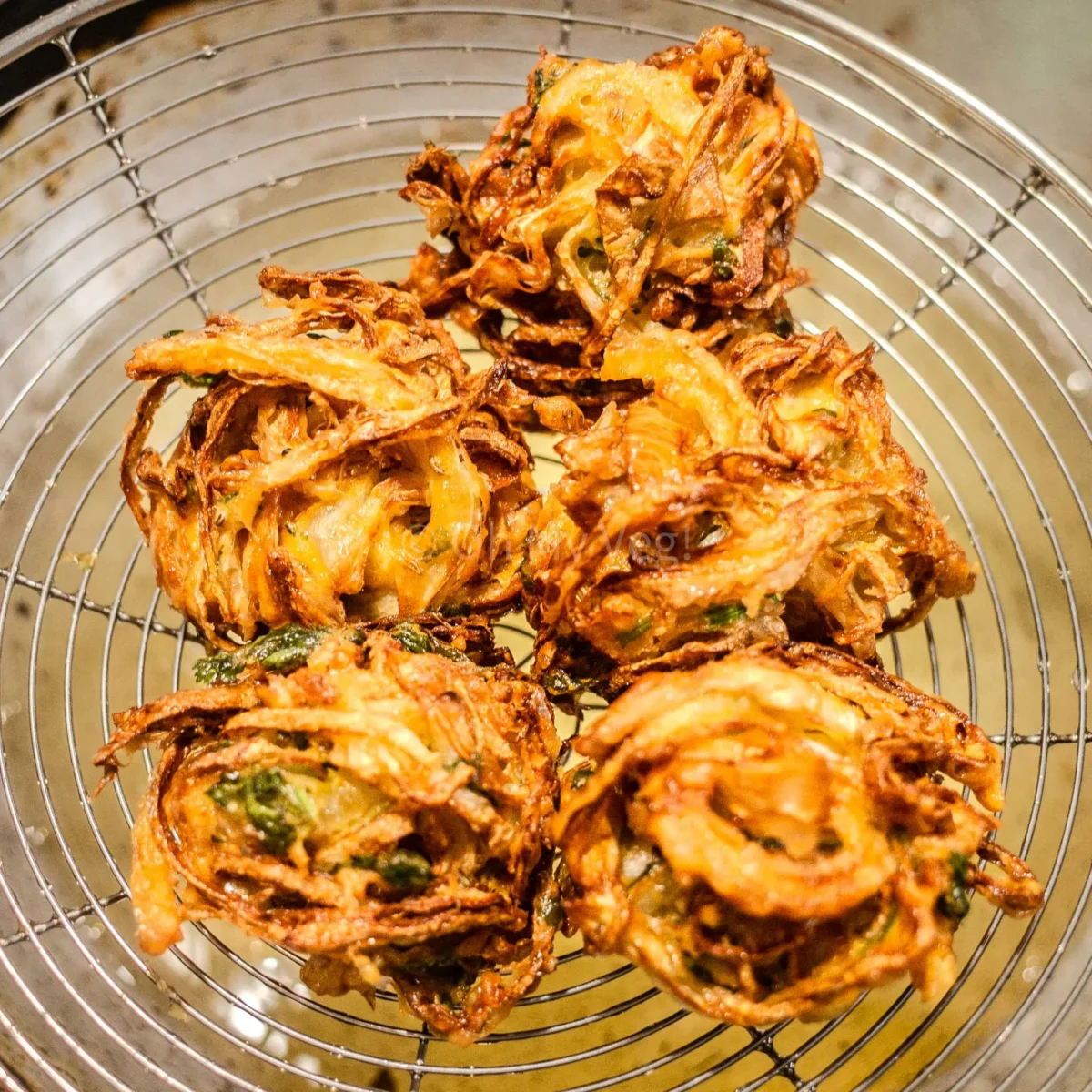
Twelve: The cabbage pakora are done when they are golden-brown and crispy all over. Drain excess oil on a metal rack and continue frying any remaining batches.
Remember, the complete recipe (with ingredient quantities and instructions) can be found at the bottom of this page. You can also print or save the recipe, adjust the servings, and more from there!
🎛️ Do I Have to Deep Fry Pakoras? Cooking Cabbage Pakora in the Oven or Air-Fryer
Deep-frying is the traditional method for making pakora. It also has the best results: evenly golden, crispy, and not at all greasy (if you do it right!). Shallow-frying is a great alternative if you’d like to use less oil yet achieve the same results.
Still, for all its virtues, deep-frying isn’t healthy. So, if you’re looking for a health-conscious way to make pakora, you’ll be pleased to hear this recipe can be made in an oven or an air-fryer! That’s because my batter is thicker than most recipes.
However, please set your expectations: baked or air-fried pakora will be tasty, but not quite as good as deep-fried. It’s a decent trade-off, though!
➡️ To air-fry onion bhaji, preheat an air fryer to 200°C (392°F). Grease the air-fryer basket and place the cabbage pakora with plenty of space between them. You may have to do two batches. Spray with cooking oil and air-fry for 10 minutes. Rotate halfway through cooking.
➡️ To bake onion bhaji, preheat your oven to 200°C (392°F). Line a large baking tray with parchment paper. Arrange the cabbage pakora on the baking tray and spray with oil. Bake for 25 minutes. Check halfway; they may benefit from an additional spray of oil. Cover if they get too brown too fast.
🥡 Storing, Freezing, and Reheating
➡️ Fridge: Cool, then transfer to an airtight container. Refrigerate for up to 3 days.
➡️ Freezer: Cool, then arrange the cabbage pakora on a parchment paper-lined baking tray. Freeze the whole tray until the pakora are frozen solid. This prevents the pakora from sticking later. Once frozen, transfer to a freezer-safe bag marked with the recipe name and best-before date. Freeze for up to 2 months.
➡️ Make ahead and reheat: Thanks to the rice flour in our batter, these cabbage pakora stay crisp for a long time! They also taste fantastic cold.
However, if you’re prepping for a party or event, I suggest making the cabbage pakora in advance, then re-heating, uncovered, in the oven or air-fryer until piping hot. Be sure not to overcook; undercooking them with the view of cooking more later is the best way to avoid this. I don’t recommend using a microwave. It makes the pakora soggy.
🥘 My Favourite Serving Suggestions for Cabbage Pakora
There are COUNTLESS amazing pairings for cabbage pakora! Let’s start with a few of my best-loved choices:
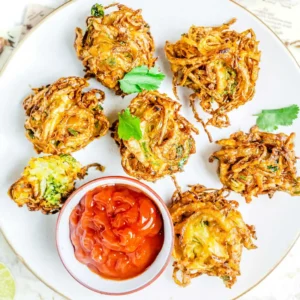
First, you need a dip. Whether it’s tamarind sauce, coriander mint chutney, ketchup, yoghurt mint sauce, raita, or even Glasgow-style pink pakora sauce, dipping isn’t optional. It’s mandatory!
If you’re going for a monsoon snack, you’ll need a hot glass of masala chai (or two). Indian people swear by the combination, and I have to say, it’s pretty comforting. Not a coffee person? Try South Indian filter coffee (filter kaapi).
For a large meal, serve the cabbage pakora as a side or a starter. Next, opt for a curry dish — there are really too many to choose from, but here are a few options:
- Bhindi masala, a vegan okra curry that will have you doubting why you ever thought you didn’t like the vegetable.
- Vangyache bharit, an authentic Maharashtrian flame-roasted aubergine curry that packs a smoky punch.
- Palak paneer is an all-time crowd-pleaser, and the creamy sauce contrasts amazingly with the crisp bite of the cabbage pakora.
- Chana masala is aromatic, rich, and complements the flavours of cabbage perfectly.
- Moong and masoor dal is a comforting, home-style option that’s rich, creamy, and tangy. If you’re craving lentils but want something richer and more restaurant-style, try dal bukhara.
To finish things off, serve with an obligatory portion of steamed rice, a pile of warm buttery chapati (roti), and a fresh salad like methi gholana.
If you’ve tried this cabbage pakora recipe, please drop a comment ✍️ or a star rating 🌟 below to help fellow readers! Additionally, if you have a question, please drop a comment, and I’ll do my best to answer ASAP.
Cabbage Pakora

Ingredients
- 180 grams white cabbage finely sliced
- 100 grams onion finely sliced
- 2 green chilli finely sliced
- 1 small handful fresh coriander (cilantro) finely chopped
- 1 teaspoon ginger garlic paste
- ¼ teaspoon coriander powder
- ⅛ teaspoon turmeric powder
- ½ teaspoon fine sea salt
- ½ teaspoon carom seeds (ajwain)
- 80 grams chickpea flour
- 1 tablespoon rice flour
- 4 tbsp water
Other Ingredients
- 1 litre neutral oil for deep frying
Instructions
- Finely slice 180 grams white cabbage into strips. Place in a large colander and thoroughly rinse the cabbage to remove any dirt or insects. Drain excess water.
- Take a large mixing bowl. Add the cabbage, 100 grams onion (finely sliced), 2 green chilli (finely sliced), 1 small handful fresh coriander (cilantro) (finely chopped), 1 teaspoon ginger garlic paste, ¼ teaspoon coriander powder, ⅛ teaspoon turmeric powder, and ½ teaspoon fine sea salt.
- Tip ½ teaspoon carom seeds (ajwain) onto the palm of your hand. Use your other palm to gently crush the seeds. This releases the essential oils and aromas of the spice.
- Add the crushed carom seeds to the mixing bowl along with the other ingredients.
- Use clean hands to massage all the spices into the cabbage and onions.
- Sieve 80 grams chickpea flour and 1 tablespoon rice flour into the bowl. Once again, use your clean hands to work the flours into the mixture.
- Slowly add 4 tbsp water, and mix with your hands until well incorporated. The mixture should be slightly wet, with batter clinging to the vegetables. Don't worry that there isn't much batter — it's what makes the cabbage pakora crispy.
- Pour 1 litre neutral oil into a deep kadai, saucepan, or deep-fat fryer. Set the flame to medium-high and wait for the oil to heat.
- Once the oil is hot enough (test it with the handle of a wooden spoon — the oil should bubble), take a small portion of the pakora batter in your hands. Gently squeeze it together. Carefully drop the pakora into the hot oil. Repeat, but don't overcrowd the oil.
- Fry until all sides are golden-brown and beautifully crispy. Remove with a frying spoon, then place on a wire rack to remove excess oil.
- Fry the remaining cabbage pakora.