
Bok Choy Noodle
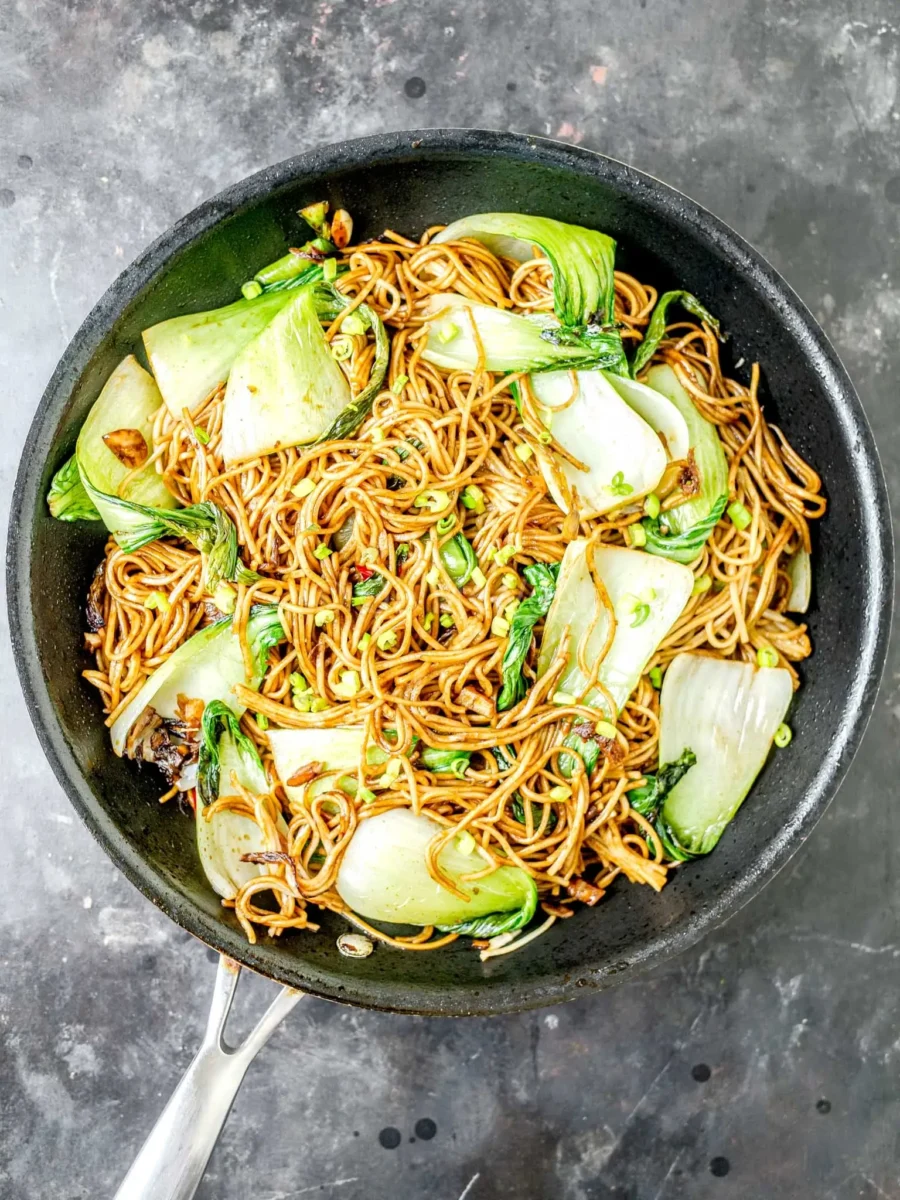
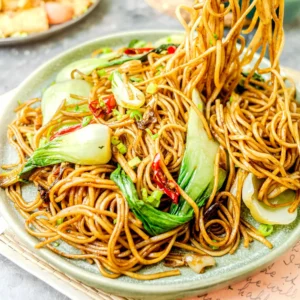
Savoury, slightly sweet, and dangerously moreish: this bok choy noodle stir-fry, complete with glossy noodles, crisp bok choy, and a soy-ginger-garlic sauce, surpasses any takeout I’ve ever had.
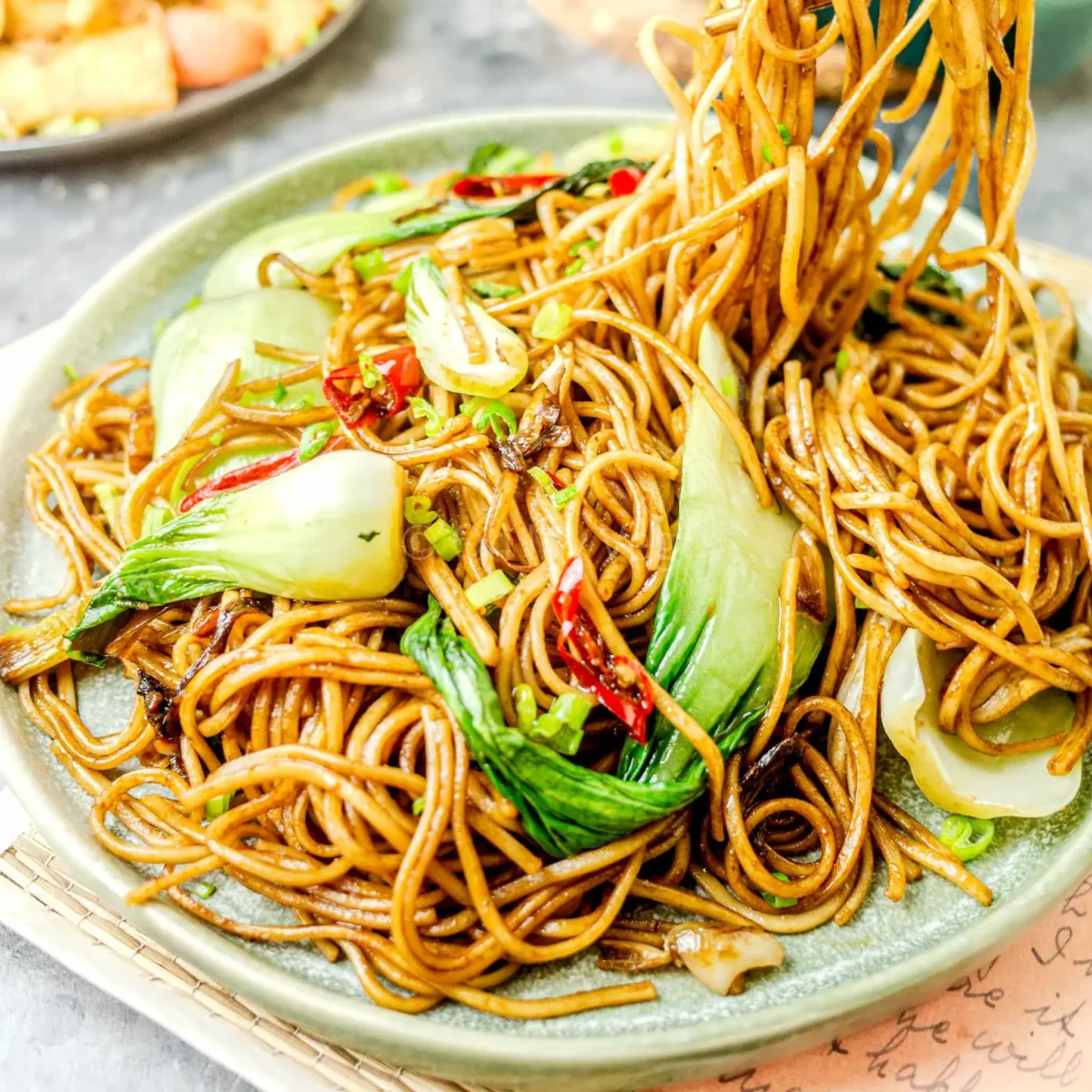
This isn’t a traditional Chinese recipe, but, it might get an honorary citizenship!
The dish is a fusion of my favourite noodle recipes: the simplicity and umami-packed taste of Chinese soft noodles — so beloved in British Chinese takeaways — combined with divinely aromatic notes thanks to the fried green onion-infused oil, ginger, and garlic.
We can’t forget the bok choy, of course. This unassuming little green vegetable is mind-bogglingly underrated. The thick white stems stay crunchy even when they’re subjected to the screaming-hot temperatures of the wok, and the leaves remain beautifully tender.
Yet, the most impressive thing is how this bok choy noodle stir-fry builds layers of flavour from the bottom up.
It all starts with the aromatics: heat from the chilli (if you want it), caramelised char from the onions, pungent warmth from ginger, and buttery sweetness from garlic. All that’s before we even get to the noodles, bok choy, irresistible sauce, and the unmistakable nutty finishing note from sesame oil.
I’ve made this recipe more times than I can count, tweaking it until it’s exactly right (honestly, I feel like I’ve cooked enough noodles to wrap around the Earth and then some!).
The sauce ratio, the cooking times, the type of noodles, the wok hei … it all matters, and this recipe teaches you how. It works every single time, whether you’re already a confident cook or just starting your journey (if it’s the latter, welcome to Oh My Veg 😁).
❤️ Why You’ll Love this Bok Choy Noodle Stir-Fry
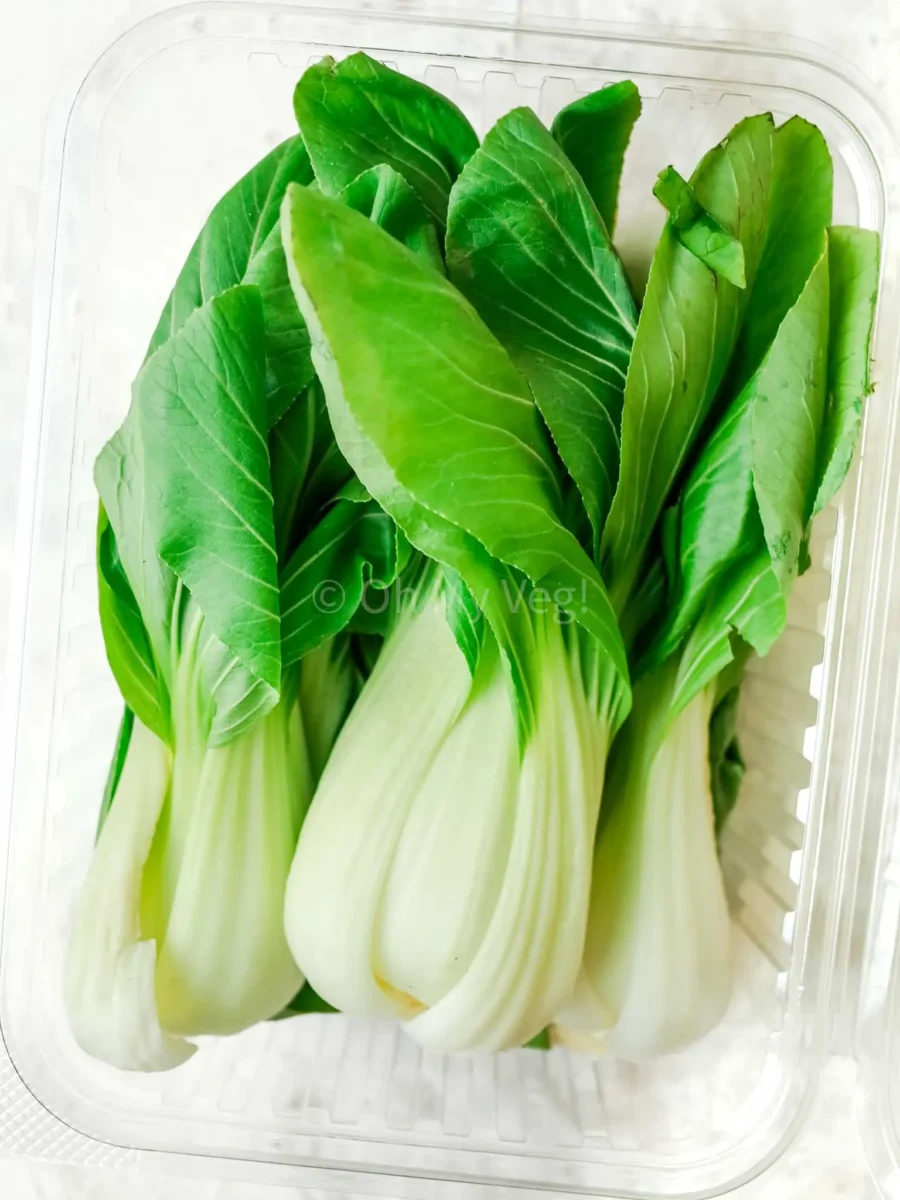
❓ What is Bok Choy?
Bok choy (also spelt pak choi, pak choy, or bok choi) is a variety of Chinese cabbage characterised by its thick, crisp stems. It’s a staple in East Asian cooking and has a distinctive, mild, slightly sweet flavour that’s worlds apart from regular cabbage.
Types of Bok Choy
Bok choy can be differentiated by three factors: its size, its colour, and its variety.
First, let’s look at the different sizes available:
- Large bok choy, which is quite hard to find in the West. As the oldest of the bunch, it’s more robust and slightly tougher, making it great for stews.
- Regular bok choy is easiest to find in U.K. supermarkets. It’s slightly less “full” than the other sizes.
- Baby bok choy is prized for its tantalisingly tender texture and comparatively sweeter taste. This is commonly found in specialist Asian markets.
- Dwarf bok choy is actually a different variety called nai you choy, with signature bright white stems and dark green, curly leaves. This distinguishes it from other varieties, which have flat leaves.
I also mentioned colour; bok choy can have white or green stems, although white stems are more prevalent. In fact, “bok choy” actually translates to “white vegetable!”
Despite being marginally less common, green-stemmed bok choy is available in both regular and mini versions. The kind I see most often in the U.K. is called Shanghai choy (although just labelled “pak choi”), and is fabulous in pak choy salad.
Any of These Bok Choy Varieties Will Fit Right Into This Recipe …
… With just one caveat: If you use a regular or large variety (I used baby), you’ll need to chop it, rather than keeping the stems and leaves whole, as I did.
If you’ve never cooked with bok choy before, this recipe is a perfect introduction. Once you’ve tried it here, you’ll probably want to use it in everything — it’s that good.
And if you love bok choy as much as I do, you’ll want to try it in other ways too — roasted until the edges char, braised until it’s meltingly soft, or even raw in a salad. It’s a brilliant vegetable that deserves more attention than it gets.
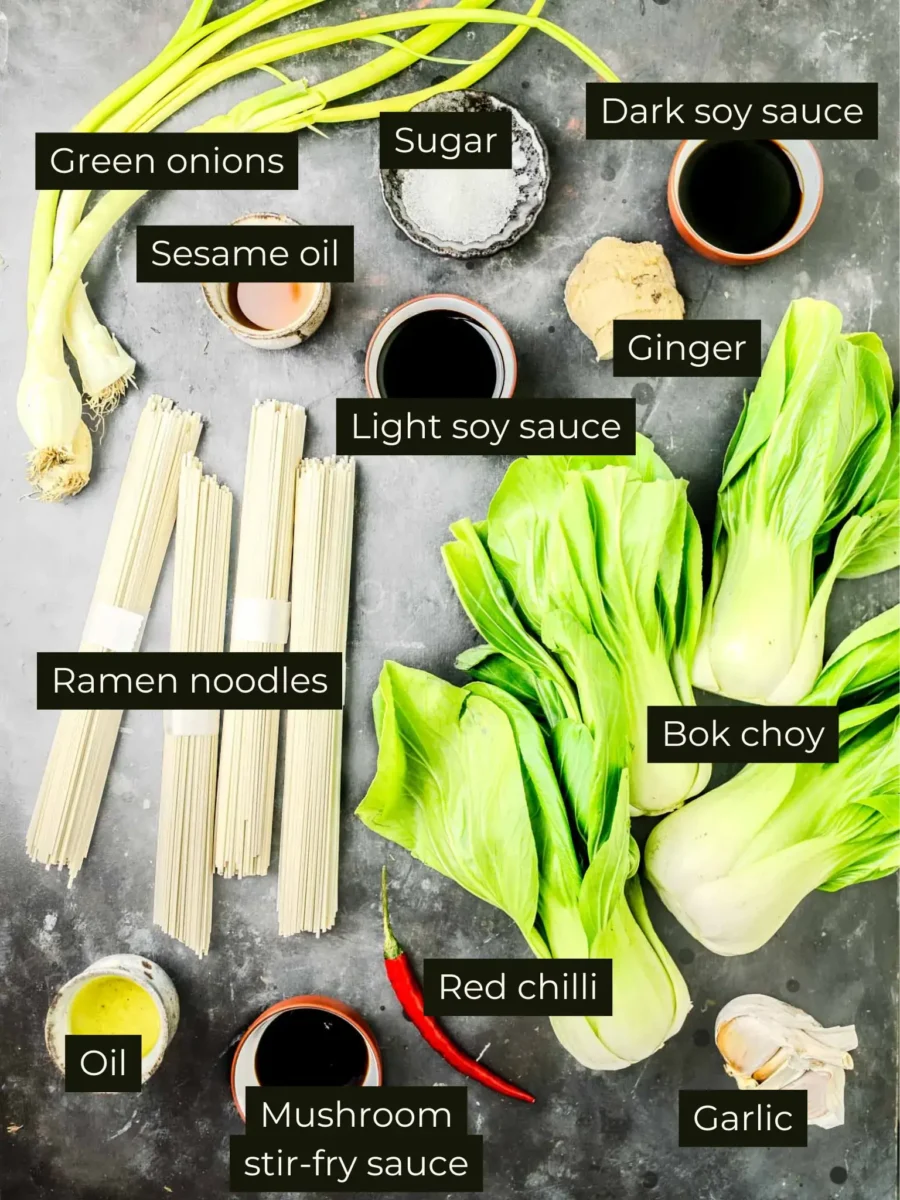
🥬 What Ingredients You’ll Need For Bok Choy Noodle
Don’t be overwhelmed; this recipe actually keeps things very simple.
Let’s split it up and see what each player delivers (crucial if you plan to adapt this recipe in the future … I always recommend cooking it as-written first).
- Wheat noodles are the base of the dish. I’ve used dried straight ramen noodles for these photos, but I’ve also made the dish with chow mein noodles (I like the Lucky Boat brand), which was a great success. You can also substitute egg noodles, but ensure the brand is high quality; I’ve found the labels sold in standard grocery stores perform consistently worse than those in my local Chinatown.
For the Stir-Fry Sauce
You’ll only need a handful of ingredients — literally.
Most of these are pantry staples for me, since I cook a lot of Asian recipes. However, a good-sized store should stock them (although I often have to venture to my local Chinatown or order vegetarian oyster sauce online).
- Light soy sauce brings the salty, savoury taste to our sauce. It’s lighter and less intense than dark soy, which makes it perfect for seasoning.
- Dark soy sauce adds depth and that gorgeous brown colour you get with proper Chinese cooking. It’s thick, slightly caramel-sweet, and intensely flavoured, with heaps of umami.
- Vegetarian oyster sauce (sometimes called mushroom stir-fry sauce) is a truly irreplaceable secret ingredient in my Asian recipes. It lends the dish complexity and builds on the layers of umami.
- White sugar balances the saltiness and rounds out the sauce. Trust me!
- Sesame oil makes everything taste heavenly. It’s got an incredible aroma and even better nutty flavour.
And Finally, For Tossing in the Wok:
You’ll need a few aromatics and fresh ingredients (including the namesake of this recipe, bok choy!).
There’s nothing too exciting here, but boy, do they add up to a spectacular meal.
- Neutral oil for wok-frying. You need something with a high smoke point.
- Spring onions add colour and infuse our oil with a mild onion-y taste.
- Garlic marries with the freshness of bok choy.
- Ginger adds a warming, slightly spicy kick. Fresh ginger is miles better than jarred, which always leaves an aftertaste.
- Red chilli is added for a bit of heat.
- Bok choy, AKA the star of the show! I used baby Shanghai choy, but any variety will do. It stays beautifully crisp, sweet, and tender even after stir-frying.
Adapting This Recipe For Allergies and Dietary Requirements
This recipe is already nut-free, vegetarian, and vegan — but it’s easy to make it work for just about anyone.
While my recipe is vegan, remember that if you use egg noodles, it won’t be. It’s always a good idea to check that your ramen noodles don’t contain eggs, too (some do!).
If you need it gluten-free, swap the regular noodles for a gluten-free alternative. While you can use rice noodles (they’re certainly easier to find), it will change the texture of the recipe to be more like my veggie mei fun.
You’ll also need to use tamari in lieu of regular soy sauce, at a 1:1 ratio. My Mum loves that stuff so much she uses it even though it’s not gluten-free!
🫛 Adding Protein To Bok Choy Noodle Stir-Fry
Whether you’ve got protein goals and baulk from eating a recipe without a main protein or want to add a little bulk to the meal, you’re in luck: it’s super easy to add protein to these bok choy noodles!
Here are just a few options:
- Tofu is my favourite choice. It’s so versatile! Use homemade tofu, tofu puffs, or store-bought extra firm tofu. Press it, cube it, coat it in cornflour, and fry it until golden brown for the best texture. I promise, tofu isn’t the boring, tasteless food some people would have you believe.
- Tempeh works much the same way as tofu, but has a much stronger taste. Whereas tofu doesn’t disrupt the flavours this bok choy noodle stir-fry has going on, tempeh adds a really nutty, earthy, almost pungent bite. Slice it thin and fry until caramelised, then stir through.
- Edamame is a fantastic source of plant-based protein and only increases the greens (and therefore nutrition) in this recipe! You can use frozen edamame straight from the packet. Just chuck them straight in the pan with the bok choy.
- Eggs are a fantastic economical option if you’re not vegan. Scramble them separately and stir through for a quick and easy solution, or spend a little more time to fry an egg for each serving. Even a soft-boiled egg is a perfect match for these noodles — the runny yolk mixes with the sauce in a really divine way.
🧑🍳 How to Make Bok Choy Noodle Stir-Fry
I wasn’t exaggerating when I said this dish takes less than 10 minutes.
The most time-consuming part is, strangely enough, preparing the bok choy — like most green vegetables, it often needs thorough washing and cleaning. It can get sandy!
Once that’s done, you’ll want to prep your ingredients. Wok cooking is hot and heavy. If you’re caught slacking, it’s game over.
Let’s see these step-by-step photos from my kitchen, and get the ball rolling!
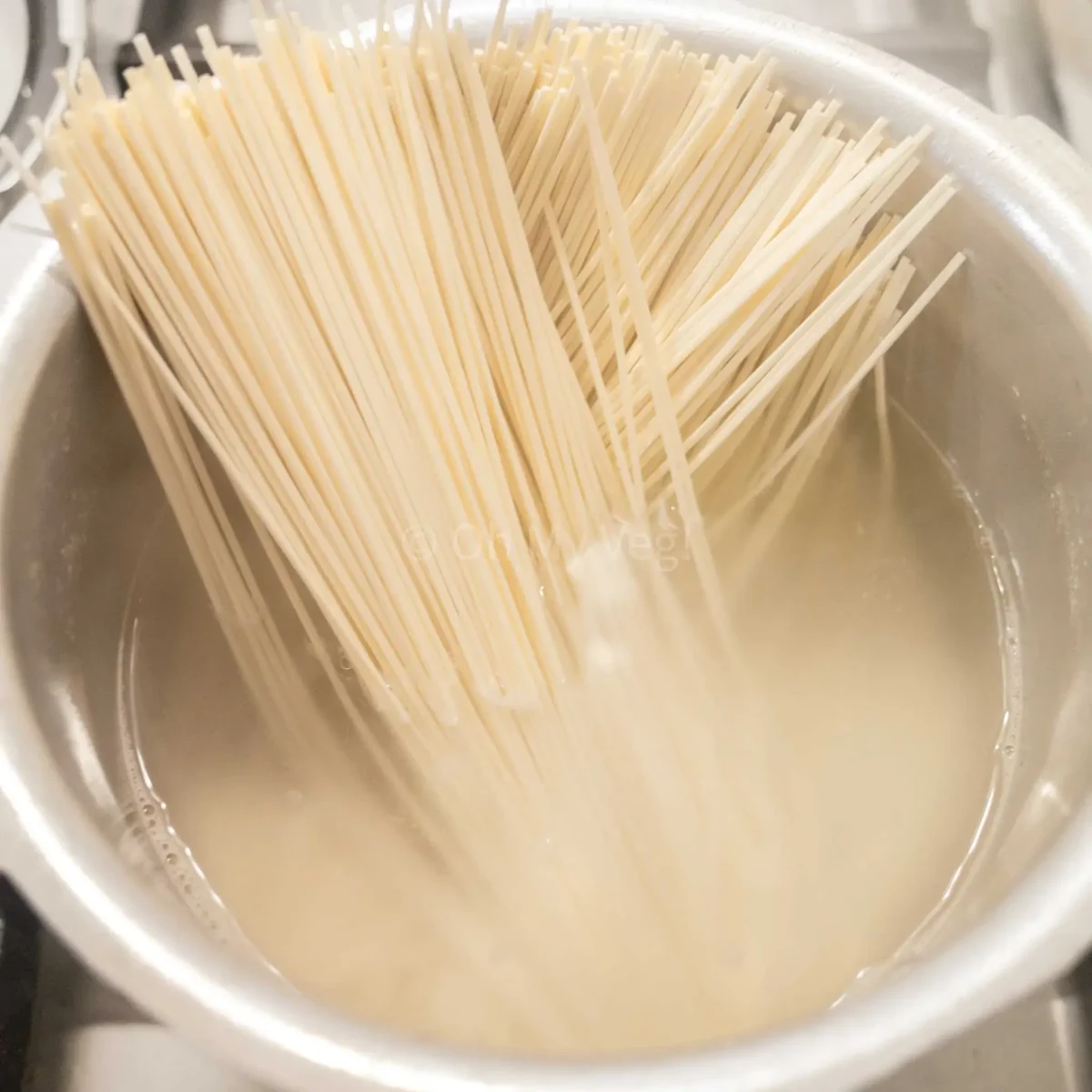
One: Add your noodles to a pot of boiling water, and cook according to package directions, or al dente.
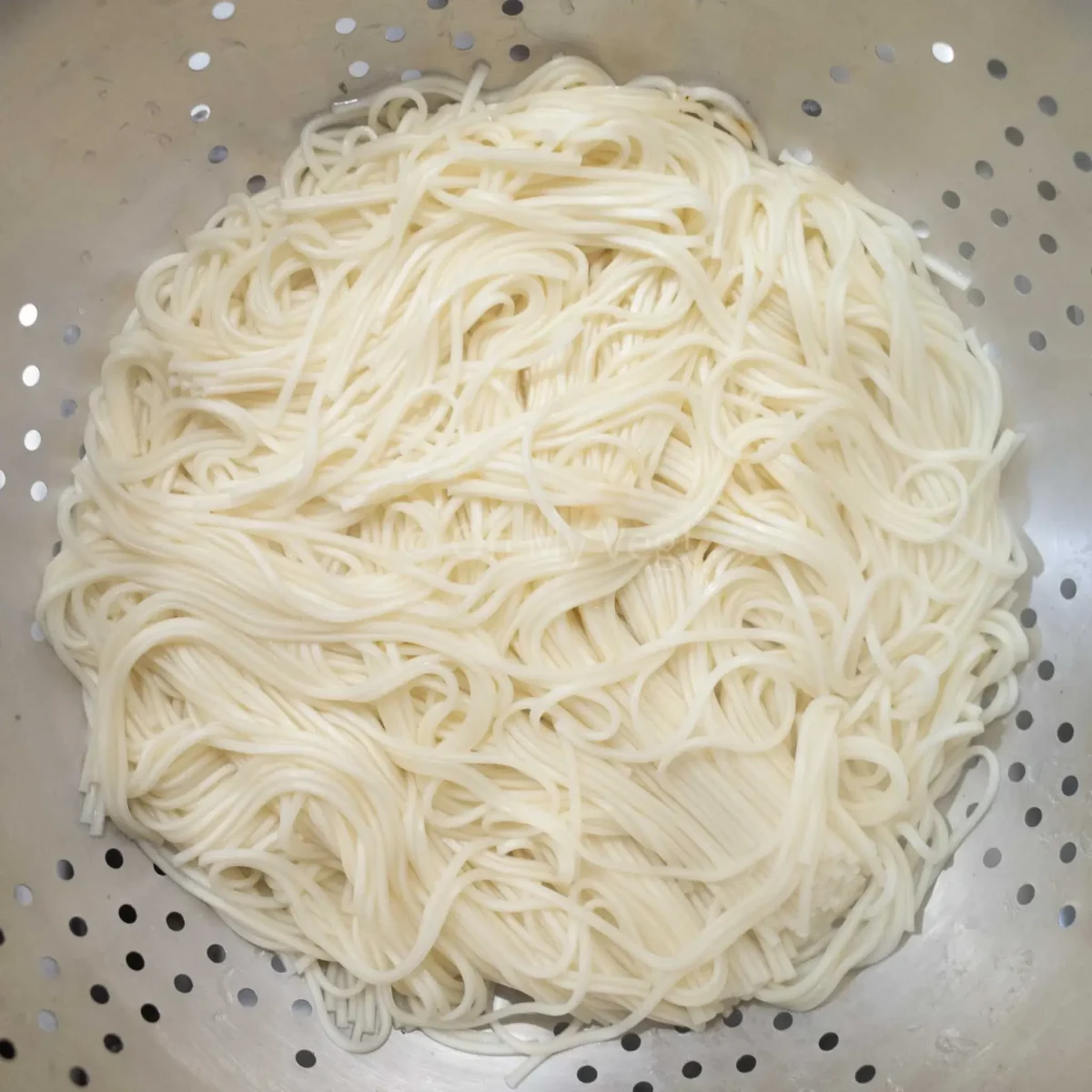
Two: Drain your noodles. You want to start the stir-fry while the noodles are cooking, so they don’t sit for too long once done.
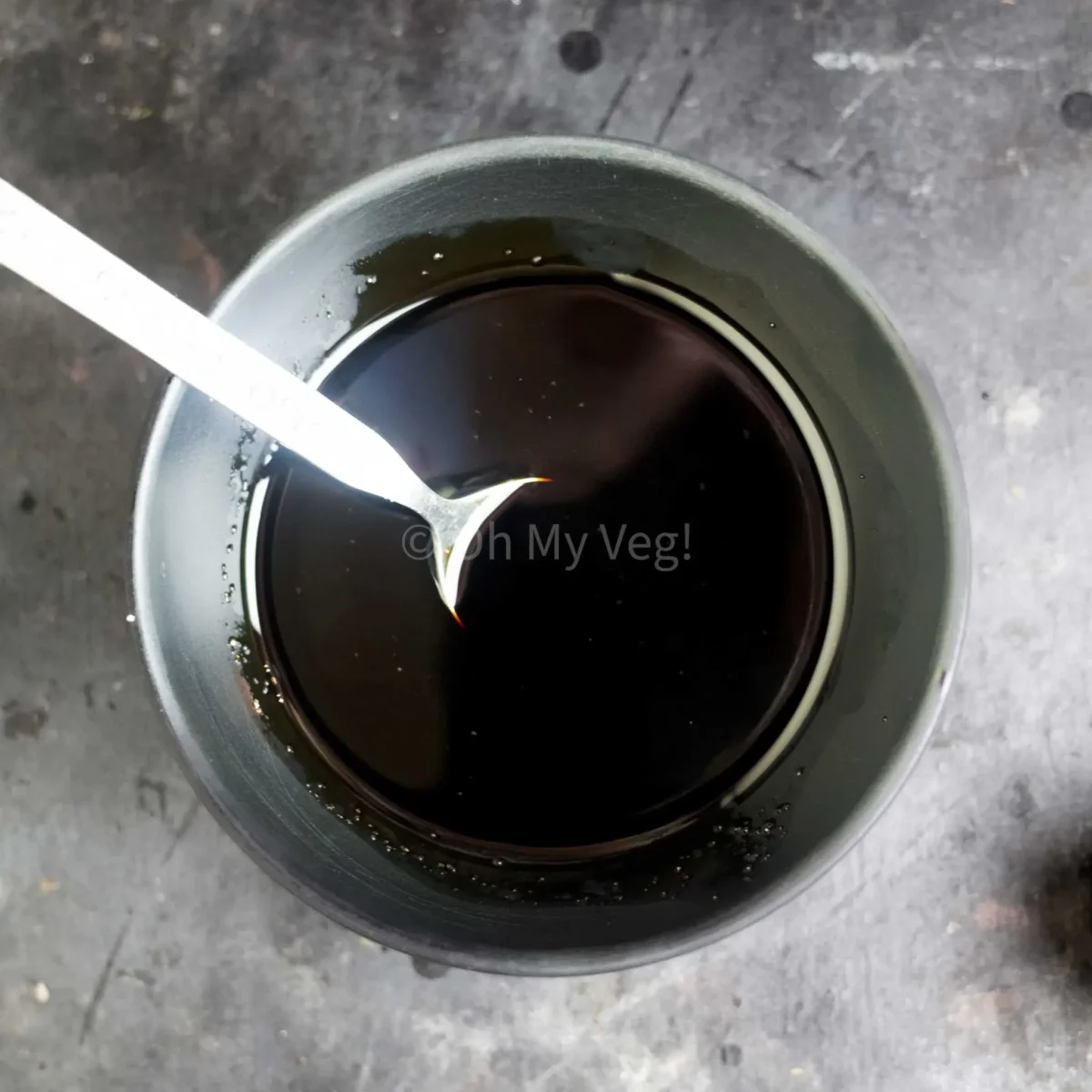
Three: Make the stir-fry sauce by combining light and dark soy sauce, vegetarian oyster sauce, sugar, and sesame oil.
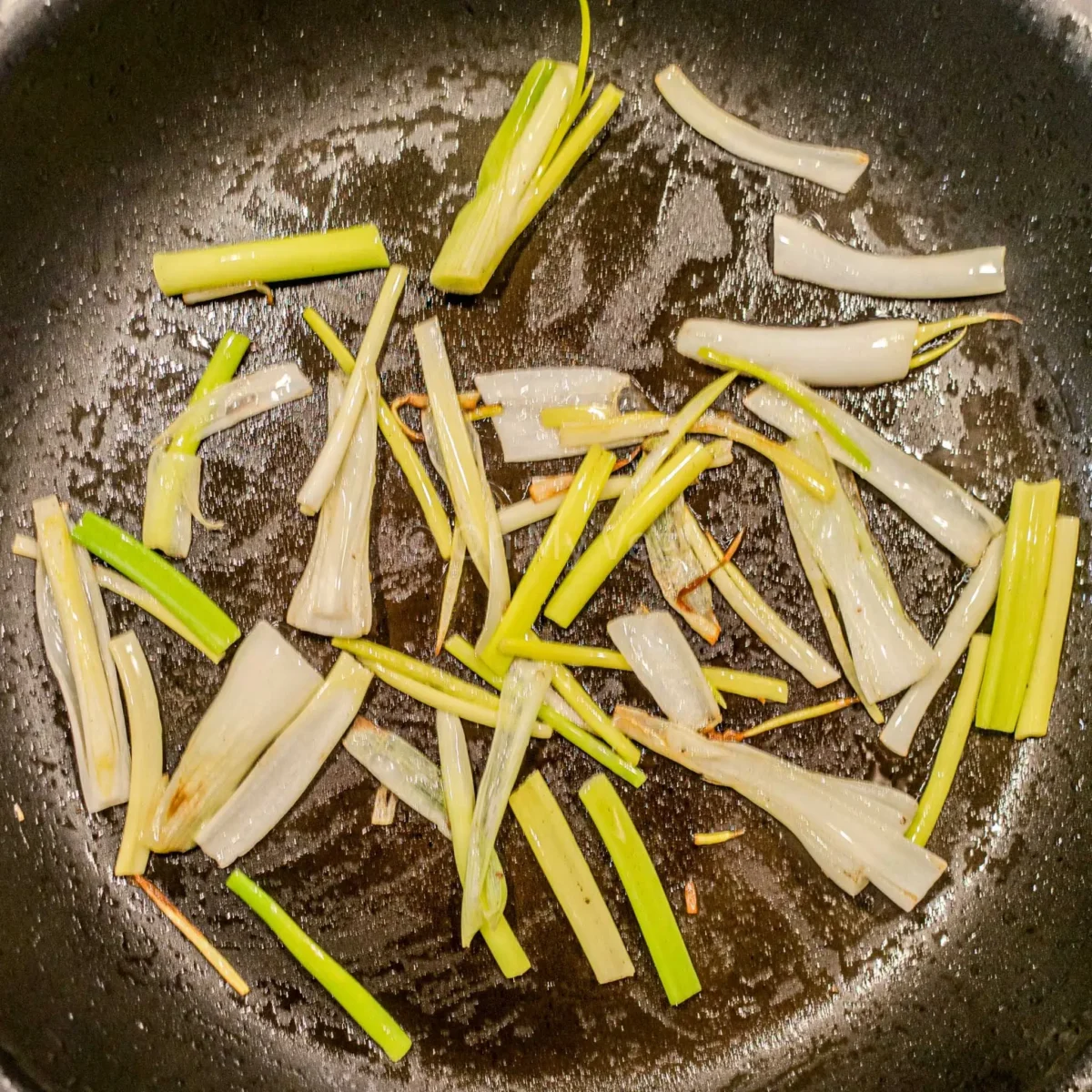
Four: In a large pan or wok, heat oil until smoking hot. Add the sliced green onions over high heat.
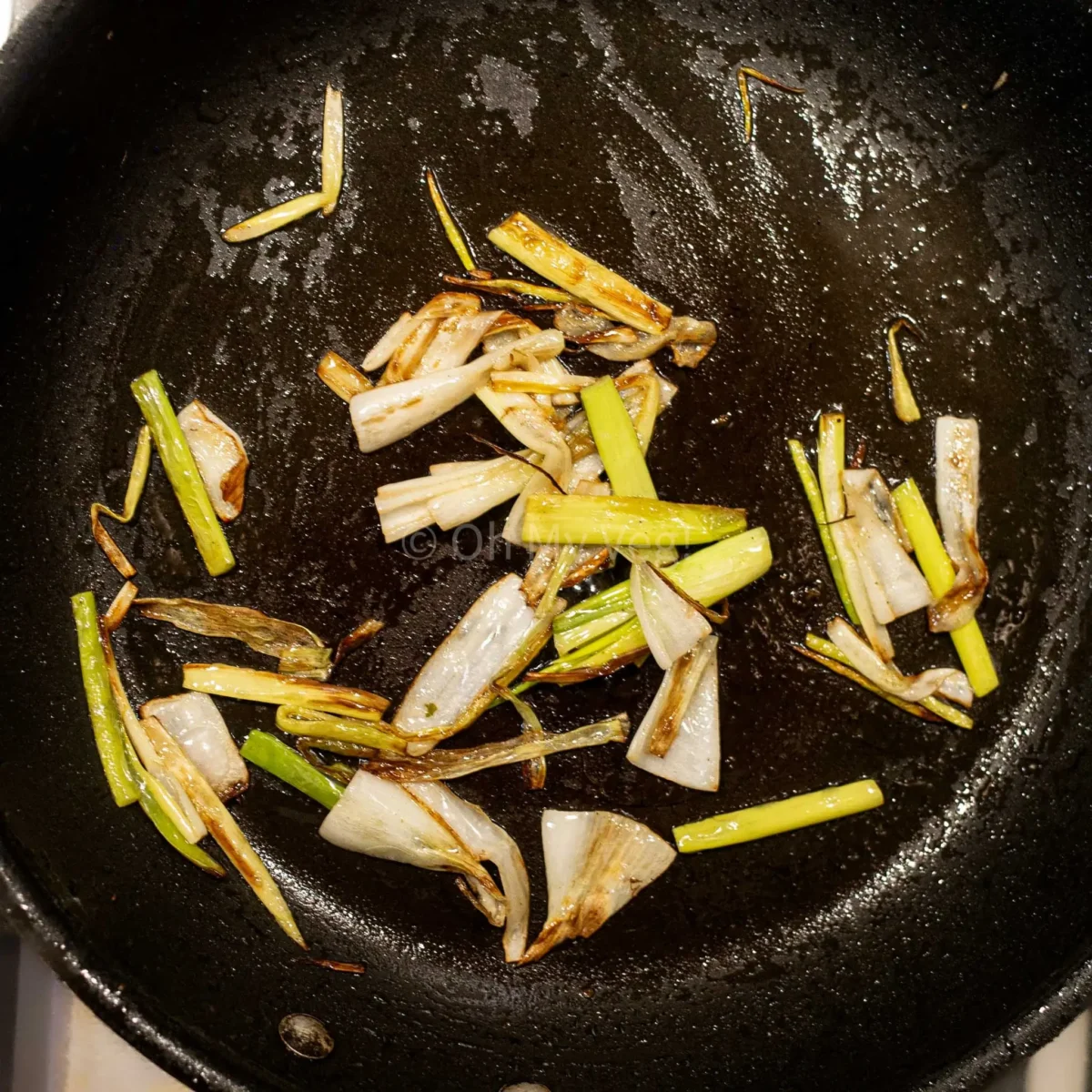
Five: Stir-fry the spring onions until charred and aromatic.
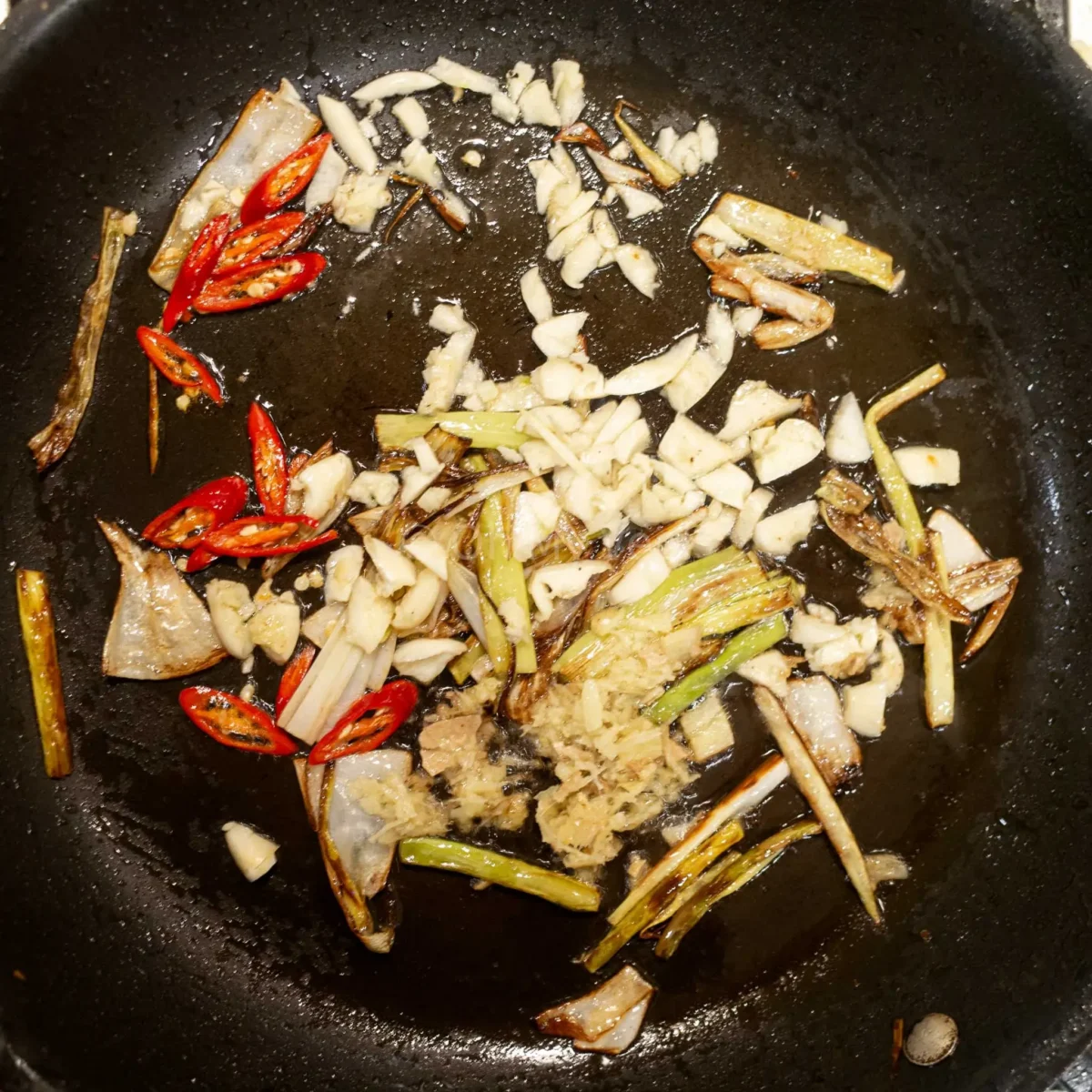
Six: Add the minced ginger, sliced garlic, and sliced red chillies to the pan. Cook until aromatic.
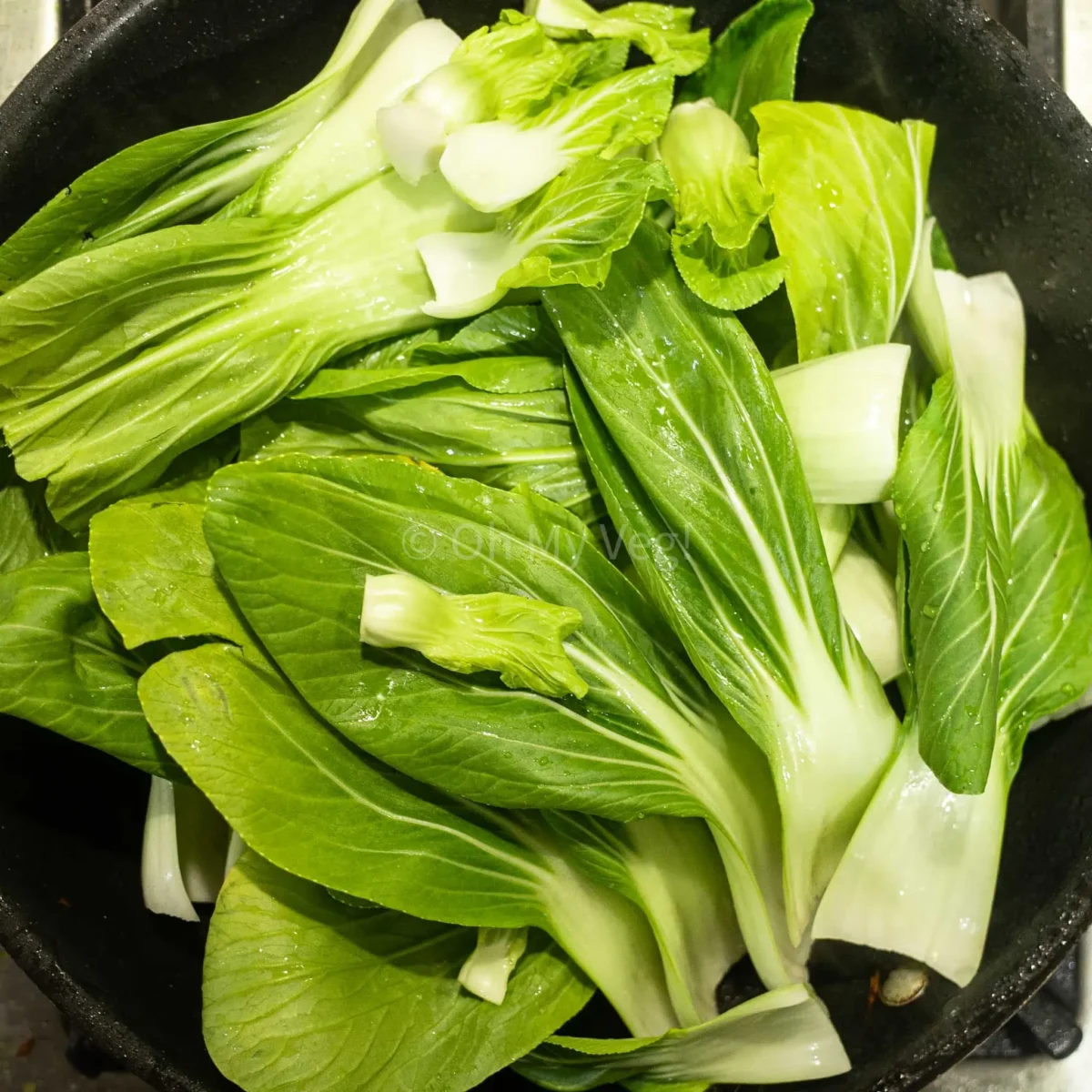
Seven: Add the washed and cleaned bok choy.
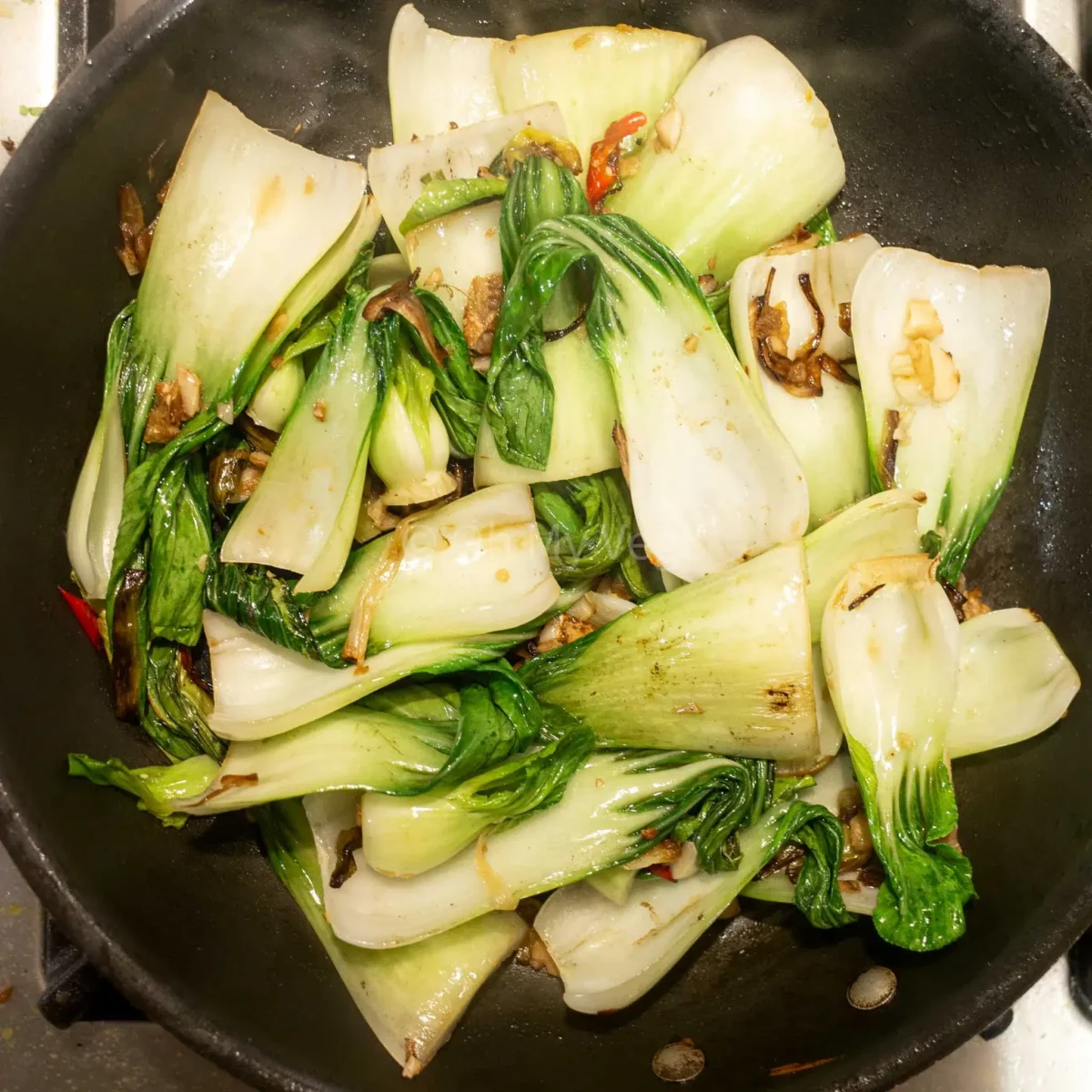
Eight: Stir-fry the bok choy until it has shrunk in size and softened.
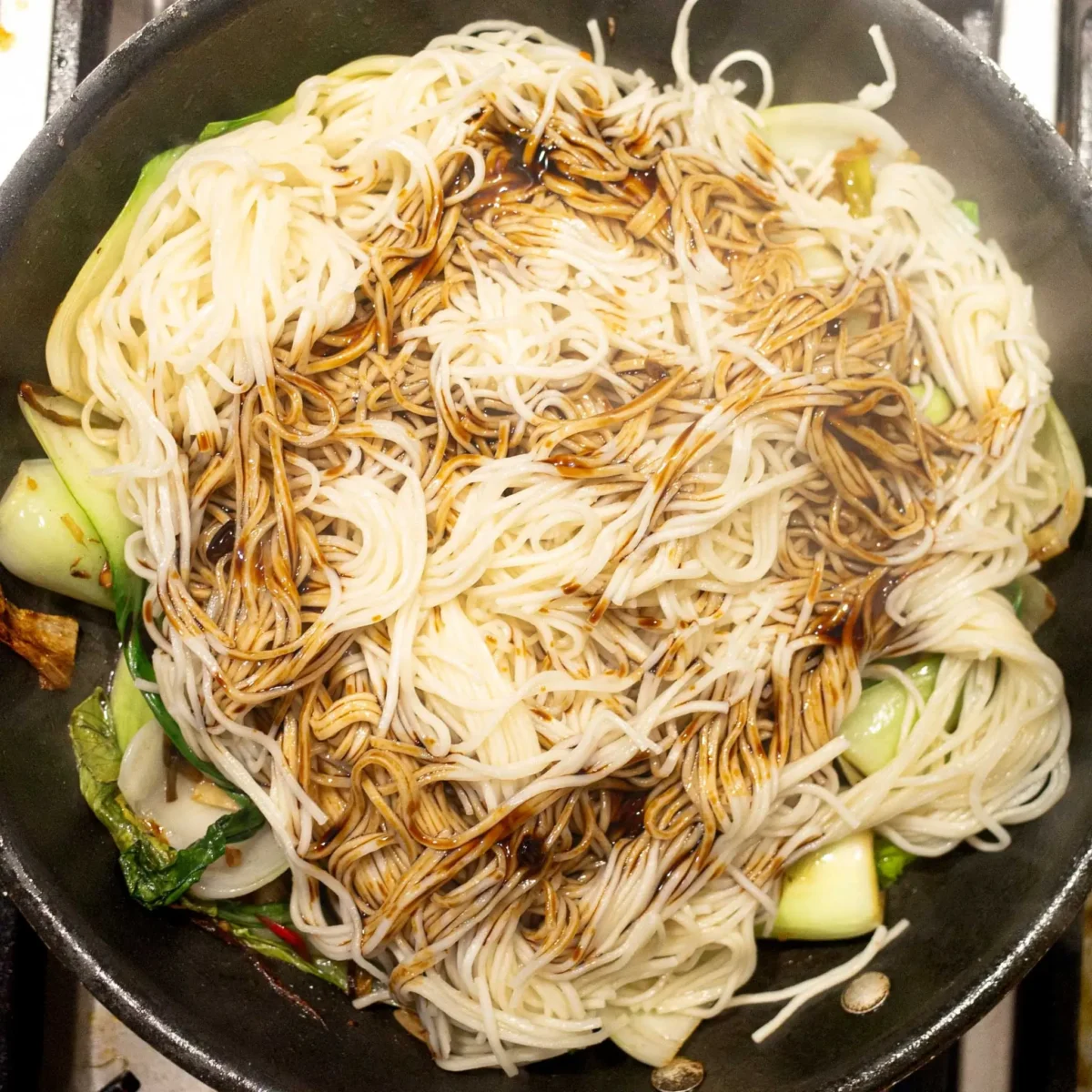
Nine: Add the cooked noodles to the pan along with the stir-fry sauce. If needed, add a few tablespoons of noodle water.
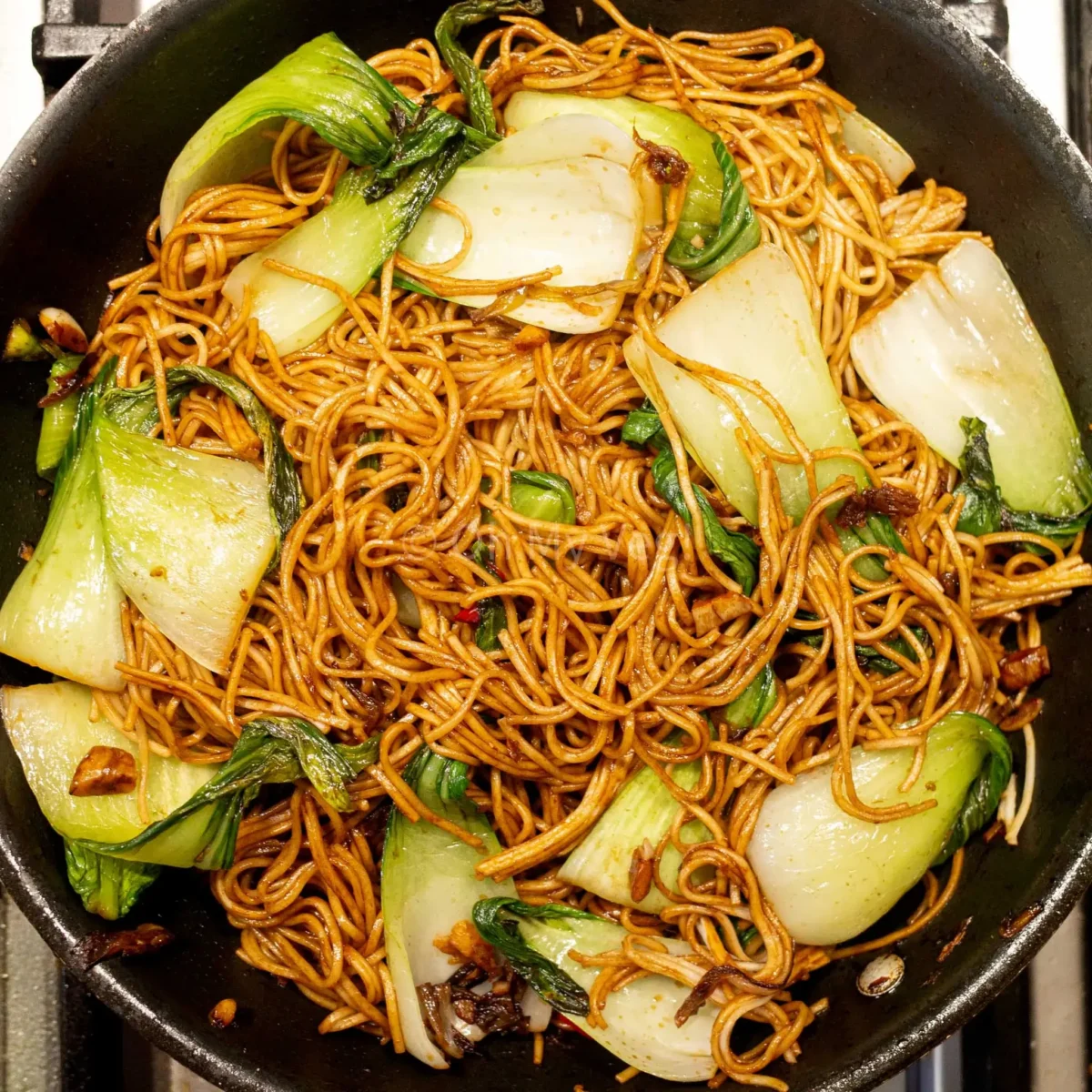
Ten: Toss everything to combine. Cook until the noodles have infused with the smoky, wok-charred flavour, then serve.
Remember, the complete recipe (with ingredient quantities and instructions) can be found at the bottom of this page. You can also print the recipe, save the recipe, adjust the servings, and much more from there!
⭐ Top Tips For Making Perfect Bok Choy Noodles
- Make the sauce first. Having it ready to go means you’re not scrambling to measure things out while your aromatics burn in the pan.
- In fact, prep everything before you start cooking. Things happen fast when you’re stir-frying. It’s the same with dishes like my morning glory stir fry: it’s not worth the risk of ruining your dish because you forgot to chop the garlic.
- Use high heat! Don’t be afraid of the smoke and the char. You want that proper wok heat for a real Chinese restaurant-style taste. It adds so much flavour.
- Don’t stir too much. Let things sit in the pan between tossing so they can actually get colour. On the same topic, you shouldn’t be stirring; try tossing and mixing instead.
- Try not to overcook those noodles. They’ll cook more in the pan after boiling, so it’s better to slightly undercook them. Overcooked noodles are slimy and unappealing.
🥡 Storing Bok Choy Noodle
I doubt you’ll have leftovers, but … I wouldn’t blame you for doubling up on this recipe, especially so you had extras!
To store, let the noodles cool completely, then load up an airtight container. Keep it in the fridge for up to three days.
To reheat, I recommend tossing the bok choy noodle stir-fry in the wok or frying pan, then cooking over medium-high heat. Add a splash of water if things look dry. Although a quick blast in the microwave is an option, it’s not so great for texture.
I don’t recommend freezing as there’s a risk your noodles will go mushy after thawing.
Luckily, the recipe is so quick to bring together that it takes no effort at all to make a fresh batch.
🥟 Serving Suggestions For Bok Choy Noodle
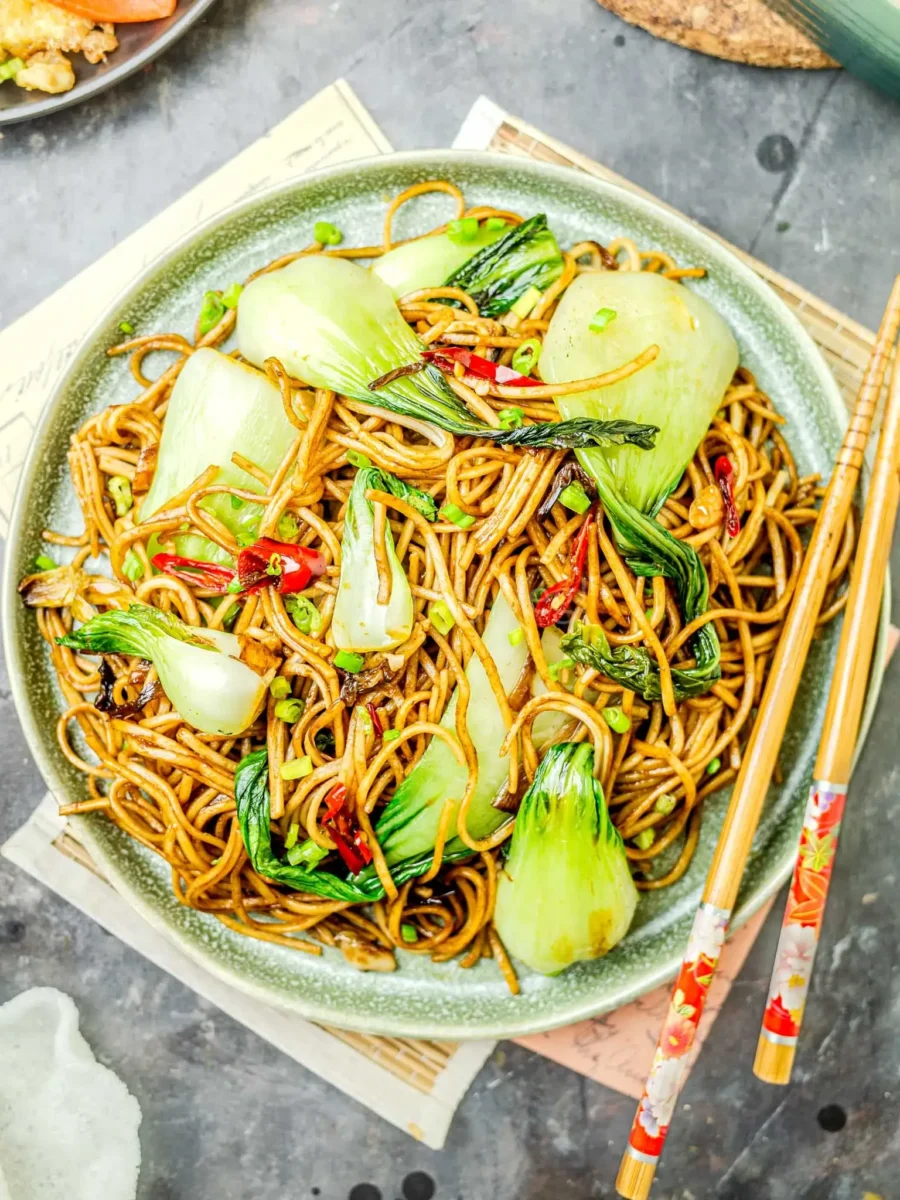
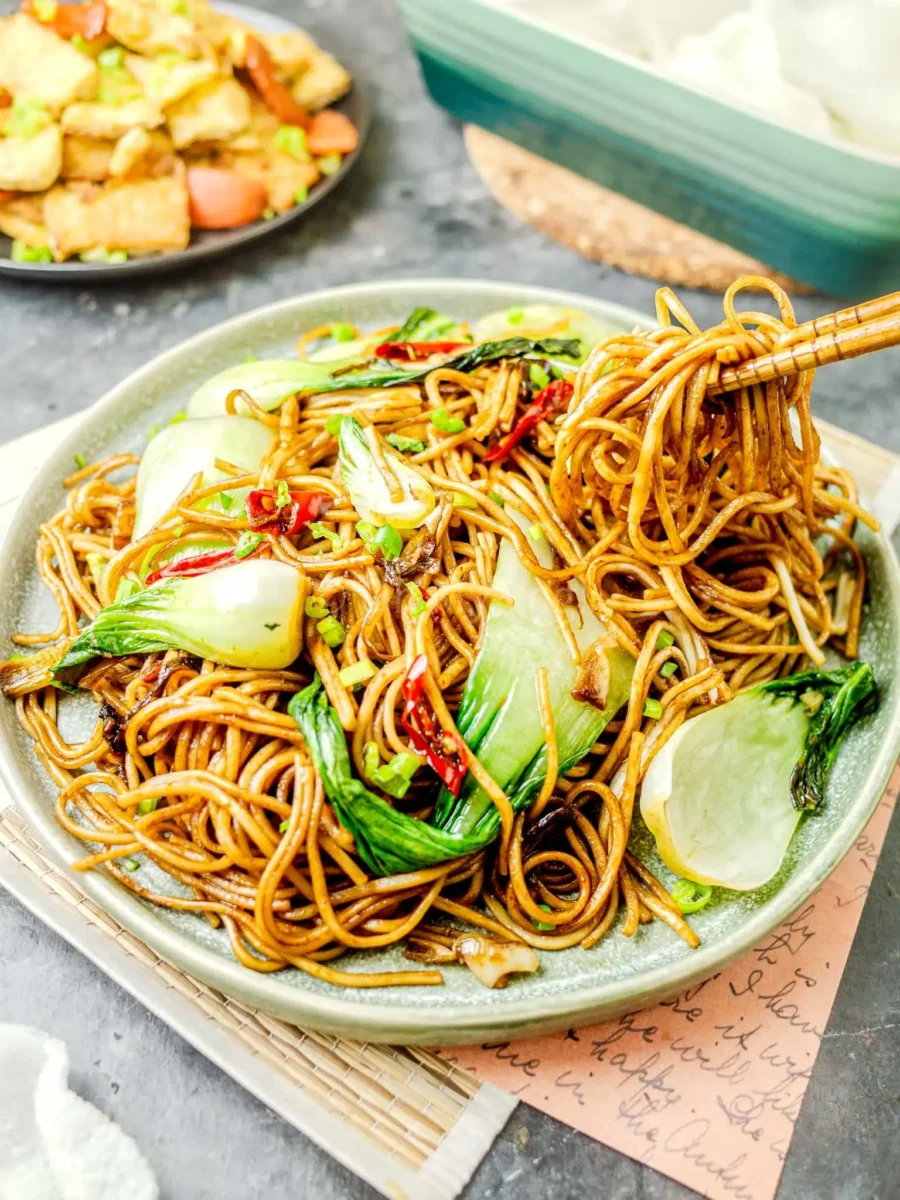
In these photos, I served the noodles with fried rice paper (makes for excellent vegetarian prawn crackers!) and some tofu on the side.
I love making a feast of it by offering starters such as pan-fried tofu potstickers, crispy mushroom wontons, or classic vegetable gyoza, followed by sides like salt and pepper tofu (for protein and crispiness) or tofu satay curry (noodles and curry are an elite combination!).
For a lighter meal, pair the bok choy noodles with a simple vinegar and sugar-dressed cucumber salad. The acidity cuts through the richness of the noodles in the most delicious fashion.
Or, go full-on fakeaway style with some chunky chips (crinkle cut chips, if you want extra crispiness), spring rolls,
If you’ve tried this bok choy noodle recipe, please drop a comment ✍️ or a star rating 🌟 below to help fellow readers! Additionally, if you have a question, please drop a comment, and I’ll do my best to answer ASAP.
Bok Choy Noodle

Ingredients
- 400 grams dried straight ramen noodles
For the Sauce
- 2 tablespoons light soy sauce
- 2 tablespoons dark soy sauce
- 1 tablespoon vegetarian oyster sauce (mushroom stir-fry sauce)
- ½ teaspoon white sugar
- ½ teaspoon sesame oil
- 4 tablespoons water, from cooking the noodles
For the Noodles
- 2 tablespoons neutral oil
- 4 spring onions sliced in large strips
- 4 cloves garlic sliced
- 1 ½ tablespoons ginger minced
- 1 red chilli finely sliced
- 4 green bok choy
Instructions
Prep
- Prepare the bok choy by cutting the hard ends off. Separate the leaves, then thoroughly wash them to remove any dirt. Once clean, dry.
- Prepare the other aromatics as mentioned in the ingredients.
Cook the Noodles
- Begin by bringing a large pot of water to a boil.
- Add 400 grams dried straight ramen noodles and cook according to package directions. It's better to slightly undercook than overcook.
- Once the noodles are cooked, drain (reserve 4 tablespoons water, from cooking the noodles). However, work on the other steps while the noodles are cooking, so they don't sit for too long.
Make the Stir-Fry Sauce
- In a small bowl, add 2 tablespoons light soy sauce, 2 tablespoons dark soy sauce, 1 tablespoon vegetarian oyster sauce (mushroom stir-fry sauce), ½ teaspoon white sugar, and ½ teaspoon sesame oil. Stir well.
Make the Bok Choy Noodle Stir-Fry
- In a large wok, heat 2 tablespoons neutral oil until smoking.
- Add 4 spring onions (sliced lengthways). Stir-fry until slightly charred.
- Add 4 cloves garlic (sliced), 1 ½ tablespoons ginger (minced), and 1 red chilli (sliced) to the pan. Cook until aromatic.
- Next, add 4 green bok choy (washed and prepped).
- Stir-fry the bok choy for around a minute, until it has wilted and softened.
- Add the cooked noodles to the wok along with the prepared stir-fry sauce.
- Toss everything to mix the sauce and aromatics into the noodles.



I look forward to Ellanor’s recipes and try a different one every week. They never disappoint and I’ve learnt so much, really should leave more reviews, very grateful. These noodles came out better than anything I’ve had in restaurants, so tasty!
What a lovely comment, Toby! I can’t thank you enough — learning from my recipes and enjoying the food they make is the best compliment you could give. What did you enjoy your bok choy noodle stir-fry with?