Aloo Sukhi Bhaji is Your New Favourite Indian Side
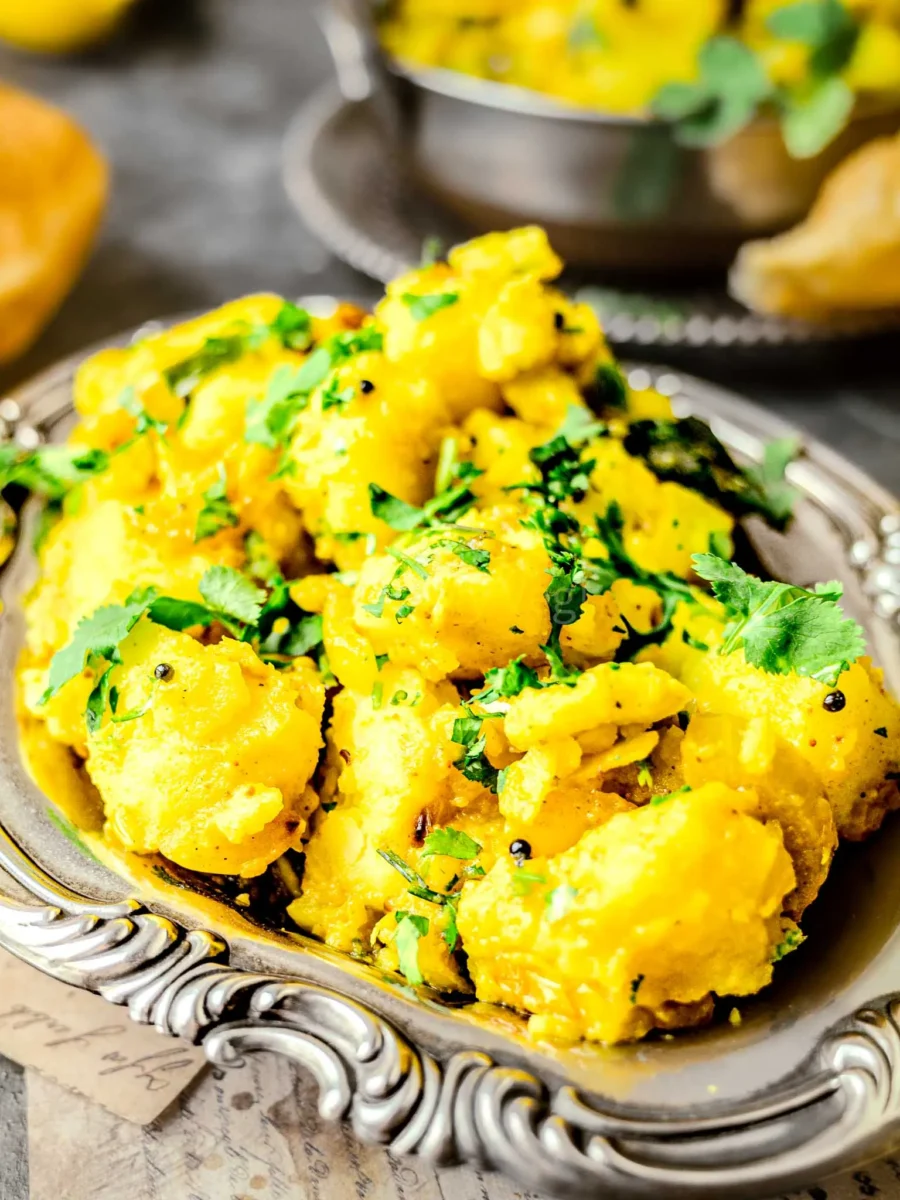
A humble dish, by all accounts, but aloo sukhi bhaji is as delicious as they come. Buttery potatoes, gently spiced with mustard, turmeric, and cumin; fragranced with fresh curry leaves, and finished with lemon. Mm-hm.

This is an Indian side dish for everyone, even people who typically shy away from Indian food. It’s vibrant, fresh, and boasts complex, layered flavours. Yet it’s also mild and understated, without any of the fiery burn-the-back-of-your-throat spice you might expect.
There’s no doubt that the texture of these potatoes — melt-in-the-mouth, practically falling apart — is key. They’re pre-cooked beforehand, then stir-fried with citrusy, warm spices until every ounce of the potato is coated in pure, unbridled flavour.
I make this recipe for my family every week (if I skip a week, there’s practically riots).
It’s that kind of affair: a dish that can sit alongside a rustic, homely spread of dishes like dal, chapati, and bhindi masala, but shine equally well paired with restaurant-style palak paneer and coriander naan. Chef’s choice — you know it’ll taste spectacular either way.
❤️ Why You’ll Love This Recipe
🤔 What is Aloo Sukhi Bhaji?
Aloo sukhi bhaji is a traditional, lightly-spiced, dry potato curry.
The dish originates in Western India — namely Gujarat and Maharashtra — and is often enjoyed as a daily staple, usually served with puri (light, crisp, and puffy fried bread).
Similar dishes include Maharashtrian puri bhaji, a beloved breakfast that looks alike, but also includes fried lentils and ginger. South Indian poori masala adds tangy tomatoes and mashes the potatoes, creating a thick, scoopable curry sauce.
It’s markedly distinct from other potato dishes like batatyachi rassa, which boasts a thin, fiery spiced gravy.

🍛 Ingredient Notes
While you need a fair few ingredients to build layers of flavour, as Indian recipes go, this one is on the minimalist side.
You’ll need just over 10 components: vegetables, aromatics, fresh herbs, and ground spices. All can be found in your local grocery store, an Indian market, or a specialist shop.
- Potatoes are the humble star of aloo sukhi bhaji. (“Aloo” means potato in Hindi). I recommend using starchy/floury potatoes like Maris Piper, King Edwards, or Russets. They don’t hold up well to boiling, which usually makes them fantastic for dishes that rely on crispy edges, like roasties or chips — but that soft, fall-apart texture is exactly what we want here.
- Neutral oil is a flavour carrier. Groundnut (peanut), sunflower, and cottonseed oil are all used in Gujarati and Marathi cuisine; choose the most accessible.
- Black mustard seeds are sharp and nutty, offering intense bursts of warm, peppery heat.
- Curry leaves offer a unique citrusy flavour. It’s worth a trip to your local Indian store or a purchase on Amazon; fresh curry leaves are the only sort worth having. Dried curry leaves are tasteless. Fresh can be frozen to retain flavour.
- Onion offers a depth of sweetness. I use brown onions, which have a much more robust flavour compared to white ones.
- Garlic is mild, sweet, and buttery once cooked. Some households make aloo sukhi bhaji a no-garlic recipe — you could use a pinch of asafoetida (hing) instead.
- Green chillies for sharp, fruity heat. I use jwala chillies for my Indian recipes.
- Ground spices, including turmeric powder (for colour and pleasant bitterness), cumin powder (for earthy warmth, and a touch of garam masala for well-rounded complexity.
- Fresh coriander is a must-have garnish for any Indian dish! Known as cilantro in the U.S., it offers a fresh, peppery, and citrusy note.
- Lemon juice finishes aloo sukhi bhaji with a tart brightness.
🌱 An Allergy-Free Recipe
My recipe for aloo sukhi bhaji is 100% vegan, gluten-free, nut-free, soy-free, and dairy-free.
It’s for this reason that aloo sukhi bhaji makes its way onto so many of my guests’ plates — it’s not only delicious but also suitable for so many dietary requirements, making it a real crowd pleaser.
🥔 Recipe Variations and Substitutions
Aloo sukhi bhaji is often made without onion and garlic for religious reasons. You can easily omit these and replace them with a pinch of asafoetida (hing), a powerful — and magic — spice with a pungency that mimics the alliums.
Instead of cumin powder, you can use whole cumin seeds. Add them to the hot oil just after your mustard seeds pop.
If you don’t have fresh lemon juice, use amchur powder (dried mango powder) to add a fruity sourness to the dry potato curry. Kokum powder offers a more Konkani spin on the recipe and is equally scrumptious.
There is no substitute for curry leaves. If you don’t have easy access to fresh curry leaves, I recommend buying them when you can and freezing them, which retains the flavour. Alternatively, omit them entirely.
To add more nutrition to the dish, add other vegetables. I’d suggest peas, spinach, cauliflower, or other leafy greens.
♨️ How to Make Aloo Sukhi Bhaji (Step-by-Step Photos)
Indian recipes can seem overwhelming to anyone who isn’t familiar with the cuisine — but I promise, this aloo sukhi bhaji is fast, easy, and worth the effort.
By effort, I mean the less than 30 minutes it takes to whip this meal up!
Along with more detailed instructions in the recipe card further down, I’ve taken stepwise pictures from my own kitchen so you can confidently follow along with each stage:
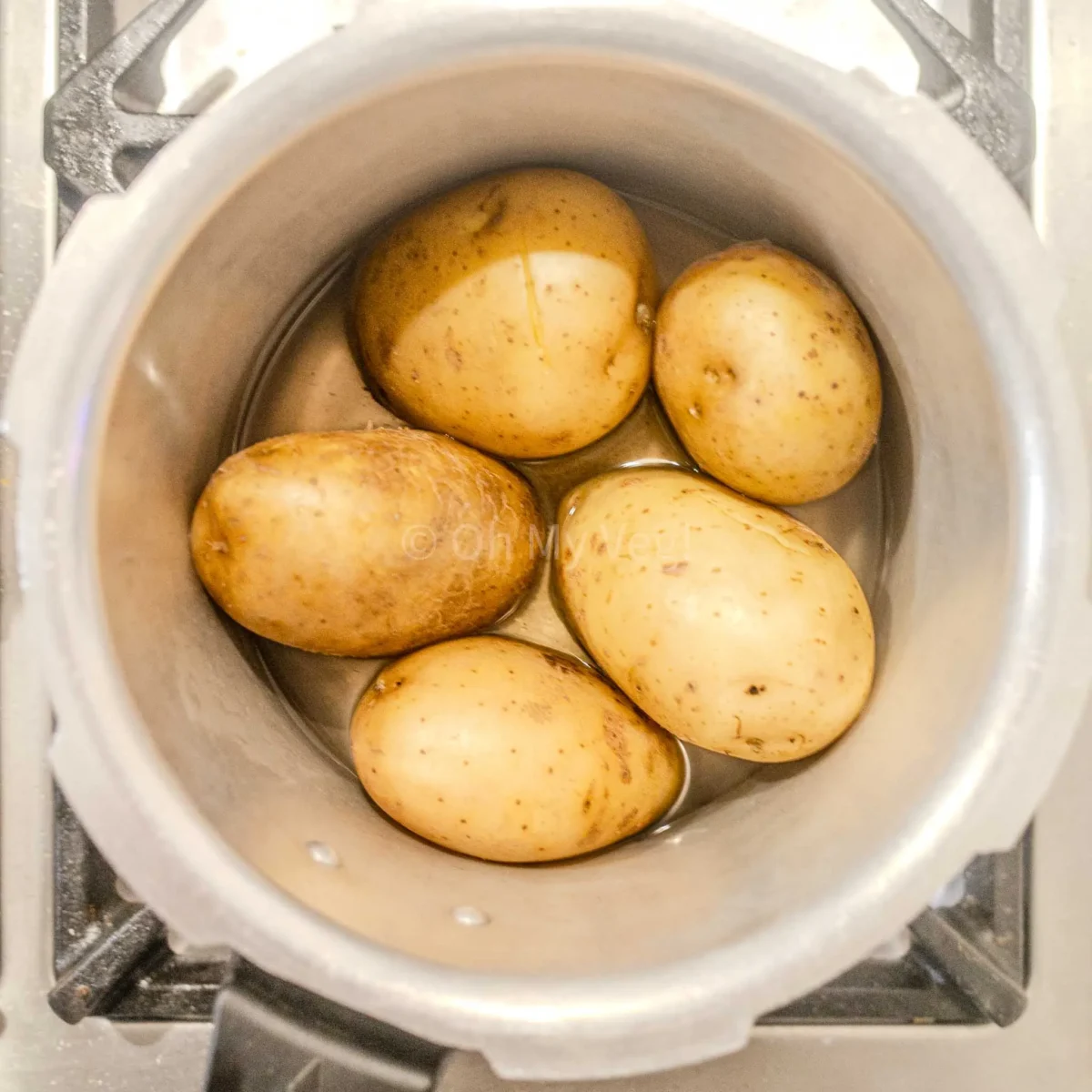
One: Boil or pressure cook potatoes until knife-soft and tender.
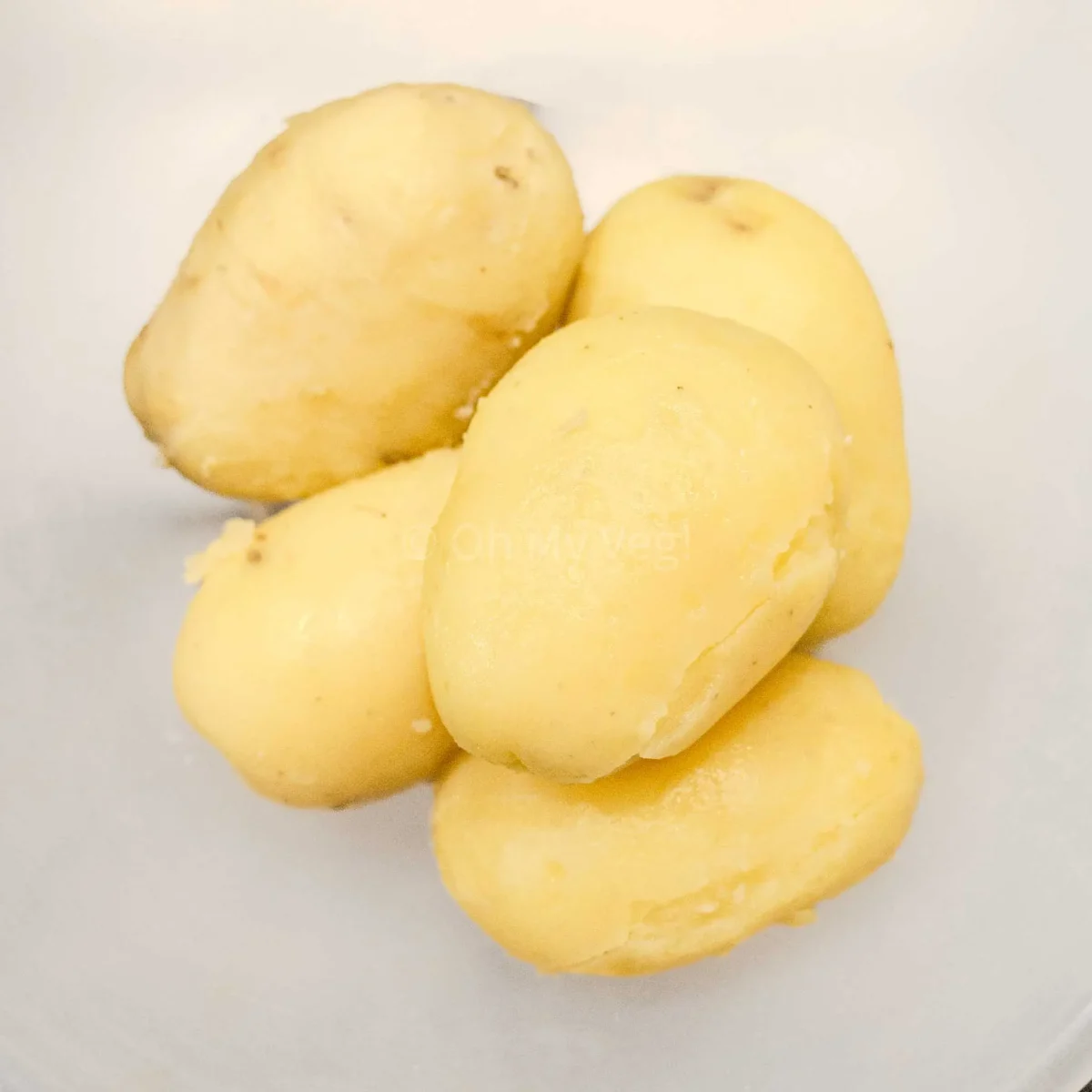
Two: Once the potatoes have cooked, drain, cool, and peel.
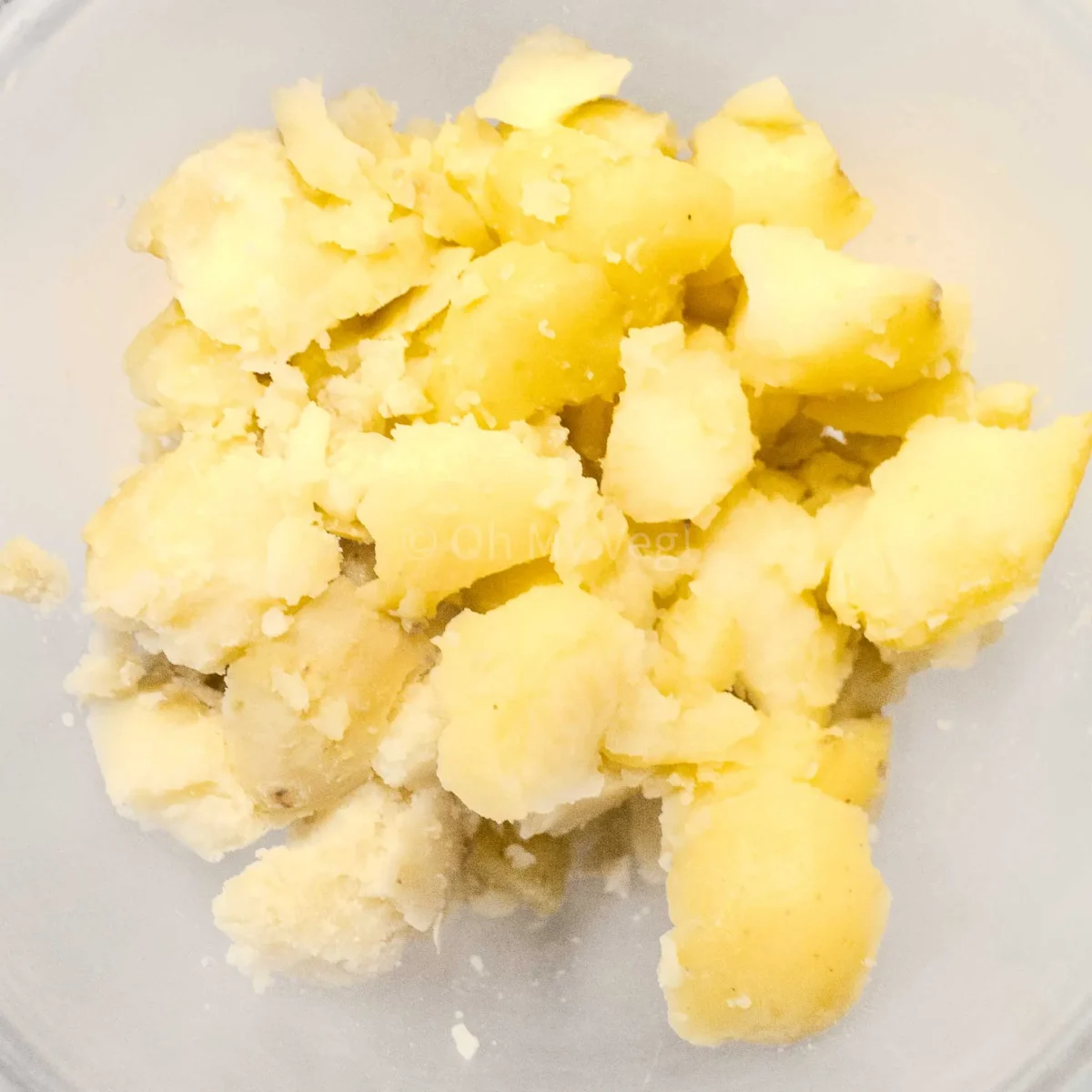
Three: Roughly break the potatoes into pieces.
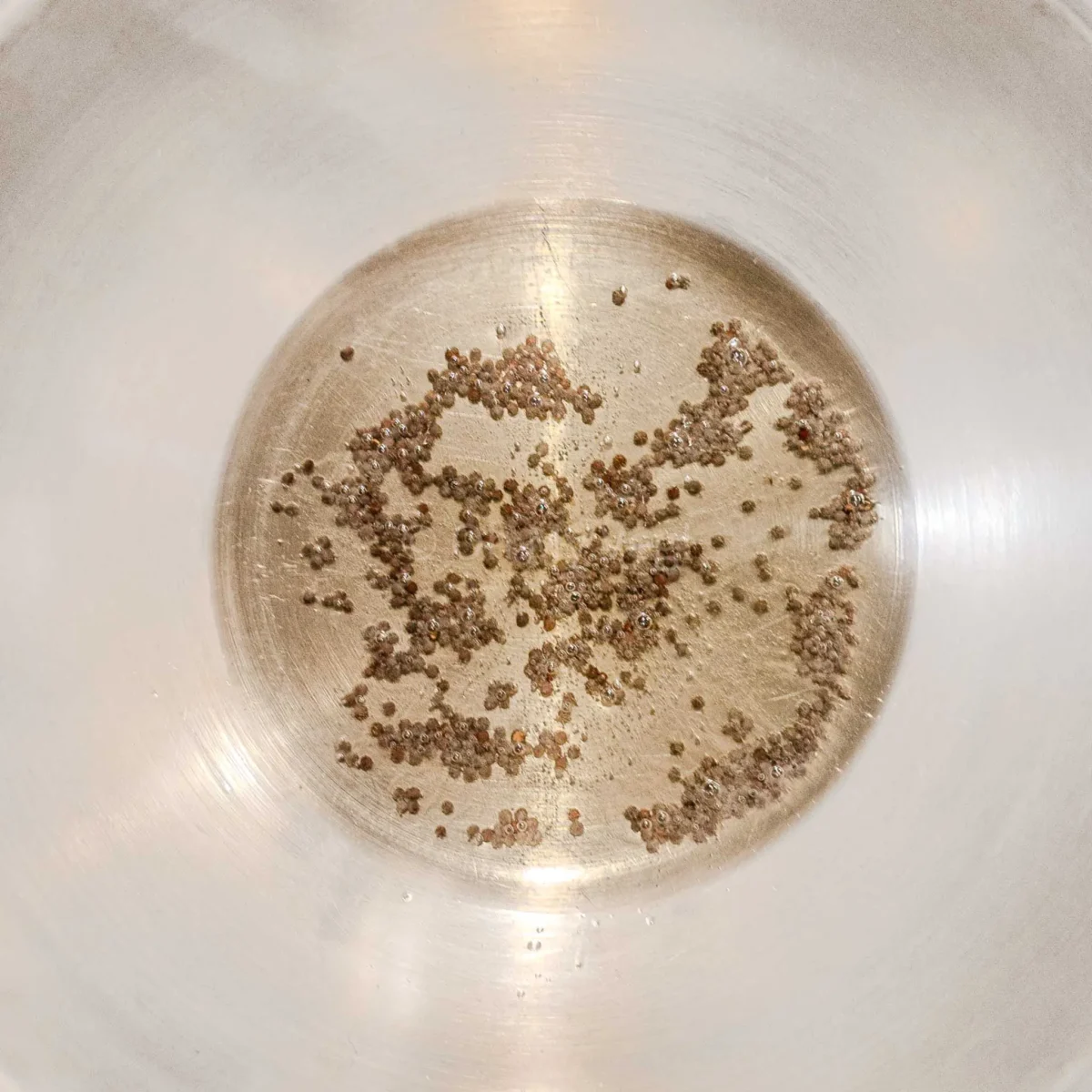
Four: In a large kadai or saucepan, heat oil over a medium flame. Cook black mustard seeds until they pop.
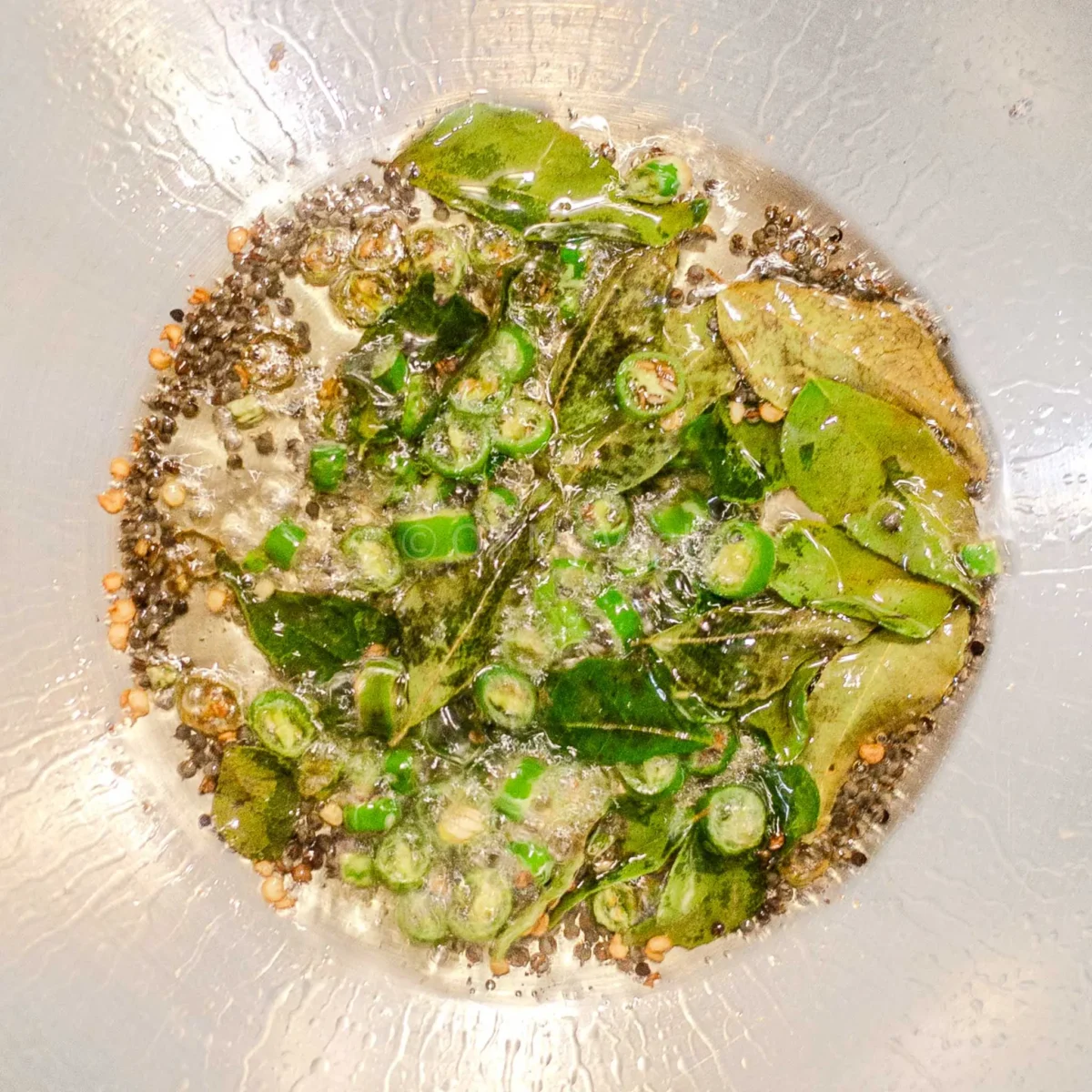
Five: Next, add curry leaves. Follow that up with sliced green chillies — both will splutter, so be careful.
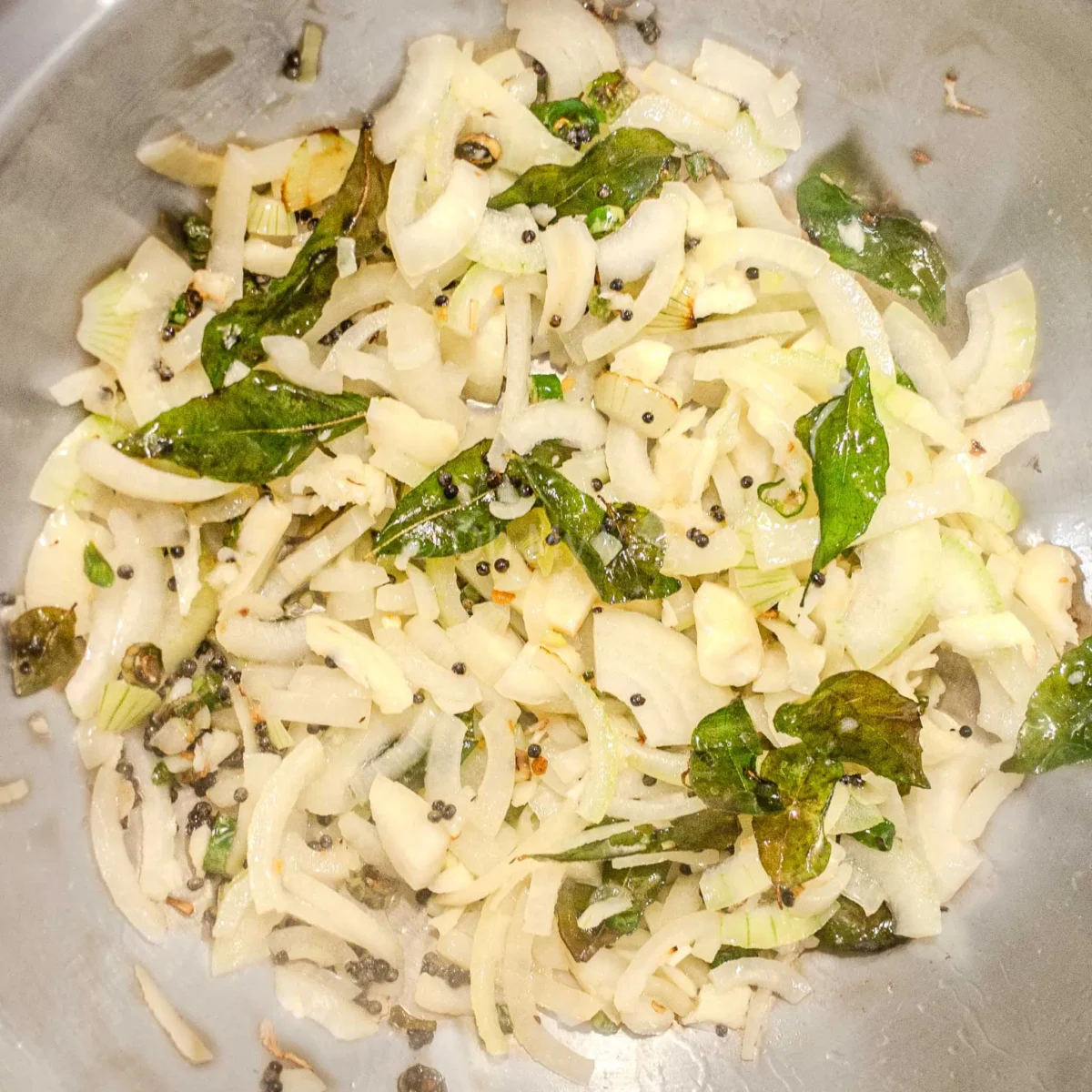
Six: Add chopped onions and garlic. Let the aromatics cook until translucent and sweet-smelling, a few minutes.
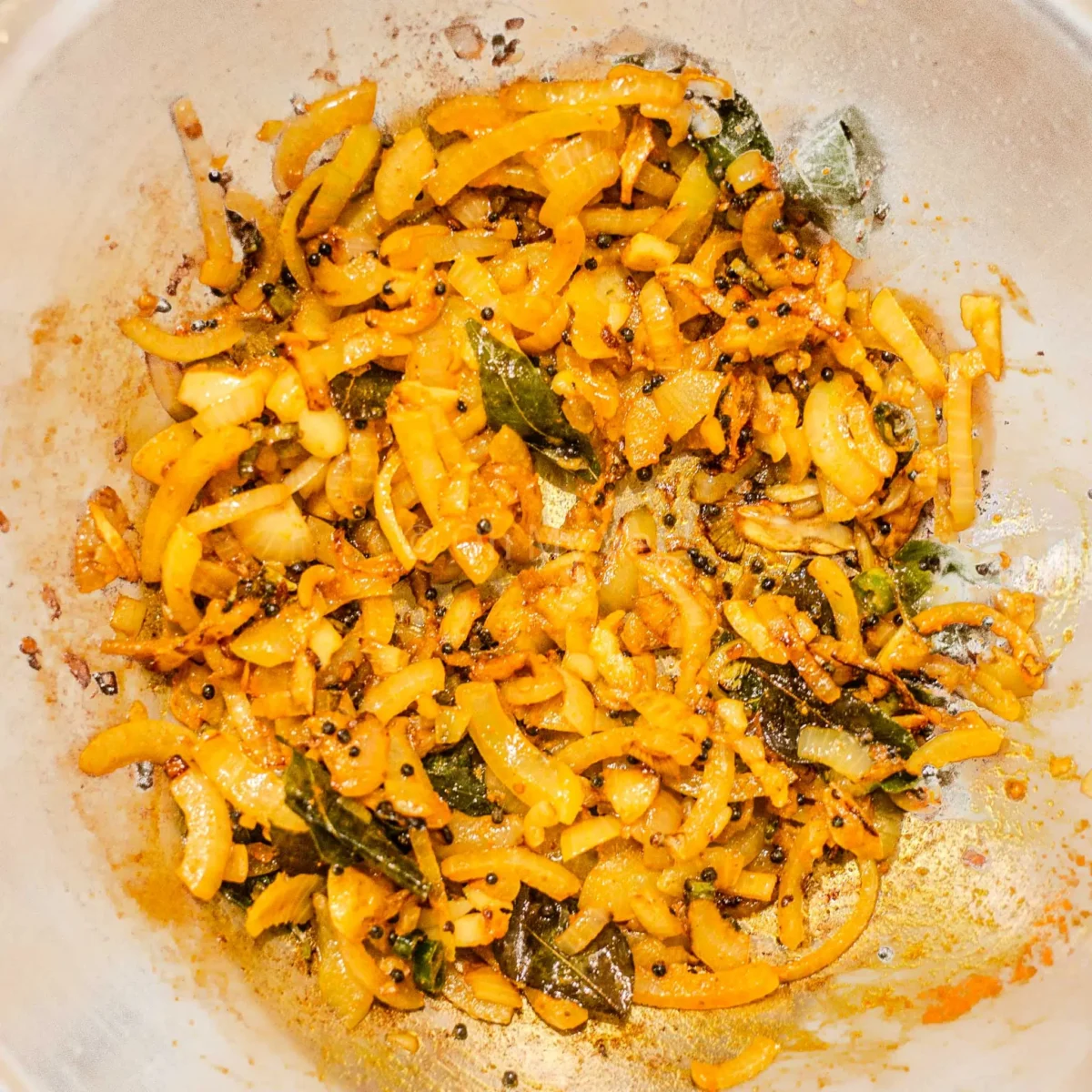
Seven: Add ground turmeric and cumin powder. Let the spices cook for a few seconds, adding a splash of water if necessary to avoid burning.
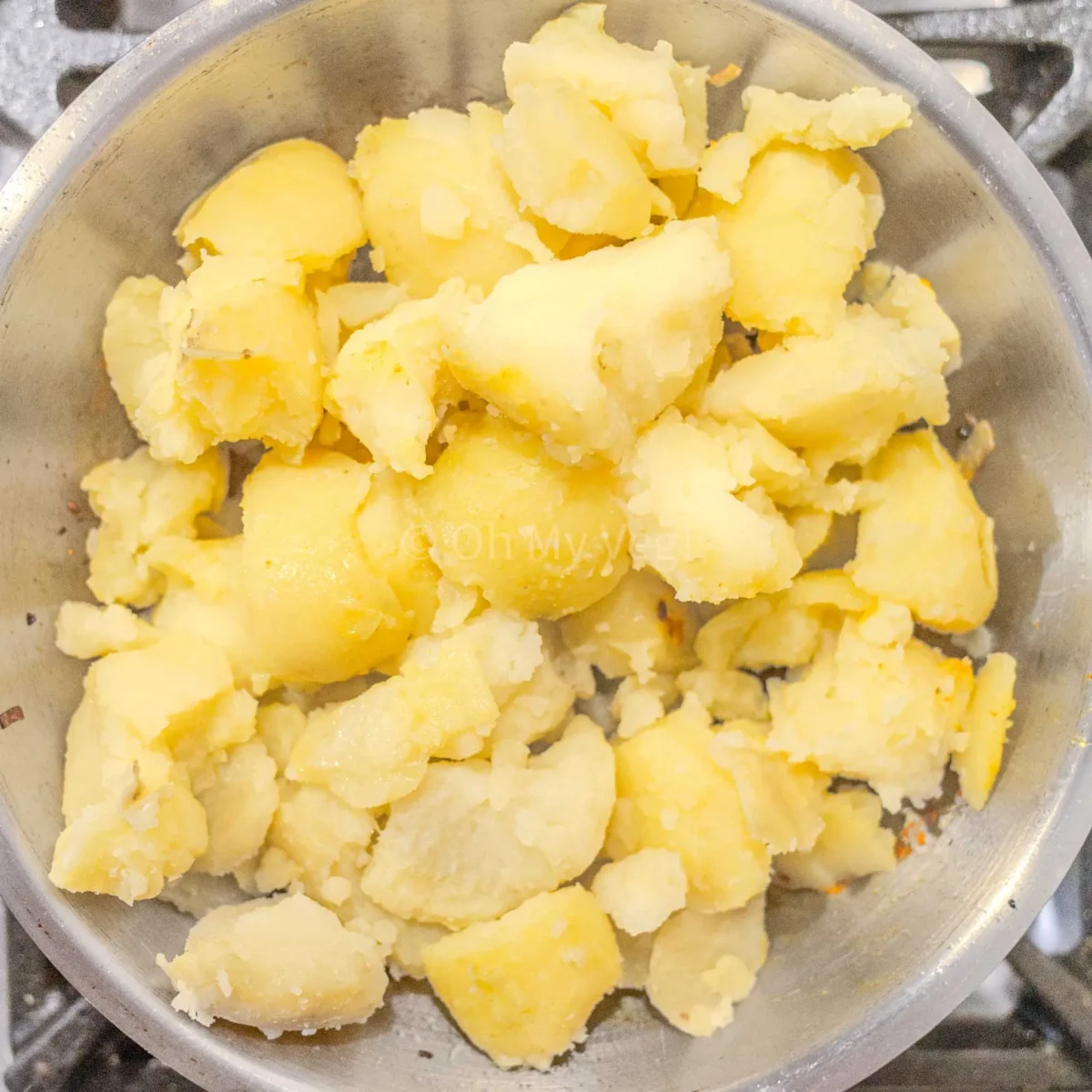
Eight: Add the boiled potatoes to the pan.
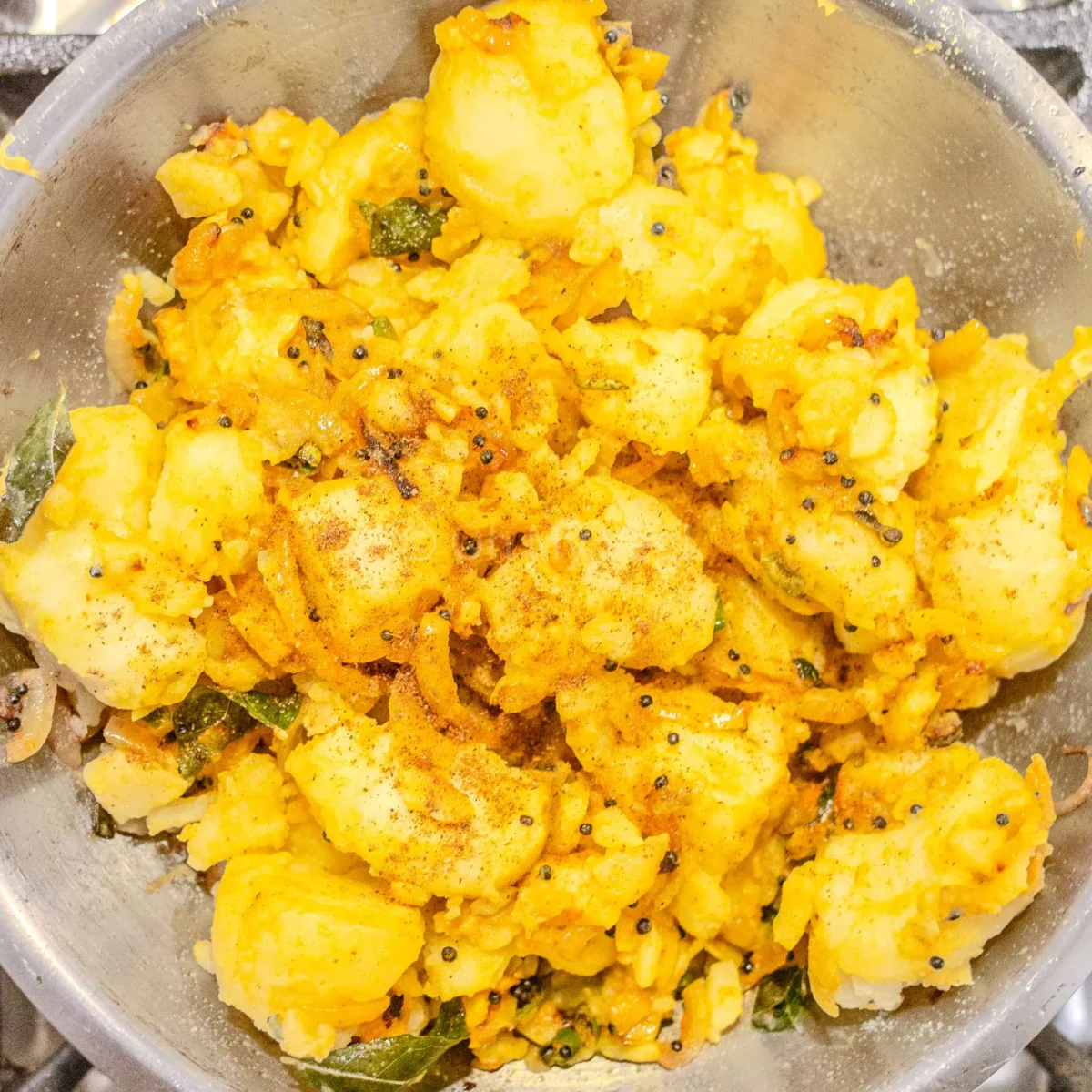
Nine: Stir to coat the potatoes in spices. Season with garam masala, salt to taste, and lemon juice. Stir through.

Ten: Garnish the aloo sukhi bhaji with plenty of chopped coriander and serve hot.
Remember, the complete recipe (with ingredient quantities and instructions) can be found at the bottom of this page. You can also print or save the recipe, adjust the servings, and more from there!
💡 Tips You NEED to Know
There’s only one thing you need to be wary of when making aloo sukhi bhaji. It can ruin the whole dish, and I’ve seen beginners making this mistake time and time again, without realising it’s why their food tastes unpleasant … to say the least.
It’s simple, but easily done: don’t burn the spices. Especially turmeric.
Burnt turmeric tastes sharp, acrid, and bitter. Overpoweringly so. There’s no easy way to remedy it.
To avoid the risk of burning spices, be sure not to leave the stove unattended. Have a glass of water to hand so, if needed, you can quickly add a splash of liquid to prevent the spices from catching.
❄️ Storing, Making Ahead, and Reheating
🡆 Fridge: Cool, then transfer to an airtight container. Refrigerate for up to 3 days.
🡆 Freezer: Cool, then place in a freezer-safe container or bag labelled with the recipe name and best-by date. Freeze for up to 3 months.
Potatoes change texture when frozen. Expect your aloo sukhi bhaji to be mushier/softer after defrosting.
🡆 Reheat: Best done on the stovetop. Sprinkle with a little water, cover with a lid, and heat on low to steam the potatoes. Stir now and then to prevent sticking. Serve hot.
Alternatively, use the microwave. Sprinkle with water and place in a microwave-safe dish. Cover with a microwave-safe lid (to prevent drying out) and microwave for 1-minute bursts until piping hot.
🡆 Make ahead: You can boil the potatoes 3 days ahead of time (store in the fridge). The remaining prep and cooking should take less than 15 minutes. It’s a fantastic option for busy home cooks or if you’re preparing for a party/feast.

🥪 What to Make with Leftovers
I’m obsessed with dishes that can gain new life as a completely different meal.
It’s a smart way to cook that saves money, time, and effort.
Here are a few ways I repurpose aloo sukhi bhaji the next day:
- Aloo paratha. Aloo sukhi bhaji makes a homely, comforting, and mild stuffing for aloo paratha. It’s a breakfast kids will love. Either make as-is, or add more spices.
- Aloo vada. Mash the potatoes and batter in gram flour for a quick, easy snack. You can then use these aloo vada in vada pav, the ICONIC Mumbai street food.
- Aloo toast/potato toastie. Again, mash the potatoes. Pile them onto bread, load up with green chutney, then toast until golden. This is a perfect lunch-on-the-go.
- Bread pakora. AKA, an indulgent deep-fried snack. You layer spiced potatoes between bread, dip them in batter, and fry them until crispy. It’s easy to see where aloo sukhi bhaji fits in!
- Aloo puffs. Popular in Indian bakeries. Potatoes fill little puff pastry parcels, resulting in a flaky, buttery savoury snack. Check out my paneer puffs too!
- Masala dosa. This aloo sukhi bhaji isn’t too dissimilar from potato masala used to stuff crispy gluten-free dosa. This is one of my all-time favourite breakfasts.
🥘 Serving Suggestions
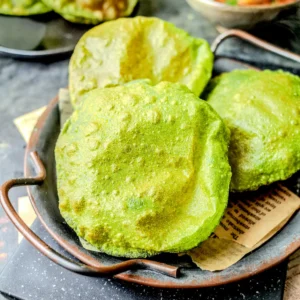
Aloo sukhi bhaji is best served with puri, a crispy, deep-fried bread. You can have fun with the combination; instead of plain puri, try making flavoured variations such as palak puri, beetroot puri, masala puri, or methi puri.
Traditionally, dry potato curry is usually eaten for breakfast — an Indian breakfast tends to be a heavy affair — but I’ve enjoyed it for brunch, lunch, and dinner, too!
Because it’s mildly spiced, the dish pairs brilliantly with other Indian recipes. Favourite matches in my household include aromatic chana masala, gavar bhaji, spicy bharli vangi, or creamy moong and masoor dal.
Pickles (achar), chutneys, and a refreshing salad like methi gholana wouldn’t go amiss either. Nor would something crispy, like onion bhaji or papad (poppadom) with spiced onions.
In the summer months, try serving aloo sukhi bhaji with cooling desserts like aamras or shrikhand (or, for the best of both worlds, aamrakhand!).
If you’ve tried this aloo sukhi bhaji recipe, please drop a comment ✍️ or a star rating 🌟 below to help fellow readers! Additionally, if you have a question, please drop a comment, and I’ll do my best to answer ASAP.

Aloo Sukhi Bhaji

Ingredients
- 680 grams floury potatoes (680 grams = ~5 medium potatoes)
- 2 tablespoons neutral oil
- ¾ teaspoon black mustard seeds
- 4 green chillies sliced
- 1 sprig curry leaves
- 100 grams brown onion sliced
- 3 cloves garlic minced
- ½ teaspoon turmeric powder
- ¼ teaspoon cumin powder
- 1 pinch garam masala
- fine sea salt to taste
- 1 tablespoon lemon juice
- small bunch fresh coriander (cilantro) chopped, to garnish, optional
Instructions
- Add 680 grams floury potatoes to a large saucepan or pressure cooker along with water. Cook the potatoes until knife-soft and tender. In a pressure cooker, this should take around 10-15 minutes (then wait for the pressure to release naturally); on the stovetop, around 15 minutes.
- Wait for the potatoes to cool, then carefully peel them. Next, roughly break them into medium-sized pieces.
- In a large kadai, heat 2 tablespoons neutral oil over medium heat.
- Once the oil is hot, add ¾ teaspoon black mustard seeds. Let them pop.
- Next, add 4 green chillies (sliced) and 1 sprig curry leaves. Both will splutter in the hot oil, so be careful. Sauté for a few seconds, until aromatic.
- Add 100 grams brown onion (sliced) and 3 cloves garlic (minced) to the pan. Cook, stirring regularly, for around 2 minutes, or until aromatic and translucent.
- Season the aromatics with ¼ teaspoon cumin powder and ¼ teaspoon cumin powder. Be careful not to let the spices catch or burn; sprinkle some water on the spices if necessary.
- Immediately add the potatoes back to the pan. Carefully stir to completely coat the potatoes in the spices.
- Finish with 1 pinch garam masala, fine sea salt (to taste), and 1 tablespoon lemon juice. Stir through.
- Optionally, garnish the dish with small bunch fresh coriander (cilantro) (finely chopped). Serve hot.